The good news first
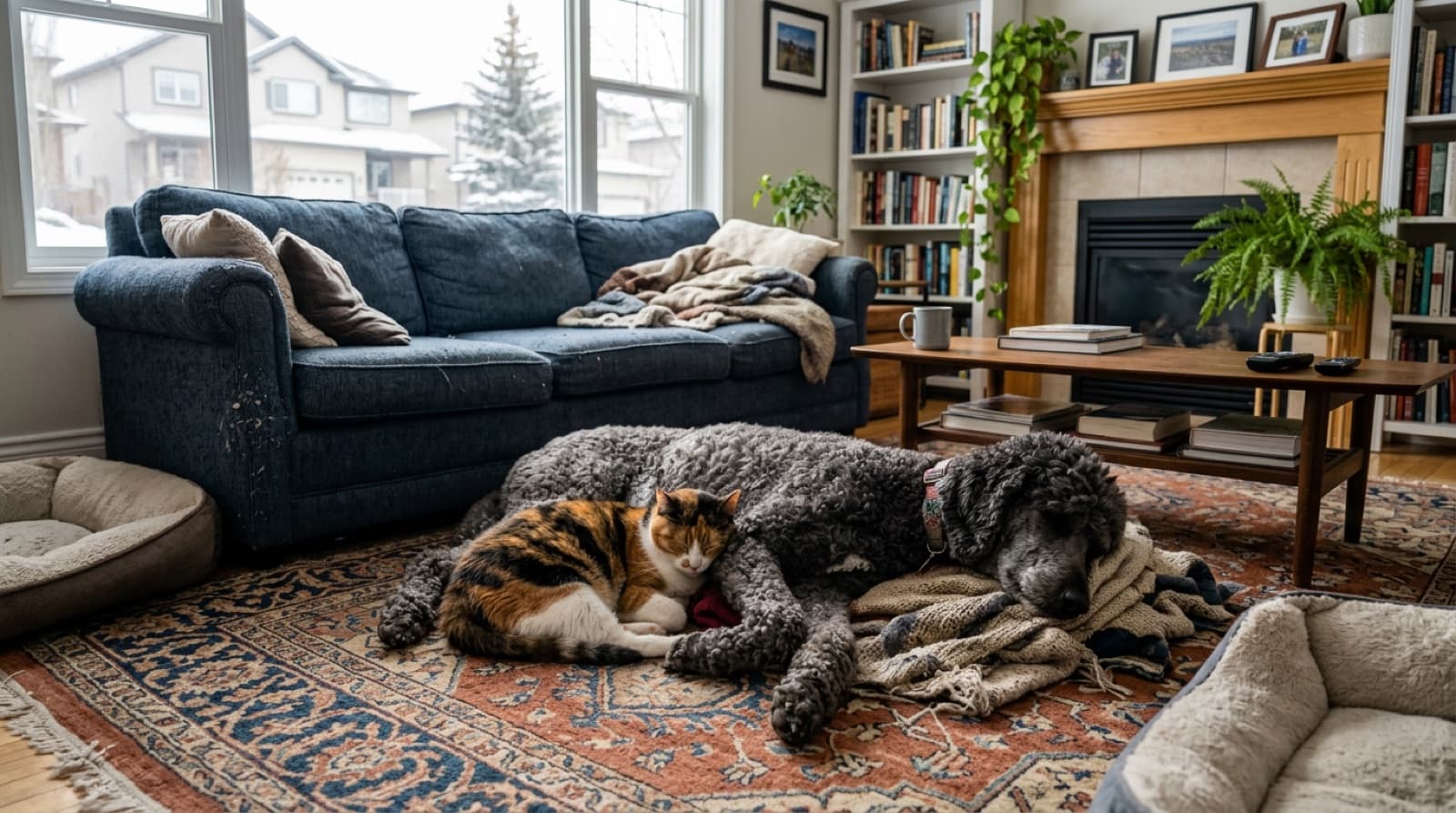
Poodle-cat compatibility is one of the most-discussed topics in the Reddit Poodle community — the threads regularly hit 90+ comments — and the overwhelming pattern is positive. Poodles are not high-prey-drive bird-dog or terrier breeds; they were bred as water retrievers, and they generally make excellent cat housemates with proper introduction. Standards have the best track record (calm, slow, often ignore cats); Toys and Minis can absolutely work but need slightly more management. This guide is the 7-step protocol Calgary rescues use, the success patterns to look for, and the abort signals that mean a particular pairing is not going to work.
The 7-Step Introduction Protocol
1. Full physical separation
Different rooms. They smell each other through closed doors but never see each other. Feed on opposite sides of the same door so each associates the other's scent with food.
2. Scent swapping
Rotate bedding and toys between rooms so each animal carries the other's scent. Calm reactions get rewarded; reactive behaviour gets ignored and the introduction slowed down.
3. Visual contact through a barrier
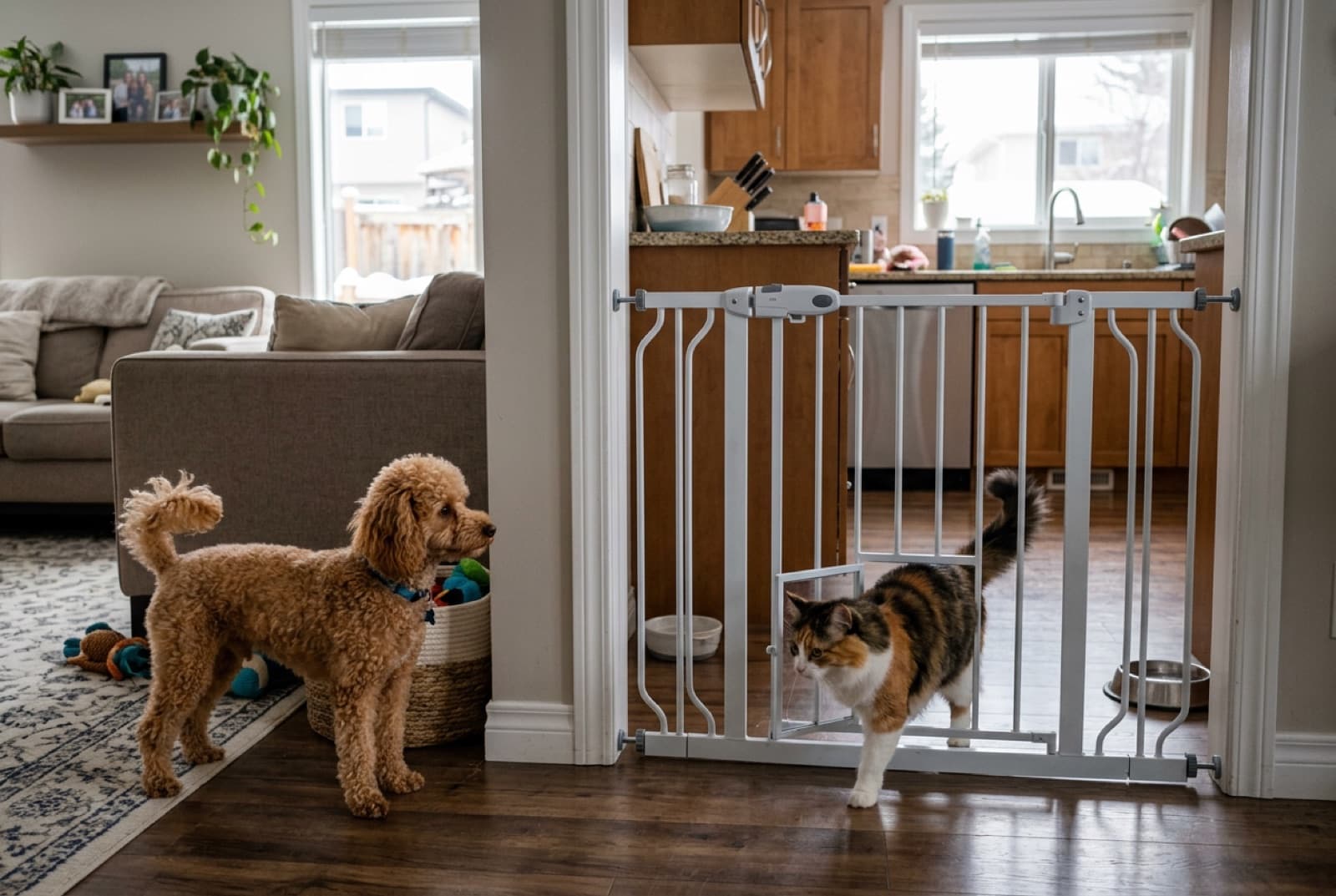
Baby gate or screen door. Both animals can see each other but cannot physically interact. Reward calm with high-value treats. Watch for stiff body language, hard stares, growling.
4. Leashed in-room exposure
Dog on leash, cat free to approach or leave. 5 to 15 minute sessions. End on calm. Multiple short sessions per day work better than one long session.
5. Longer leashed sessions
Build up duration. Drop the leash if both animals are calm. Keep handler within reach to manage if needed.
6. Supervised off-leash
Both animals free in shared spaces with handler supervision. Always supervise; never leave alone yet. Watch for any predatory pattern shifts.
7. Cautiously unsupervised
ONLY if cat has reliable escape routes (high shelves, baby gates with cat holes, separate cat sanctuary room). Many Poodle-cat households take 2 to 6 months before fully unsupervised co-existence is comfortable.
Prey Drive by Poodle Size
Toy Poodle
Cat-pairing success ~65%
Faster movement, smaller size can trigger more cat reactivity initially. Large cats (10+ lbs) typically dominant in the dynamic. Watch for small-Poodle play getting too rough on kittens or smaller cats.
Miniature Poodle
Cat-pairing success ~70%
Good balance — small enough not to overwhelm cats, big enough to handle being swatted without panic. Most versatile cat-household Poodle.
Standard Poodle
Cat-pairing success ~80%
Counterintuitive winner. Larger size = slower movement, calmer demeanor, often ignores cats entirely. Cats quickly learn the Standard is not a threat.
Success rates are approximate from Reddit Poodle and Calgary rescue intake data. Individual temperament matters more than breed/size average.
Browse cat-tested Poodles in Calgary
Most Calgary rescues cat-test before listing. Foster reports note “cat-friendly,” “cat-tested,” or “high prey drive — no cats” based on testing.
Success Signs vs Abort Signals
Going well (keep going)
- • Calm body language, soft eyes, relaxed bodies
- • Voluntary co-existence in same room
- • Curiosity without intensity
- • Eating and drinking normally with each other present
- • Sleeping in proximity (eventually)
- • By week 2: tolerate presence
- • By week 4: ignore each other when calm
- • By month 3: unsupervised okay with safety setups
Abort signals (4+ weeks)
- • Fixated predatory staring + stalking that does not break
- • Lunging, chasing, or grabbing the cat
- • Snapping or air-snapping at close range
- • Cat hiding 100% of the time after 4+ weeks
- • Chronic stress signs (cat off food, dog pacing/whining)
- • Either animal losing weight from stress
- • Repeated escalation between sessions
If you hit abort signals after 4 to 6 weeks of consistent work, contact a force-free Calgary trainer or vet behaviourist. Some pairings genuinely do not work; rehoming one animal is kinder than chronic stress. Calgary rescues take dogs back at any age.
Multi-Cat + Poodle Household Infrastructure
Vertical space for cats
Cat shelves, cat trees, window perches, top of bookcases. Cats need escape routes upward where the Poodle cannot follow.
Poodle-proof feeding stations
Cats eat on a counter, a tall shelf, or behind a baby gate with a cat hole. Dogs eating cat food (high protein, designed for smaller dogs) get weight gain and digestive issues.
Separate litter areas the Poodle cannot reach
Critical: Poodles will eat cat poop given the chance (called coprophagia). Place litter boxes behind baby gates, in closets with cat doors, or on elevated platforms. The Reddit Poodle community jokes about this constantly; it is real.
Escape routes in every shared room
A cat that feels trapped reacts defensively. Always ensure each shared room has a cat-accessible escape route. Even one corner the Poodle cannot reach makes a big difference.
Separate cat sanctuary room
Many multi-pet households dedicate one room (often a bedroom or office) as cat-only space, accessible to the cats but blocked from the Poodle. Reduces stress for the cats and gives them territory of their own.
Frequently Asked Questions
Do Poodles get along with cats?
Most do with proper intro. Poodles are gentler than terriers, lower prey drive than herding breeds. Standards ~80%, Mini ~70%, Toy ~65% success rate per Reddit + Calgary rescue data.
How to introduce a Poodle to a cat?
7-step protocol over 6+ weeks: separation, scent swap, barrier, leashed, longer leashed, supervised off-leash, cautiously unsupervised. Most households take 2-6 months total.
What is prey drive in Poodles?
Moderate to low (water retriever breed, not hunting). Signs: fixated staring, stalking, sudden lunging. Calgary rescues cat-test before listing; foster reports note “cat-tested,” “cat-curious,” or “no cats.”
Which size is best with cats?
Standards counterintuitively safest (slower, calmer, ignore cats). Minis most versatile. Toys can work but faster movement can trigger cat reactivity.
Success signs?
Calm body language, voluntary co-existence, curiosity without intensity, eating normally together, eventually sleeping in proximity. Week 2 tolerate, week 4 ignore, month 3 unsupervised okay.
When to abort?
Persistent predatory stalking, lunging/chasing, snapping, cat hiding 100% after 4 weeks, chronic stress signs. Calgary rescues take dogs back at any age if pairing does not work.
Multi-cat household with a Poodle?
Yes. Cats teach the dog the dynamic. Need: vertical space, Poodle-proof feeding, separate litter areas (Poodles eat cat poop), escape routes in every shared room, cat sanctuary room.
Puppies easier or harder?
Easier long-term (raised together = lifelong compatibility), harder short-term (puppy energy stresses cats). Critical socialization 8-16 weeks is the easiest window. Kitten + puppy raised together is gold standard.
More Poodle guides
Poodle Training Calgary →
Force-free positive reinforcement, mental stim, Calgary force-free trainers.
Is a Poodle Right for You? →
10 honest truths + 12-question self-assessment.
Poodle Separation Anxiety →
Working full-time, daycare math, the 4-week prevention protocol.
Standard vs Mini vs Toy →
Side-by-side comparison of the three Poodle sizes.
New dog? Start with these care guides
Everything a new adopter needs to set up a safe, happy home.