The short answer
The Shih Poo is a designer cross, not a recognised breed. Neither the Canadian Kennel Club nor the American Kennel Club register it. Pure Shih Poos are uncommon in Calgary rescues, but Shih Tzu + Poodle mixes appear regularly across Calgary Humane Society, AARCS, Pawsitive Match, ARF Alberta, BARCS Rescue, Heaven Can Wait, and Cochrane Humane Society. Adoption fees commonly run $300 to $600; breeder pricing is usually $2,000 to $3,500+. Sizes vary by Poodle parent (Toy Shih Poo 6 to 12 lbs, Mini Shih Poo 12 to 20 lbs). Coat is typically wavy or curly and lower-shedding than a purebred Shih Tzu, but no dog is 100 percent hypoallergenic.
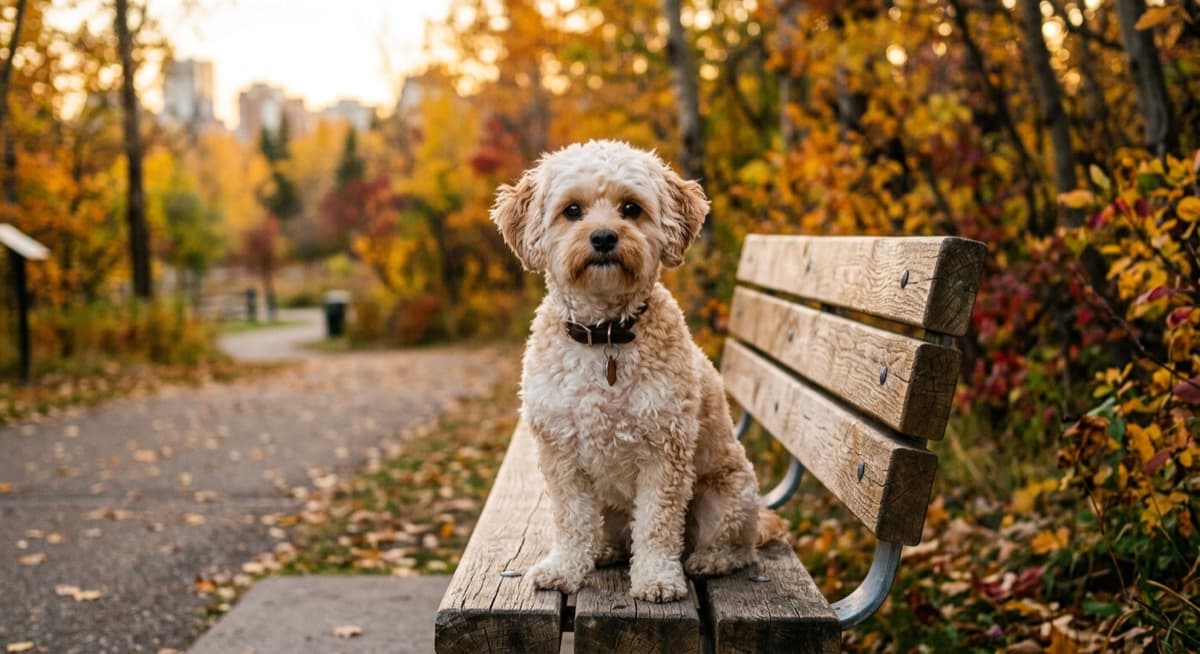
The Shih Poo (sometimes written Shihpoo or Shih-Poo) is one of the more popular small designer crosses in Calgary. It pairs the calm, affectionate Shih Tzu with the smart, lower-shedding Toy or Miniature Poodle. The result is a small companion dog that suits apartments, seniors, and families with older children. This guide covers what the designer-cross label actually means, the size and coat variants, the realistic health profile, how training tends to go, and where Shih Tzu + Poodle mixes actually appear in Calgary rescues.
What is a Shih Poo?
A Shih Poo is a first-generation cross between a Shih Tzu and a Toy or Miniature Poodle. Neither the Canadian Kennel Club nor the American Kennel Club recognises the Shih Poo as a breed. It is a designer cross, which means there is no breed standard, no consistent appearance, and no predictable temperament across litters. Two Shih Poo puppies from the same litter can look and behave quite differently.
Designer crosses became popular in the 1990s and 2000s after the Cockapoo and Labradoodle made low-shedding small dogs fashionable. The Shih Poo followed the same logic: take a small, affectionate companion breed (Shih Tzu) and add Poodle coat genetics. Calgary adopters see Shih Poos described under many spellings and labels: Shihpoo, Shih-Poo, Pooshi, Shoodle, or simply Shih Tzu + Poodle mix.
The parent breeds are well-documented. Read about the Shih Tzu at the American Kennel Club and the Toy Poodle at the American Kennel Club. Both pages cover the parent traits that influence a Shih Poo.
Shih Poo sizes: Toy vs Mini
Shih Poo size depends almost entirely on the Poodle parent. Shih Tzus are a fairly consistent 9 to 16 lbs, so the variable in the cross is the Poodle side. There are two common Shih Poo size variants you will see in Calgary:
| Variant | Poodle parent | Typical adult weight | Common in Calgary |
|---|---|---|---|
| Toy Shih Poo | Toy Poodle (4 to 9 lbs) | 6 to 12 lbs | Most common |
| Mini Shih Poo | Miniature Poodle (10 to 15 lbs) | 12 to 20 lbs | Occasional |
| Standard Shih Poo | Standard Poodle (45 to 70 lbs) | 25 to 45 lbs | Very rare |
Be wary of any breeder or seller advertising “teacup” or “micro” Shih Poos. These are not recognised size categories. They are usually the result of breeding the smallest possible parent dogs together, which carries elevated risks of fragility, hypoglycaemia, dental crowding, and shortened lifespan. A healthy Toy Shih Poo at 6 to 12 lbs is small enough for any Calgary apartment without engineering further size reduction.
Coat and the “hypoallergenic” question
Shih Poos typically inherit a wavy or curly coat that sheds less than a purebred Shih Tzu. Some lean toward a curlier Poodle coat; others lean toward a straighter, softer Shih Tzu coat; many fall somewhere in the middle. Coat colour ranges widely: cream, apricot, gold, chocolate, black, brindle, parti-colour, and combinations.
The hypoallergenic claim deserves an honest answer. Both parent breeds shed less than most dogs and produce less dander, which is why the cross is marketed as hypoallergenic. But no dog is 100 percent hypoallergenic. The American Veterinary Medical Association is clear on this point: dog allergens come from saliva, urine, and dander, all of which are produced by every dog regardless of coat. A Shih Poo that inherits a more Poodle-style coat will likely shed less and trigger fewer reactions; one that inherits more Shih Tzu coat will shed more.
If allergies are part of your decision, spend extended time with the specific dog before adopting and ideally meet a second time on a different day. Coat texture also affects grooming workload, which we cover in the next section. For grooming detail that applies directly to most Shih Poos, see our Shih Tzu grooming guide.
Temperament and daily life
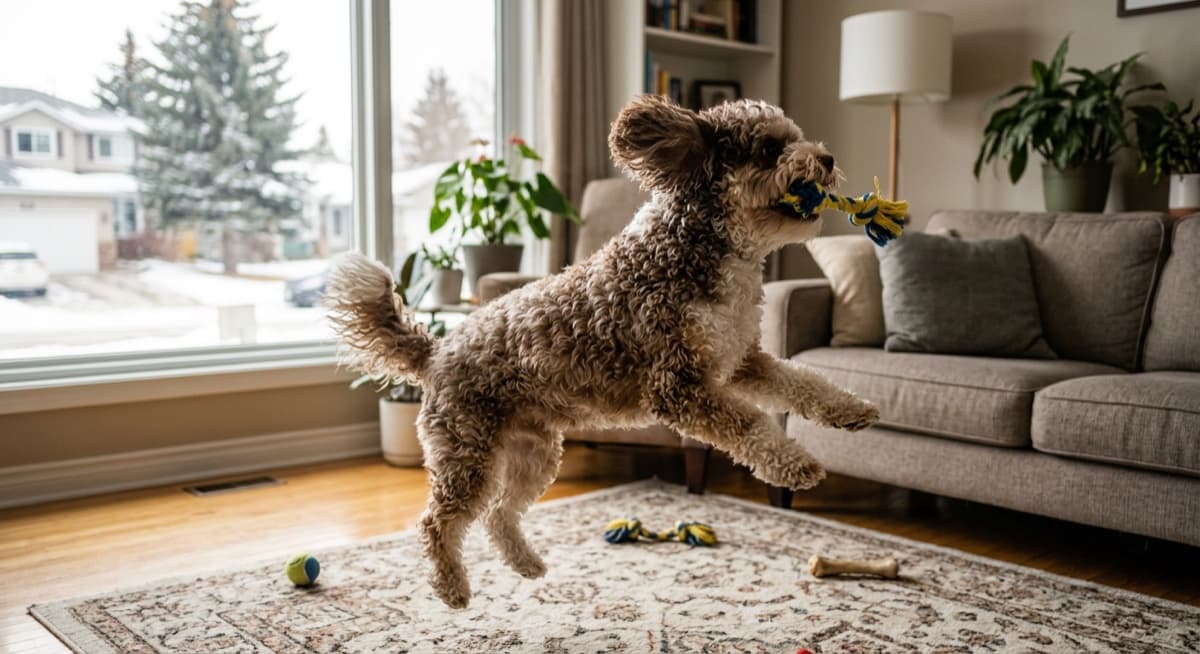
The Shih Tzu side brings calm, affectionate, lap-dog energy. The Poodle side brings intelligence, trainability, and a slightly higher activity level. A typical Shih Poo is small, friendly, and content with moderate daily exercise: two short walks a day plus indoor play. They suit apartment life in neighbourhoods like Beltline, Bridgeland, Inglewood, and Mission, and they handle quiet suburban homes equally well.
- Exercise needs. 30 to 45 minutes daily is typical. Off-leash time at small, fenced dog parks works better than long-distance hiking. Most Calgary off-leash areas accept all sizes, including small dogs.
- Companion-oriented. Shih Poos bond closely and can struggle with long alone-time. Daycare or a midday walker helps if your household leaves for full workdays.
- Trainable. Poodle genetics make Shih Poos generally quick to learn cues and routines. Short, frequent training sessions with food rewards work well.
- Good with kids and other pets. Most do well with older children who handle small dogs gently. Toddlers can be too rough for a 6 to 12 lb dog; supervise closely.
- Quiet to moderate barkers. Less reactive than many small breeds, but individual dogs vary. Calgary's Responsible Pet Ownership Bylaw covers persistent nuisance barking, so factor training time into your first few months.
- Calgary winters. Small dogs lose heat quickly. A fitted sweater or coat for walks below -10°C is reasonable, and watch for snow buildup between paw pads. Routine cold snaps below -20°C call for shorter walks and indoor play.
Health profile: what to plan for
Designer crosses can inherit health issues from either parent breed. A Shih Poo is no exception. Average lifespan is 12 to 17 years, which is long for a dog and a real commitment.
- Dental disease. Small breeds have crowded mouths and develop tartar quickly. Daily tooth brushing, dental chews, and routine cleanings at your Calgary vet are the standard.
- Patellar luxation. Loose kneecaps are common in small dogs. Watch for skipping or hopping in the back legs. Most cases are managed without surgery.
- Eye issues. Cataracts, progressive retinal atrophy, and (from the Shih Tzu side) dry eye or corneal ulcers. Annual eye exams help catch these early.
- Brachycephalic risk. If the Shih Tzu face is dominant, the dog can inherit a shortened muzzle and the breathing, heat, and dental issues that come with it. We cover this in the next section.
- Allergies and skin issues. Both parent breeds are prone to skin sensitivities. Watch for itching, paw chewing, and recurrent ear infections.
- Hypoglycaemia in puppies. Very small puppies (under 4 lbs) can develop low blood sugar if meals are spaced too far apart. Frequent small meals through the first 4 to 6 months are the standard.
Pet insurance for a small designer cross typically costs $25 to $50 per month in Calgary and is worth the investment given the 12 to 17 year lifespan. Always consult your Calgary vet about specific symptoms, treatments, or supplements; we do not recommend medications or doses here.
Is a Shih Poo brachycephalic?
It depends on the parent ratio. The Shih Tzu is one of the classic brachycephalic (flat-faced) breeds and can suffer from Brachycephalic Obstructive Airway Syndrome (BOAS), which the American Veterinary Medical Association covers in detail. A Toy or Miniature Poodle has a normal-length muzzle.
Shih Poos sit on a spectrum:
- Shih Tzu-dominant face. Shorter muzzle, more prominent eyes, more risk of BOAS, more heat intolerance, more dental crowding. Calgary summers and indoor heat in winter both matter for these dogs.
- Mid-spectrum face. Slightly shortened muzzle but functional. Lower BOAS risk but still worth a vet airway check at the first exam.
- Poodle-dominant face. Normal-length muzzle. Brachycephalic concerns generally do not apply, though dental and eye issues can still appear from the Shih Tzu inheritance.
The practical advice: meet the dog before adopting, look at the face shape, and ask your Calgary vet to assess airway, soft palate, and nostrils during the first exam. A dog with audible breathing at rest, frequent reverse sneezing, or visible struggle in summer heat needs a closer look.
Training a Shih Poo
The Poodle side makes Shih Poos generally quick to learn. The Shih Tzu side can add an independent streak: they will learn a cue, but they will also decide when they feel like performing it. Force-free training with food rewards and short sessions works best.
- House training. Small bladders mean more frequent breaks. A young Shih Poo may need a break regularly initially. A consistent schedule and a designated outdoor spot speed up the process.
- Crate training. Helps with house training and gives the dog a quiet base. Use the crate as a positive space, never as punishment.
- Socialisation. Expose puppies to varied people, surfaces, sounds, and other friendly dogs between 8 and 16 weeks. Calgary off-leash parks are useful once vaccinations are complete.
- Recall. Practise from day one in a fenced space before progressing to off-leash zones. Small dogs are at higher risk from coyotes on the river paths, so a reliable recall matters.
A reputable Calgary force-free trainer can help with first-time owners or with specific issues. Avoid trainers who use prong collars, e-collars, or alpha framing, especially on a small dog where the physical risk of those tools is higher.
Why Shih Poos end up in rescue
Small designer crosses come into Calgary rescues for the same reasons most small dogs do.
- Owner life changes. Moves, divorce, illness, or a new baby. Small dogs are surrendered for housing changes more often than larger breeds because rentals impose breed and size limits inconsistently.
- Grooming workload underestimated. New owners underestimate the cost and time of every-6-to-8-weeks grooming and daily brushing. Coats mat quickly when neglected.
- Health surprises. Dental disease at age 3, patellar surgery, or BOAS symptoms can come as a shock to owners who expected a low-maintenance small dog.
- Designer-cross over-breeding. The Doodle and Shih Poo trend produced more puppies than the long-term ownership demand, and some end up back in rescue as adults.
The good news: most rescue Shih Poos are well-socialised adults already through basic training. You will typically meet a dog that knows the basics and has a foster-family temperament write-up, which is more reliable than a breeder's promise about a puppy's adult personality.
Where to find a Shih Poo in Calgary
Pure Shih Poos are uncommon in Calgary rescues. Shih Tzu + Poodle mixes appear regularly, often labelled simply as Shih Tzu mix or Poodle mix in intake notes. Cast a wide net:
- Calgary Humane Society: the largest Calgary shelter; small designer crosses appear occasionally.
- AARCS: foster-based with structured temperament write-ups.
- Pawsitive Match: Calgary foster-based; many small dogs.
- ARF Alberta: Calgary foster-based; small to medium dogs frequently.
- BARCS Rescue: Calgary foster-based; transports many small dogs into the region.
- Heaven Can Wait: Calgary rescue with a small-dog focus at times.
- Cochrane Humane Society: Cochrane-based, serves the broader Calgary region.
Search both breed pages and set up alerts. The Calgary Shih Tzu breed page and the Poodle and Doodle breed page both surface Shih Tzu + Poodle crosses on the LocalPetFinder feed. Listings refresh regularly, so notifications are the difference between catching a new arrival and missing one.
Adoption fees commonly run $300 to $600 and typically include spay or neuter, vaccinations, microchip, and a basic vet exam. Calgary requires a city dog licence for every dog three months and older under the Responsible Pet Ownership Bylaw, which is a small annual fee. For a full lifetime-cost breakdown, see our Calgary adoption costs guide.
Browse Shih Tzu and Poodle mixes in Calgary
See current Shih Tzus, Poodles, and Shih Tzu + Poodle mixes across 15+ Calgary rescues in one place. Listings refresh regularly, so set up notifications and apply quickly when a Shih Poo appears.
Frequently Asked Questions
Where can I adopt a Shih Poo in Calgary?↓
How much does a Shih Poo cost to adopt in Calgary?↓
Are Shih Poos hypoallergenic?↓
What size will a Shih Poo grow to?↓
How much grooming does a Shih Poo need?↓
Are Shih Poos easy to train?↓
What health issues should I expect with a Shih Poo?↓
Is a Shih Poo brachycephalic?↓
Continue reading
Shih Tzu adoption in Calgary
Where to adopt Shih Tzus in Calgary, real costs, Bichon Shih (Shichon) mix info, lifespan, temperament, and why “free Shih Tzu puppies” listings are almost always scams.
Shih Tzu grooming in Calgary
Cuts, daily brushing, top knot, eye stains, brachycephalic face care, and Calgary groomer pricing. Applies directly to most Shih Poos.
Browse Calgary Shih Tzus
Currently available Shih Tzus and Shih Tzu mixes across 15+ Calgary rescues, refreshed regularly.
Browse Calgary Poodles & Doodles
Toy, Miniature, and Standard Poodles plus Doodle crosses (including Shih Poos) across 15+ Calgary rescues, refreshed regularly.
New dog? Start with these care guides
Everything a new adopter needs to set up a safe, happy home.