The short answer most articles will not give you
Yes, Shih Tzus are one of the better small breeds for families with kids. They are calm, tolerant, and sturdier than Yorkies or Chihuahuas at 9 to 16 pounds. They were bred for centuries as palace companions in China, which means people are their favourite thing. The realistic version: they fit best in homes with kids age 5 and up who can follow basic dog-respect rules, and they need active supervision around younger children. The breed-specific caveats are the prominent eyes (vulnerable to accidental finger pokes), the short brachycephalic face (no roughhousing or chest-squeezing), and a tolerance ceiling that quietly maxes out faster than the dog tells you. This guide walks through the age-by-age fit, the supervision rules, the brachycephalic safety conversation, the dog-respect rulebook for kids, when a Shih Tzu is NOT the right call, and how to pick the right rescue dog for the household.
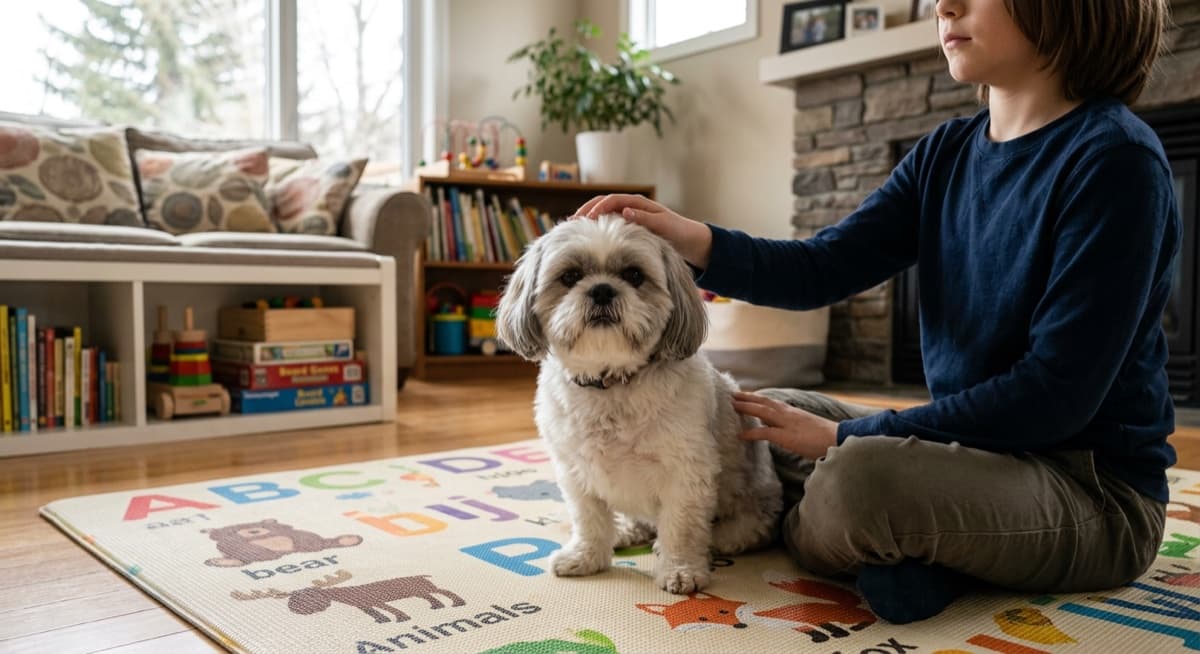
General Fit: Why Shih Tzus Land Well with Calgary Families
The American Kennel Club consistently ranks the Shih Tzu among the more family-friendly small breeds, and the practical reasons hold up:
- Sturdier than tiny toys. At 9 to 16 lb (4 to 7 kg) and a compact, solid build, a Shih Tzu is less fragile than a Chihuahua, Yorkie, or Maltese. Accidental bumps that would injure a 5 lb toy breed are usually shrugged off.
- Calm temperament by breed standard. Bred as a lap and palace companion, not a working dog. They do not have the herding-nip drive of a Border Collie or the chase instinct of a sighthound. The default state is “chilling near my people.”
- Tolerant of handling. Most well-socialized Shih Tzus accept being brushed, lifted, carried, dressed up, and generally fussed over. This is the trait Calgary families notice most quickly.
- People-bonded, not aloof. Shih Tzus seek out family activity rather than retreat from it. A house full of kids is usually a feature for the dog, not a bug.
- Apartment and condo friendly. Small footprint, low exercise needs (20 to 40 minutes a day plus indoor play), and a manageable bark. Realistic for Calgary families in condos, townhouses, or smaller homes.
None of this means the breed is a free pass. The caveats below are real and worth planning around before you sign the adoption paperwork.
Compatibility by Kid Age
| Kid age | Shih Tzu fit | Primary risk |
|---|---|---|
| 0 to 2 years (babies) | Workable but careful. A confirmed kid-history adult Shih Tzu can manage a baby in the home; baby-gated dog zone and strict adult supervision are non-negotiable. | Stepping on the dog, eye injury from a grabby hand, brachycephalic stress if the baby falls onto the dog. |
| 3 to 4 years (toddlers) | Harder than most articles admit. Toddlers cannot follow rules consistently. Adult-in-the-room supervision every single interaction. | Unpredictable handling. Eye-poke risk is highest in this group. |
| 5 to 7 years | Sweet spot starting age. Kids in this range can learn the rules, follow them with reminders, and form a real bond. | Light. Active supervision and a clear rulebook. |
| 8 to 12 years | Excellent fit. Old enough to read body language, handle the dog appropriately, and help with daily care. | Very light. Standard small-dog management. |
| 13+ (teens and up) | Easy. Shih Tzus thrive with calm teens and gentle adults. | Minimal. The dog wants to be part of the household; teens usually deliver. |
The American Veterinary Medical Association recommends adult supervision for every interaction between any dog and any child under 6 years old, regardless of breed or temperament. Build that into the household rule book from day one.
Supervision Rules: The Non-Negotiable Layer
Supervision is the single biggest variable in dog-child safety, more than breed, age, or training. Calgary force-free trainers and Family Paws Parent Education materials agree on the structure:
- Active supervision under age 8. An adult is in the room, looking at the interaction, within arm's reach if needed. Not in the next room. Not scrolling a phone. Eyes on the dog and the kid.
- Passive supervision ages 8 to 12. Adult is in the home and can hear the interaction. Kids know the rules well enough to manage routine play. An adult intervenes only if the rules are broken.
- Separation when nobody is watching. A baby-gated zone or a quiet room for the Shih Tzu when adults are showering, cooking, or distracted. Not a punishment; a safe space.
- Wind-down rules at bedtime and morning. The two highest-risk windows are last-thing-at-night and first-thing-in-the-morning, when kids are tired or amped up and adults are not paying close attention.
- Visiting kids get the briefing. Cousins, playdates, neighbours' kids, every visiting child gets a 60-second “here are the rules for our dog” talk before they interact.
Supervision is not pessimism. It is the protocol that lets a Shih Tzu and kids live together happily for 14 plus years without incident.
What to Teach Kids Before the Shih Tzu Comes Home
Teach these rules in the weeks before adoption, not after. Calgary rescues recommend running through them at the dinner table or in a family meeting until every kid can recite them.
1. Never wake a sleeping dog
If the Shih Tzu is on its bed, on the couch, or anywhere with eyes closed, it is off-limits. Adults call the dog's name from a distance before touching. Sleep-startle is rare in Shih Tzus compared with Greyhounds, but the rule protects every dog and every kid.
2. The dog bed is the dog's sanctuary
Nobody climbs onto it, sits on it, or plays beside it while the dog is resting. Shih Tzus often pick a favourite couch corner or pillow; that spot becomes part of the sanctuary too.
3. Hands stay off the face
No touching the eyes, no fingers near the mouth, no patting the top of the head. Shih Tzus have large prominent eyes and a short face. A grabby finger is the most common cause of eye injury in this breed. The American Shih Tzu Club specifically calls out eye protection as a daily care priority.
4. No hugging, no squeezing, no riding
Most dogs do not enjoy hugs the way kids think they do, and a brachycephalic dog being squeezed around the chest can struggle to breathe within seconds. Pet the dog on the chest or shoulder, never wrap arms around it.
5. Never pick the dog up alone
Lifting a Shih Tzu wrong (under the front legs, around the belly with no back support) hurts the dog and risks a drop. Kids ask an adult, every time, until the rescue or trainer signs off on safe lifting form. Even then, no lifting on stairs.
6. Never take food, toys, or chews
Resource guarding is uncommon but possible in any dog. Do not test for it. If the Shih Tzu has a bully stick or a chew, give it space. The American Academy of Pediatrics dog-bite prevention guidance lists food-and-toy interference as one of the top triggers in household bites.
7. Read the warning signs
Lip lick, head turn, freeze, whale-eye (whites of the eyes showing), low growl, tucked tail. Each one means “I am uncomfortable; back off.” Teach kids age 6 and up to recognize them. The dog rarely snaps with no warning; kids who read the warnings stay safe.
The Brachycephalic Caveat: Why Roughhousing Is a Bigger Deal Than It Seems
Shih Tzus are brachycephalic, meaning they have a shortened skull and flat face. The American College of Veterinary Surgeons describes Brachycephalic Obstructive Airway Syndrome (BOAS) as a structural breathing condition affecting many short-faced breeds. For a Calgary family with kids, the practical implications are:
- No chest-squeezing. Hugs around the chest compress the airway. A brachycephalic dog can move from comfortable to laboured breathing in seconds. Kids learn to pet the shoulder or chin, not wrap arms around the body.
- No chase games in summer. Calgary summers are short but afternoon temperatures hit 30°C regularly in July and August. A Shih Tzu sprinting across the yard while a kid chases it can overheat fast. Indoor play, shaded play, and 5 to 10 minute outdoor sessions in the heat.
- Watch for signs of breathing distress. Loud snorting, blue or purple gums, prolonged open-mouth panting after mild activity, collapse. Any of these means stop the activity, get the dog cool and resting, and call your vet if it does not resolve in minutes. The City of Calgary's pet bylaws also require providing adequate shelter from the elements; in heat, that means shade and water.
- Eye contact is risk too. The prominent globe of a Shih Tzu eye sits proud of the socket. A finger jab, a falling toy, even a tree branch can cause corneal injury or, in severe cases, eye proptosis (eye popped out of the socket). It is the same reason rough chest-on-floor play is risky: the eye hits the floor first.
- Heat plus humidity is worse than heat alone. If kids are running the sprinkler in the backyard on a 28°C day, the Shih Tzu sits in the shade with cool water nearby; it does not run laps.
The takeaway is not “Shih Tzus are fragile.” The takeaway is “Shih Tzus play gently, in cool conditions, with respect for the face and chest.” That message lands well with most kids age 5 plus.
Browse adoptable Shih Tzus in Calgary
Calgary Humane Society, AARCS, and several Alberta rescues list Shih Tzus and Shih Tzu mixes. Foster-tested kid-history dogs are the safest fit for households with children.
See Available Shih Tzus →Knock-Over and Stepping-On Risk: The Toddler-Household Reality
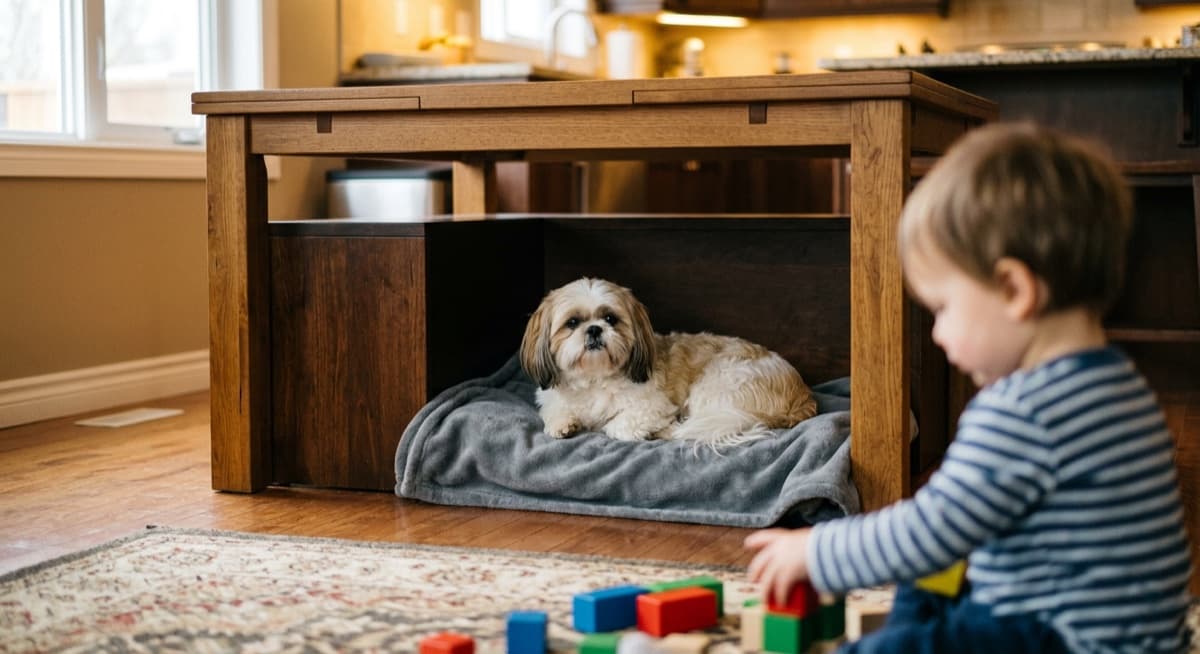
Tiny toy breeds (Chihuahua, Yorkie, Maltese) get knocked over by toddlers regularly. A Shih Tzu's extra body weight makes that risk smaller but not zero. The bigger issue in toddler homes is the opposite direction: the toddler stepping on the dog. Practical patterns:
- Sleeping-dog injury. A toddler walking through the kitchen sees the Shih Tzu napping near the fridge, does not register the obstacle, and steps on a paw or rib. Fix: a raised dog bed in a low-traffic corner, away from family walking paths.
- Door-zone collisions. The Shih Tzu wants to greet everyone at the door; a running toddler hits the dog as they barrel through. Fix: a baby gate at high-traffic entry points and a rule that the dog comes to a designated greeting spot, not the doorway.
- Falling-on-top injury. A toddler falls forward and lands on the dog, especially common during play. Fix: dog gets a designated raised area during active toddler floor-play; come back to the floor at calmer times.
- Furniture jumps. Shih Tzus jumping off couches or beds is a back-injury risk on its own (IVDD is a known Shih Tzu condition). Add a toddler who launches the dog mid-jump and the risk climbs. Fix: pet stairs or ramps on the couch, no jumping from height, and toddlers are not allowed to lift the dog off furniture.
- Stair zone is dog-only or kid-only at a time. Two-way traffic on a staircase with a small dog and a small child is a fall waiting to happen.
When a Shih Tzu Is NOT a Good Fit
Honest list. If any of these describe the household right now, wait, or consider a different breed entirely:
1. Multiple kids under 4 with no household supervision capacity
A house with two or three toddlers, both parents working, and limited adult-eyes-on-dog time is genuinely risky. The Shih Tzu's tolerance ceiling gets hit fast and warnings get missed. Wait two or three years; the dog will still be there.
2. Households unwilling to commit to daily face and eye care
Shih Tzus need daily face wiping (tear staining, food in the beard) and frequent eye checks. Skipping that grooming load creates infections and resentment fast. If nobody in the family will own this task, look at a smoother-coated breed.
3. Active outdoor families wanting a hiking partner
Shih Tzus are not built for long Calgary hikes, Bow River trail runs, or weekend backcountry days. The brachycephalic structure caps endurance and heat tolerance. Active families need a different breed.
4. Households with a history of allowing rough play with the dog
If older kids have grown up wrestling with bigger family dogs, a Shih Tzu cannot absorb that style of play. The cultural reset on play has to happen before the dog comes home; not after.
5. Families ready to give up on training in week 2
Shih Tzus are stubborn about housetraining and can be slow to fully crate-train. Families who lose patience and give up at the first setback often end up surrendering. Commit to 3 to 6 months of patience before adopting.
Choosing the Right Rescue Shih Tzu for the Household
A great Calgary rescue Shih Tzu for a family with kids has three things: a known kid history, a calm baseline temperament, and a clean handling record (no bite history toward children). Ask the rescue these direct questions before the meet-and-greet:
1. Has this dog lived with children before, and what age?
Confirmed kid-history is the gold standard. A dog who lived with school-age kids for years before surrender is the safest bet. AARCS and Calgary Humane Society include kid-history in their adoption profiles where known.
2. What is the foster's honest read on temperament?
Foster volunteers see the dog in real home conditions for weeks. Their read on energy, reactivity, tolerance, and noise sensitivity is more useful than a kennel assessment. Ask to speak with the foster before applying.
3. Are there any handling sensitivities?
Common Shih Tzu sensitivities: eye area, ear cleaning (chronic ear infections are common), mouth/dental zone (dental disease is widespread in the breed), feet (nail trims are often resented), and lifting. Knowing the dog's flashpoints lets the family train kids around them.
4. Bite history, no matter how minor?
A documented bite toward a child is a hard no for a family adoption. A documented air-snap or resource guard is a discussion with a Calgary force-free behaviour consultant before adopting. Honest rescues disclose this; transparent disclosure is a signal you are working with a good rescue.
5. Health check status before adoption
Shih Tzus with chronic pain (dental, IVDD, ear infections, hip dysplasia) are more likely to snap if a child touches the painful area. A pre-adoption dental cleaning and a vet check at adoption clarifies whether the dog is in a comfortable baseline before joining a busy household.
Foster-to-adopt programmes (offered by AARCS and many Alberta rescues) are the highest-confidence path. The dog spends 2 to 4 weeks in your home before the adoption finalizes. If the fit is wrong, the dog returns to the rescue without a failed adoption on its record.
Citations and Further Reading
- American Kennel Club, Shih Tzu breed standard, temperament, and care guidance (akc.org/dog-breeds/shih-tzu).
- American Shih Tzu Club, Health, grooming, and brachycephalic care articles (americanshihtzuclub.org).
- American Veterinary Medical Association, Dog bite prevention and child-and-dog supervision guidance (avma.org/resources-tools/pet-owners/petcare/dog-bite-prevention).
- American Academy of Pediatrics, HealthyChildren.org “Pet Safety for Children” (healthychildren.org).
- American College of Veterinary Surgeons, Brachycephalic Obstructive Airway Syndrome (BOAS) overview (acvs.org/small-animal/brachycephalic-syndrome).
- Family Paws Parent Education, Free supervision protocols for families with dogs and young children (familypaws.com).
- Pet Professional Guild, Directory of certified force-free trainers and behaviour consultants in Calgary and across Canada (petprofessionalguild.com).
Frequently Asked Questions
What age should kids be before adopting a Shih Tzu?
Most Calgary rescues recommend age 5 and up as the sweet-spot starting age. Kids 5 plus can learn the dog-respect rules, follow them with reminders, and form a real bond. Households with kids 8 plus are the easiest fit. Younger kids can absolutely live with a Shih Tzu, but the household needs strict adult supervision every interaction and a baby-gated dog zone.
Do Shih Tzus need supervision around children?
Yes. Active supervision under age 8, passive supervision ages 8 to 12. The American Veterinary Medical Association is clear that no dog of any breed should be left unsupervised with young children. Shih Tzus tolerate handling well but tolerance has a ceiling, and the warning signs are easy to miss without adult eyes on the interaction.
Can a toddler hurt a Shih Tzu by stepping on it?
Yes, and it is the most common Shih Tzu injury in households with toddlers. Thin bones in the legs and back can fracture under a toddler's falling weight. Knock-over risk is lower than with toy breeds (the Shih Tzu has more mass), but stepping-on risk is real. Fix: raised dog bed in a low-traffic corner, baby-gated nap zone, and a no-toddler-stair-traffic rule when the dog is moving.
Are there breathing risks with Shih Tzus and kids?
Yes. Shih Tzus are brachycephalic and prone to BOAS. Roughhousing, chest-squeezing hugs, chase games on a 30°C Calgary July afternoon, all of these can trigger laboured breathing or heat stress. Kids learn to pet on the shoulder or chest, not wrap arms around the chest, and outdoor play is short and shaded in summer.
How do I teach my kids to respect a Shih Tzu?
Six rules taught before the dog comes home: never wake a sleeping dog, never touch the face or eyes, never pick the dog up alone, no hugging or squeezing, never take food or toys, and read the warning signs (lip lick, head turn, freeze, whale-eye). Run through them at the family dinner table for two weeks before adoption.
How do I choose the right rescue Shih Tzu?
Confirmed kid-history is the gold standard. Ask the rescue: has this dog lived with children before, what age, and what is the foster's honest read on temperament. Ask about handling sensitivities (eyes, ears, mouth, lifting) and any bite history. Foster-to-adopt programmes through AARCS and other Alberta rescues are the highest-confidence path.
Are Shih Tzus good in multi-child households?
They can be excellent with two or three kids age 6 plus who follow the rules and can take turns calmly. The risk in a multi-child home is cumulative handling load. Build in non-negotiable rest hours, a kid-free dog zone, and a rotation so no one child monopolizes the dog. Multiple toddlers under 4 is tougher and worth waiting on.
What if my Shih Tzu snaps at my child?
Take it seriously. Separate the dog and the child calmly, no punishment for the dog. Identify the trigger. Book a vet visit (Shih Tzus with eye, ear, dental, or back pain often snap when the painful area is touched). Call a Calgary force-free certified behaviour consultant. Adjust household rules so the trigger does not repeat. Most dog-child incidents are predictable in hindsight; the fix is environment and rules, not surrendering the dog.
More Shih Tzu and family guides
Shih Tzu Adoption Calgary →
Where to adopt, real adoption costs vs breeder prices, Bichon Shih mix info, and the free-puppy scam warning.
Shih Tzu Health Issues →
BOAS, eye proptosis, dental disease, IVDD, renal dysplasia, and Calgary surgery costs to plan for.
Adoptable Shih Tzus in Calgary →
Live listings of Shih Tzus and Shih Tzu mixes from Calgary and Alberta rescues.
Adopting a Dog with Kids →
General family-dog adoption guide covering age guidelines, supervision, and the household rulebook that works.
New dog? Start with these care guides
Everything a new adopter needs to set up a safe, happy home.