The short answer
Whippets are uncommon in Calgary rescues but worth waiting for. Best places to monitor: Calgary Humane Society, AARCS, BARCS, Pawsitive Match, ARF Alberta, Cochrane Humane, and Heaven Can Wait. The Northwest Canadian Greyhound League occasionally places Whippets through its sighthound network. Adoption fees for an adult dog commonly run $400 to $700; CKC breeder Whippets cost $1,500 to $3,500 by comparison. Three hard rules every Calgary Whippet owner accepts on day one: an insulated winter coat is mandatory below 0°C, the dog is never off-leash anywhere unfenced, and your vet must use a sighthound-specific anesthesia protocol.
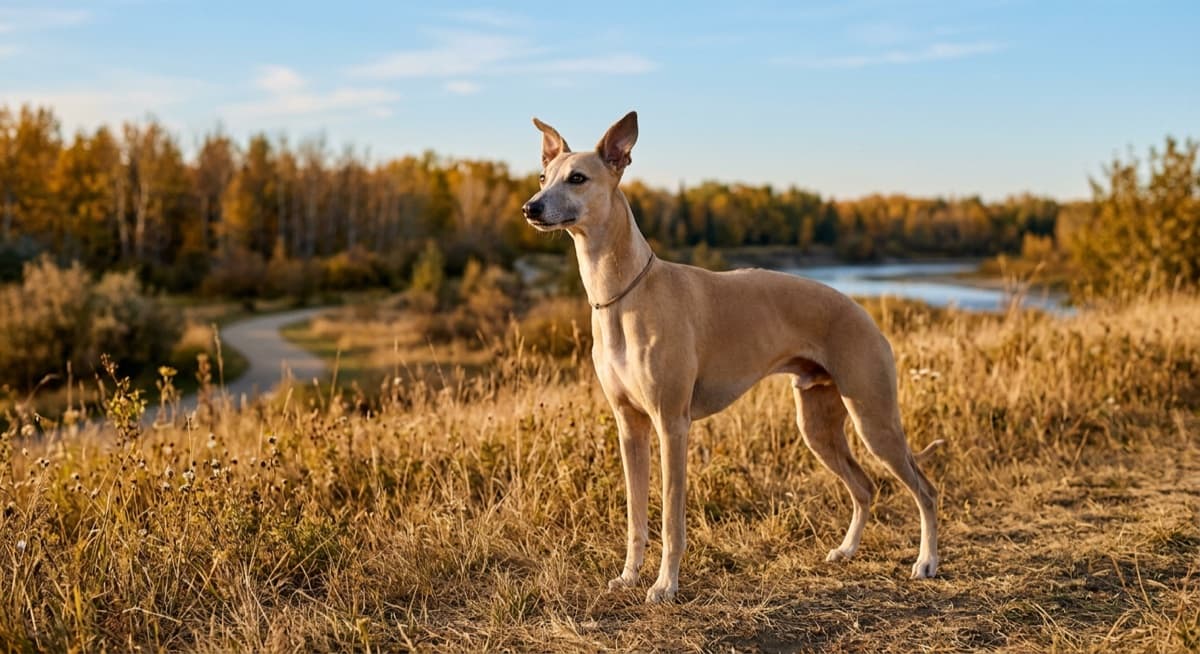
Whippets sit in a quiet sweet spot of the sighthound family: too small to be mistaken for a Greyhound and too big to be confused with an Italian Greyhound. The breed reads as a 30-pound couch companion that sprints like a missile when a rabbit cuts across the yard. That mix of calm indoor behaviour and explosive outdoor speed makes Whippets one of the best-suited apartment dogs in Calgary, and one of the most misunderstood. This guide covers where Whippets actually appear in Calgary rescues, what they cost, the three non-negotiable care rules (winter coat, never off-leash, anesthesia protocol), and how to tell a Whippet apart from its sighthound cousins.
Where to adopt a Whippet in Calgary
Whippets are not a common sight in Calgary rescues. Most local Whippets come from owners who underestimated the breed's prey drive or the cost of sighthound-aware vet care, plus the occasional racing-line surrender from outside Alberta. Listings tend to clear quickly because the sighthound adopter community is small but loyal.
Rescues to monitor across the Calgary region:
- Calgary Humane Society: the largest Calgary shelter; the most reliable place to check first.
- AARCS: foster-based; structured temperament evaluations are useful for sighthounds.
- BARCS Rescue: Calgary foster-based; transports medium dogs and occasional sighthounds.
- Pawsitive Match: Calgary foster-based; small to medium dogs frequently.
- ARF Alberta: Calgary foster-based; medium and lean-built dogs regularly.
- Cochrane Humane Society: Cochrane-based, serves the broader Calgary region.
- Heaven Can Wait: Calgary rescue with a small dog focus at times.
- The Northwest Canadian Greyhound League: the canonical Alberta breed-specific sighthound rescue. NCGL focuses on retired racing Greyhounds but occasionally facilitates Whippet placements through its volunteer network.
Browse currently available sighthounds, including Whippets when they appear, on the LocalPetFinder Whippet breed page. Listings update regularly, and setting up notifications is the most reliable way to apply before a Whippet is gone.
What does a Whippet cost in Calgary?
Calgary adoption fees vary by rescue and inclusions, but the realistic ranges are:
| Source | Fee range | Typically includes |
|---|---|---|
| Calgary Humane Society | $405 adult (1 to 6 years), $270 senior | Spay or neuter, vaccinations, microchip, vet exam |
| AARCS | $425 adult, $150 senior | Spay or neuter, vaccinations, microchip, foster history |
| BARCS / Pawsitive Match | BARCS $650 / Pawsitive Match $475 (adult) | Spay or neuter, vaccinations, microchip |
| Sighthound specialty rescue | $400 to $700 | Transport, foster-based temperament evaluation, dental |
| CKC breeder Whippet | $1,500 to $3,500 | Health testing, contract, breeder support |
Beyond the adoption fee, plan for first-year costs of roughly $1,500 to $3,000 across vet visits, training, food, a quality winter coat, and pet insurance. Calgary requires a city dog licence for every dog three months and older under the Responsible Pet Ownership Bylaw (calgary.ca/bylaws-standards), which is a small annual fee.
For a full lifetime cost breakdown, see our Calgary adoption costs guide.
Whippet vs Greyhound vs Italian Greyhound
Sighthound identification confuses most first-time adopters. The three breeds look similar at a glance but live very different lives. Verify the breed with the rescue before applying, especially if breed-specific care needs (apartment size, fragile-bone risk, anesthesia thresholds) influence your decision. The American Kennel Club Whippet profile, the American Whippet Club, and the Canadian Kennel Club all maintain detailed standards.
| Trait | Whippet | Greyhound | Italian Greyhound |
|---|---|---|---|
| Weight | 25 to 40 lbs | 55 to 80 lbs | 8 to 15 lbs |
| Height | 18 to 22 in | 27 to 30 in | 13 to 15 in |
| Top speed | ~35 mph | ~45 mph | ~25 mph |
| Temperament | Calm + playful | Calm + couch potato | Velcro + anxious |
| Typical lifespan | 12 to 15 years | 10 to 14 years | 14 to 16 years |
| Calgary rescue availability | Uncommon | Uncommon | Rare |
All three breeds share the same sighthound essentials: thin single coats, low body fat, prey drive that rules out unfenced off-leash time, and anesthesia sensitivity. For a deeper Greyhound breakdown, see our Greyhound adoption Calgary guide.
Why Whippets end up in Calgary rescues
Whippets are not a high-surrender breed nationally, which is part of why availability in Calgary is thin. When they do appear in local rescues, the reasons cluster into a handful of predictable themes.
- Cost shock from sighthound-specific vet care. Owners who did not budget for anesthesia-aware procedures, dental cleanings, or specialty referrals can struggle when the first big vet bill arrives. A Calgary specialty centre that does breed-specific anesthesia protocols is worth keeping on file.
- Prey drive incidents. A Whippet that bolts after a squirrel and runs into traffic, fights with a small dog at a dog park, or pulls free of a flat collar can shake an owner's confidence. The risk is real and the response (long lines, fenced spaces, harnesses) is straightforward once an owner accepts the never-off-leash rule.
- Racing-line surrenders. A small number of Whippets arrive in Calgary from amateur lure-coursing or racing programs through cross-provincial transport. These dogs need home-life acclimation similar to retired racing Greyhounds.
- Allergy and thin-coat skin issues. Whippets show skin problems more visibly than thick-coated breeds. Owners unprepared for routine vet visits sometimes surrender once the management routine feels overwhelming.
None of these are deal-breakers for prepared adopters. Most are solvable with budgeting, harness gear, and a sighthound-aware Calgary vet on speed dial.
The three rules every Calgary Whippet owner accepts
Three things separate happy Whippet households from regretful ones. None are optional in Calgary.
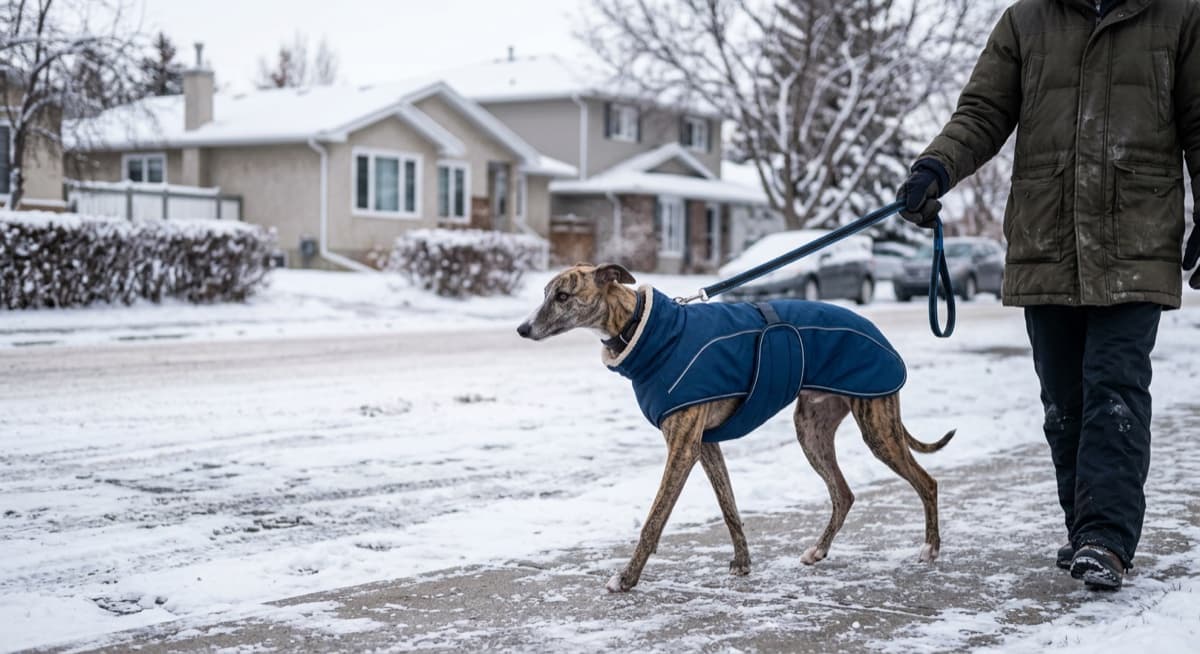
- Winter coat mandatory below 0°C. A Whippet has a single thin coat and very low body fat. Once the temperature drops below freezing, an insulated coat is the only way to safely walk the dog. Routine winter cold below -20°C calls for added leg coverage or a fleece base layer. Booties protect paw pads from salt and ice on Beltline, Bridgeland, and Inglewood sidewalks. Many owners use indoor fleece pajamas during the coldest months. Skipping the coat means restricting your Whippet to brief potty-only outings through most of winter.
- Never off-leash anywhere unfenced. Whippets sprint near 35 mph and can be hundreds of metres away in seconds once a sight target locks in. Calgary off-leash parks like Nose Hill, Bowmont, Edworthy, Tom Campbell's Hill, and Sandy Beach are not fully fenced, so they are not safe for a Whippet without a 30 to 50 foot long-line. The same recall reality applies that we cover in our Greyhound off-leash recall guide, which Whippet owners should read alongside this article.
- Anesthesia sensitivity goes in your vet file. Sighthounds metabolize certain anesthetic drugs differently because they carry so little body fat. Thiopental, acepromazine, and some barbiturates are commonly flagged. Before any procedure, tell your Calgary vet that your dog is a sighthound and ask whether the clinic uses a sighthound-specific anesthesia protocol. If they have not, ask for a referral to a Calgary specialty centre that does. Our Greyhound health and vet guide covers the same protocols Whippets need.
What to expect from a rescued Whippet
The Whippet was developed in nineteenth-century England as a working-class sighthound for hare coursing and ratting. Modern Whippets keep the same essential temperament: fast outside, sleepy inside, and intensely bonded to a small family group.
- Calm indoors, sprint outdoors. Whippets are the “45 mph couch potato” framing scaled down. Expect a dog that sleeps most of the day and explodes into 30-second sprints when given fenced space. Indoor energy is low.
- Velcro bonding. Whippets follow their humans from room to room and prefer to sleep touching someone. A Whippet that is left alone for nine-hour workdays without enrichment can develop separation anxiety. Daycare, a dog walker, or a second sighthound housemate often helps.
- Prey drive. Cats, small dogs, rabbits, and joggers are all potential triggers. Some Whippets live happily with house cats they were raised alongside; others cannot. Ask the rescue what the foster home has observed and assume the trigger is real until proven otherwise.
- Thin skin tears. Whippets bruise and tear skin more easily than thick-coated breeds. Avoid rough off-leash play with much larger dogs, scree-strewn hikes in Kananaskis without paw protection, and tight-collar walking gear. A Y-front harness is the Calgary sighthound default.
- Calgary winters. Without a coat, a Whippet refuses to walk below freezing and is right to. With proper gear (coat, base layer, booties), Whippets can enjoy short winter walks even on -20°C days. Watch ears and paws for frostbite during deep cold snaps.
- Apartment friendliness. Whippets are quiet, do not bark much, and rarely need stairs the way larger breeds do. Beltline, Bridgeland, and Inglewood apartments work well for committed owners. Verify your building permits dogs before applying to adopt.
Browse Whippets in Calgary
See current Whippets and sighthound mixes across Calgary rescues in one place. Listings update regularly, so set up notifications and apply quickly when one appears.
See Calgary Whippets available now →Frequently Asked Questions
Where can I adopt a Whippet in Calgary?↓
How much does a Whippet cost in Calgary?↓
What's the difference between a Whippet, Greyhound, and Italian Greyhound?↓
Can I let my Whippet off-leash at a Calgary park?↓
How do Whippets handle Calgary winter?↓
Are Whippets good with kids and other pets?↓
Why do Whippets need anesthesia precautions?↓
How long do Whippets live?↓
Continue reading
Greyhound Adoption Calgary
Where to adopt Greyhounds in Calgary, why puppies are rare, off-leash truth, anesthesia sensitivity, and how Italian Greyhounds differ.
Sighthound off-leash recall
The reasoning, the gear, the long-line workflow, and Calgary fenced spaces. Whippets share the never-off-leash rule with Greyhounds.
Sighthound health and vet guide
Anesthesia protocols, bloodwork values, dental, skin tears, and Calgary-specific vet planning for thin-coated sighthounds.
Browse Calgary Whippets
Currently available Whippets and sighthound mixes across Calgary rescues, refreshed regularly.
New dog? Start with these care guides
Everything a new adopter needs to set up a safe, happy home.