Get notified when a Samoyed is listed
We will email you the moment a Samoyed becomes available in Alberta, from a rescue or an owner rehoming.
Adopting a Samoyed in Alberta
Samoyeds are uncommon in Alberta rescue, and an adopter set on the breed needs patience. Calgary Humane Society, Edmonton Humane Society, AARCS, SCARS, and the smaller rescues we work with see Samoyeds and Samoyed crosses only occasionally. Most Samoyeds are bought from breeders, which is why few reach rescue.
This page pulls every adoptable Samoyed from the launched Alberta shelters into one searchable place, refreshed regularly. Because the breed is rare in rescue, searching province-wide is essential, and so is patience. A Samoyed in Edmonton or Red Deer is worth the drive, and most rescues will arrange a meet at the foster home regardless of where you live.
Why Samoyeds cycle through Alberta rescue
Samoyeds are mostly bought rather than adopted, so few enter the rescue system. The ones that do are usually owner surrenders, sometimes when the household discovered the breed is far more dog than the smiling, fluffy look suggested, retired breeding dogs, or crosses. The recurring story is the same as the Husky: a buyer picked a beautiful northern breed without planning for the coat, the energy, or the noise. A rescue Samoyed is rarely a damaged dog. It is usually a sound dog whose first home underestimated the breed.
The coat and the working dog under the smile
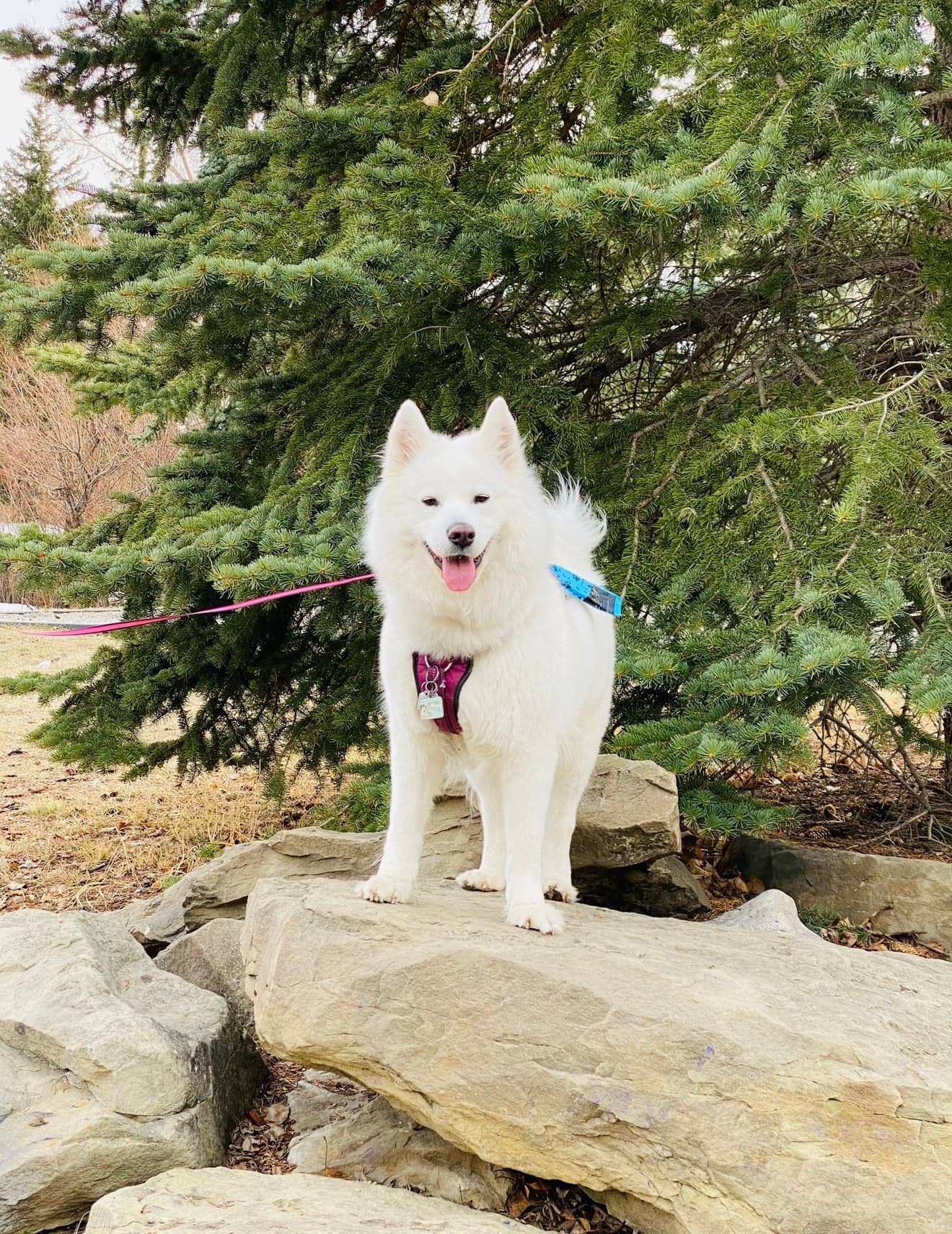
The Samoyed is famous for two things: the permanent smile and the cloud of white fur. Both are real, and the fur in particular is the part adopters most underestimate. A Samoyed has a thick, double-layered coat built for the Siberian Arctic, and it sheds enormously. Not occasionally, and not only seasonally. A Samoyed home means white fur on the floor, the furniture, and your clothes year-round, with two heavy coat blows on top of that. The coat needs brushing several times a week, and it is a genuine, ongoing commitment.
The smile hides the second surprise: the Samoyed is a working dog, not a decorative one. The breed was bred by the Samoyede people to herd reindeer, haul sleds, and live closely with its family, and all of that is still in there. A Samoyed is energetic and needs real daily exercise. It is also intensely social and people-oriented, far more so than a Husky, and it does not cope well with being left alone, often becoming vocal and destructive when it is. Many Samoyeds are talkative in general. An adopter who plans for the coat, the exercise, the company, and the noise gets a joyful, affectionate, genuinely loving companion. An adopter expecting a low-effort fluffy dog does not.
Health concerns worth asking the foster about
Samoyeds have a few breed-specific health concerns worth asking about. The most notable is Samoyed hereditary glomerulopathy, an inherited kidney disease. The breed also sees hip dysplasia, progressive retinal atrophy and other eye conditions, diabetes, and hypothyroidism. A foster who has lived with the dog for weeks knows how it moves, how it sees, and how it is doing generally. Ask directly, and plan for routine veterinary care.
What Samoyeds are actually like to live with
The Samoyed is a joyful, affectionate, genuinely loving dog, and for an active, present household it is a wonderful companion. The harder parts are why some end up in rescue:
- A huge shedding coat. The thick white double coat sheds year-round and needs brushing several times a week.
- A working dog, not a decoration. Samoyeds are energetic and need real daily exercise.
- Intensely social. The breed bonds hard and does not cope well alone all day. Company matters.
- Vocal. Many Samoyeds are talkative, and an under-exercised, lonely one becomes louder.
- Built for cold. The Samoyed loves Alberta winter and snow. Summer heat needs careful management.
- Friendly with almost everyone. Samoyeds are typically poor guard dogs and good with people and other dogs.
- Bright and a little stubborn. The breed is intelligent and does best with patient, positive training.
What the fee usually covers
Samoyed adoption fees at Alberta rescues sit in the same range as other medium-to-large rescue dogs in the province, and they are a small fraction of a breeder price. The fee covers the medical work the rescue already paid for: spay or neuter, core vaccinations, microchip, deworming, and a vet check before placement. Confirm the exact number on the dog's own listing, because it varies with age and any special medical care.
How to actually search
Use the filters above to narrow by energy level (Samoyeds are high), size (medium to large), age, compatibility, and shelter. Samoyeds come through rarely, so check often and search the whole province. Stay open to Samoyed crosses, which appear more often. When a match shows up, apply the same day, and make sure you are ready for the coat and the company the breed needs.
Prefer a city-specific view? Browse our deeper Calgary Samoyed cluster, or the dog listings in Edmonton, Red Deer, and Grande Prairie. The broader hub is Dog Adoption Alberta.
The rescues that most often list Samoyeds across the province are SCARS, AARCS, Calgary Humane Society, and Edmonton Humane Society. For breed-specific background, the Canadian Kennel Club is a useful reference.
Samoyed Adoption FAQ — Alberta
Tap a question to expand
How many Samoyeds are available for adoption in Alberta?▼
Where can I find Samoyed adoption near me in Alberta?▼
Do Samoyeds shed a lot?▼
Are Samoyeds calm, low-energy dogs?▼
Are Samoyeds a good fit for Alberta winters?▼
What health problems do Samoyeds have?▼
How much does it cost to adopt a Samoyed in Alberta?▼
Is LocalPetFinder a Samoyed rescue?▼
Are these Samoyeds for sale in Alberta?▼
Where can I buy a Samoyed in Alberta, and should I?▼
Are there free Samoyeds in Alberta, or samoyeds under $500?▼
Are there Samoyed puppies in Alberta, or only adults?▼
Where can I find a Samoyed near me in Alberta?▼
Need to rehome a Samoyed?
If you can no longer keep your Samoyed, you can list them for free on LocalPetFinder. Your dog stays in your home until you find the right family, you screen who applies, and there is no surrender fee. Not sure yet? Our guide to surrendering a dog in Canada walks through every option first.
List your dog for free →Samoyed adoption by Alberta city
Alberta rescues transport between cities and several operate province-wide, so it is worth checking Samoyeds elsewhere in the province before you give up on a match.