The short answer
Feed an Airedale a complete diet from a nutritionist-backed brand, scaled to a high-energy dog, and keep it lean. As the largest terrier, the Airedale needs terrier-style energy feeding with large-breed caution: feed smaller meals from a floor-level slow feeder because the deep chest carries a real bloat risk, and grow puppies slowly on a large-breed formula. Watch for the thyroid trap, where weight gain and a dull coat get blamed on food when the real cause is hypothyroidism, a breed-prone condition the diet cannot fix. Skip grain-free unless your vet advises it.
The largest terrier feeds like two dogs
Most Airedale feeding advice picks one lane: it either treats the dog as a big terrier or as a generic large breed. The Airedale is genuinely both, and the feeding has to account for both.
On the terrier side, this is a high-energy, hard-driving working dog. An active adult burns a lot, so portions scale steeply with how much the dog actually does. On the large-breed side, the Airedale's size brings deeper-chested bloat risk and joint considerations that a Jack Russell never faces. The practical result is terrier-style portioning, generous for a working dog, lean for a couch one, wrapped in large-breed habits around meals and growth.
Feed to body condition, not the chart. A typical adult (40 to 65 pounds) lands somewhere around one and a half to three and a half cups a day split into two meals, but activity drives that number more than weight does. Feel the ribs, look for a waist, and count treats inside the daily total. The most common Airedale feeding mistake is feeding a working-dog amount to a dog that mostly lounges.
Feeding to lower bloat risk
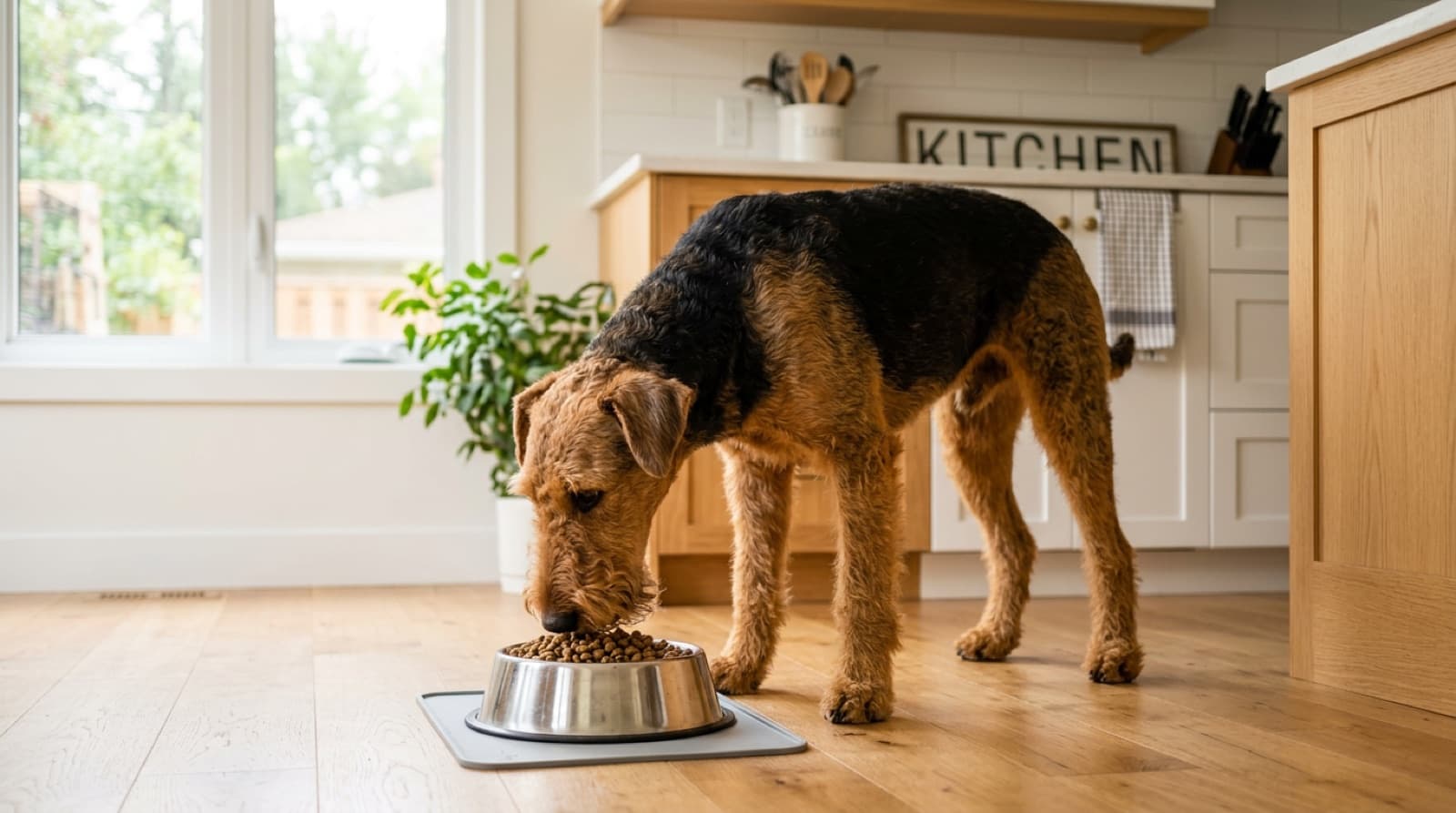
As the biggest terrier and a moderately deep-chested dog, the Airedale has a real bloat (gastric dilatation-volvulus) risk, lower than a Great Dane but not something to ignore. The feeding levers that lower it: feed two or more smaller meals a day instead of one big one, slow a fast eater with a slow-feeder bowl, and avoid hard exercise for about an hour before and after meals.
Skip raised bowls. They are linked to higher bloat risk in larger breeds, not lower, so feed from the floor. The AKC bloat overview is a good primer. A swollen belly, unproductive retching, or sudden distress is a true emergency, so go straight to a vet, and ask whether a preventive stomach-tacking surgery makes sense for your dog.

The thyroid trap: when it is not the food
This is the angle that saves Airedale owners months of pointless food-switching. The breed is predisposed to hypothyroidism, an underactive thyroid, and its signs look exactly like a diet problem: weight gain without eating more, low energy, exercise intolerance, and a dull, thinning coat. The Merck Veterinary Manual describes the picture.
So owners cut portions, switch foods, and add coat supplements, and nothing works, because the problem was never the food. Hypothyroidism is diagnosed with a simple blood panel and treated with an inexpensive daily thyroid medication, after which the weight and coat improve over several weeks. The tell is weight gain on an unchanged diet paired with a coat that looks off. If that is your dog, ask your vet for a thyroid test before you blame the bag. Diet does not cause it and cannot cure it.
Puppy growth, grain-free, and foods to avoid
For a puppy, a large-breed puppy formula is the safest choice. It controls calcium and calories so the puppy grows slowly, which protects the joints. Never add a calcium supplement on top of a complete puppy food, which actively harms a larger-breed puppy, and the AKC's guidance on large-breed foods explains why.
Skip grain-free unless your vet diagnoses a grain allergy; the itch is usually environmental or a protein, and the FDA grain-free investigation is a real reason for caution. The harsh Airedale coat does best on adequate quality protein plus omega-3, not on a boutique formula.
Keep these away from an Airedale completely: chocolate, grapes and raisins, xylitol, onions and garlic, macadamia nuts, alcohol, caffeine, and cooked bones. If your dog eats something toxic, call your vet or a pet poison helpline right away.
Looking to adopt an Airedale Terrier?
Plan for a slow-feeder bowl and plenty of exercise before day one. Browse Airedales and terrier mixes available now from the rescues we track.
See Available Airedales →Where to buy Airedale food
Every brand worth feeding an Airedale is easy to find in store and online:
- Pet specialty chains (Pet Planet, Tail Blazers, Tisol, and similar). Carry Pro Plan, Royal Canin, and large-breed lines.
- Pet Valu and PetSmart. National chains that stock the major large-breed and sensitive-skin formulas.
- Your vet clinic. The place for therapeutic diets and any food needed alongside thyroid treatment.
- Online. The same brands ship to your door, easy to set on a recurring delivery.
A floor-level slow feeder is the single most useful Airedale feeding purchase, since it tackles both fast eating and bloat risk at once. A simple large-dog slow-feeder bowl is inexpensive and ships easily.
Frequently Asked Questions
What is the best food for an Airedale Terrier?
A complete formula from a brand that employs a board-certified veterinary nutritionist and runs feeding trials, like Purina Pro Plan, Royal Canin, or Hill’s Science Diet. The Airedale is the largest terrier, so it sits between terrier and large-breed feeding: an active adult needs the energy of a working terrier, but the skeleton benefits from large-breed care, especially as a puppy. Pick a quality complete food, transition over seven to ten days, and judge it by firm stool, a healthy harsh coat, and a lean body rather than the marketing on the bag.
How much should I feed an Airedale Terrier?
A typical adult Airedale weighs roughly 40 to 65 pounds and eats somewhere around one and a half to three and a half cups of quality food a day split into two meals, but that is a wide range because it scales heavily with activity, and the bag chart over-states for many dogs. A hard-working or very active Airedale needs more; a less active adult needs less, and that is where most owners overfeed. Feed to body condition, not a cup count: you should feel the ribs easily and see a waist. Count treats inside the daily total.
Do Airedale Terriers get bloat, and how do I feed to prevent it?
Airedales are the largest terrier and moderately deep-chested, so the risk of bloat (gastric dilatation-volvulus) is real, though lower than in giant breeds. The feeding habits that lower it are well established: feed two or more smaller meals a day rather than one big one, slow a fast eater with a slow-feeder bowl, and avoid hard exercise for about an hour before and after meals. Skip raised bowls, which are linked to higher bloat risk in larger breeds, not lower. A swollen belly, unproductive retching, or sudden distress is an emergency, so go to a vet immediately.
My Airedale is gaining weight and has a dull coat but is not eating more. Is it the food?
Maybe not. Airedales are a breed predisposed to hypothyroidism, and the classic signs are weight gain without eating more, low energy, and a dull, thinning coat. Owners often spend months changing food to fix what is actually a thyroid problem the diet cannot touch. Hypothyroidism is diagnosed with a simple blood test and treated with a daily thyroid medication, and the coat and weight improve over several weeks once treatment starts. If your Airedale is gaining weight on the same food and the coat looks off, ask your vet for a thyroid panel before you blame the bag.
How do I feed an Airedale puppy for healthy growth?
Because the Airedale is a larger breed, a large-breed puppy formula is the safest choice: it controls calcium and calories so the puppy does not grow too fast, which protects the developing joints. The lever is controlled calcium and calories, not low protein, so do not avoid a quality food because the protein looks high, and never add a calcium supplement on top of a complete puppy food. Keep the puppy lean enough to feel the ribs, keep exercise gentle while it is growing, and confirm the timing of the switch to adult food with your vet.
Should I feed my Airedale grain-free?
Not unless your vet diagnoses a grain allergy, which is rare. Airedales are an itchy breed, but the itch is usually environmental or a protein, not grain, so grain-free rarely helps. The FDA has also been investigating a possible link between grain-free diets built on peas, lentils, and potatoes and a heart condition called dilated cardiomyopathy. A complete diet from a feeding-trial brand is the safer default.
What to Feed a Miniature Schnauzer
Another wiry-coated terrier where weight and coat health drive the feeding.
What to Feed a German Shepherd
The deep-chest bloat and large-breed growth principles, in a working breed.
Breed Feeding Guides
What to feed dozens of breeds, from toy dogs to giants, with the science made practical.
Airedales for Adoption
Live listings of Airedale Terriers and terrier mixes from the rescues we track.