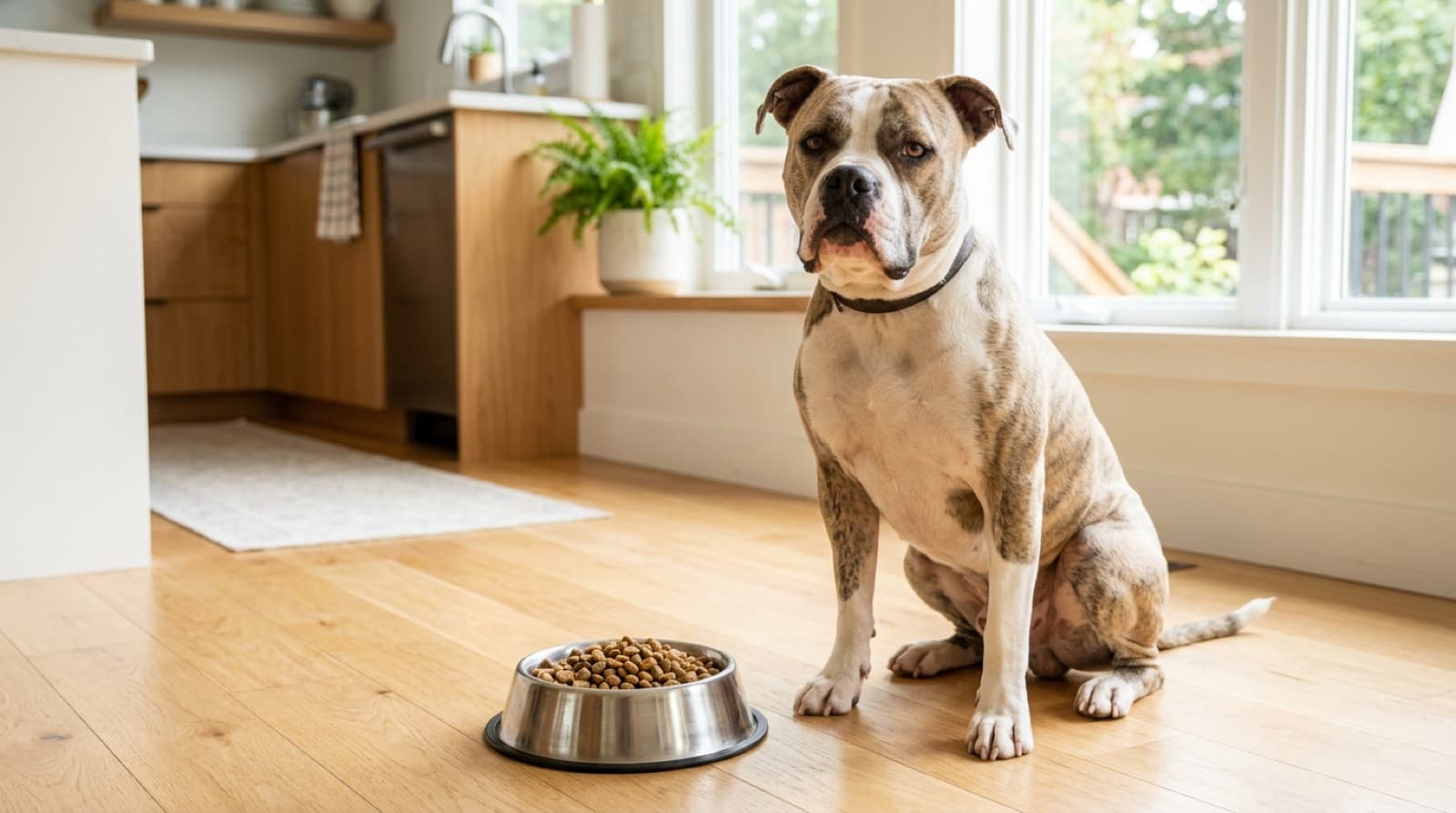
The short answer
Feed an American Bulldog a complete large-breed diet from a nutritionist-backed brand, and keep the dog lean. The breed is allergy-prone, but the itch is usually not the food, and grain-free rarely fixes it, so see a vet before you chase bags. Forget muscle-building powders: lean muscle comes from good food, calories, and exercise, not supplements. Grow a puppy slowly on a large-breed puppy formula with controlled calcium, never a calcium supplement. Feed smaller meals from a floor-level slow feeder, because this big, moderately deep-chested breed has a real bloat risk.
What is the best food for an American Bulldog?
There is no single best bag, and any site that names one is selling something. The standard most vets point to comes from the WSAVA global nutrition guidelines.
Pick a brand that does the science. Ask whether the company employs a full-time, board-certified veterinary nutritionist and runs feeding trials. The safe defaults for a healthy American Bulldog are Purina Pro Plan Large Breed, Royal Canin, and Hill's Science Diet.
Because the breed is allergy-prone, a sensitive-skin-and-stomach or limited-ingredient line is a common starting point. Then watch the dog: firm stool, settled skin, a glossy coat, and a lean, muscular body mean it is working. Many popular bully-circle brands market muscle and sensitivity but do not meet the nutritionist and feeding-trial bar, so treat those as second-tier.
The itchy-skin reality
Itchy skin, paw-licking, recurring ear infections, and hot spots are the single most common reason American Bulldog owners change food, so this deserves a careful answer.
Food allergy is real in the breed, but it is the least common cause of itch, behind environmental allergies and fleas. So a food change often does not fix the problem. When food is the trigger, it is almost always a protein (beef, chicken, dairy, egg), not grain, which is exactly why grain-free so often disappoints. The only way to confirm a food allergy is a vet-run elimination diet: eight to twelve weeks on a single novel or hydrolyzed protein with zero other treats, then a rechallenge. PetMD's overview of dog skin allergies is a good primer.
One thing to clear up: demodex (a skin-mite condition some American Bulldogs get) is an immune and mite issue, not a diet problem. Diet supports the skin barrier (omega-3 fish oil helps), but it does not cause or cure demodex. The honest bottom line is that persistent skin problems need a vet, not another bag.
The muscle myth, and how much to feed
American Bulldog circles are full of high-protein muscle foods and mass-builder supplements. Most of it is marketing. Lean muscle comes from adequate complete protein, enough calories, real exercise, and genetics, in that order. A quality large-breed adult food already supplies what a muscular dog needs. Pouring on extra protein or a powder mostly adds fat and cost, and some of those products are chicken-based, a common allergy trigger.
Feed to body condition, not the chart. A typical adult lands somewhere in the 3 to 6 cup range a day split into two meals, but that scales with size (the breed runs 60 to 120 pounds) and activity. Feel the ribs, look for a waist from above and a tuck from the side, and count treats inside the daily total. A fit American Bulldog looks lean and athletic, not blocky and heavy.
Growing a large-breed puppy
Never add a calcium supplement on top of a complete large-breed puppy food. Excess calcium drives developmental bone and joint disease in big-breed puppies, the opposite of what most owners think they are doing.
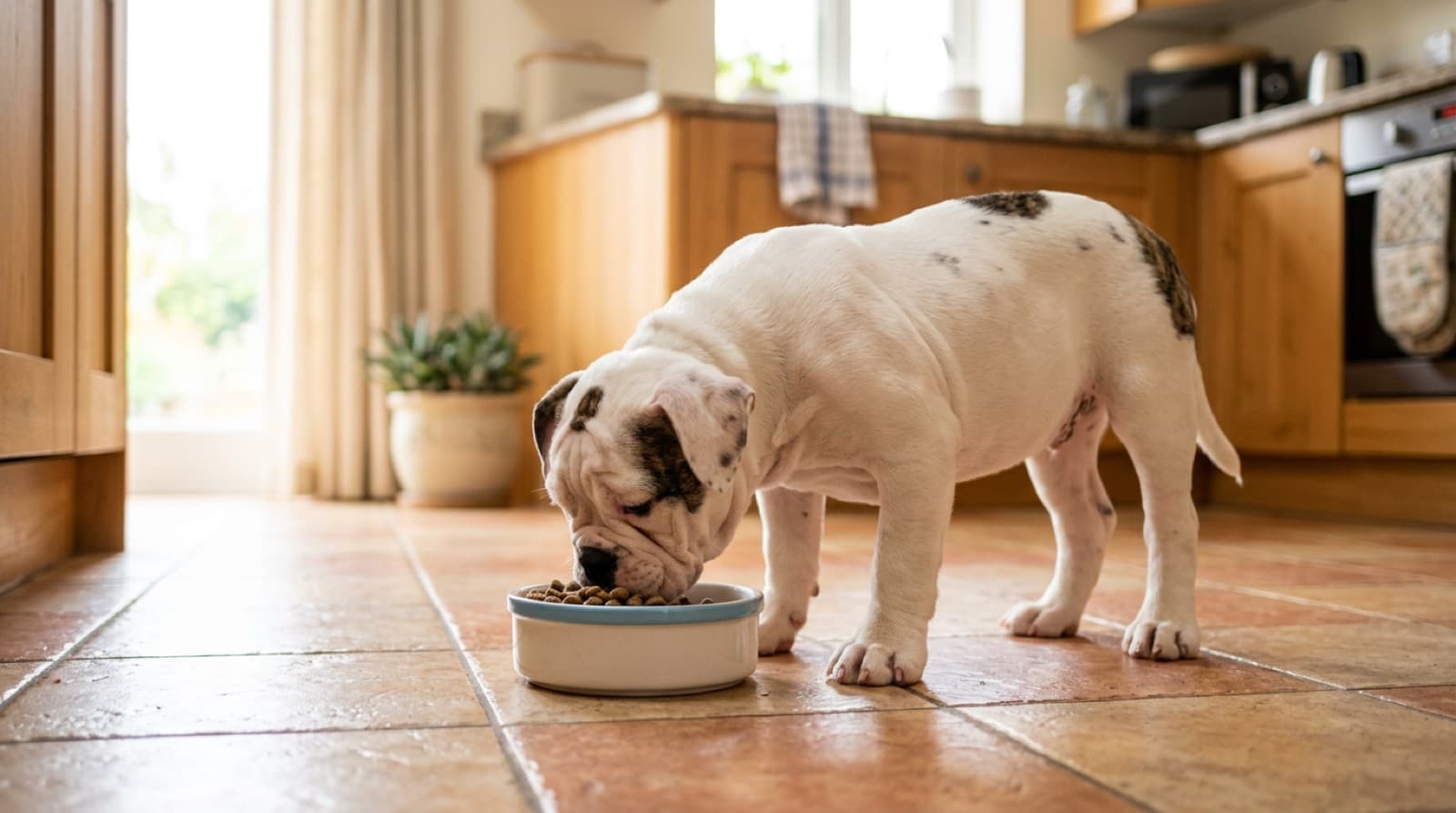
Feed an American Bulldog puppy a large-breed puppy formula and grow it slowly and lean. Large-breed puppy foods control calcium and calories so a big-breed puppy does not grow too fast, which protects the developing hips the breed is genuinely prone to (the American Kennel Club explains why large-breed formulas matter).
The lever is controlled calcium and calories, not low protein. Do not avoid a quality food because the protein number looks high. Keep the puppy lean enough to feel the ribs, keep exercise gentle while it is growing, and confirm the timing of the switch to adult food with your vet.
Feeding to lower bloat risk
American Bulldogs are large and moderately deep-chested, so the risk of bloat (gastric dilatation-volvulus) is real, though lower than in a giant breed like the Great Dane. The feeding habits that lower it: feed two or more smaller meals a day instead of one big one, slow a fast eater with a slow-feeder bowl, and avoid hard exercise for about an hour before and after meals.
Skip raised bowls. They are linked to higher bloat risk in large breeds, not lower, so feed from the floor. The AKC bloat overview is a good primer. A swollen belly, unproductive retching, or sudden distress is a true emergency, so go straight to a vet, and ask whether a preventive stomach-tacking surgery (gastropexy) makes sense for your dog.
Grain-free and foods to avoid
Skip grain-free unless your vet diagnoses a grain allergy; the trigger is almost always a protein, and the FDA grain-free investigation is a real reason for caution in a large breed.
Keep these away from an American Bulldog completely: chocolate, grapes and raisins, xylitol (in gum and some peanut butters), onions and garlic, macadamia nuts, alcohol, caffeine, cooked bones (which splinter), and fatty table scraps (a pancreatitis risk). If your dog eats something toxic, call your vet or a pet poison helpline right away.
Should I feed my American Bulldog a raw diet?
Only with a vet or veterinary nutritionist involved. Raw has a big following in bully communities, often sold as the way to build muscle, but there is no evidence raw builds more muscle than a complete kibble. Raw meat also carries a pathogen risk for the dog and the household, and a homemade raw diet without a professional recipe routinely runs short on calcium and other nutrients, which matters most for a growing large-breed puppy. If you go raw, use a complete commercial product or a vet-formulated recipe rather than guessing.
Looking to adopt an American Bulldog?
Plan for allergy-prone skin and a slow-feeder bowl before day one. Browse American Bulldogs and bulldog mixes available now from the rescues we track.
See Available American Bulldogs →Where to buy American Bulldog food
Every brand worth feeding an American Bulldog is easy to find in store and online:
- Pet specialty chains (Pet Planet, Tail Blazers, Tisol, and similar). Carry Pro Plan, Royal Canin, and large-breed and sensitive-skin lines.
- Pet Valu and PetSmart. National chains that stock the major large-breed and sensitive-stomach formulas.
- Your vet clinic. The place for prescription hydrolyzed diets used in allergy work-ups.
- Online. The same brands ship to your door, easy to set on a recurring delivery.
Once you find a food your American Bulldog's skin and stomach are happy on, stick with it. The major large-breed and sensitive-skin formulas are all available online.
Frequently Asked Questions
What is the best food for an American Bulldog?
A complete large-breed formula from a brand that employs a board-certified veterinary nutritionist and runs feeding trials, such as Purina Pro Plan, Royal Canin, or Hill’s Science Diet. American Bulldogs are allergy-prone, so a sensitive-skin-and-stomach or limited-ingredient line is a common starting point, but the brand matters less than the food agreeing with your dog. Start with whatever the breeder or rescue was feeding, transition over seven to ten days, and judge it by firm stool, settled skin, and a lean, muscular body rather than by the marketing on the bag.
How much should I feed an American Bulldog?
A typical adult American Bulldog eats somewhere in the range of 3 to 6 cups of quality food a day split into two meals, but that is a wide range because it scales with the dog’s size (they run 60 to 120 pounds), age, and activity, and the bag chart over-states for many dogs. Feed to body condition rather than a fixed cup count: you should feel the ribs easily, see a waist from above, and see a tuck from the side. Count treats inside the daily total. Working and very active dogs need more; couch dogs need less.
Why is my American Bulldog so itchy, and is it the food?
It might be, but food allergy is actually the least common cause of itch, behind environmental allergies and fleas, so a food change often does not fix it. When food is the trigger, it is almost always a protein like beef, chicken, or dairy, not grain, which is why grain-free rarely helps. Confirming a food allergy means a vet-run elimination diet: eight to twelve weeks on a single novel or hydrolyzed protein with no other treats, then a rechallenge. Persistent itching, recurring ear infections, or paw-licking warrant a vet visit to sort food allergy from environmental allergy, mites, or skin infection, not endless bag-swapping.
What is the best food to build muscle on an American Bulldog?
There is no muscle-building bag, and the supplements marketed for it are mostly overpriced filler. Lean muscle comes from adequate complete protein, enough calories, real exercise, and the dog’s genetics, in that order. A quality large-breed adult food from a nutritionist-backed brand already provides what a muscular dog needs. Pouring on extra protein or a mass-builder powder mostly adds fat and cost, and some of those products are chicken-based, which is a common allergy trigger for the breed. Feed a complete diet, keep the dog lean, and let exercise build the muscle.
How do I feed an American Bulldog puppy for healthy growth?
Use a large-breed puppy formula and grow the puppy slowly and lean. Large-breed puppy foods control calcium and calories so a big-breed puppy does not grow too fast, which protects the developing hips and joints the breed is prone to. The lever is controlled calcium and calories, not low protein, so do not avoid a quality food because the protein looks high, and never add a calcium supplement on top of a complete puppy food, which actively harms a large-breed puppy. Keep the puppy lean enough to feel the ribs, and confirm the timing of the switch to adult food with your vet.
Do American Bulldogs get bloat, and how do I feed to prevent it?
American Bulldogs are large and moderately deep-chested, so the risk of bloat (gastric dilatation-volvulus) is real but lower than in giant breeds like the Great Dane. Feed two or more smaller meals a day instead of one big one, slow a fast eater with a slow-feeder bowl, and avoid hard exercise for about an hour before and after meals. Skip raised bowls, since research links them to higher bloat risk in large breeds, not lower. A swollen belly, unproductive retching, or sudden distress is an emergency, so go to a vet immediately, and ask whether a preventive stomach-tacking surgery is worth it for your dog.
Should I feed my American Bulldog grain-free?
Not unless your vet diagnoses a grain allergy, which is rare. Most American Bulldog food allergies are to a protein, not to grain, so grain-free usually does not fix the itch. On top of that, the FDA has been investigating a possible link between grain-free diets built on peas, lentils, and potatoes and a heart condition called dilated cardiomyopathy, and large breeds may be more vulnerable. A complete diet from a feeding-trial brand is the safer default.
Adopting an American Bulldog
Rescue sources, real costs, and what to expect from the breed in Calgary.
What to Feed a Mastiff
Another big, deep-chested breed where lean growth and bloat are the priorities.
Breed Feeding Guides
What to feed dozens of breeds, from toy dogs to giants, with the science made practical.
American Bulldogs for Adoption
Live listings of American Bulldogs and bulldog mixes from the rescues we track.