The short answer
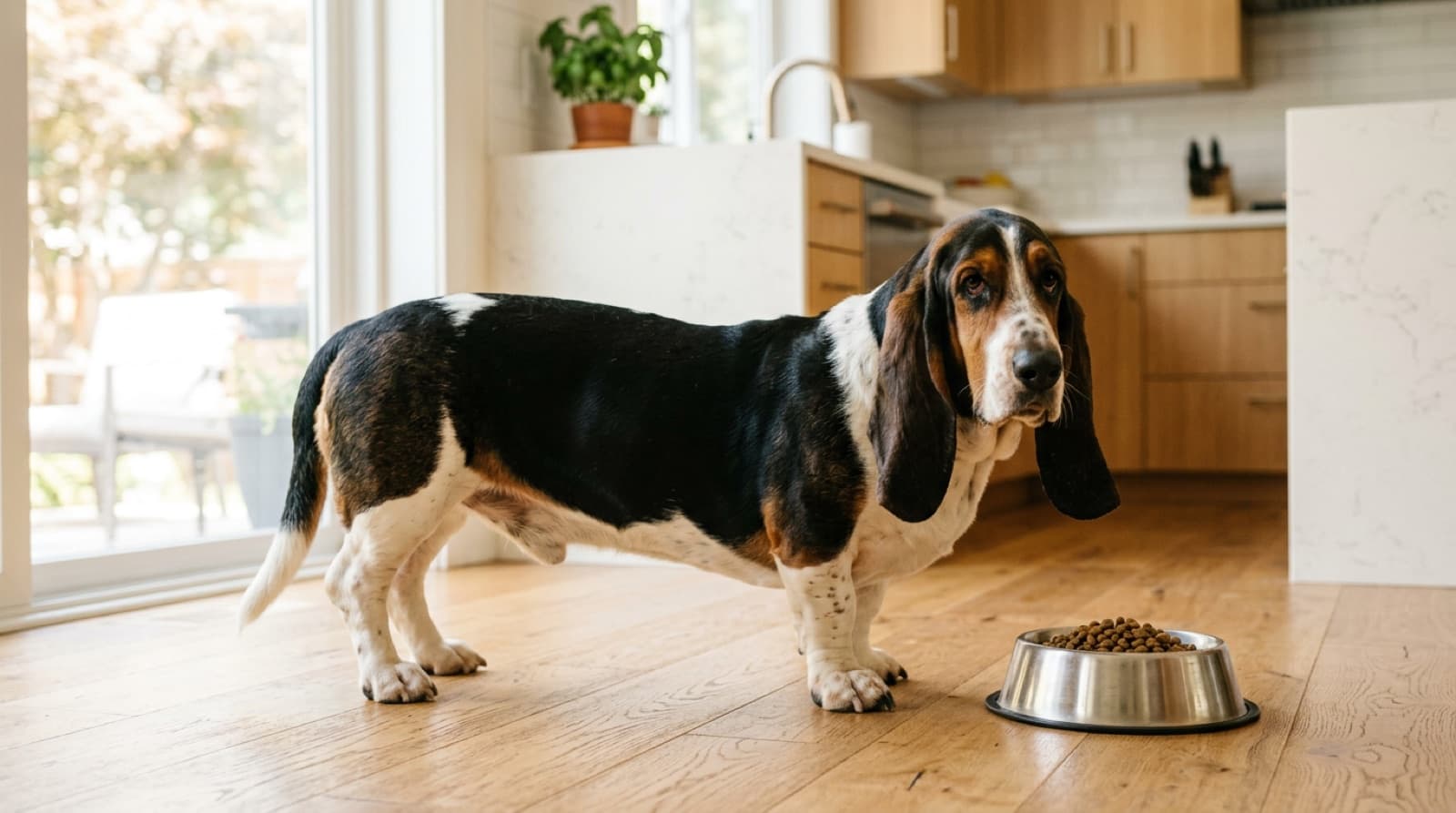
Feed a Basset Hound a complete food from a nutritionist-backed brand, measure every meal, and keep the dog lean. Bassets are food-obsessed scent hounds who will become obese if fed all they want, and the begging is breed-normal, not hunger. It matters because excess weight loads the breed's long back and short legs. Feed two or more smaller meals a day and use a slow feeder, both because this deep-chested breed is at real risk of bloat and because raised bowls (often recommended for the breed) actually raise that risk. Ear infections are mostly anatomy, not food.
What is the best food for a Basset Hound?
There is no single best bag, and any site that names one is selling something. The standard most vets point to comes from the WSAVA global nutrition guidelines.
Pick a brand that does the science. Ask whether the company employs a full-time, board-certified veterinary nutritionist and runs feeding trials. The safe defaults are Purina Pro Plan, Royal Canin, and Hill's Science Diet.
The repeated wisdom in Basset circles is that the best food is the one your individual dog does best on. Because the breed gains weight so easily, favour a moderate-calorie formula. Then judge it by the dog: firm stool, a healthy coat, and a lean body condition mean it is working.
The chow-hound problem, and the long back
Feed a Basset everything it asks for and it will become obese, not just a little chubby. Excess weight on a long-backed, short-legged frame is the breed's single biggest preventable health problem.
Bassets were bred to follow a scent for hours, and that persistence shows up at home as relentless food-seeking: sniffing, counter-surfing, bin-raiding, and a begging stare that can wear down the firmest owner. Here is the key reframe: that food obsession is a bred-in trait, not a hunger signal. The begging may never completely stop, and that is normal.
Why it matters is the shape of the dog. The Basset is a dwarf breed with a long spine and short legs, so excess weight loads the back and joints harder than it would on a normally built dog, raising the risk of back and joint trouble. Keeping a Basset lean is the most useful thing diet does for the breed. A practical feeding method many owners use: put the measured bowl down for about ten minutes, then pick it up, and weigh or measure portions rather than eyeballing. The American Kennel Club breed guide flags the breed's tendency to overeat.
Bloat, and the raised-bowl myth
Despite being low to the ground, Bassets have a deep, wide chest, which puts them at real risk of bloat (gastric dilatation-volvulus), a true emergency. A swollen belly, unproductive retching, or sudden distress means go to an emergency vet immediately.
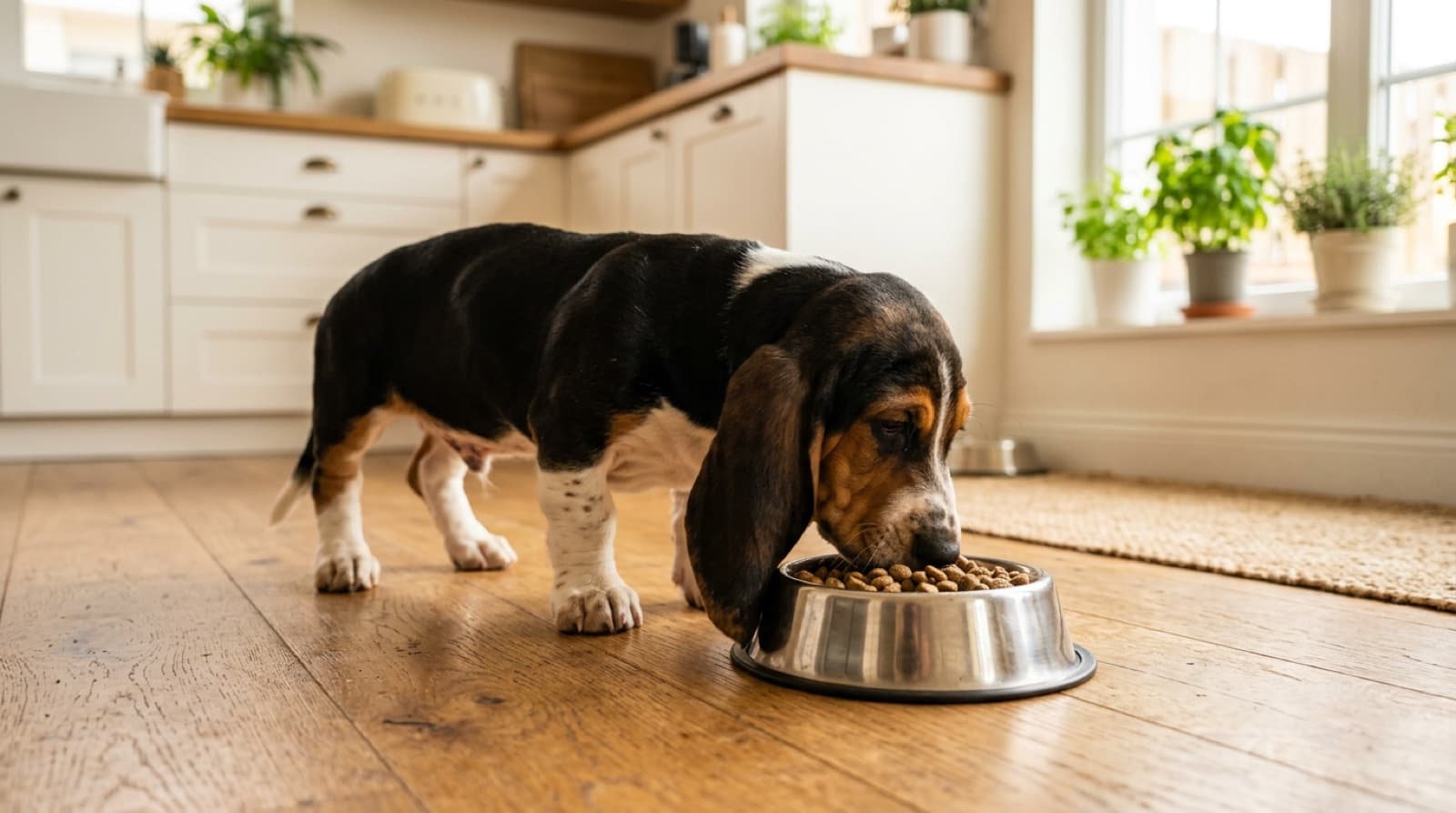
Most people picture bloat as a giant-breed problem, so the Basset's risk surprises owners. But it is the deep, wide chest that matters, not the height. The feeding habits that lower the risk: feed two or more smaller meals a day instead of one big one, slow a fast eater with a slow-feeder bowl, and avoid hard exercise for about an hour around meals.
One common piece of advice for the breed is wrong: raised or elevated bowls, sometimes recommended so a low dog does not have to stoop, are actually linked to higher bloat risk in at-risk breeds, so feed from the floor. The Cornell Riney Canine Health Center covers the risk factors. Ask your vet whether a preventive stomach-tacking surgery makes sense.
Ears, grain-free, and foods to avoid
Ears. Bassets get chronic ear infections largely because their long, heavy, low-hanging ears trap moisture, not because of food. Diet can be one factor in a genuinely allergic dog, but a food swap will not cure an active infection. Treat the ears with a vet and a regular cleaning routine, and investigate diet separately with a vet-run elimination diet if the dog is also itchy.
Grain-free and foods to avoid. Skip grain-free unless your vet diagnoses a grain allergy, since the allergen is almost always a protein and the FDA grain-free investigation is reason for caution. Keep these away from a Basset completely: chocolate, grapes and raisins, xylitol, onions and garlic, macadamia nuts, alcohol, caffeine, and cooked bones. A bin-raiding Basset needs management more than willpower, so lid the trash and keep food pushed back. If your Basset eats something toxic, call your vet or a pet poison helpline right away.
Should I feed my Basset Hound a raw diet?
Only with a vet or veterinary nutritionist involved. Some Bassets do well on a properly built raw diet, but raw meat carries a pathogen risk for the dog and the household, and a homemade raw diet without a professional recipe routinely runs short on key nutrients, which is especially important for a heavy-boned growing puppy. For a weight-prone breed, the bigger practical issue is portion control, which a complete commercial diet makes easier to track. If you go raw, use a complete commercial product or a vet-formulated recipe.
Looking to adopt a Basset Hound?
Sort the measuring cup and a slow-feeder bowl before day one. Browse Bassets and Basset mixes available now from the rescues we track.
See Available Basset Hounds →Where to buy Basset Hound food
Every brand worth feeding a Basset is easy to find in store and online:
- Pet specialty chains (Pet Planet, Tail Blazers, Tisol, and similar). Carry Pro Plan, Royal Canin, and weight-management lines.
- Pet Valu and PetSmart. National chains that stock the major formulas, including reduced-calorie and large-breed puppy options.
- Your vet clinic. The place for prescription weight-loss diets if your Basset needs to drop pounds.
- Online. The same brands ship to your door, easy to set on a recurring delivery.
A measuring cup and a slow-feeder bowl matter as much as the brand for this breed. The major adult formulas are all available online.
Frequently Asked Questions
What is the best food for a Basset Hound?
A complete formula from a brand that employs a veterinary nutritionist and runs feeding trials, like Purina Pro Plan, Royal Canin, or Hill’s Science Diet. The repeated wisdom among Basset owners is that the best food is the one your individual dog does well on, judged by firm stool, a healthy coat, and a lean body. Because the breed gains weight so easily, favour a moderate-calorie formula. Start with whatever the rescue was feeding, then transition over seven to ten days.
How much should I feed a Basset Hound?
Less than a relentless chow-hound will tell you it needs. Bassets are bred for persistence, which shows up as non-stop sniffing, counter-surfing, bin-raiding, and begging, and if you feed all they desire they will become obese, not just a little chubby. A common adult range is roughly 1.5 to 2.5 cups a day split into two meals, but feed to body condition, not the bag: you should feel the ribs easily and see a waist. A useful method many owners use is to put the bowl down for about ten minutes, then pick it up, and to measure with an actual cup rather than eyeballing.
My Basset acts starving all the time. Am I underfeeding him?
Almost certainly not. Food obsession is a bred-in trait for this scent hound, not a hunger signal, and the begging may never completely stop. Judge by body condition, not by how hungry the dog acts. If you want to take the edge off without adding calories, use a slow-feeder bowl, add low-calorie veggies like green beans, and pull a few pieces of kibble from the meal allowance to use as training treats. A heavy Basset is the most common, and most preventable, problem in the breed.
Why does my Basset’s weight matter so much?
Because of the long back and short legs. The Basset’s dwarfed, long-spined frame means excess weight loads the spine and joints harder than it would on a normally proportioned dog, and that raises the risk of back and joint problems. Keeping a Basset lean is the single most useful thing diet does for the breed’s long-term mobility and comfort. You should be able to feel the ribs under a light cover and see a waist from above; the heavy, low-slung look many people think is normal for the breed is usually overweight.
Are Basset Hounds at risk of bloat, and does feeding affect it?
Yes, more than people expect. Despite being low to the ground, Bassets have a deep, wide chest, which puts them among the breeds at risk of bloat (gastric dilatation-volvulus), a true emergency. Feeding practices that lower the risk: feed two or more smaller meals a day instead of one big one, slow down a fast eater with a slow-feeder bowl, and avoid hard exercise around mealtimes. Skip raised or elevated bowls, since research links them to higher bloat risk in at-risk breeds, not lower. A swollen belly, unproductive retching, or sudden distress means go to an emergency vet immediately.
Could my Basset’s ear infections be caused by food?
Diet can be one factor in a genuinely allergic dog, but it is not usually the main cause, and a food swap does not cure an active infection. A Basset’s long, heavy, low-hanging ears trap moisture and warmth, which is the primary reason the breed gets chronic ear infections regardless of diet. If your Basset also has itchy skin and recurrent ears together, a food allergy may be part of it, and a vet-run elimination diet can test for it. But the ear itself needs veterinary treatment, plus a regular cleaning routine, not just a different bag.
What should I feed a Basset Hound puppy?
A large-breed puppy formula, even though a Basset is not tall, because they are heavy-boned and benefit from controlled, steady growth. Large-breed puppy foods manage calcium and calories so the puppy grows evenly, which protects the developing joints. Keep the puppy lean, feed measured meals rather than free-feeding, and stay on the formula until your vet advises switching to adult food. Overfeeding a heavy-boned puppy is the start of the lifelong weight battle this breed is prone to.
Basset Hound Health Issues
The back, joints, ears, bloat, and the conditions weight and diet can affect.
Things Nobody Tells You About Bassets
The food obsession, the drool, and the realities of living with a scent hound.
Basset Hound Adoption
Where to find Bassets and Basset mixes, real costs, and what to expect from the breed.
Basset Hounds for Adoption
Live listings of Basset Hounds and Basset mixes from the rescues we track.