The short answer
New Basset owners in Calgary are usually surprised by the same things: a hound voice that fills a condo, real and constant drool, a houndy smell that gets worse with over-bathing, ears that drag in food and slush, a nose that defeats every off-leash trainer, more shedding than expected, low bellies that get cold fast in Calgary winters, and vet bills above the breed average from chronic ear infections and back risk. None of it is a deal-breaker. All of it is easier when you know about it on day one.
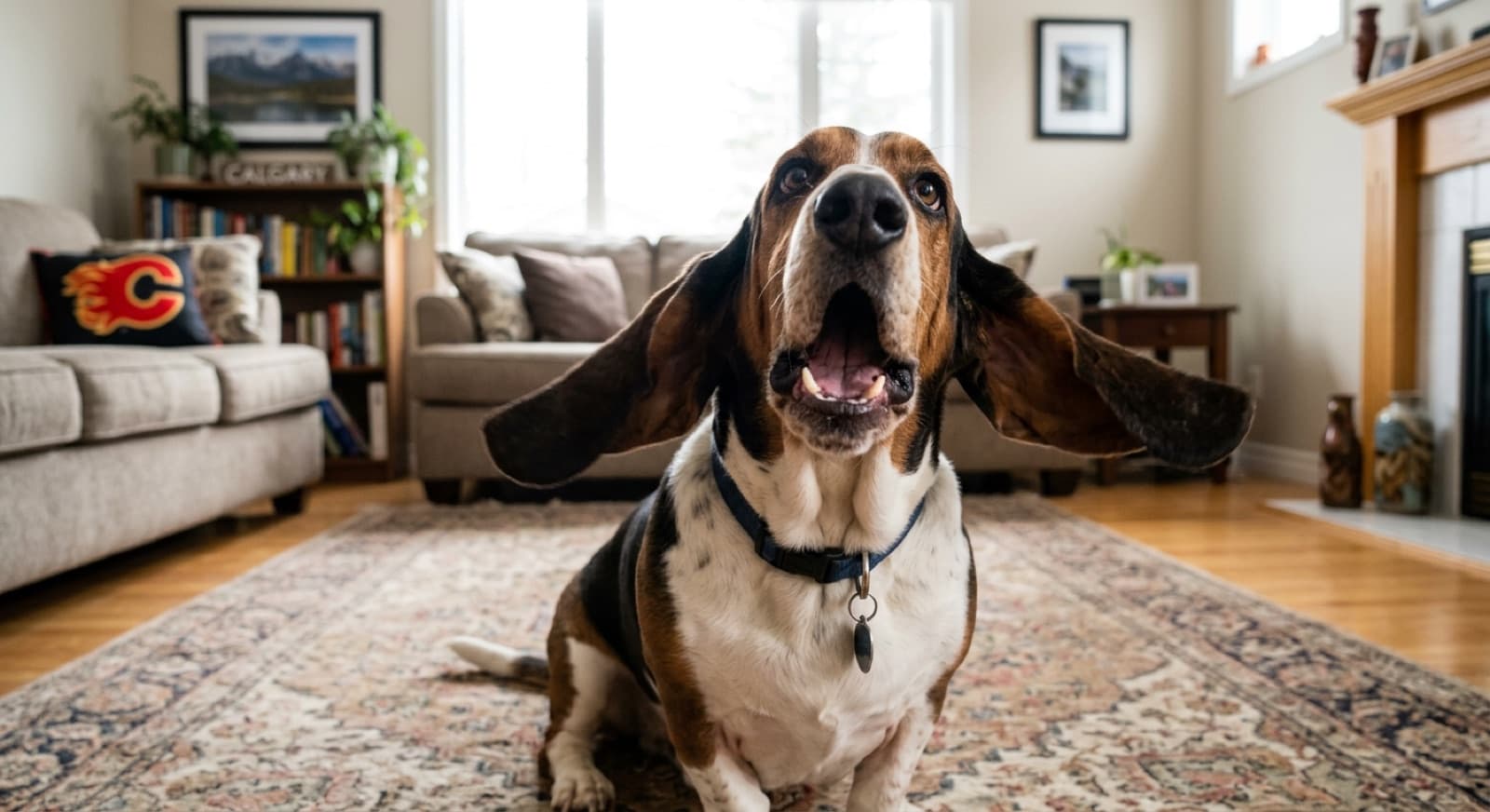
Most Basset Hound first-year owners hit the same wall around month three. They adopted the dog expecting a low-key apartment companion with funny ears, and instead they are living with a vocal scent hound who drools in arcs, hijacks every walk with a buried-treasure expression, and refuses to come when called the moment a squirrel passes. The breed is fantastic, but it is not the breed most people picture. The list below is what we tell every Calgary Basset adopter before they sign the application, drawn from the patterns we see in foster handovers and the questions that come up most in reputable Basset owner communities.
1. They are not low-maintenance, despite the lazy look
The marketing version of a Basset is a sleepy lap-warmer who naps through a workday. The real version is a scent hound bred for the field, built to track for hours, and possessing the stubborn working drive that comes with that job. Bassets have energy in bursts. They will sleep for two hours, demand a walk, sleep two more, demand enrichment, and then nap heavily again after dinner. Owners who try to skip the active part get destruction, weight gain, and a constant low-grade frustration in the dog.
What a realistic Calgary Basset week looks like:
- 45 to 60 minutes of structured walking daily, ideally on routes with sniff variety (riverside paths beat suburban sidewalks).
- One or two sniff-game sessions per day: scatter feeding in the yard, food puzzles, snuffle mats, or a hide-the-treat search through the house.
- Two or three social outings per week: family visits, sniffing at Fish Creek Park, or controlled meetups with calm dogs.
- Light training maintenance daily: 5 minutes of recall practice on a long line, leash manners, or basic obedience.
Skip the mental side and a Basset will find his own enrichment, usually by counter-surfing, digging up the yard, or learning to open the fridge. Read our companion piece on whether the breed fits your household before you commit: Is a Basset Hound right for you?
2. The vocalising is real, and it carries
Bassets bay, howl, and talk. The bay is the long, melodic, almost mournful sound the breed was developed to project across open fields so hunters could hear them from a distance. In a downtown Calgary condo, that sound carries through walls and ceilings. Owners in Beltline, Bridgeland, and Inglewood buildings learn this within the first month.
Calgary's Responsible Pet Ownership Bylaw treats persistent or excessive barking as a nuisance offence with escalating fines. Most landlord notices begin with a neighbour complaint about a hound voice that the owner has stopped noticing. Practical things that help:
- Plan for separation-anxiety prevention from day one, not after the first complaint. See our Basset separation anxiety and howling guide.
- Train a quiet cue from week one. Reward four seconds of silence, then six, then ten, building duration the dog can hold.
- Use white noise or calm music during alone time to mask the trigger sounds (elevator dings, hallway voices) that set off the howl.
- Tell neighbours you are working on it. Communication preempts most complaints.
- If you are in a condo or townhouse, factor noise into the decision before adopting. A bungalow in a quieter neighbourhood is genuinely easier on the breed.
Force-free Calgary trainers like Raising Canine and Pup City Pup Academy have experience with vocal hound breeds and can build a custom desensitisation plan if the howling starts to escalate.
3. The drool is constant, not occasional
The loose lower lips that give the Basset its mournful expression are called flews, and they are also a drool-storage system. After a drink, water pools in the flews and gets released in long arcs when the dog shakes his head. After eating, kibble dust and saliva mix into beard goo. When food is being prepared, the anticipation alone triggers a steady drip onto the kitchen floor.
What practical drool management looks like in a Calgary home:
- A dedicated drool towel at the water bowl. Wipe the beard after every drink. This single habit cuts wall-arc damage by about 80 percent.
- A second towel in the kitchen. Wipe before meal prep starts.
- Microfibre over terry. Microfibre lifts the saliva instead of smearing it.
- Washable couch covers. Wet beard on upholstery becomes a stain you cannot reach.
- Check the flews weekly. Trapped food in the lip folds causes lip-fold dermatitis, which smells terrible and becomes a vet visit.
4. The hound smell, and why over-bathing makes it worse
Even a freshly bathed Basset Hound carries a distinct hound odour within 24 hours. The smell is partly the natural skin oils that protect the coat, partly the ear and skin-fold microbiome, and partly the simple density of a heavy coat on a short body that sits close to every floor surface. The instinct most new owners have is to bathe more often. That makes the smell worse.
Frequent bathing strips the natural oils. The skin compensates by producing more, the new oils oxidise faster, and within a few days the dog smells stronger than before the bath. The fix is the reverse of what feels right.
- Bathe every 6 to 8 weeks, not more. Use a vet-recommended mild shampoo.
- Brush with a rubber curry weekly. The mechanical action distributes oils evenly and lifts dander.
- Clean ears weekly with vet-approved solution. The ears are the single biggest smell source on a Basset.
- Wipe skin folds dry after meals and walks. The wrinkles around the muzzle and flews trap moisture.
- Spot-clean the beard daily. A damp microfibre cloth on the beard and flews resets the local smell without disturbing the coat oils.
Our dedicated Basset grooming and odour guide covers the full weekly routine and recommends Calgary product picks.
5. Ears in the food bowl, ears in the water
Basset ears are long, low-set, and heavy. They drag through every bowl the dog uses. Wet ears trap kibble dust and bacteria, which is one of the reasons the breed has such a high chronic ear infection rate. According to the Basset Hound Club of Canada and Calgary specialty vets, recurring otitis externa is one of the most common breed presentations.
Two simple changes solve most of it:
- Use a snood at meals. A snood is a tube of stretch fabric that holds the ears up and out of the bowl. Most Calgary owners pick one up online for under $20. It lasts years.
- Switch to shallow weighted bowls. Tall food bowls force the ears down into the food. Wide shallow bowls (sometimes sold as “spaniel bowls”) keep the ears clear.
- Towel the ears dry after every meal and water break. Inside and outside of each ear flap. The earlier you build this habit, the lower the ear infection rate over the dog's life.
- Weekly ear cleaning with a vet-approved solution. If your dog already has chronic infections, ask your vet about a sustained cleaning protocol; specialty dermatology at Western Veterinary Specialist & Emergency Centre is the Calgary referral for recurring cases.
6. The lean and the flop
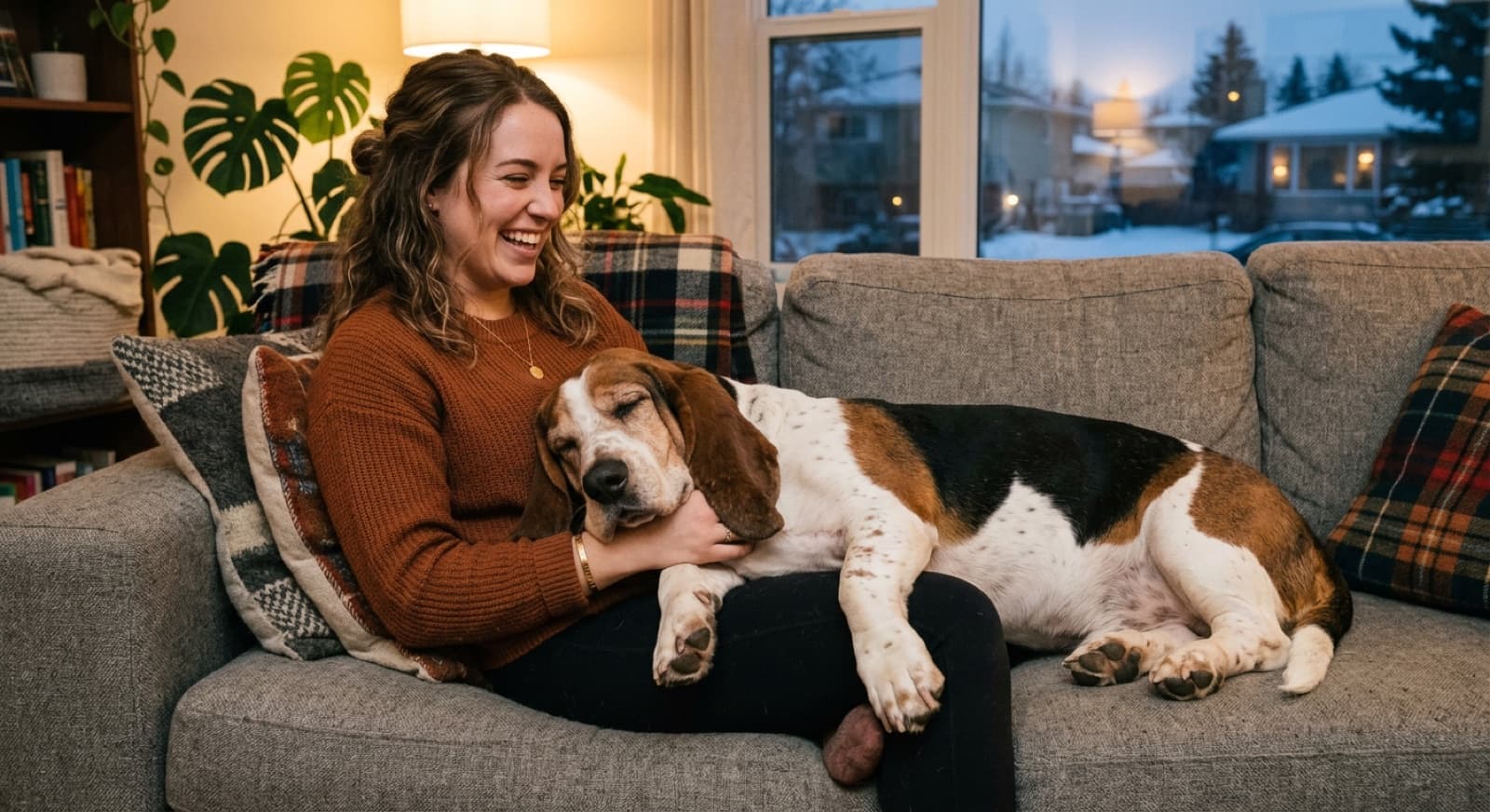
Basset Hounds are 35 to 65 pounds of bone-dense, low-built dog. When they sit on a couch and lean against a person, the result is roughly the weight of a small child pressed into the ribcage. When they flop on a lap, they flop with the full body. New owners are almost always surprised by how solid a 50-pound Basset feels.
What this means in practice:
- Expect to be pinned on the couch. Expect to lose the leg you were planning to move.
- A Basset wedged against your hip on the couch will sleep there for two hours and will not move when you ask politely.
- The lean is also a communication signal. It is the breed's default expression of trust and affection. Read it as a compliment, not a problem.
- Older Bassets benefit from orthopaedic beds positioned at floor level next to the couch, so they can choose comfort without the joint strain of jumping.
7. Follow-the-nose deafness
Basset Hounds have a sense of smell second only to the Bloodhound. When the nose engages, the brain shifts. Recall cues, name calls, and treat shakes all become background noise. This is not stubbornness or disobedience. It is the wiring the breed was selected for over centuries of scent work.
The practical consequence is that you can train recall for years and still lose your dog the first time he hits a fresh deer trail at Bowmont. The realistic message every reputable Calgary Basset rescue gives new adopters is the same: assume off-leash will never be safe in unfenced space.
What works instead:
- A 10 to 15 metre long line at parks like Nose Hill, Edworthy, or Tom Campbell's Hill. The dog gets the sniff freedom and you get the safety net.
- A securely fenced yard with a 1.5 metre minimum fence, and dig-proofing along the edges (Bassets dig out, not over).
- A fenced dog park like Sue Higgins for free running. Even there, monitor the gate.
- GPS tracker on the collar in case of escape. Tractive and Fi both work in Calgary.
Our full breakdown lives in the Basset Hound training and recall guide. The gear, the training plan, and the honest framing on what recall can and cannot do for this breed.
8. Surprisingly heavy shedding for a short coat
The Basset coat looks low-effort. It is not. The dense short undercoat blows twice yearly, in spring and fall, and during those weeks you will find short, sharp guard hairs woven into every fabric in the house. They embed in couches, carpets, and dog beds in a way long fur never does.
- Weekly rubber-curry brushing year-round. Five minutes. The hair lifts off the curry in clumps.
- Daily brushing during coat blow. Spring (March to April) and fall (October to November). A high-quality undercoat rake helps.
- A robot vacuum is genuinely worth it. Most Basset owners we talk to consider it the single best home-equipment purchase.
- Wash bedding weekly, especially during coat blow.
9. Never off-leash is a universal rule, not a suggestion
This deserves its own section because most new Basset owners try at least once before they accept it. The pattern goes: a few weeks of good recall on leash, a perfect day at the park, and a confident off-leash attempt. The dog hits a scent line within ten minutes. Twenty minutes later the owner is calling Calgary Animal Services.
The Basset rescue community across Canada and the United States is unanimous on this. There is no “trained-up” Basset who is reliably off-leash near scent. The breed is genuinely different from a retriever or a shepherd in this respect, and pretending otherwise puts the dog in real danger from traffic, coyotes along river paths, and other dogs.
Defer to our full training and recall guide for the reasoning, the gear, and the fenced-area options in Calgary.
10. Calgary-specific surprises (winter belly, summer heat, slush in ears)
Basset Hounds are short-coupled and low-bellied. Calgary's climate hits them in ways most breed brochures (written for a generic North American audience) do not cover.
Winter:
- The belly drags through snow on every walk where the snow is deeper than 15 centimetres. Below -10°C this gets cold fast.
- A fleece belly band or a full-body sweater is not cosmetic. It is functional below -15°C.
- Booties protect from road salt on Beltline and Bridgeland sidewalks, but most Bassets walk awkwardly in them and take a week to adjust.
- Slush packs into the ear flaps on every winter walk, refreezes against the skin, and contributes to chronic ear infection rates. Towel the ears inside and out the moment you walk in the door.
- Ice slips can cause back injury in a breed already at IVDD risk. Stick to plowed paths and avoid icy stairs.
Summer:
- Above 22°C Bassets slow down. Above 25°C the heat-stroke risk becomes real. The short legs and dense coat are a poor combination for warm weather.
- Walk before 9am or after 8pm during July and August.
- The five-second pavement test: if the back of your hand cannot rest on it for five seconds, the surface is too hot for paws.
- Water access at Sandy Beach on the Bow River is a good cooling option. Supervise; Bassets are not strong swimmers.
Stairs and jumping:
- Stairs are a back-injury risk for the long-spine, short-leg build. Carry puppies up and down stairs until 12 months. Limit stairs for adults and seniors. Use ramps where possible.
- Discourage jumping on and off couches. A simple step or a low ottoman beside the couch saves the back.
11. The vet bill is above the breed average
Basset Hounds carry above-average vet costs because of three breed-typical problems: chronic ear infections (recurring through life), intervertebral disc disease (IVDD), and glaucoma. The infection bill is steady and predictable. The IVDD bill is rare but catastrophic.
Realistic Calgary annual ranges, directional:
- Routine wellness: $400 to $700 per year (annual exam, vaccines, parasite prevention, dental check).
- Ear infection treatment: $300 to $1,200 per year, depending on frequency. Half of Bassets experience recurring infections; some require quarterly vet visits.
- IVDD surgery, if it strikes: $5,000 to $10,000 at a Calgary specialty centre. Lifetime risk is meaningful for the breed.
- Glaucoma treatment, if it develops: $200 to $500 per month in medication, plus potential surgery.
- Pet insurance: $30 to $60 per month for a healthy young Basset, directional. Written before the first ear infection, the math favours the insurance for almost every Basset owner.
For the full clinical picture and Calgary specialty vet contacts, see our Basset Hound health issues guide.
12. Lifespan reality: 12 to 13 years, and obesity steals two of them
Bassets typically live 12 to 13 years. The breed-typical threats to that lifespan are obesity, IVDD-related complications, and untreated chronic ear or eye disease. Obesity is the largest controllable factor, and it is also the one Calgary owners most often miss because the breed's short stature and barrel chest hide weight gain visually.
The veterinary research is consistent: a lean dog lives 1.5 to 2.5 years longer than an overweight dog of the same breed. For a Basset, that is roughly 15 to 20 percent of the dog's life. Practical Calgary owner steps:
- Learn the body condition score (BCS) chart. Your vet will run through it at every visit. Aim for a 4 or 5 out of 9.
- Use a measuring cup at every meal. Eyeballing food is the number one cause of slow Basset weight gain.
- Treats count as food. Cut training treats to pencil-eraser size and subtract them from the daily kibble allotment.
- Weekly weigh-ins. A bathroom scale and a willing dog work. A 5 percent weight change deserves attention.
- Avoid the Calgary “treat at the patio” trap during summer. Most Bassets gain a kilogram or two over patio season if owners do not track.
For house-training and feeding routines from day one, see the Basset Hound house-training guide.
Browse adoptable Basset Hounds in Calgary
See current Basset Hounds and Basset mixes across 15+ Calgary rescues in one place. Inventory updates regularly. Set up notifications so a new arrival reaches you quickly.
See Available Basset Hounds →Frequently Asked Questions
Are Basset Hounds really low-maintenance?↓
How loud are Basset Hounds in a Calgary condo?↓
Do Basset Hounds really drool that much?↓
Why does my Basset Hound smell even after a bath?↓
Can I let my Basset off-leash at Calgary off-leash parks?↓
Are Basset Hounds OK in Calgary winters?↓
How much will vet care actually cost?↓
How long do Basset Hounds live?↓
Do Basset Hounds shed?↓
Where can I adopt a Basset Hound in Calgary?↓
Continue reading
Basset Hound adoption in Calgary
Rescue partners, real fees, why Bassets get surrendered, and the rescue-vs-breeder framing for Calgary adopters.
Basset Hound training and recall
Why off-leash is permanently off, long-line technique, and the recall training plan that actually fits the breed.
Basset Hound health issues
Chronic ear infections, IVDD, glaucoma, Calgary specialty vet contacts, and pet insurance ROI for the breed.
Basset grooming and odour
The weekly routine, why over-bathing makes the smell worse, ear cleaning, skin folds, and Calgary product picks.
New dog? Start with these care guides
Everything a new adopter needs to set up a safe, happy home.