The short answer
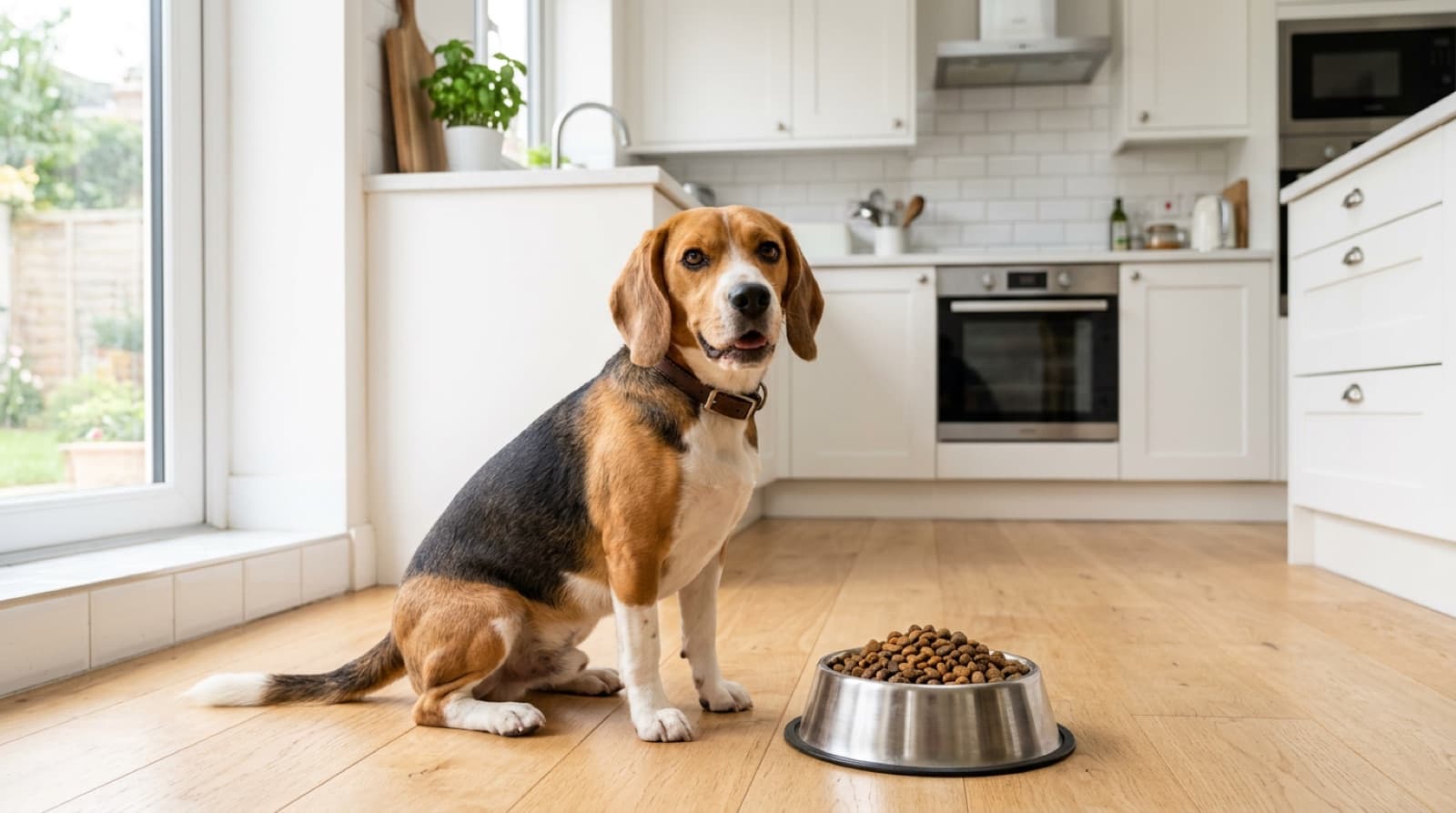
With a Beagle, feeding is mostly about not over-feeding. Beagles are among the most obesity-prone breeds: food-obsessed scent hounds who scavenge, beg, and act starving no matter how recently they ate. So the whole game is measured meals and body condition, not the brand on the bag. Feed a complete small-to-medium-breed adult food, weigh or measure every portion, count treats inside the daily total, and never free-feed. Because they get fat so easily, a weight-management formula suits many adult Beagles. And because their nose finds everything, secure the trash, counters, and food bag: scavenging is a real poisoning and obstruction risk for this breed.
How much to feed a Beagle, and keeping it lean
Obesity is the defining Beagle feeding issue, full stop. Get the portion right and most of the job is done. A rough starting point is about three-quarters to one and a half cups of quality dry food a day, split into two meals, but treat that as a guess to calibrate, not a rule, since it depends on the food's calories and your dog's size.
The breed comes in two sizes: the 13-inch Beagle under 20 lb and the 15-inch Beagle at 20 to 30 lb. Use the healthy weight for the dog's frame as your anchor, not whatever it weighs now.
Feed to body condition, not the bag. Use the WSAVA body condition score: aim for a 4 to 5 out of 9, where you feel the ribs easily and see a waist from above. Most Beagles need less than the bag chart suggests. Measure every meal with an actual cup, count treats inside the daily total rather than on top of it, and do not leave food down all day.
The bottomless appetite, and why it is a safety issue
A Beagle acting starving is not under-fed, it is being a Beagle. The breed was built to work in packs following a scent, and that left it a food-driven, opportunistic scavenger. The dog will eat well past full, beg relentlessly, and go looking for more.
Do not feed the begging. Cave once and you teach the dog that begging works. Stick to scheduled meals, skip table scraps, and use a slow feeder or food puzzle to stretch a meal out and give that busy nose a job.
The part new owners underestimate is safety. A Beagle's nose plus its appetite means it finds and eats things it should not: the trash, food left on the counter, a whole bag of dog food, the odd toxic item or foreign object. That is a genuine poisoning and gut-obstruction risk for this breed, so securing food, bins, and counters is part of owning one. For the full playbook on managing the scavenging and counter-surfing, see our Beagle food obsession and counter-surfing guide.
What is the best food for a Beagle?
There is no single best bag, but there is a sound way to choose one, from the WSAVA nutrition guidelines.
Choose a small-to-medium-breed adult formula, not a large-breed one, which is built for giant-breed growth a Beagle does not have. Look for a named animal protein, the AAFCO complete-and-balanced statement for adult maintenance, and a stated calorie count so you can portion accurately. Then ask whether the brand employs a board-certified veterinary nutritionist, runs feeding trials, and will share a full nutrient analysis. The big makers that meet this bar are the safe default: Purina Pro Plan, Royal Canin (which makes a breed-specific Beagle line), Hill's Science Diet, and Eukanuba, with Acana a popular Canadian option.
A weight-management formula is a reasonable default for many Beagles. Because the breed trends heavy, a lower-calorie, higher-satiety food lets a food-obsessed dog feel fuller on fewer calories, which is exactly the problem you are solving. Match it to your dog with your vet, especially for a neutered or less-active adult.
What should I feed a Beagle puppy?
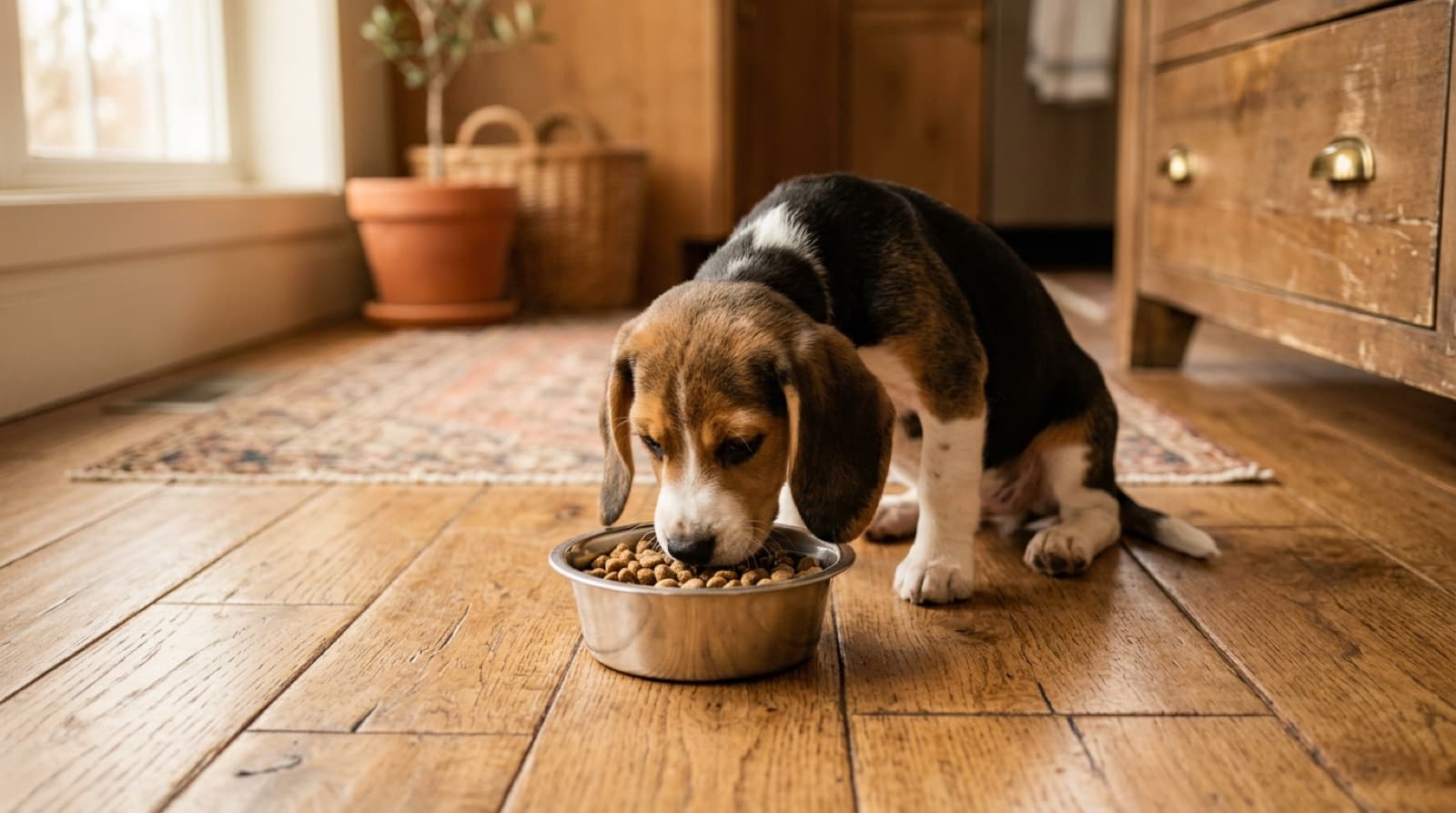
A puppy or all-life-stages formula for small-to-medium breeds, not a large-breed puppy food. Large-breed puppy diets exist to slow giant-breed growth, which a Beagle does not need.
Follow the standard puppy feeding timeline: about four meals a day from 6 to 12 weeks, three by 3 to 6 months, and two by 6 to 12 months. Most small-to-medium breeds move to adult food around 9 to 12 months.
The breed-specific tip is to start lean habits early. A Beagle that learns to clean a measured bowl at set times grows up easier to keep trim than one free-fed into a habit of grazing and begging. Resist over-treating the puppy, and remember a roly-poly Beagle puppy is not a healthy one, just a head start on a lifelong weight problem.
Do Beagles need special allergy or grain-free food?
Usually not. Beagles are not notably more food-allergic than other breeds, and food allergy in dogs is uncommon next to flea and environmental allergies. There is also no proven benefit to grain-free for a typical Beagle: the FDA looked into a possible link between grain-free diets and a heart condition and did not establish one, so feed grain-free only if your vet diagnoses a reason.
If your Beagle is chronically itchy or has ongoing stomach trouble, that is a vet workup, not a reason to start switching bags. A true food allergy is diagnosed only by a vet-run elimination diet over several weeks, never by a blood, saliva, or hair test, which research has shown are unreliable and flag allergies even in healthy dogs.
Bloat: not a big Beagle worry
Bloat (gastric dilatation-volvulus) is the emergency that stalks large, deep-and-narrow-chested breeds like Great Danes and Shepherds. A 20 to 30 lb, moderately built Beagle is not in that high-risk group, so this is one worry you can mostly set aside.
The sensible, non-alarmist practice still applies: Beagles often gulp their food, so a slow-feeder bowl is worth using to slow the gulping and add a little enrichment. That is good portion and behaviour management, not bloat panic.
Foods to avoid for a scavenger
Every dog should avoid these toxic foods, but it matters more for a Beagle because the breed seeks them out: chocolate, grapes and raisins, xylitol (in sugar-free gum, some peanut butters, and baking), onions and garlic, macadamia nuts, alcohol, and cooked bones.
The Beagle defence is environmental, not training. Lid the bin, clear the counters, store the food bag where the dog cannot reach it, and assume an unattended Beagle plus unattended food equals no food. Two more feeding notes: keep treats to about 10% of daily calories, since over-treating is the most common way a Beagle gets fat, and call your vet or a pet poison helpline right away if your dog eats something toxic.
Should I feed my Beagle a raw diet?
Make it a vet conversation. The AVMA and the WSAVA discourage feeding raw or undercooked animal protein because of the pathogen risk to both the dog and the people in the home, and there is no documented evidence it beats a balanced cooked or commercial diet.
There is a Beagle-specific wrinkle worth naming: a scavenging, counter-surfing dog raises the household cross-contamination risk, because it will happily raid raw scraps or a thawing package. If you still want to feed raw, use a complete commercial product or a recipe from a board-certified veterinary nutritionist, keep strict kitchen hygiene, and talk to your vet first.
Looking to adopt a Beagle?
Sort the food, the slow feeder, and a bin lock before day one. Browse Beagles and Beagle mixes available right now from the rescues we track.
See Available Beagles →Where to buy Beagle food
Every brand worth feeding a Beagle is easy to find in store and online:
- Pet specialty chains (Pet Planet, Tail Blazers, Tisol, and similar). Carry Pro Plan, Royal Canin, Acana, and most premium lines.
- Pet Valu and PetSmart. National chains that stock the major small-breed and weight-management formulas.
- Your vet clinic. The place for a therapeutic weight-management or prescription diet.
- Costco. Kirkland Signature is a solid everyday budget option.
Whatever you buy, store it in a sealed container the dog cannot open: a determined Beagle has eaten its way through a food bag more than once. Online, the same brands ship to your door, and the weight-management formulas are easy to set on a recurring delivery.
Frequently Asked Questions
How much should I feed a Beagle?
Less than your Beagle would have you believe. A rough starting point for an adult is about three-quarters to one and a half cups of quality dry food a day, split into two meals, but the right amount depends on the food’s calories and your dog’s size (the 13-inch Beagle is under 20 lb, the 15-inch is 20 to 30 lb). Feed to body condition, not the bag: you should feel the ribs easily and see a waist from above. Beagles gain weight very easily, so measure every meal with an actual cup, count treats inside the daily total, and do not free-feed.
Why does my Beagle act like it is always starving?
Because it is a Beagle. Beagles are scent hounds bred to work in packs, and that heritage left them food-obsessed, nose-driven scavengers who will happily eat well past full and beg as if they have never been fed. A Beagle acting starving five minutes after dinner is normal breed behaviour, not a sign it is under-fed. Do not answer the begging with more food, which just reinforces it. Answer it with scheduled measured meals, a slow feeder or food puzzle to make meals last, and a firm no to table scraps. (One myth to skip: the well-known dog "hunger gene" was found in Labradors, not Beagles, so the Beagle drive is behavioural, not a known genetic defect.)
What is the best food for a Beagle?
A complete small-to-medium-breed adult formula from a company that does real nutrition science. A Beagle is not a large breed, so skip large-breed formulas. Use the WSAVA approach: choose a brand that employs a board-certified veterinary nutritionist, runs feeding trials, and will share a full nutrient analysis, and look for the AAFCO complete-and-balanced statement and a named protein. Because so many Beagles trend overweight, a lower-calorie or weight-management formula is a reasonable fit for many adult Beagles, especially neutered or less-active ones, but match it to the dog with your vet.
What should I feed a Beagle puppy?
A puppy or all-life-stages formula for small-to-medium breeds, not a large-breed puppy food. Feed about four meals a day from 6 to 12 weeks, dropping to three by 3 to 6 months and two by 6 to 12 months. The breed-specific tip: start good portion habits early. Because Beagles get fat so easily, resist over-treating the puppy and do not let "puppy chub" become normal. Use measured meals and pick the bowl up after about 15 minutes rather than free-feeding, so the dog grows up on structure.
My Beagle is overweight. How do I help it lose weight?
Start with an honest body condition check (ribs easily felt, a waist from above) and a vet visit, because a real weight-loss plan should be vet-guided, not crash-dieted. The core moves are measuring meals precisely, cutting treats to no more than about 10% of daily calories and subtracting them from meals, switching low-value treats to things like carrot or green beans, and adding gentle activity. Many vets put a heavier Beagle on a therapeutic weight-management diet so the dog still feels full on fewer calories. Do not just slash the regular food sharply on your own, which can leave the dog hungry and short on nutrients.
What foods are toxic to a Beagle?
The same foods toxic to any dog, and it matters more for a Beagle because the breed actively sniffs out and eats things. Keep chocolate, grapes and raisins, xylitol (in sugar-free gum, some peanut butters, and baking), onions and garlic, macadamia nuts, alcohol, and cooked bones well out of reach. A Beagle will counter-surf, open the bin, and raid a bag, so the real defence is securing food, trash, and counters, not training. If your Beagle eats something toxic, call your vet or a pet poison helpline right away.
Do Beagles need grain-free or special allergy food?
Usually not. Beagles are not notably more allergy-prone than other breeds, and food allergy in dogs is uncommon compared with flea and environmental allergies. There is also no proven benefit to grain-free for a typical Beagle, and the FDA investigated but did not establish a link between grain-free diets and a heart condition. If your Beagle is chronically itchy or has ongoing tummy trouble, that is a vet workup, and a true food allergy is diagnosed only by a vet-run elimination diet, never by a blood or saliva test, which are unreliable.
How much does it cost to feed a Beagle per month?
Not much, since a Beagle is a small-to-medium dog that eats less than a big breed. Budget roughly $40 to $80 a month for an adult on a quality dry food, with budget kibble lower and premium, fresh-cooked, or prescription weight-management diets higher. Add a little for treats and dental chews. These are approximate ranges that vary with brand, your dog’s size, and where you shop.
Beagle Food Obsession & Counter-Surfing
Managing the begging, scavenging, and trash-raiding without losing your mind.
Beagle Health Issues
The conditions to watch, and how weight and diet make them better or worse.
Beagle Adoption
Where to find Beagles and Beagle mixes, real costs, and what the breed is like.
Beagles for Adoption
Live listings of Beagles and Beagle mixes from the rescues we track.