The short answer
For most Canadians, Kabo is the easiest place to start with fresh-cooked delivery, Open Farm is the pick for ingredient traceability, and Tom & Sawyer is best for medical diets. If you want fresh-style nutrition without the freezer or the subscription, shelf-stable dehydrated and freeze-dried raw like Smack or Stella & Chewy's are sold on Amazon.ca and just need water. Fresh costs several times more than kibble and is most worth it for picky, sensitive, or underweight dogs rather than every dog. Some links here are Amazon affiliate links; we may earn a small commission at no extra cost to you, and it never changes what we recommend.
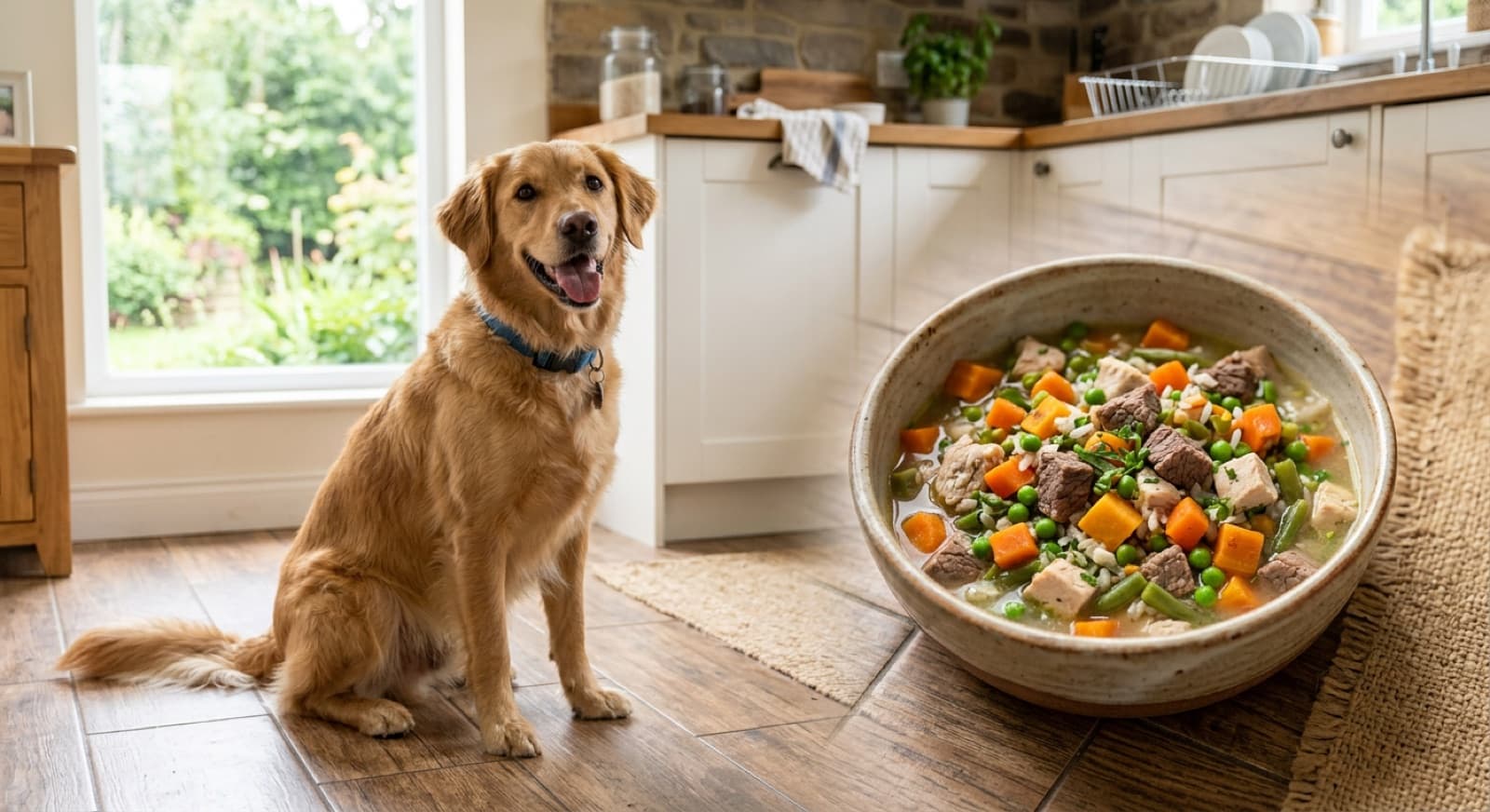
Search “best fresh dog food” from Canada and Google hands you a wall of American brands you cannot actually buy. It is one of the more frustrating corners of pet shopping here. So this guide does two things: it tells you which fresh-food brands genuinely deliver in Canada, and it gives you the honest version of whether fresh is worth the money in the first place. We make money if you buy the shelf-stable brands through our Amazon links, and we have been upfront below about which brands we earn nothing on, because a comparison you cannot trust is useless.
First, the brands that do not ship to Canada
Let us clear the biggest source of confusion. The fresh-food brands that dominate American advertising do not deliver to Canadian addresses:
- The Farmer's Dog ships only to the 48 contiguous US states, per its own FAQ. A Canadian dog cannot order it.
- Ollie, Nom Nom, and Spot & Tango are also US-only.
- JustFoodForDogs fresh meals ship within the US; only its shelf-stable nutrient blend turns up through some Canadian retailers.
Be careful here, because several auto-generated “dog food subscriptions Canada” pages list these brands as if you can buy them. You cannot. If a site sends you to a US checkout that rejects your postal code, that is why. The good news is that Canada has real equivalents, and they are who the rest of this guide is about.
The fresh-cooked delivery brands you can actually get in Canada
These are the gently-cooked, human-grade, AAFCO-formulated subscriptions, the true analog to The Farmer's Dog. They arrive frozen and pre-portioned to your dog's calories.
Kabo — the default starting point
Kabo is the most established Canadian fresh-cooked brand and ships nationwide except the territories and Newfoundland. Food is cooked, vacuum-sealed, and frozen; Kabo's own FAQ says it keeps up to six months frozen (use within four) and should move to the fridge one to two days before feeding. Recipes are formulated to meet and exceed AAFCO standards, and there is a kibble line too if you want a cheaper everyday base. It is the brand most Canadians try first, and the easiest to recommend as a first step.
Open Farm — best for ingredient traceability
Open Farm is a Toronto brand known for letting you trace each ingredient by lot number. Beyond its gently-cooked fresh line it makes freeze-dried raw, RawMix, wet, and dry, and it sells widely in stores. Its freeze-dried and RawMix products also turn up on Amazon.ca, so you can try the brand without committing to a subscription. One honesty note: Open Farm sources ingredients internationally, so it is a Canadian company rather than a strictly made-in-Canada food.
Tom & Sawyer — best for medical and sensitive diets
Tom & Sawyer pioneered gently-cooked food in Canada and stands out for condition-specific recipes, including low-fat and GI-friendly options that suit dogs with pancreatitis or chronic stomach trouble. Shipping is free within Ontario and available Canada-wide, though shipping costs climb outside Ontario. If your dog is on a prescription-style diet and you want it cooked fresh, this is the one to look at first.
Regional fresh-cooked options worth knowing
A few smaller players deliver fresh-cooked food in tighter zones: NutriCanine (free shipping in Ontario), Lucky Dog Cuisine (Southern Ontario, often cited as the value pick), Kafka's Organic (Vancouver area), and Dog Standards, which markets itself as the Canadian answer to The Farmer's Dog. Availability comes down to your postal code, so check coverage before you get attached to one.
The no-freezer route: dehydrated and freeze-dried raw
If you like the idea of minimally-processed food but do not want a freezer full of meal trays or a recurring subscription, this is the category that actually solves your problem, and it is the one we can point you to on Amazon.ca today.
- Smack is a Winnipeg-made dehydrated-raw food. It is shelf-stable, you scoop and add water, and it has topped Canadian best-of lists for years. Nutrient-dense, so daily servings look small.
- Stella & Chewy's freeze-dried raw patties and meal mixers are an easy way to add raw nutrition to a kibble bowl without handling frozen meat.
- The Honest Kitchen makes human-grade dehydrated food you rehydrate with warm water, a gentle option for fussy or older dogs.
Canada also has a big frozen-raw market led by Big Country Raw, sold through pet shops like Pet Valu and Global Pet Foods. It is good value for raw feeders, but note that its single-protein “Pure” products are complementary, not complete, so they need added supplements to be a full diet. For most people reading a fresh-food guide, the dehydrated and freeze-dried options above are the easier on-ramp.
Quick comparison
| Brand | Type | Coverage | Where to buy |
|---|---|---|---|
| Kabo | Fresh-cooked + kibble | Most of Canada | Subscription (kabo.co) |
| Open Farm | Fresh-cooked, freeze-dried, kibble | Nationwide + retail | Site + Amazon.ca |
| Tom & Sawyer | Fresh-cooked (medical diets) | Free in ON, ships Canada-wide | Subscription |
| Smack | Dehydrated raw (shelf-stable) | Nationwide | Amazon.ca + retail |
| Stella & Chewy's | Freeze-dried raw | Nationwide | Amazon.ca + retail |
| Big Country Raw | Frozen raw | ON + Western Canada delivery, retail nationwide | Pet shops |
Coverage and availability change; confirm your postal code on the brand's site before subscribing.
Is fresh food actually worth it? The honest version
Cost is the thing every owner runs into. Fresh food generally costs three to five times more than kibble. PetMD pegs fresh at roughly $1.40 per 100 calories versus about 25 cents for dry food. In Canadian terms, Kabo owners commonly report 5 to 10 dollars a day for a small dog and 25 to 35 dollars a day for a large or giant breed on full fresh. That adds up fast over a year.
And here is the part the marketing skips: for a healthy dog already doing well on a quality kibble, there is no strong evidence that fresh food makes them measurably healthier. Veterinary nutritionists are openly skeptical of the price-to-benefit ratio for healthy dogs. The improvements owners rave about, shinier coat, smaller stools, more enthusiasm at mealtime, are real and commonly reported, but they show up most dramatically in dogs who were not thriving on their old food.
So who is fresh genuinely worth it for?
- Picky eaters who turn their nose up at kibble. This is the number-one success story owners report.
- Dogs with sensitive stomachs or diagnosed GI issues, where a gently-cooked, controlled-ingredient diet can genuinely help (with your vet's input).
- Underweight or recovering dogs who need to be tempted to eat enough.
The most common money-saving move is to feed fresh as a topper or as half the bowl, with kibble making up the rest. You keep most of the palatability win at a fraction of the cost. If you are switching because of a health problem rather than preference, loop in your vet first, since the right answer might be a specific therapeutic diet rather than a fresh subscription.
Still choosing your dog?
Sort out the food after you find the dog. Browse adoptable rescue dogs from shelters across Canada.
Browse Adoptable Dogs →
How to judge whether a brand is nutritionally complete
This is the one technical thing worth getting right, because it is a health issue, not a preference. The label that matters is complete and balanced, backed by an AAFCO statement for your dog's life stage. PetMD's guidance is to choose reputable brands that employ a board-certified veterinary nutritionist and meet AAFCO standards. Kabo, Open Farm, and Tom & Sawyer all state AAFCO compliance.
Two traps to avoid. First, “human-grade,” “natural,” and “no fillers” are largely unregulated marketing words; judge a food by its AAFCO statement and the company behind it, not its slogans. Second, in the raw aisle especially, some single-protein products are labelled complementary rather than complete, which means they are missing nutrients on purpose and need supplements like fish oil or kelp to be a full diet. Homemade fresh food has the same risk: most amateur recipes are nutritionally incomplete without careful formulation, so do not treat “I'll just cook for my dog” as a free shortcut.
Switching without the diarrhea
Any diet change can upset a dog's stomach, so transition over one to two weeks rather than overnight. Start with about a quarter new food mixed into the old, hold a few days, then move to half, then three-quarters, then all the way. If stools loosen, stay at the current ratio for a few extra days before increasing. A little soft stool during the change is normal; severe, bloody, or days-long diarrhea is a reason to call your vet. One more safety note from PetMD: because fresh food is cooked at lower temperatures and is not shelf-stable, it is a weaker choice for very young, very old, pregnant, or immunocompromised dogs unless your vet signs off. Store it like the cooked meat it is.
For more on settling a new dog's diet and routine, see our guides on dog dental care and the breed-specific feeding guides in our resource library.
Frequently asked questions
Does The Farmer’s Dog ship to Canada?
No. The Farmer’s Dog delivers only within the 48 contiguous United States, and the same is true of Ollie, Nom Nom, Spot & Tango, and JustFoodForDogs fresh meals. If a Canadian comparison site shows them as available here, it is wrong, usually because it copied a US article. The genuine Canadian equivalents are fresh-cooked delivery brands like Kabo, Open Farm, and Tom & Sawyer. So if you came here searching for The Farmer’s Dog in Canada, the short version is to stop looking for that brand and pick a Canadian one instead.
What is the best fresh dog food in Canada?
There is no single winner, because it depends on your dog and your budget. Kabo is the most established nationwide fresh-cooked subscription and the easiest starting point for most people. Open Farm is the best pick if you want full ingredient traceability and also sell in stores. Tom & Sawyer is the strongest option for dogs with medical diets like low-fat or sensitive stomach. If you want fresh-style nutrition without a freezer or a subscription, a dehydrated-raw brand like Smack is the practical middle ground. Match the brand to the problem you are actually trying to solve rather than chasing a generic ranking.
Is fresh dog food actually worth the cost?
For a healthy dog on a good kibble, the honest answer is that the science does not clearly show fresh food makes them healthier, and it costs several times more. Where fresh earns its price is for specific dogs: fussy eaters who refuse kibble, dogs with sensitive stomachs or diagnosed GI issues, and underweight dogs who need to be tempted to eat. Many Canadian owners split the difference by feeding fresh as half the bowl with kibble making up the rest, which cuts the cost while keeping the palatability. Talk to your vet if the reason you are switching is a health problem rather than preference.
How much does Kabo cost per month in Canada?
Kabo prices by your dog’s size and calorie needs, so there is no flat number, but owner-reported math gives a realistic range. Small dogs commonly land around 5 to 10 dollars a day, and large or giant breeds can run 25 to 35 dollars a day on full fresh. One reviewer’s 11-pound dog worked out to about 5 dollars a day. Feeding fresh as half the bowl roughly halves that. These are owner-reported Canadian figures, not a fixed price, so use Kabo’s own questionnaire for an exact quote for your dog.
Can I freeze fresh dog food, and how long does it keep?
Yes, and most fresh-cooked brands arrive frozen for exactly this reason. Kabo’s own guidance is that the food keeps up to about six months frozen, with a recommendation to use it within four months, and that you should move a portion to the fridge only one to two days before feeding. Thawed food behaves like any cooked meat, so keep it refrigerated and do not leave it sitting out. Freezer space is a real consideration before you subscribe, especially for a big dog.
Is fresh-cooked the same as raw?
No. Fresh-cooked (also called gently cooked) means real ingredients lightly cooked at low temperature, which kills bacteria while keeping the food less processed than kibble. Raw means uncooked meat and organ, fed frozen or dehydrated. Canada has a strong raw market, with Big Country Raw and Smack as two of the best-known names, but raw carries bacterial-handling considerations that cooked-fresh sidesteps, and many vets are more cautious about it. If raw makes you nervous, gently cooked or dehydrated-raw are the easier first steps.
How do I switch to fresh food without causing diarrhea?
Go slowly. Mix a little of the new food into the current food and increase the fresh portion over about one to two weeks, or longer for a sensitive dog. A common pattern is roughly a quarter new for a few days, then half, then three-quarters, then all the way. If stools loosen, hold at the current ratio for a few extra days before increasing again. Some transition diarrhea is normal, but if it is severe, bloody, or lasts more than a couple of days, call your vet.
How do I know a fresh brand is nutritionally complete?
Look for an AAFCO statement on the brand’s site saying the food is complete and balanced for your dog’s life stage, ideally backed by feeding trials and a brand that employs a qualified nutritionist. Kabo, Open Farm, and Tom & Sawyer all state AAFCO compliance. Watch one trap in the raw world: some single-protein products are labelled complementary, not complete, which means they need added supplements like fish oil or kelp to be a full diet. Complete-and-balanced is the label that matters far more than buzzwords like human-grade or no fillers, which are largely unregulated marketing.
Is fresh food safe for puppies and senior dogs?
It can be, with two caveats. First, the food must be labelled complete and balanced for that life stage, since puppies in particular have strict nutritional requirements. Second, because fresh food is cooked at lower temperatures and is not shelf-stable, it carries a slightly higher spoilage risk, so it is a poorer choice for very young, very old, pregnant, or immunocompromised dogs unless your vet is on board. For a healthy adult dog the safety margin is wide as long as you handle and store it properly.
Where can I buy fresh-style dog food without a subscription?
Three routes. Refrigerated fresh rolls like Freshpet sit in the cooler at many Canadian grocery and pet stores. Dehydrated and freeze-dried raw brands such as Smack, Stella & Chewy’s, and The Honest Kitchen are shelf-stable, sold in stores and on Amazon.ca, and only need water added. And several raw brands sell frozen at independent pet shops. If the appeal of fresh is the ingredients rather than the delivery box, these no-commitment options get you most of the way there.
Sources: PetMD: Pros and Cons of Fresh Dog Food; Kabo FAQ; The Farmer's Dog FAQ. This article is general information, not veterinary advice; consult your veterinarian about your dog's diet, especially for a health condition.
Related guides
Adoptable Dogs in Canada
Browse rescue dogs from shelters across the country.
Dog Dental Care: What Works
Brushing, chews, and cleanings, sorted by the evidence.
Dog Feeding Calculator
How much to feed your dog each day, by weight and age.
All Dog Care Guides
Breed feeding guides, health, and adoption resources.
Something else going on with your dog?
Pick what is on your mind and we will point you at the guide that answers it, and what to buy if anything.