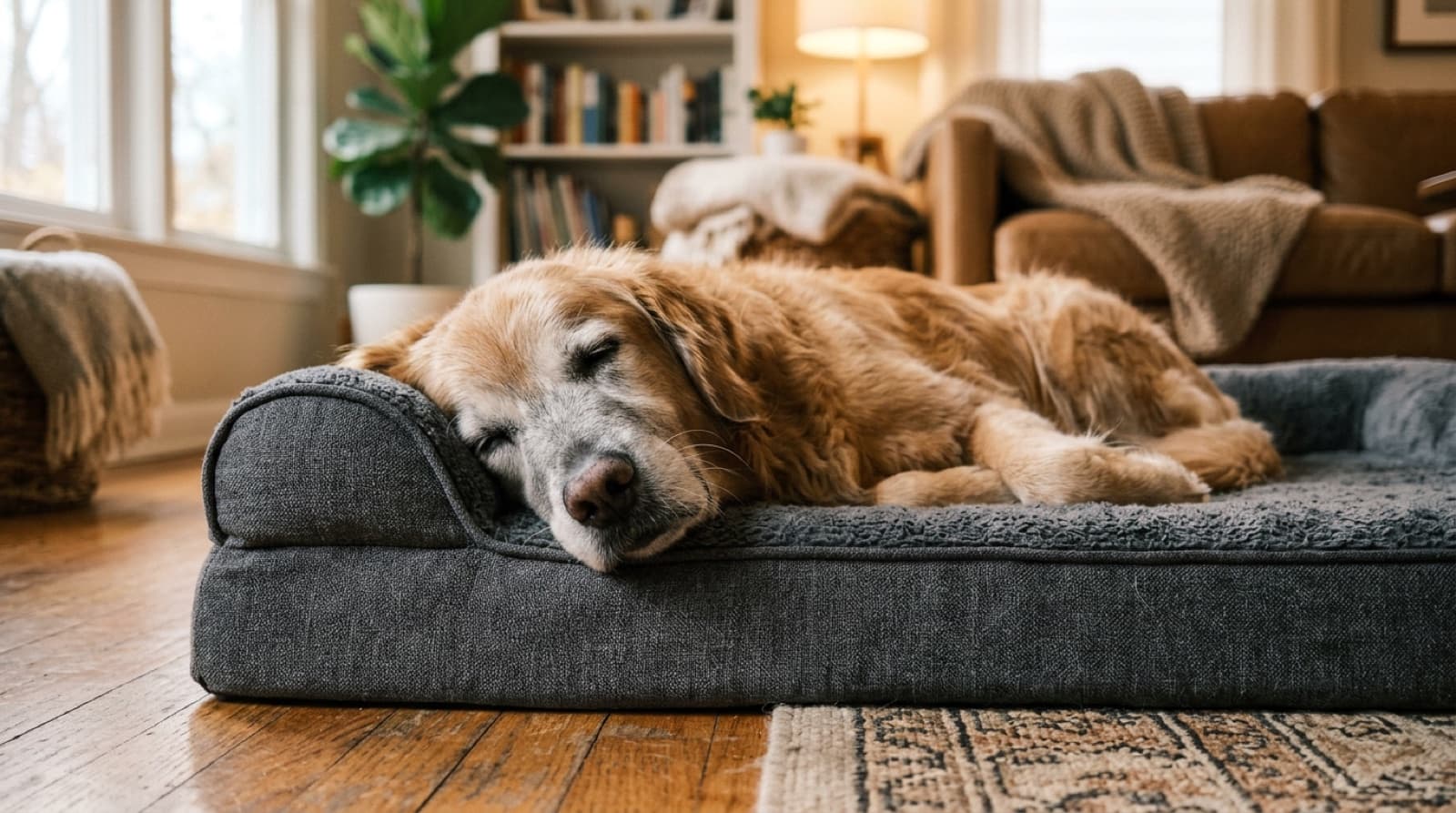
The short answer
Buy a bed made of solid or memory foam, not loose poly-fill, sized so your dog can stretch out fully. Prioritise real memory foam, a low entry point a stiff dog can step onto, and a washable waterproof cover. Then keep it warm and off cold floors. A bed is comfort and support, not a treatment: a limping or stiff dog needs a vet, and the single best thing for canine arthritis is keeping your dog lean.
The bed worth buying
The specification matters far more than the brand here, and it rules out most of what is on the shelf: you want a solid slab of memory foam, not shredded foam or poly-fill, because shredded filling compresses into lumps within months and stops supporting the joints you bought it for.
JOYELF Memory Foam Orthopedic Bed is the one we point people at. Solid memory foam base, bolstered sides so a dog has somewhere to rest their head, a cover that zips off for the machine — non-negotiable with an older dog — and five sizes from 68 cm up to 119 cm. 4.6★ (30,503) · $99.99 on Amazon.ca
Size it by measuring your dog stretched out, nose to base of tail, and adding about 15 cm. Most people buy one size too small because they picture the dog curled up, and then the dog sleeps with their hindquarters on the floor, which defeats the point. If the bed is going inside a crate, measure the crate instead.
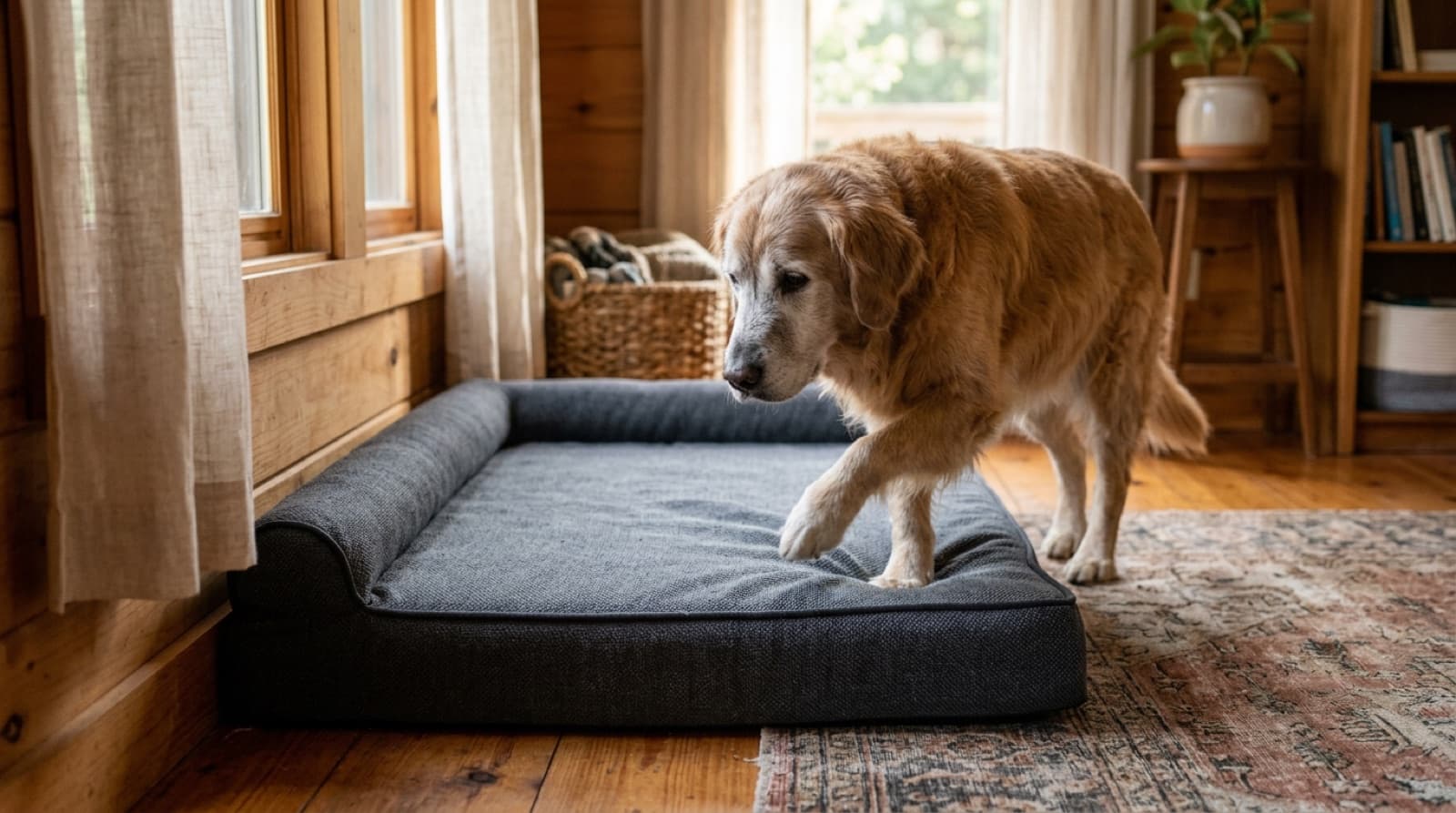
One thing to check before you buy for a senior: entry height. A thick orthopedic bed is wonderful support and an obstacle for a dog with bad hips, so for a dog who already struggles to step up, choose a lower profile or pair it with a ramp.
Some links on this page are Amazon affiliate links — we may earn a small commission at no extra cost to you. It never changes what we recommend.
Which dogs actually need one: older, large and arthritic dogs
A young, light dog with healthy joints does fine on a normal bed. An orthopedic bed earns its price for a specific set of dogs. Senior dogs top the list, since older dogs lie down far more and, by some estimates, a large majority of large-breed dogs deal with joint pain as they age. Arthritic dogs and dogs with diagnosed hip or elbow issues benefit from even weight distribution that keeps them off inflamed joints. Large and giant breeds and simply heavy dogs put more pressure on every contact point, so they feel a hard floor sooner.
There is also a group owners often miss: dogs developing elbow calluses or hygromas, the thickened patches and fluid-filled swellings that form from lying repeatedly on tile, concrete or hardwood. Soft, thick bedding is the front-line prevention, and vets note these lesions often improve with better bedding alone. Post-surgery and rehab dogs, who spend more time lying down, round out the list. The honest framing throughout: a supportive bed genuinely helps comfort, circulation and sleep, but it is support, not a cure.
What “orthopedic” should actually mean
“Orthopedic” is an unregulated marketing term. A thin poly-fill cushion can legally carry it. The buyer test is the fill, not the word: look for solid or memory foam that molds and rebounds, not a bag of fluff that flattens.
With that filter in mind, here is what to match to your dog:
- Solid or memory foam of the right thickness and density. The single most important spec. A heavier dog needs firmer, thicker, higher-density foam so it does not bottom out. Shop memory-foam beds and press a hand in: if you feel the base, it is too thin for a big dog.
- The right size. Your dog should stretch out fully, not curl to fit. Measure them lying flat and add several inches. Most owners buy a size too small, so lean to a larger size.
- Bolster or flat. A bolster edge supports the head and suits dogs who lean; a flat, low-entry bed suits sprawlers and dogs who struggle to climb.
- Low, easy entry for arthritic or mobility-limited dogs, so they step on rather than clamber over an edge.
- A washable, waterproof cover. Senior incontinence is common, so a removable machine-washable cover is close to essential.
- Chew resistance for heavy chewers (a tougher build), and a cooling option for large or heat-sensitive dogs.
Some links on this page are Amazon affiliate links — we may earn a small commission at no extra cost to you. It never changes what we recommend. This article is general information, not veterinary advice.
Placement does half the work (a Canadian winter note)
The best bed in the wrong spot underperforms. Cold stiffens arthritic joints, which matters through a long Canadian winter, so keep the bed in a warm, draft-free spot and up off cold tile or concrete. Put it somewhere the dog can reach easily: a stiff, arthritic dog should not have to climb stairs to get to bed, so a ground-floor, accessible spot beats a cozy basement they avoid. Wash the cover regularly, both for hygiene and to keep pressure points and any calluses clean. And if your dog already shows elbow calluses, offer padded surfaces everywhere they routinely lie, not just the one bed.
A bed is comfort, not a cure
A bed is supportive care, not a treatment. If your dog is limping, stiff, or slow to rise, that needs a veterinary diagnosis and a management plan, and the single most effective thing you can do for canine arthritis is keep your dog lean.
Arthritis (osteoarthritis) is a progressive disease that is managed, not cured. Signs worth a vet visit include limping, reluctance to rise or use stairs, stiffness after rest or in the cold, and dropping off in activity. As the VCA and AKC both frame it, real management is multimodal: weight control first, then appropriate exercise, physical rehabilitation, and vet-prescribed pain relief. Body fat itself releases inflammatory signals that worsen joint pain, which is why keeping the dog lean does more than any single product. A warm orthopedic bed and a sensible joint supplement are comfort measures that sit on top of that plan, not in place of it.
Thinking about a senior rescue dog?
Older rescue dogs are calm, house-trained, and desperate for a soft place to land. A warm orthopedic bed is the kindest welcome you can give one.
Browse Adoptable Dogs →Frequently Asked Questions
What is an orthopedic dog bed?
It is a bed built on a base of solid or memory foam designed to distribute a dog's weight evenly and relieve pressure on the joints, rather than a cushion stuffed with loose fill that flattens under weight. The idea is the same as a good mattress for a person: even support so the hips, elbows and shoulders are not pressing into a hard surface. The catch is that "orthopedic" is an unregulated marketing word, so the label alone guarantees nothing. What makes a bed genuinely orthopedic is the foam inside it, not the word on the tag.
Do orthopedic dog beds really help?
For the right dog, yes, as comfort and pressure relief. Direct canine research is limited, but the most-cited study, a University of Pennsylvania trial of a large-breed orthopedic bed, reported improved mobility and reduced joint pain in arthritic large dogs, and vets widely recommend supportive bedding for seniors and heavy breeds. Be clear on what it is, though: a bed improves comfort, circulation and sleep quality, but it does not treat arthritis. It is supportive care that sits alongside veterinary management, not a substitute for it.
What is the best dog bed for arthritis or senior dogs?
A solid memory-foam bed, sized so the dog can stretch out fully, with a low entry point that a stiff dog can step onto rather than climb, and a machine-washable waterproof cover for the incontinence that often comes with age. Then placement does half the work: keep it warm, off cold floors, and out of drafts, because cold stiffens arthritic joints. Avoid anything that is mostly loose poly-fill dressed up with the word orthopedic.
What thickness or density of memory foam does a large dog need?
Enough that the dog does not bottom out and end up resting on the floor through the foam. Density matters more than a single headline number: a heavier dog needs firmer, thicker, higher-density foam to stay supported. Press your hand into the bed; if you can easily feel the base underneath, it is too thin or too soft for a big dog. For giant breeds, look specifically for beds rated for their weight rather than a generic large.
What is the best dog bed for large or giant breeds?
A large or extra-large solid memory-foam bed rated for the dog's weight, with a cover you can actually get off and wash. A bolster edge is a nice extra for dogs who like to rest their head, but the non-negotiable is real, supportive foam that holds up under a heavy dog. Measure your dog stretched out and add several inches, since most owners buy a size too small.
Are orthopedic dog beds worth it?
For senior dogs, large and heavy breeds, arthritic dogs, and dogs developing elbow calluses from hard floors, they are a worthwhile comfort investment. For a young, light dog with no joint issues, a regular bed is fine. The one caution is that because "orthopedic" is unregulated, you have to check for genuine solid foam rather than trusting the label, or you are paying an orthopedic price for a poly-fill cushion.
Bolster or flat bed, which is better?
It depends on how your dog sleeps. A bolster bed, with raised edges, suits dogs who like to rest their head or lean against something and feel more secure curled up. A flat bed with a low or no edge suits dogs who sprawl out flat, and it is easier for a stiff or mobility-limited dog to step onto without climbing over a raised bolster. If your dog struggles to get up, prioritise easy entry over the bolster.
Can an orthopedic bed prevent elbow calluses or hygromas?
Soft, thick bedding is the front-line prevention for the pressure sores, calluses and fluid-filled hygromas that dogs develop from lying repeatedly on hard floors like tile or concrete. Vets note these often improve with softer bedding alone. So yes, giving a large or bony dog a genuinely padded surface to lie on, everywhere they routinely rest, both prevents and helps these pressure lesions. If a lump or sore is already established, have your vet check it.
Best Dog Joint Supplement
What the evidence actually says, why omega-3 beats glucosamine, and the vet caveats.
Best Senior Dog Food
Keeping a senior dog lean is the single best thing for their joints. Start here.
Adopting a Senior Dog
Why older rescue dogs make wonderful companions, and what they need.
Explore Dog Breeds
Large and giant breeds feel hard floors soonest. See what each one needs.
Something else going on with your dog?
Pick what is on your mind and we will point you at the guide that answers it, and what to buy if anything.