The short answer
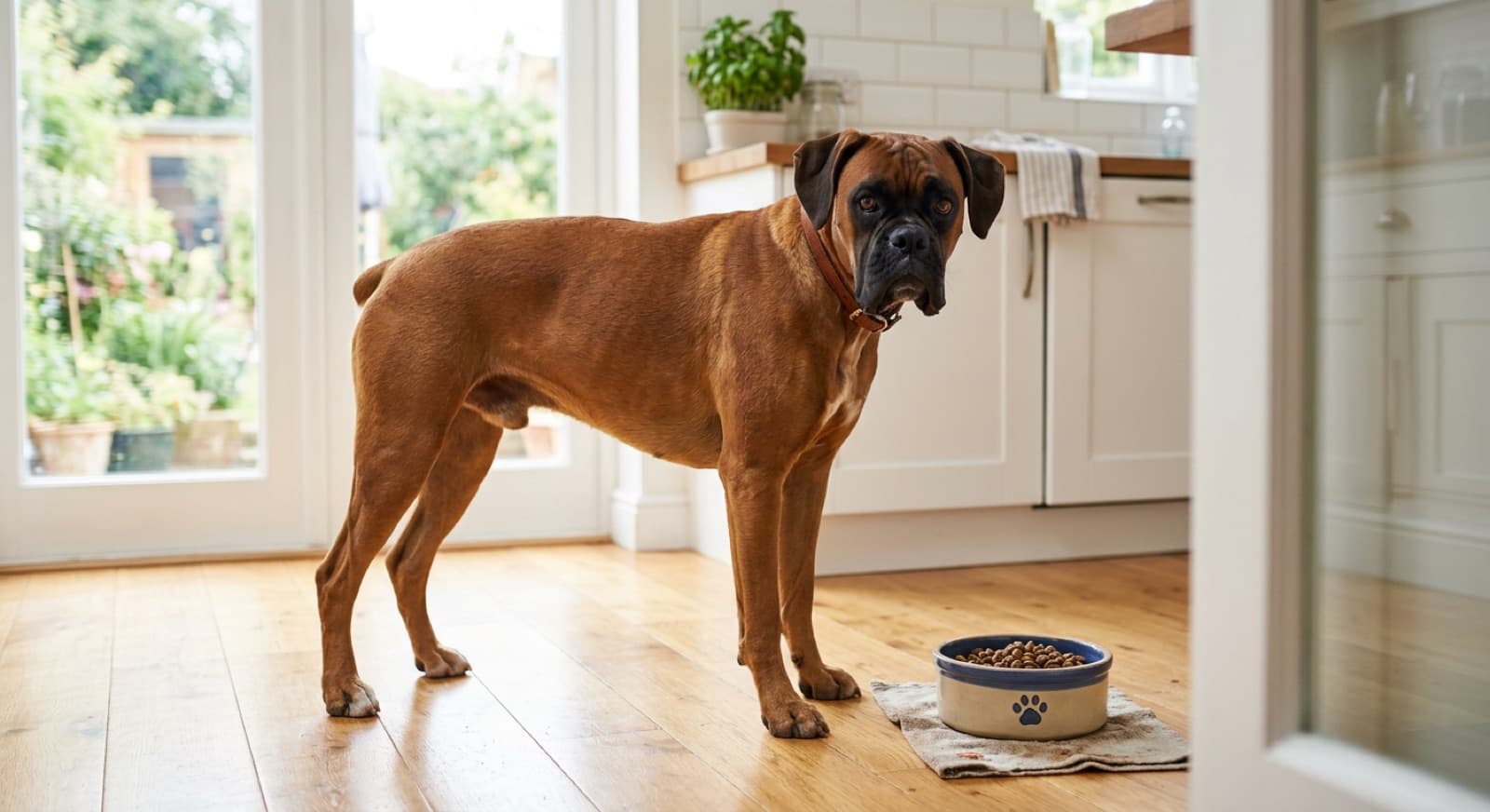
Feed a Boxer a complete diet from an established, nutritionist-backed brand, keep it lean, and take its sensitive stomach seriously. Boxers react easily, so a steady quality food beats constant switching, and a real food allergy is diagnosed by a vet elimination diet, not guesswork. Keep the puppy on a controlled-calcium large-breed formula and grow it slowly. Feed two meals from the floor, never raised, because elevated bowls raise bloat risk. And know the heart facts: Boxer cardiomyopathy is genetic, not dietary, but a heart-prone breed is reason enough to avoid boutique grain-free.
The sensitive stomach is real
Spend any time in Boxer owner communities and the same theme dominates: loose stools, gas, and the long hunt for a food that finally settles the dog. Boxers are a genuinely sensitive-GI breed, so this is not just bad luck, it is the breed.
The productive approach is steadiness, not churn. Pick a complete diet from a brand that employs a board-certified veterinary nutritionist and runs feeding trials, per the WSAVA guidelines, and transition to any new food over seven to ten days. Several major brands make sensitive-stomach or gastrointestinal lines worth trying. If loose stools or gas persist, the real answer is a vet-supervised elimination diet using a novel or hydrolyzed protein for eight to twelve weeks, which is the only reliable way to identify a true food trigger. One myth to drop: grain is rarely the culprit. The common canine food allergens are animal proteins like beef and chicken, not grains, so a grain-free switch is usually not the fix.
The heart and the grain-free question
Two different heart issues get confused. Boxer cardiomyopathy is genetic, not caused by diet. The grain-free concern is about a separate disease and is unproven. Do not give taurine or heart supplements on your own; that is a vet decision after testing.
Boxer cardiomyopathy (ARVC) is a genetic condition. The Merck Veterinary Manual describes it as arrhythmogenic right ventricular cardiomyopathy, tied to a gene mutation, and its hallmark sign is fainting. Diet does not cause it and no food cures it. Keep that separate from the next point.
The grain-free controversy is about a different disease, dilated cardiomyopathy (DCM). The FDA has investigated a possible association between grain-free, legume-heavy diets and DCM, but it has not established causation and the question remains genuinely unresolved. So the honest position is neither “grain-free causes heart disease” nor “grain-free is proven safe.” The sensible conclusion for this breed: a Boxer is already heart-vulnerable, so there is no upside to gambling on a boutique grain-free recipe when established, feeding-trial brands are available. Leave taurine and any cardiac supplement to your vet, who will test first.
Boxer colitis: not the food
Boxers are prone to a specific condition, histiocytic ulcerative colitis, widely called Boxer colitis, which shows up in young dogs as frequent, small, mucousy, often bloody large-bowel diarrhea. For years owners chased it with diet changes, and this is the correction worth making: it is now understood to be associated with invasive E. coli bacteria in the colon wall, not a food allergy, and the effective treatment is a specific antibiotic course from your vet, which can produce remission where diet-only approaches failed.
So if a young Boxer develops bloody, mucousy diarrhea, that is a veterinary diagnosis, not a food experiment. Diet may play a supportive role in recovery, but the cause is bacterial, and the belief that the right bag cures Boxer colitis is outdated. This is different from the everyday sensitive stomach above, which is about finding a food that agrees with the dog.
Growing a Boxer puppy
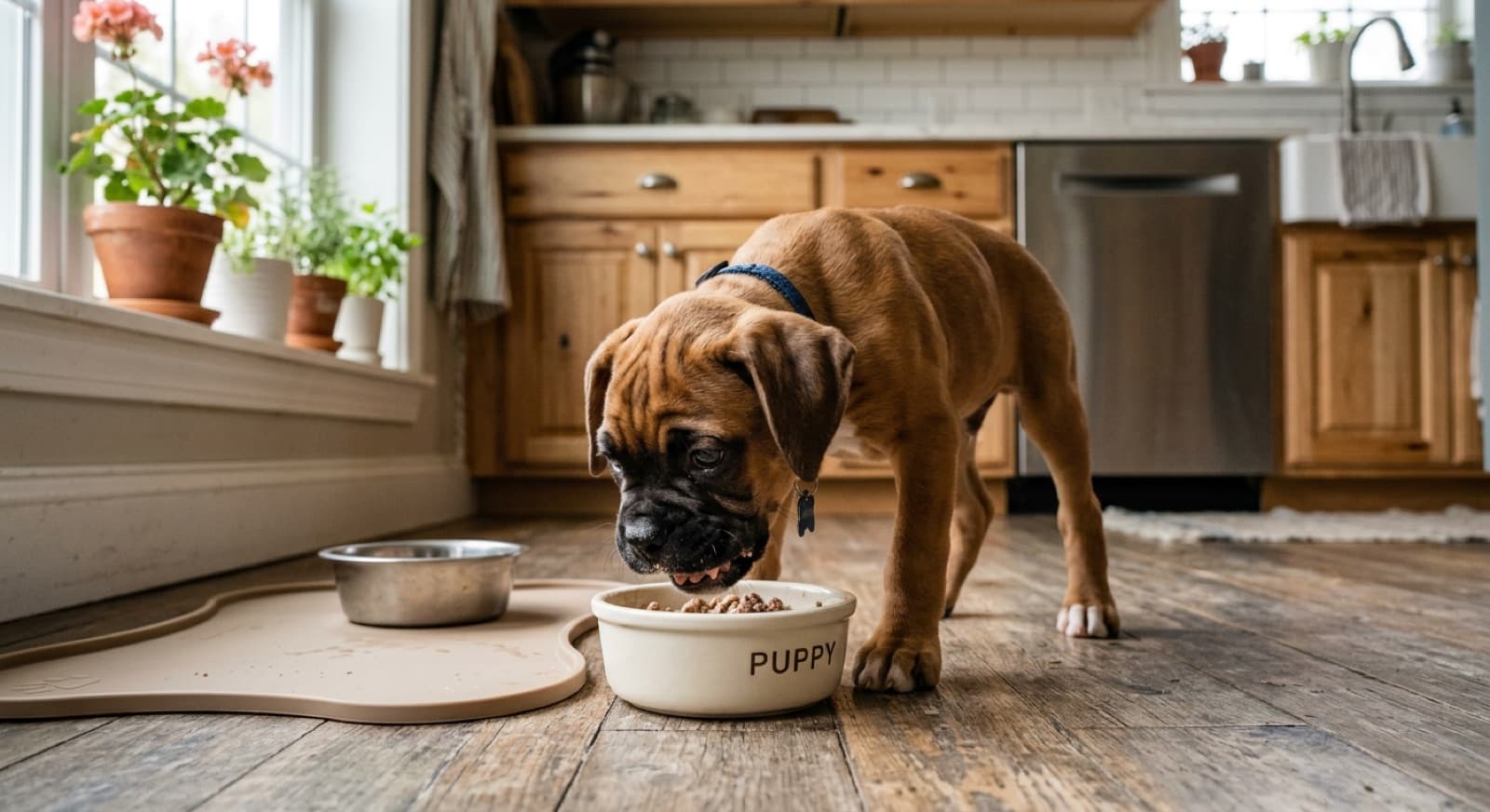
Boxers sit at the medium-to-large border, and for growth purposes the safe move is to treat a Boxer puppy as a large breed and feed a controlled-calcium large-breed puppy formula. The reason is the same as for any big puppy: excess calcium and overfeeding for fast growth are established causes of developmental joint and skeletal problems, and a large-breed puppy cannot regulate the calcium it absorbs.
That gives two firm rules. Do not free-feed or push a Boxer puppy to grow fast, and do not add a calcium supplement or multivitamin to a complete puppy food. Keep the puppy lean, let it grow slowly, and transition to adult food on your vet's timing, generally somewhere around 12 to 15 months. Slow and lean now is what protects the athletic body the breed is known for.
Bloat, and the raised-bowl myth
Raised or elevated bowls do not prevent bloat. Cornell lists them as a factor that increases the risk in at-risk breeds. Feed a Boxer from the floor.
Bloat, or gastric dilatation-volvulus, is when the stomach fills with gas and twists, and it is rapidly fatal without emergency surgery. Boxers are deep-chested and appear on bloat risk lists, so the prevention is worth taking seriously. Cornell's Riney Canine Health Center lists the modifiable risk factors, and the surprising one is that raised feeding bowls increase risk rather than reduce it.
So feed from the floor, feed two or more smaller meals a day instead of one large one, slow a fast eater with a slow-feeder bowl, and avoid hard exercise right around meals. The single most reliable protection is a preventive gastropexy, which tacks the stomach so it cannot twist; Cornell notes it drops the recurrence risk dramatically. A swollen, drum-tight belly with unproductive retching is a go-to-the-emergency-vet-now situation.
Lean and muscular, the right way
The Boxer's physique tempts owners to bulk the dog up with extra protein or muscle-builder supplements. Skip it. A Boxer's muscle comes from genetics, exercise, and a complete balanced diet with adequate quality protein, not from megadosing, which is unnecessary and can cause harm, especially excess calcium in a growing dog.
Feed to body condition rather than the bag. As the AKC describes, you should feel the ribs easily under light pressure, see a waist from above, and see an abdominal tuck from the side, aiming for a lean 4 to 5 out of 9. The AKC also notes lean dogs can live well over a year longer than overweight ones, so a lean, athletic Boxer is a healthier one than a bulky version. Adjust the amount to hold that condition and count treats inside the daily total.
A word on cancer and diet
Boxers are one of the most cancer-prone breeds, especially for mast cell tumours and lymphoma, and it is worth being clear: that predisposition is genetic, and no diet, antioxidant, or supplement has been shown to prevent these breed-associated cancers. Be skeptical of any product marketed as cancer-preventing.
Keeping a Boxer lean supports overall health, but the genuine lever against cancer is early detection. Check your dog regularly for new lumps, and have anything new or changing looked at by your vet promptly rather than waiting to see if a dietary change helps. With this breed, time matters more than any supplement.
Foods to avoid
Keep these away from a Boxer completely:
- Chocolate (darker is worse)
- Grapes and raisins (can cause kidney failure, even a few)
- Xylitol (in sugar-free gum, some peanut butters, and baking), which is rapidly fatal to dogs
- Onions, garlic, leeks, and chives
- Macadamia nuts
- Alcohol and caffeine
- Cooked bones (they splinter), and rich, fatty scraps that upset a sensitive stomach
A food-motivated Boxer will help itself to anything in reach, so keep counters and bins secured. If your dog eats something on this list, call your vet, the nearest emergency clinic, or a pet poison helpline right away.
Looking to adopt a Boxer?
Plan the sensitive-stomach and lean-feeding routine before day one. Browse Boxers and Boxer mixes available now from the rescues we track across Canada.
See Available Boxers →Where to buy Boxer food
Every brand worth feeding a Boxer is easy to find:
- Pet specialty chains (Pet Planet, Tail Blazers, Tisol). Carry Pro Plan, Royal Canin, and Hill's, including sensitive-stomach and large-breed lines.
- Pet Valu and PetSmart. Stock the major large-breed puppy and adult formulas.
- Your vet clinic. The best source for gastrointestinal prescription diets if your Boxer's stomach needs more help.
For a sensitive Boxer, a sensitive-stomach formula from an established brand is a good starting point, and the major large-breed formulas are easy to set on a recurring delivery once you find one that agrees with your dog.
Frequently Asked Questions
What is the best food for a Boxer with a sensitive stomach?
There is no single best bag, because the right food depends on what your individual Boxer reacts to. Boxers are a notably sensitive-stomach breed, and the reliable approach is a complete diet from a brand that employs a board-certified veterinary nutritionist and runs feeding trials, such as Purina Pro Plan, Royal Canin, or Hill's Science Diet, several of which make sensitive-stomach or gastrointestinal lines. If loose stools or gas persist, the answer is a vet-supervised elimination diet to find the real trigger, not endless brand-swapping. Most food reactions are to a protein like chicken or beef, not to grain.
Does grain-free food cause heart disease in Boxers?
This needs care, because two different heart issues get confused. Boxer cardiomyopathy (ARVC) is a genetic condition caused by a gene mutation, not by diet, and no food causes or cures it. Separately, the FDA has investigated a possible link between grain-free diets high in peas, lentils, and potatoes and a different disease, dilated cardiomyopathy. That link is not proven and remains unresolved. But because Boxers are already a heart-vulnerable breed, most vets sensibly steer owners toward established, nutritionist-backed brands rather than boutique grain-free recipes. It is caution, not a proven danger.
Is Boxer colitis caused by food?
Mostly no, and this is an important correction. Histiocytic ulcerative colitis, often called Boxer colitis, causes bloody, mucousy large-bowel diarrhea in young Boxers, and it is now understood to be associated with invasive E. coli bacteria in the colon wall, not a food allergy. The modern, effective treatment is a specific antibiotic course prescribed by a vet, often with dramatic results, where old diet-only approaches failed. Diet can be supportive, but the belief that the right food cures Boxer colitis is outdated. If your Boxer has bloody diarrhea, that is a vet visit, not a food experiment.
Do I feed a Boxer puppy large-breed puppy food?
Yes, treat a Boxer as a large breed for growth purposes and feed a controlled-calcium large-breed puppy formula. Boxers sit at the medium-to-large border, but the safe approach is to control calcium and avoid overfeeding, because excess calcium and rapid growth are established causes of joint and skeletal problems in growing large-breed dogs. Do not free-feed or push fast growth, and do not add calcium supplements to a complete food. Keep the puppy lean and let it grow slowly. Transition to adult food on your vet's timing, generally around 12 to 15 months.
Do raised or elevated bowls prevent bloat in a Boxer?
No, the evidence points the other way. Cornell lists raised feeding bowls as a factor that increases the risk of bloat in at-risk breeds, so feed a Boxer from the floor. Boxers are deep-chested and appear on bloat risk lists, so prevention matters: feed two or more smaller meals a day rather than one large one, slow a fast eater with a slow-feeder bowl, and avoid hard exercise right around meals. The most reliable protection is a preventive gastropexy, which tacks the stomach so it cannot twist and dramatically lowers the risk, worth discussing with your vet.
How do I keep my Boxer lean and muscular?
A Boxer's muscle comes from genetics and exercise plus a complete, balanced diet, not from megadosing protein or feeding muscle-builder supplements, which are unnecessary and can do harm. Feed to body condition, not to the bag: you should feel the ribs easily with light pressure, see a waist from above, and see a tuck from the side. Aim for a lean score around 4 to 5 out of 9. Lean dogs live measurably longer, so resist the urge to bulk a Boxer up. Adjust the amount to hold that lean, athletic condition and count treats inside the daily total.
Can diet prevent cancer in Boxers?
No. Boxers are one of the most cancer-prone breeds, especially for mast cell tumours and lymphoma, and that predisposition is genetic. No diet, antioxidant, or supplement has been shown to prevent these breed-associated cancers, and you should be skeptical of any product that claims to. Keeping a Boxer lean supports overall health, but the real lever against cancer is early detection: check regularly for lumps, and have anything new looked at by your vet promptly. Do not delay a vet visit in favour of a dietary fix.
What to Feed a Doberman
Lean body condition and the heart-aware, deep-chested-breed feeding rules.
What to Feed a Great Dane
Controlled-calcium growth and the bloat playbook for a deep-chested breed.
What to Feed a French Bulldog
Sensitive-stomach and colitis-prone feeding for another short-nosed breed.
Boxers for Adoption
Live listings of Boxers and Boxer mixes from the rescues we track.