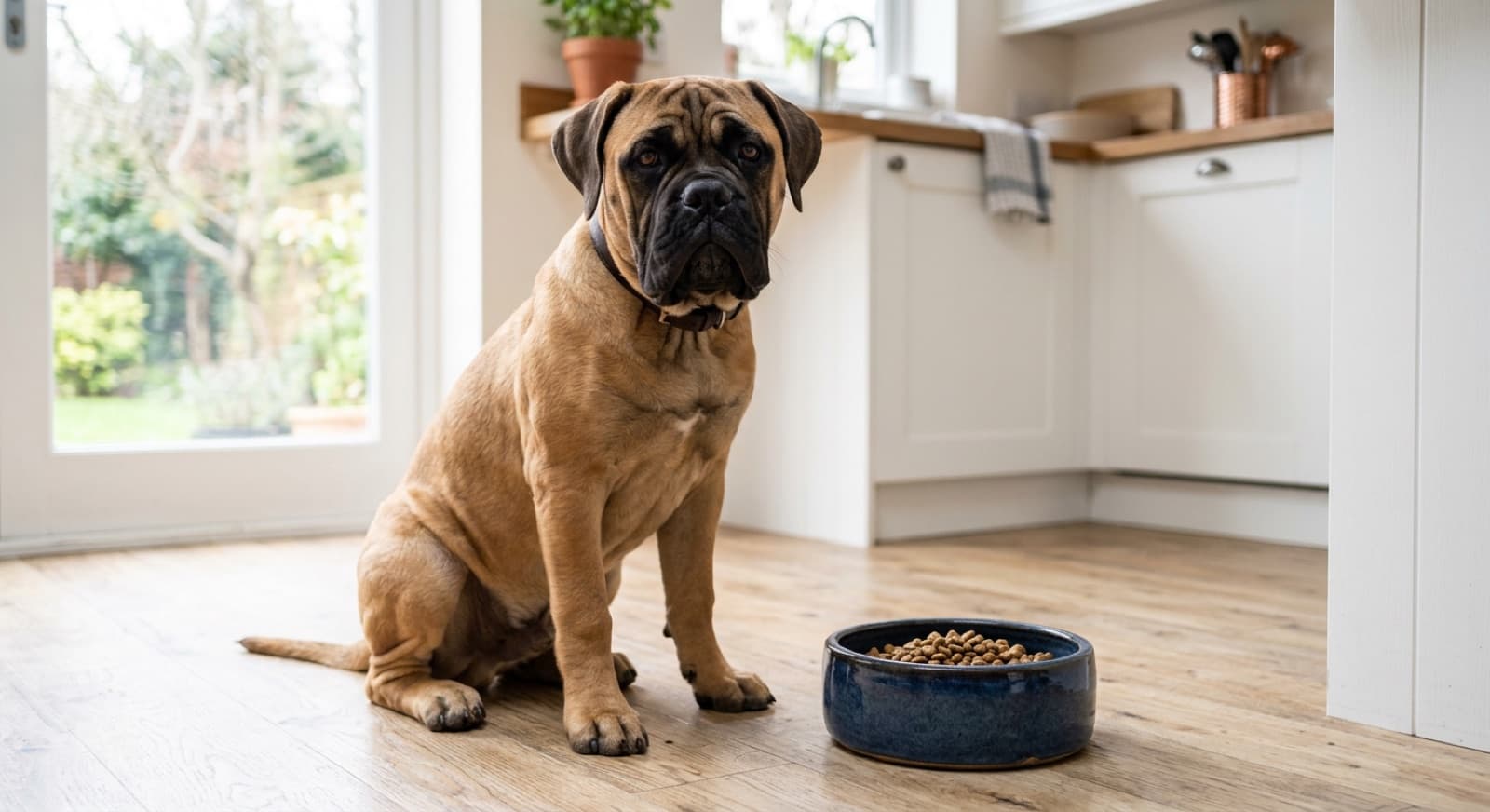
The short answer
Feed a Bullmastiff puppy a controlled-calcium large or giant-breed growth food, grow it slowly, and keep it lean for life. The puppy-versus-adult-food argument misses the point: what matters is the large-breed growth formulation and a calcium level near 1 to 1.2 percent, with no supplements added. The Bullmastiff is a high bloat-risk breed, so feed several smaller meals from the floor, never a raised bowl, and consider a gastropexy. Do not bulk a mastiff up; lean protects its joints and airway. Cystinuria is the one genuine urinary diet link, managed by your vet.
Growing a giant: calcium, not the word on the bag
Never add calcium, cottage cheese, eggshell, or bone meal to a complete puppy food to build bigger bones. Excess calcium causes developmental bone disease in a giant-breed puppy. It harms, it does not help.
The single biggest Bullmastiff feeding debate is whether to feed a giant puppy “puppy food” or to switch to “adult food” early, as many mastiff breeders advise. Both camps are circling the real answer without naming it. What actually matters is not the word on the bag but whether the food is formulated for the growth of large-size dogs, which you confirm by the AAFCO statement, with a controlled calcium level around 1 to 1.2 percent. As VCA explains, a giant-breed puppy should only get food appropriate for large or giant-breed growth, kept on it to around 18 to 24 months.
The reason breeders' “switch to adult food” advice often works in practice is that many large-breed adult foods happen to have lower calories and controlled calcium compared with a calorie-dense all-breed puppy food. It is a rough proxy for the real rule, not the rule itself. The danger to avoid is twofold, both established causes of developmental orthopedic disease: too-rapid growth from overfeeding, and excess calcium, which a giant puppy cannot regulate. So feed a large or giant-breed growth food, keep the puppy lean and growing slowly, and add nothing to it.
Bloat: a high risk for the breed
Raised or elevated bowls do not prevent bloat. The leading study found they increase the risk in large and giant breeds. Feed a Bullmastiff from the floor.
Bloat, or gastric dilatation-volvulus, is when the stomach fills with gas and twists, and it is a rapidly fatal emergency that the American Bullmastiff Association flags as a life-threatening breed concern. The risk factors it cites from the research include eating one meal a day, eating rapidly, being underweight, and a fearful temperament, with stress as a common trigger.
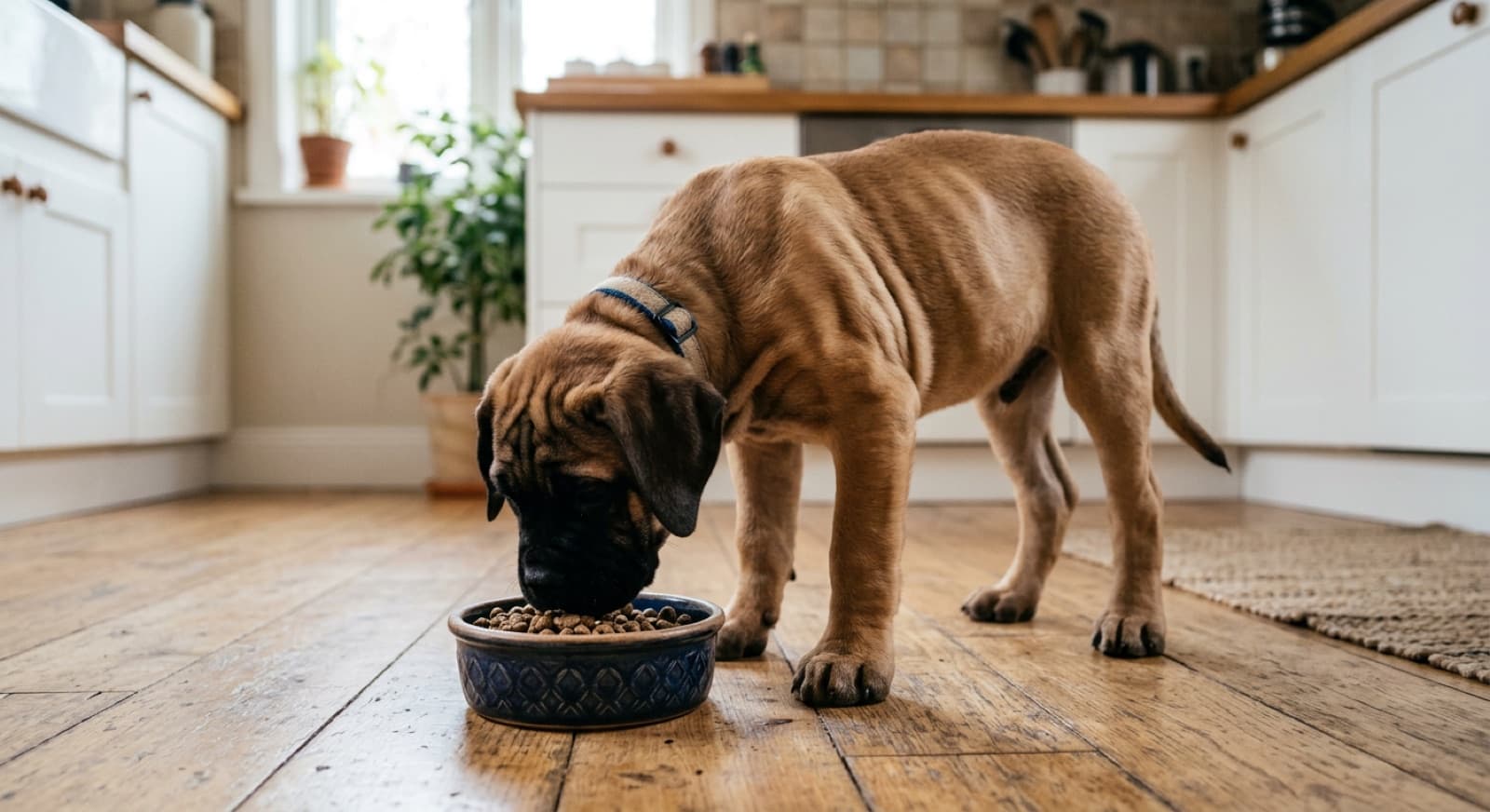
The prevention is concrete. The breed association recommends feeding small, frequent meals, three to five times a day, and slowing a fast eater. The large Glickman study found that raised feeders were associated with an increased risk, so feed from the floor, not an elevated bowl. Keep the dog calm for half an hour to an hour before and after meals. The single most reliable protection is a preventive gastropexy, which tacks the stomach so it cannot twist, dropping recurrence from the majority of dogs to just a few percent, and is commonly done at spay or neuter. A swollen, drum-tight belly with unproductive retching is a go-to-the-emergency-vet-now situation.
Keep the giant lean, do not bulk it up
There is a temptation with a powerful breed to feed it heavy and let it carry mass. Resist it. Extra weight on a Bullmastiff loads the hips and elbows the breed is already prone to having trouble with, strains a short-muzzled airway, and shortens life. A mastiff is large and imposing no matter what; there is no upside to carrying fat and real harm in it.
Feed to body condition, not the bag. As PetMD and the standard body condition tools describe, a healthy Bullmastiff has a visible waist from above, an abdominal tuck from the side, and ribs you can feel under a thin layer of fat. Keeping the dog lean is also the single most important thing you can do to limit how badly hip and elbow problems show up, since the genes set the risk but weight drives the expression. Big bones and muscle come from genetics and time, not from overfeeding.
Drool, gas, fast eating, and heat
Feeding a Bullmastiff comes with logistics. The loose jowls mean heavy drool, especially around food, so a washable mat under the bowl and a drool towel are part of the routine. The short muzzle also means the dog tends to gulp air while eating fast, which causes gas and is itself a bloat risk factor, so a slow-feeder bowl does double duty.
Heat ties into feeding too. As a short-muzzled breed, the Bullmastiff overheats easily and does not pant as efficiently as a long-nosed dog, so the bloat rule to avoid hard exercise around meals overlaps neatly with the heat rule to exercise only in the cool parts of the day. Never feed a Bullmastiff and then exercise it in the heat. Schedule meals and activity for cooler mornings and evenings, and keep fresh water available.
Which Bullmastiff health issues are about diet?
Owners file most worries under feeding, so it helps to separate what diet controls from what it does not.
- Cystinuria (the real diet link): an inherited defect that lets cystine form bladder or kidney stones, affecting Bullmastiffs and Mastiffs, with males far more affected. A diagnosed dog is managed with a vet-prescribed low-purine, cystine-reducing diet, often with urine-alkalinizing medication. As the Merck Veterinary Manual notes, this is vet-directed, because the wrong approach can promote other stone types.
- Obesity and joint disease (diet-driven): the everyday issue, and the reason the keep-lean rule matters so much.
- Hip and elbow dysplasia (diet modifies, does not cause): genetic in origin, but growth rate and body weight strongly influence how badly they show.
- Cancer (not diet): Bullmastiffs are notably prone to lymphoma and other cancers, and that predisposition is genetic. No diet prevents it, so be skeptical of any product that claims to; early detection is the real lever.
- Subaortic stenosis (not diet): a congenital heart defect, unrelated to food.
Foods to avoid
Keep these away from a Bullmastiff completely:
- Chocolate (darker is worse)
- Grapes and raisins (can cause kidney failure, even a few)
- Xylitol (in sugar-free gum, some peanut butters, and baking), which is rapidly fatal to dogs
- Onions, garlic, leeks, and chives
- Macadamia nuts
- Alcohol and caffeine
- Cooked bones (they splinter)
A Bullmastiff can clear a counter without trying, so keep food and bins out of reach. If your dog eats something on this list, call your vet, the nearest emergency clinic, or a pet poison helpline right away.
Should I feed my Bullmastiff a raw diet?
Only with a vet or veterinary nutritionist involved, and be especially careful with a growing puppy. Many new Bullmastiff owners are drawn to raw, and some dogs do well on a properly built diet, but the FDA warns raw meat carries a pathogen risk for the dog and the household. Balancing calcium in a homemade raw diet is also genuinely hard, which is exactly the nutrient a giant-breed puppy cannot afford to get wrong.
For most Bullmastiffs, a complete cooked or kibble diet from a nutritionist-backed brand matches raw on outcomes. If you go raw, especially for a puppy, work with a veterinary nutritionist on a complete, calcium-correct recipe rather than guessing.
Looking to adopt a Bullmastiff?
Plan the giant-breed growth and bloat-prevention routine before day one. Browse Bullmastiffs and mastiff mixes available now from the rescues we track across Canada.
See Available Bullmastiffs →Where to buy Bullmastiff food
Every brand worth feeding a Bullmastiff is easy to find in store and online:
- Pet specialty chains (Pet Planet, Tail Blazers, Tisol, and similar). Carry Pro Plan, Royal Canin (which makes a giant line), and large-breed growth formulas.
- Pet Valu and PetSmart. Stock the major large-breed puppy and adult formulas.
- Your vet clinic. The best source for giant-breed puppy guidance and the prescription diet if cystinuria is ever diagnosed.
- Costco. Kirkland Signature large-breed is a cheaper everyday adult option.
Because an adult Bullmastiff eats moderately for its size, buying the largest bag it finishes before the food goes stale, stored sealed, keeps the per-meal cost down. The major large-breed formulas are easy to set on a recurring delivery.
Frequently Asked Questions
Do I feed a Bullmastiff puppy "puppy food" or "adult food"?
This is the most argued-about question in the breed, and both camps are half-right. The thing that actually matters is not the word puppy or adult on the bag but whether the food is formulated for the growth of large-size dogs, which you confirm by the AAFCO statement and a controlled calcium level around 1 to 1.2 percent. Standard all-breed puppy food is often too calorie- and calcium-dense for a giant puppy, which is why breeders push owners toward adult large-breed food. But the cleaner answer is a food built for large or giant-breed growth, not just any adult food. Confirm the choice with your vet.
Is high calcium or a calcium supplement good for building big bones?
No, the opposite. Adding calcium, cottage cheese, eggshell, or bone meal to build a bigger-boned Bullmastiff is one of the most damaging mistakes you can make, because a giant-breed puppy cannot down-regulate the calcium it absorbs, and excess calcium is linked to developmental bone disease like osteochondrosis and other skeletal problems. A complete large or giant-breed growth food already has the right calcium, so do not supplement it. The goal is slow, steady growth on a lean frame, not fast, forced growth. Big bones come from genetics and time, not from extra calcium.
Are Bullmastiffs at high risk of bloat?
Yes. The Bullmastiff is a large, deep-chested breed, and bloat, or gastric dilatation-volvulus, is a top concern, named as life-threatening by the breed association. Risk factors include eating one large meal a day, eating fast, being underweight, and a fearful temperament. The prevention: feed two or more, ideally three to five, smaller meals a day, slow a fast eater, feed from the floor rather than a raised bowl, and keep the dog calm around mealtimes. The single most reliable protection is a preventive gastropexy, which tacks the stomach so it cannot twist and drops the risk dramatically.
Do raised or elevated bowls prevent bloat in a Bullmastiff?
No, the leading research found they increase the risk, not reduce it. So feed a Bullmastiff from the floor. The old advice to elevate the bowl for a big dog has been reversed by the evidence, which found raised feeders were associated with more bloat in large and giant breeds. The feeding habits that genuinely help are smaller, more frequent meals, slowing a fast eater with a slow-feeder bowl, and avoiding hard exercise for about an hour around meals. For a breed at this level of risk, a preventive gastropexy, often done at spay or neuter, is well worth discussing with your vet.
How much should I feed a Bullmastiff, and do they cost a fortune?
Less than the size suggests, which surprises people. Adult Bullmastiffs often eat a moderate amount for a giant, with owners commonly reporting around two to three cups twice a day, because giant breeds have a lower metabolic rate per pound. The expensive phase is puppyhood, when a fast-growing giant puppy eats a great deal. Feed to body condition rather than the bag, which over-recommends. The bigger cost of the breed is not food but veterinary care, so the smart budgeting goes into pet insurance and planning, not into overfeeding a dog that does not need it.
What is cystinuria and is it related to my Bullmastiff's diet?
Cystinuria is an inherited defect that lets the amino acid cystine build up in the urine and form bladder or kidney stones, and Bullmastiffs and Mastiffs are an affected breed, with males far more affected than females. This is a genuine diet link: a dog diagnosed with cystine stones is managed with a vet-prescribed low-purine, cystine-reducing diet, often with a medication to make the urine less acidic. This is strictly a vet-directed plan, not a do-it-yourself project, because the wrong approach can promote other stone types. If your Bullmastiff strains to urinate or has blood in the urine, see your vet.
Should I bulk up my Bullmastiff to look more impressive?
No. Feeding a Bullmastiff heavy to look more massive is harmful, not impressive. Extra weight loads the hips and elbows the breed is already prone to having trouble with, strains a short-muzzled airway, and shortens life. A healthy Bullmastiff should have a visible waist from above, a tuck from the side, and ribs you can feel under a thin layer of fat. Because the breed is large and powerful regardless, there is no benefit to carrying extra weight and real harm in it. Feed to that lean condition and let the genetics provide the size.
What to Feed a Mastiff
The same giant-breed growth and bloat rules for the larger English Mastiff.
What to Feed a St. Bernard
Controlled-calcium growth and high bloat risk for another giant breed.
What to Feed a Great Dane
The calcium-and-bloat playbook for the number-one bloat-risk giant.
Bullmastiffs for Adoption
Live listings of Bullmastiffs and mastiff mixes from the rescues we track.