The short answer
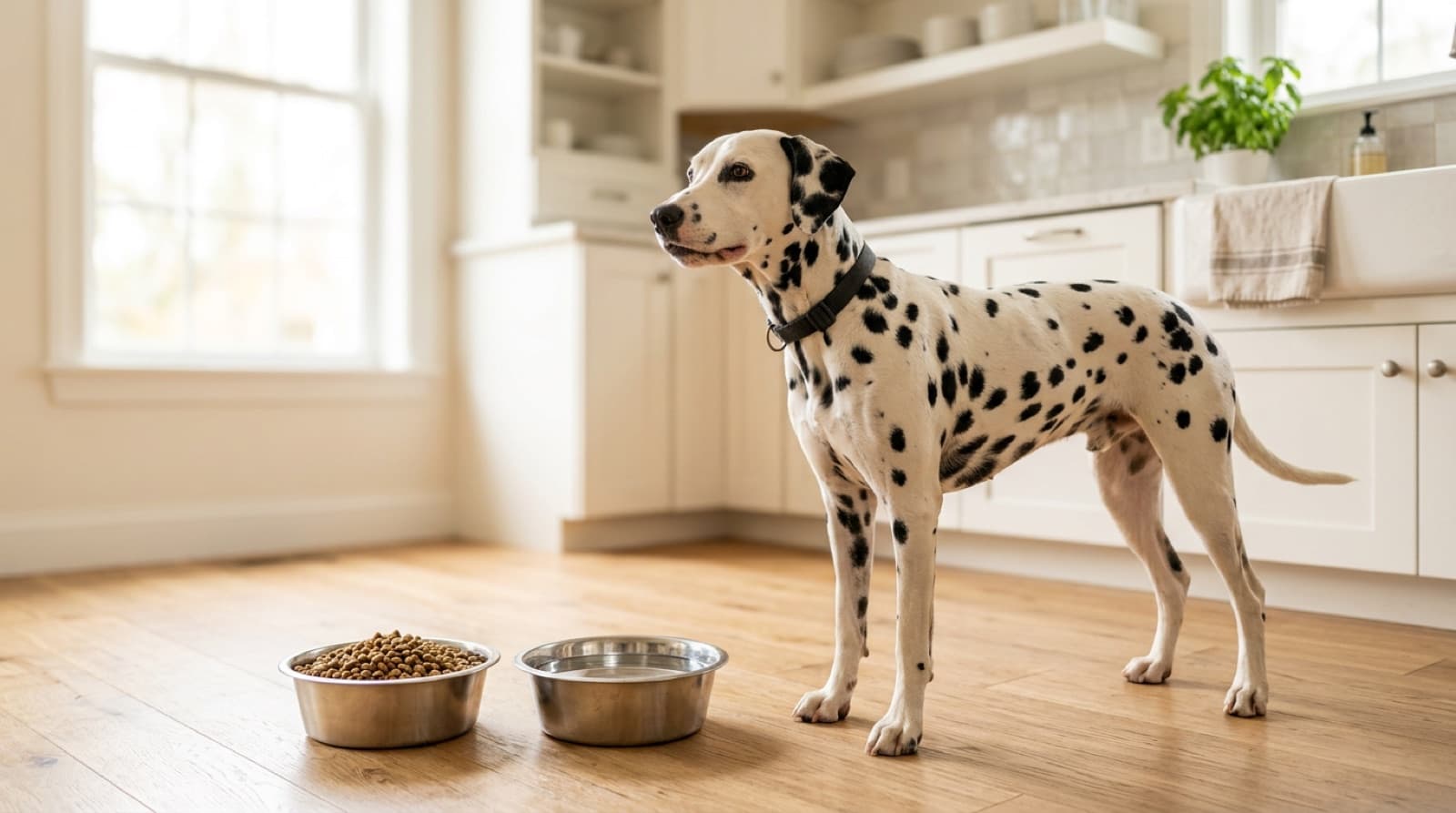
Feed a Dalmatian a complete, low-purine diet for life, and keep the dog well hydrated. Nearly all Dalmatians carry a genetic difference in how they handle uric acid, which makes them prone to urate bladder stones, so the purine level of the food matters more than the brand. Crucially, this means low-purine, not low-protein: avoid organ meat and other high-purine foods, but keep good protein from low-purine sources like eggs, dairy, and moderate chicken. Add water to meals to keep urine dilute. And know the emergency sign: a male straining to urinate may have a blockage and needs a vet immediately. Build the specifics with your vet.
What is the best food for a Dalmatian?
There is no single best bag, and any site that names one is selling something. For most breeds the standard most vets point to comes from the WSAVA global nutrition guidelines: choose a nutritionist-backed, feeding-trial brand. For a Dalmatian, add one breed-defining filter on top of that, the purine level, which the rest of this guide is about.
Scan the ingredients for purines, not just quality. Avoid foods that lead with multiple meat meals, and avoid organ meat, oily fish, game meats, peas, spinach, brewer's yeast, and soy high in the list. Many Dalmatian owners use a veterinary urinary diet specifically formulated for urate, prescribed by their vet, especially for a dog that has formed stones. A lower-purine formula is the goal, and your vet is the right partner for choosing it.
Why every Dalmatian needs a low-purine diet
Nearly all classically bred Dalmatians carry a genetic difference in uric-acid metabolism. It is not a problem in some lines, it is a breed-wide trait, and it is the reason feeding a Dalmatian is different from feeding any other dog.
Other dogs convert most of their uric acid into a more soluble compound that passes harmlessly in the urine. Dalmatians, because of a specific genetic mutation, do not, so they excrete far more uric acid directly. That uric acid can crystallize and build into urate bladder and kidney stones. The Dalmatian Club of America Foundation explains that this metabolic difference is something all classically bred Dalmatians inherited, and that the breed accounts for the great majority of uric-acid stones seen in dogs.
The encouraging part is that most Dalmatians never form a stone, as long as they get a low-purine diet, plenty of water, and regular chances to urinate. So this is not a doom diagnosis; it is lifelong management, the same way you would manage any breed-specific tendency. Diet and hydration are the two levers, and they work. The American Kennel Club breed guide flags the urinary tendency as well.
Low-purine, not low-protein: the mistake to avoid
The most common and damaging misunderstanding about Dalmatian feeding is to confuse low-purine with low-protein. They are not the same thing, and getting this wrong harms the dog. Purines are specific compounds, concentrated in organ meat, certain fish, and some plants, that the body breaks down into uric acid. Protein is a whole macronutrient the dog needs to thrive. Restrict protein too far and you cause new problems; the goal is to control the source of protein, not slash the amount.
So a well-fed Dalmatian eats plenty of protein, just the right kind. Eggs and dairy are excellent, genuinely low-purine proteins. Moderate amounts of chicken or turkey are usually fine. What you minimize is the high-purine sources, above all organ meat. Anyone telling you a Dalmatian needs a “low-protein” diet has the rule backwards.
Which foods to avoid, and which are safe
Here is the practical list owners use. Because exact purine values vary between sources, treat this as a guide to scan ingredients by, and build the specific plan with your vet.
Avoid (highest purine):
- Organ meats: liver, kidney, heart, brain (the single worst category)
- Oily fish: sardines, mackerel, anchovies, herring
- Game meats and venison, duck, and goose
- Some shellfish
- Plant sources: peas, spinach, mushrooms, asparagus, brewer's yeast, soy
Moderate (limited amounts): chicken, turkey, pork, beef, and most white fish.
Low-purine and generally safe: eggs, dairy and cheese, and most vegetables and fruits such as apples, bananas, pears, and many others.
The counterintuitive one worth repeating: organ meat is sold and shared as a healthy “superfood” treat for most dogs, but for a Dalmatian it is the food to avoid most. And one tension to flag: if your Dalmatian has itchy skin and you reach for a fish-oil supplement or a fish-based food, remember that oily fish is high-purine, so manage allergies and purines together with your vet rather than letting one undo the other.
Hydration, and the emergency every owner should know
Water is half the prevention. The more dilute a Dalmatian's urine, the harder it is for urate crystals to form and grow, so hydration sits right alongside the low-purine diet. Keep fresh water available at all times, add water or a little low-sodium broth to every meal to “float” the food, and give plenty of chances to urinate through the day. If your tap water is hard, some owners use filtered or distilled water.
Know the emergency sign. In a male Dalmatian, a stone can lodge in the narrow urethra and block urine flow, which is life-threatening. Straining to urinate, little or no urine, crying out, or a hard, painful belly means go to an emergency vet immediately.
Less urgent but still important: blood in the urine, frequent urination, or accidents warrant a prompt vet visit. And if your Dalmatian is ever treated with a medication called allopurinol to control uric acid, it must be paired with a strict low-purine diet, because the combination is a careful balance your vet manages. This is the most genuinely YMYL area in dog feeding, so it belongs with your vet, not a forum.
Puppies, weight, and the usual toxic foods
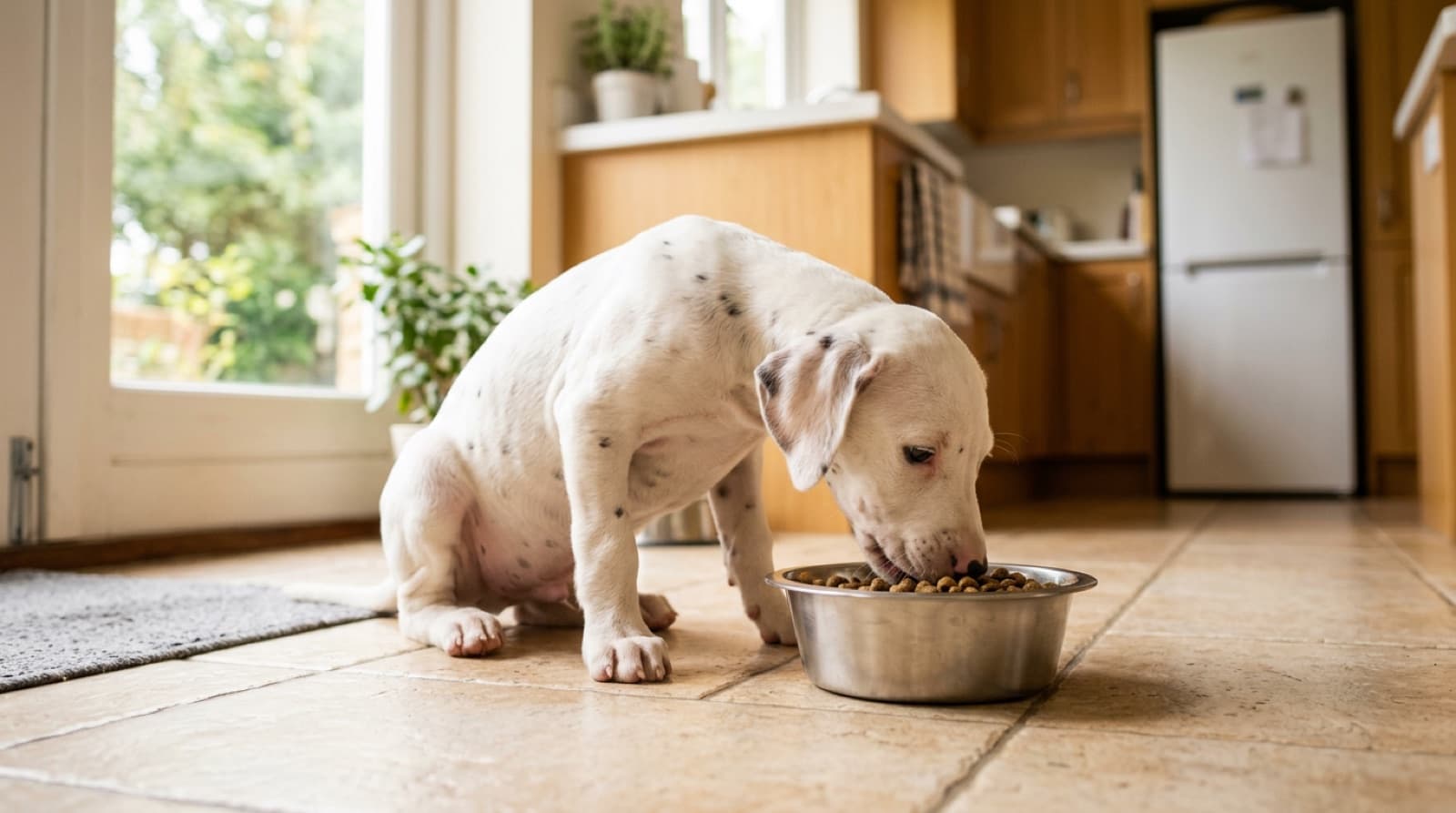
Puppies. Feed a Dalmatian puppy a complete, balanced large-breed-appropriate puppy food, and start the low-purine and hydration habits early. Keep the puppy lean, since obesity adds urinary and joint risk, and loop your vet in on the purine plan as the dog grows. (A separate note: Dalmatians have a well-known tendency to congenital deafness, but that is genetic and unrelated to diet, so do not let anyone tell you food affects it.)
The usual toxic foods apply too. Beyond the purine list, keep these away from any Dalmatian completely: chocolate, grapes and raisins, xylitol, onions and garlic, macadamia nuts, alcohol, caffeine, and cooked bones. Skip grain-free unless your vet diagnoses an allergy; the FDA grain-free investigation is reason for caution. If your Dalmatian eats something toxic, call your vet or a pet poison helpline right away.
Looking to adopt a Dalmatian?
Plan the low-purine diet and a water-rich routine before day one, and ask the rescue about the dog's stone history. Browse Dalmatians and Dalmatian mixes available now from the rescues we track.
See Available Dalmatians →Where to buy Dalmatian food
Low-purine and veterinary urinary diets are easy to find once you know what you are looking for:
- Your vet clinic. The most important source, because the veterinary urinary diets formulated for urate, and any prescription, come from here.
- Pet specialty chains (Pet Planet, Tail Blazers, Tisol, and similar). Carry the major brands; read the ingredient panel for purines.
- Pet Valu and PetSmart. National chains that stock the major formulas and can order prescription diets with vet authorization.
- Online. The same brands ship to your door, easy to set on a recurring delivery once your vet has confirmed the diet.
For a Dalmatian, reading the ingredient list for purines matters more than the brand on the front. Vet-formulated urinary diets are widely available.
Frequently Asked Questions
What is the best food for a Dalmatian?
A complete diet that is low in purines, which is what sets Dalmatians apart from every other breed. The purine level matters more than the brand, because the breed has a genetic tendency to form urate bladder stones. Look for a food that does not lead with multiple meat meals or organ meat, and avoid peas, spinach, brewer’s yeast, soy, game meats, and oily fish high in the ingredient list. Many owners use a veterinary urinary diet formulated for urate (such as a low-purine prescription food), and chicken, eggs, and dairy are among the lower-purine protein sources. Confirm the plan with your vet, especially if your dog has formed stones.
Why does every Dalmatian need a low-purine diet?
Because of a genetic difference in how Dalmatians handle uric acid. Classically bred Dalmatians carry a mutation that stops them from converting uric acid into a more soluble form the way other dogs do, so they excrete much more uric acid in their urine. That makes them prone to urate bladder and kidney stones, and Dalmatians account for the large majority of uric-acid stones seen in dogs. The crucial point is that this trait is in essentially all traditionally bred Dalmatians, not just some, so a low-purine diet plus good hydration is lifelong management for the breed, not a treatment for a few unlucky dogs.
Do Dalmatians need a low-protein diet?
No, and this is the most common and damaging misunderstanding. Dalmatians need a low-PURINE diet, not a low-PROTEIN one. Purines are specific compounds found in high amounts in organ meat, certain fish, and some plant ingredients; they are not the same as protein. Protein is essential, and restricting it too far causes its own harm. The right approach is to choose protein from low-purine sources, eggs and dairy are excellent low-purine proteins, and moderate amounts of chicken or turkey are usually fine, while avoiding the high-purine foods. Source and type, not quantity, is the lever.
Which foods should I avoid for a Dalmatian, and which are safe?
Highest-purine foods to avoid: organ meats (liver, kidney, heart, brain), oily fish like sardines, mackerel, and anchovies, game meats and venison, duck and goose, some shellfish, and plant sources including peas, spinach, mushrooms, asparagus, brewer’s yeast, and soy. Moderate, in limited amounts: chicken, turkey, pork, beef, and most white fish. Low-purine and generally safe: eggs, dairy and cheese, and most vegetables and fruits like apples, bananas, and pears. Note that organ meat, often seen as a healthy treat for other dogs, is the single worst food for a Dalmatian. Because exact purine values vary, build the specific plan with your vet.
Why do I need to add water to my Dalmatian’s food?
To keep the urine dilute, which is one of the most effective ways to prevent urate stones. The more water a Dalmatian takes in, the more dilute the urine and the harder it is for crystals to form and grow. So always keep fresh water available, add water or a little low-sodium broth to every meal to "float" the food, and give plenty of chances to urinate, several times a day. If your tap water is high in minerals, some owners use filtered or distilled water. Hydration works alongside the low-purine diet, not instead of it.
My male Dalmatian is straining to urinate. Is that an emergency?
Potentially yes, and you should treat it as one. In male dogs a stone can lodge in the narrow urethra and block urine flow, which is a life-threatening emergency. If your Dalmatian, especially a male, is straining to urinate, producing little or no urine, crying out, or has a hard, painful belly, go to an emergency vet immediately. Other signs of a urinary problem, blood in the urine, frequent urination, or accidents, warrant a prompt vet visit too. This is the breed’s most serious feeding-related risk, which is exactly why the diet and hydration matter so much.
Can I feed my Dalmatian a raw diet?
Only with a vet or veterinary nutritionist involved, and with real caution, because standard raw diets are a poor fit for the breed. Most raw and BARF diets include organ meat, which is the highest-purine food and the very thing a Dalmatian must limit. A raw diet for a Dalmatian has to deliberately minimize organ content and use low-purine proteins, which is hard to balance correctly. Raw also carries a pathogen risk for the dog and household. If you want to feed fresh or raw, do it with a veterinary nutritionist who can keep both the purines and the overall balance right; do not assume raw is automatically healthier here.
Do "low uric acid" (LUA) Dalmatians still need a special diet?
Less so, and that is the point of the line. LUA Dalmatians come from a backcross programme that reintroduced the normal uric-acid gene, and they have normal uric-acid levels, so they are not prone to urate stones and can eat a normal diet. AKC has recognized them since 2011. Classically bred Dalmatians, which are the large majority, still carry the trait and need the low-purine management described here. If you are unsure which your dog is, ask the rescue or breeder, or your vet can help assess the risk. When in doubt, manage as low-purine.
What to Feed a Bichon Frise
Another breed prone to bladder stones, where hydration and diet do the prevention.
Breed Feeding Guides
What to feed dozens of breeds, from toy dogs to giants, with the science made practical.
All Adoptable Dogs
Live listings of rescue dogs of every breed and mix from the rescues we track.
Dalmatians for Adoption
Live listings of Dalmatians and Dalmatian mixes from the rescues we track.