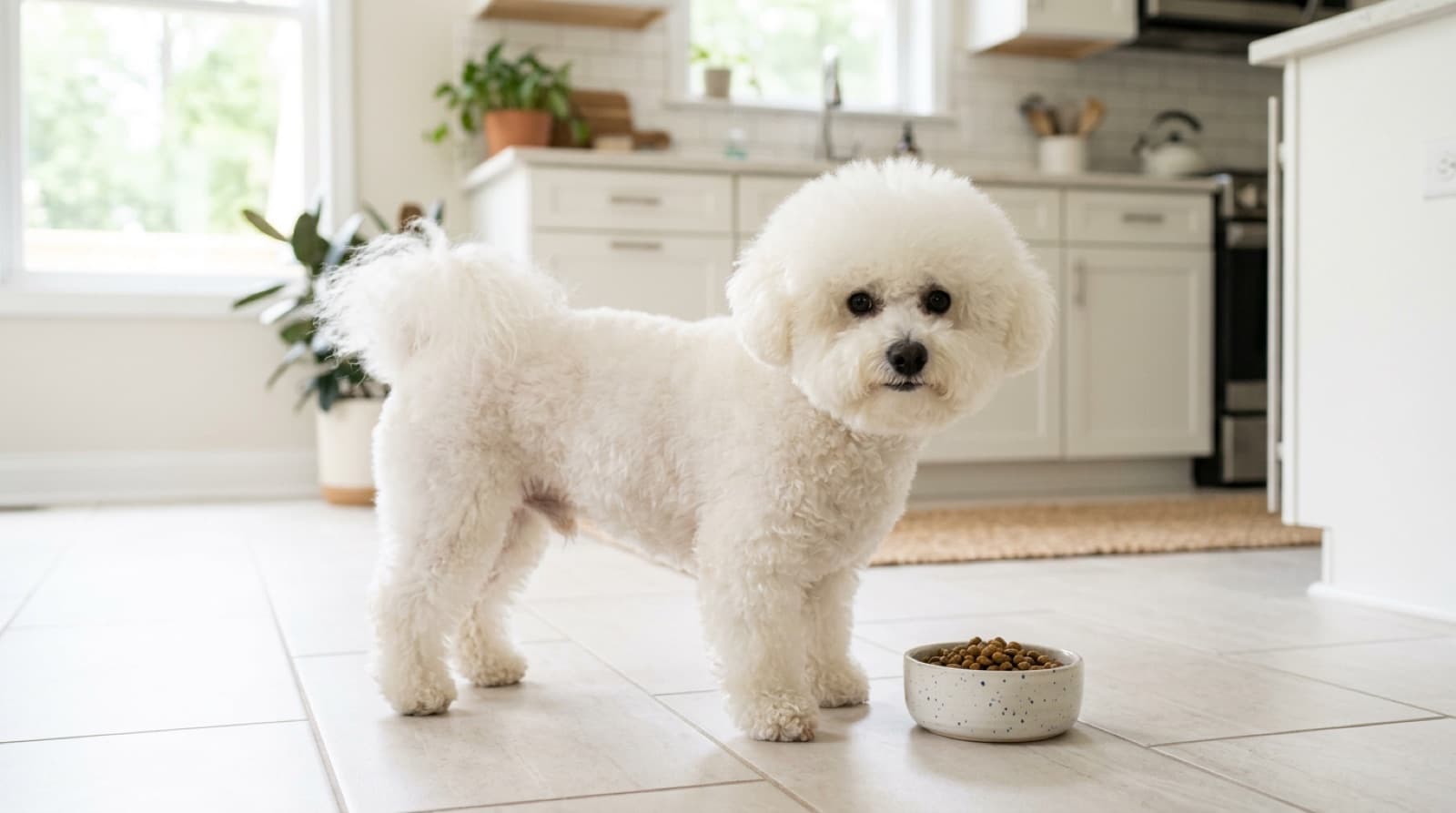
The short answer
Feed a Bichon Frise a complete small-breed diet from a nutritionist-backed brand, keep the dog lean, and keep it drinking. Allergies are the breed's number-one issue, but most Bichon itching is environmental, not food, so resist the endless bag-swapping and work it with a vet. No food reliably erases tear stains, which are mostly about the face and tear ducts. Hydration matters more than usual here, because Bichons are prone to bladder stones, so add water to meals and keep fresh water available. Skip grain-free unless your vet diagnoses an allergy.
What is the best food for a Bichon Frise?
There is no single best bag, and any site that names one is selling something. The standard most vets point to comes from the WSAVA global nutrition guidelines.
Pick a brand that does the science. Ask whether the company employs a full-time, board-certified veterinary nutritionist and runs feeding trials. The safe defaults for a healthy Bichon are the small-breed lines from Royal Canin, Hill's Science Diet, and Purina Pro Plan.
Then watch the dog. Because Bichons are allergy-prone and stone-prone, the right food is the one that keeps the skin settled, the stool firm, and the dog drinking and urinating well. A small-breed kibble suits a tiny mouth. If those things are true, you have the right food, whatever the price tier.
Itchy skin and allergies: usually not the food
Allergies and skin problems are the most common health issue Bichon owners deal with, and the natural instinct is to blame the food and start changing bags. Here is the part that saves you months of frustration.
Most Bichon itching is atopy, not a food allergy. Atopy means an environmental allergy to pollen, dust, and mould, and it looks almost identical to a food allergy on the dog: itchy skin, paw licking, recurrent ear infections, hot spots. Because the symptoms overlap, owners do food trial after food trial when the real culprit is in the air. A rough rule of thumb: itching that flares with the seasons points toward the environment, while year-round itching points more toward food.
The only way to confirm a food allergy is a proper elimination diet, and a failed one still tells you something. That means eight to twelve weeks on a single novel protein or a prescription hydrolyzed diet, with nothing else at all. If it clears the itch, you have your answer. If a properly done trial does not help, that is not a dead end, it is the answer: the problem is probably environmental, and the next stop is your vet or a veterinary dermatologist. The American Kennel Club breed guide flags the breed's allergy tendency. For the full skin and coat picture, see our Bichon health guide.
Food and tear stains: the honest version
On a white breed, tear stains are glaring, so owners chase a dietary fix hard. The honest answer is mixed. Diet can be one factor, because a food intolerance can increase tearing, and breed clubs do recommend avoiding artificial dyes and tomato pomace and using filtered, distilled, or reverse-osmosis water rather than hard tap water. But staining is driven much more by the shape of the face, shallow or blocked tear ducts, yeast on the wet fur, and teething. There is no reliable “tear-stain food.”
So before you start swapping bags chasing the stains, get your vet to check the eyes and tear ducts, because a structural or medical cause will not respond to a diet change. If a food intolerance is genuinely suspected, work it as an elimination diet with your vet rather than guessing.
How much to feed, hydration, and bladder stones
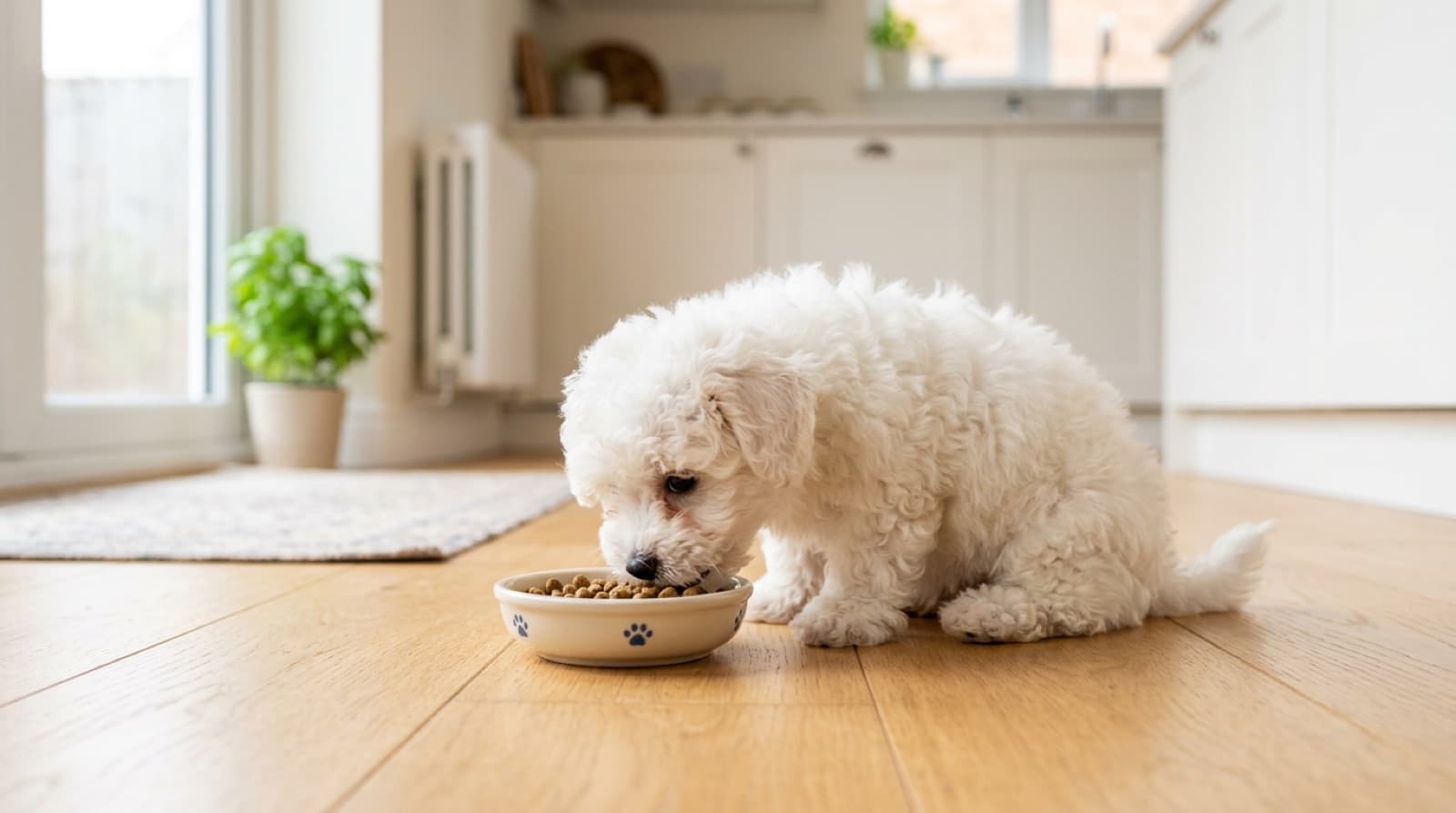
A typical adult Bichon eats roughly half a cup to a cup of quality kibble a day split into two meals, but the bag overstates it for a 12 to 18 pound dog, so feed to body condition. Feel the ribs easily under a light cover and look for a waist. Count treats inside the daily total, because they add up fast on a small dog.
Bichons are a high-risk breed for bladder stones. The single most useful everyday habit is hydration: keep fresh water available, and add a little water or low-sodium broth to meals to keep urine dilute.
That “add water to the kibble” habit does double duty: it also tends to get a picky Bichon eating. If your dog has ever had stones, your vet may prescribe a specific therapeutic diet, and which one depends on the stone type, so it is a vet decision rather than a shelf choice. Watch for straining, frequent urination, blood in the urine, or accidents, and see your vet promptly if they appear.
Grain-free, and foods to avoid
Skip grain-free unless your vet diagnoses a grain allergy. The FDA has been investigating a possible link between grain-free diets and a heart condition, and grain-free is not the allergy fix owners hope for, since the trigger is almost always a protein.
Keep these away from a Bichon completely:
- Chocolate (darker is worse)
- Grapes and raisins (can cause kidney failure, even a few)
- Xylitol (in sugar-free gum, some peanut butters, and baking), which is rapidly fatal to dogs
- Onions, garlic, leeks, and chives
- Macadamia nuts, alcohol, caffeine, and cooked bones
If your Bichon does eat something toxic, call your vet, the nearest emergency clinic, or a pet poison helpline right away.
Should I feed my Bichon a raw diet?
Only with a vet or veterinary nutritionist involved. Some Bichon owners try raw or fresh diets to manage suspected sensitivities, and a well-built one can suit the breed. But raw meat carries a pathogen risk for the dog and the household, and a homemade raw diet without a professional recipe routinely runs short on key nutrients. For a breed this prone to allergies and stones, a complete, balanced diet matters more than the format. If you want to try fresh or raw, use a complete commercial product or a vet-formulated recipe.
Looking to adopt a Bichon Frise?
Sort the small-breed food and a water fountain before day one. Browse Bichons and Bichon mixes available now from the rescues we track.
See Available Bichon Frises →Where to buy Bichon Frise food
Every brand worth feeding a Bichon is easy to find in store and online:
- Pet specialty chains (Pet Planet, Tail Blazers, Tisol, and similar). Carry Royal Canin, Pro Plan, and small-breed lines.
- Pet Valu and PetSmart. National chains that stock the major small-breed and limited-ingredient formulas.
- Your vet clinic. The place for prescription urinary and hydrolyzed diets that need authorization.
- Online. The same brands ship to your door, handy for the smaller bags this breed needs.
Because a Bichon eats little, buy a bag size your dog finishes within a few weeks so the food stays fresh. A small-breed formula on a recurring delivery means you never run out mid-week.
Frequently Asked Questions
What is the best food for a Bichon Frise?
A complete small-breed formula from a brand that employs a veterinary nutritionist and runs feeding trials, like Royal Canin, Hill’s Science Diet, or Purina Pro Plan small-breed lines. Because Bichons are allergy-prone and at higher risk of bladder stones, the right food is the one that keeps the skin settled, the stool firm, and the dog drinking and urinating well. The brand matters less than the food agreeing with your dog. Start with whatever the rescue was feeding, then transition over seven to ten days.
Why is my Bichon so itchy, and is it the food?
It might be, but for this breed it usually is not. Allergies and skin problems are the number-one health issue Bichon owners face, and the instinct is to change the food. The catch is that most Bichon itching is atopy, meaning environmental allergies to pollen, dust, and mould, not a food allergy. Endlessly swapping bags delays the real diagnosis. Itching that flares with the seasons points toward the environment; year-round itching points more toward food. The only way to confirm a food allergy is a vet-run elimination diet, eight to twelve weeks on a single novel protein with zero other treats. If that does not help, that is useful information, not a dead end, because it points you toward a vet or veterinary dermatologist for the environmental side.
Will a special food get rid of my Bichon’s tear stains?
Probably not on its own. Tear stains are a big deal on a white breed, and owners blame food dyes, beet pulp, pea-heavy formulas, and iron in red meat or hard water. Diet can be one factor, since a food intolerance can increase tearing, and breed clubs do recommend avoiding artificial dyes and using filtered, distilled, or reverse-osmosis water. But staining is mostly driven by the shape of the face, blocked or shallow tear ducts, yeast, and teething, so there is no reliable tear-stain food. Before you start swapping bags, have a vet check the eyes and tear ducts for a medical cause.
How much should I feed a Bichon Frise?
A typical adult Bichon eats roughly half a cup to a cup of quality kibble a day split into two meals, but the bag tends to overstate it for a 12 to 18 pound dog, so feed to body condition. Feel the ribs easily under a light cover and look for a waist. Treats blow the budget fast on a small dog, so count them inside the daily total. One cheap, useful trick: add a little warm water to the kibble. It often gets a picky Bichon eating and boosts water intake, which matters for the breed’s bladder-stone risk.
Are Bichons prone to bladder stones, and does diet help?
Yes. Bichon Frises are a high-risk breed for bladder stones, both struvite and calcium oxalate. The single most useful everyday step is hydration: always-available fresh water, and adding water or low-sodium broth to meals to keep urine dilute. If your Bichon has had stones, your vet may prescribe a specific therapeutic diet, and which one depends on the stone type, so this is a vet-directed decision, not a food you choose off the shelf. Signs of a problem (straining, frequent urination, blood in the urine, accidents) warrant a prompt vet visit.
What should I feed a Bichon Frise puppy?
A complete small-breed puppy food, fed three meals a day until about six months, then two. Small-breed puppy formulas put more calories into a small, easy-to-chew kibble that suits a tiny mouth, and frequent meals guard against the low-blood-sugar (hypoglycemia) that very small toy puppies can develop. Keep the puppy lean, and transition foods slowly to avoid loose stool. Stay on puppy food until roughly nine to twelve months, then move to a small-breed adult formula.
Should I feed my Bichon grain-free?
Not unless your vet diagnoses a grain allergy. The FDA has been investigating a possible link between grain-free diets built on peas, lentils, and potatoes and a heart condition called dilated cardiomyopathy, so most vets take the cautious line. Grain-free is not the allergy fix owners hope for either, because a true food allergy is almost always to a protein, not a grain. A complete small-breed diet from a nutritionist-backed brand is the safer default.
Bichon Frise Health Issues
Allergies, bladder stones, dental, and the conditions diet and hydration can affect.
Bichon Grooming & Coat Care
The white coat, the face, and the tear-stain area that diet alone will not fix.
Bichon Frise Adoption
Where to find Bichons and Bichon mixes, real costs, and what to expect from the breed.
Bichon Frises for Adoption
Live listings of Bichon Frises and Bichon mixes from the rescues we track.