
The short answer
Feed an English Springer Spaniel a complete food matched to its real activity, keep it lean, and watch the treats. Springers are intensely food-motivated and rank among the most overweight-prone breeds, so portion control and treat discipline matter more than the brand. Feed to body condition, not the bag chart, and count training treats inside the daily ration, not on top. Match calories to whether the dog truly works or mostly walks. And ignore the myth that protein causes aggression: research says it does not.
The obesity reality, and it is the headline
If you read one section, read this one. A large UK study of dogs under primary veterinary care, published in the Journal of Small Animal Practice, found the English Springer Spaniel had close to twice the odds of being overweight compared with crossbred dogs, placing it among the most at-risk breeds studied. That is not a soft observation; it is a clear, breed-level signal.
The cause is a stack of Springer traits. They are intensely food-motivated, which makes them a joy to train and a magnet for treats. They are bred to work hard, so owners feel they need a big ration even when the dog mostly walks. And neutering, middle age, and simple habit all push the same way. The fix is to feed to a lean body condition score of 4 to 5 out of 9: ribs easily felt with light pressure but not seen, a visible waist from above, and a tucked belly from the side. Weigh meals, default slightly lean, and check the body condition every couple of weeks.
Working dog or couch companion? Feed the difference
Springers come in two broad types with very different fuel needs. Working and field-line dogs are leaner, higher-drive, and genuinely burn a lot during hunting or training season, when they may need meaningfully more food, often a higher-fat performance formula. Show and pet-line dogs are heavier-bodied and, as companions, burn far less.
The mistake that fattens Springers is feeding a working ration to a pet, or feeding the in-season amount year-round. Scale the food to what the dog is actually doing this month, not to its breeding. A pet Springer needs ordinary adult maintenance and tight portions; a working dog needs more in season and less in the off-season. As always, the body condition score, not the bag, is the referee.
The treat trap
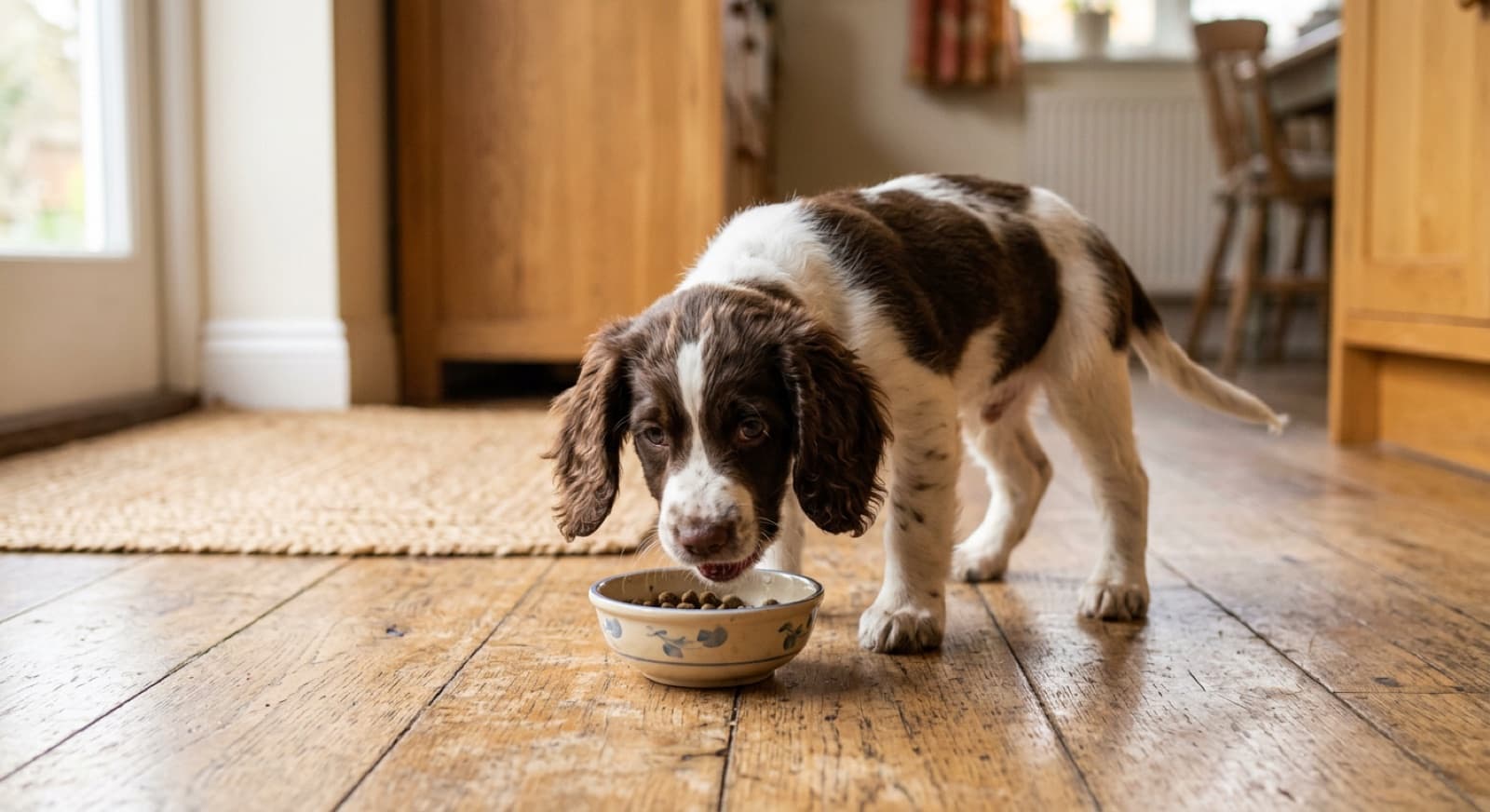
Here is the irony of the breed: the same trainability that makes a Springer wonderful to teach is the thing that makes it fat. Because the dog will do anything for food, owners reach for treats constantly through the day, and those calories add up fast and invisibly.
Two rules keep it under control. Keep all treats under about 10 percent of daily calories, and count them as part of the daily ration, not as extra. The cleanest way to do that is to train using part of the measured kibble allowance, so the rewards come out of the bowl rather than adding to it, plus low-calorie options like small bits of vegetable. With a food-obsessed breed, getting treats right is most of the weight battle won.
Ears, allergies, and the “is it the food” question
Springers are famous for ear infections, and owners often assume the food is to blame. Usually it is not, at least not directly. The main culprit is anatomy: long, heavy ear flaps cut airflow and trap moisture in the canal, and a breed that loves water makes that worse. Drying the ears after swimming and baths does more than any diet change.
Food allergy can be an underlying driver of recurrent ear infections, but it is one possibility among several, and environmental allergies to pollen, dust, and grass are at least as common. If the ears keep flaring alongside itchy skin and paws, an underlying allergy is worth working up with your vet. The only reliable way to diagnose a food allergy is a strict elimination diet using a hydrolyzed or novel protein for eight to twelve weeks, then a re-challenge, as the Merck Veterinary Manual describes. Blood and saliva “allergy tests” are not reliable for diagnosing food allergy, and grain-free is not a fix, because most food allergens are proteins like chicken or beef, not grains.
The protein-aggression myth, and the genetic conditions diet cannot touch
A stubborn piece of folklore says high-protein food makes Springers aggressive or hyperactive, often linked to talk of “rage syndrome.” It is not true. A controlled veterinary study by Dodman and colleagues tested low, medium, and high-protein diets in dogs and found protein level had no effect on dominance aggression or hyperactivity. Rage syndrome itself is a rare and genuinely debated neurological condition believed to be genetic, not dietary. Sudden unprovoked aggression is a job for a veterinary behaviourist or neurologist, not a change of kibble.
A few other breed-specific conditions get blamed on food but are purely genetic. Fucosidosis is an inherited, fatal storage disease specific to the breed, with a DNA test, and no dietary cause or cure. Phosphofructokinase (PFK) deficiency is an inherited muscle-enzyme disorder, also DNA-testable, that causes exercise intolerance and dark urine after exertion; PetMD covers it. Diet does not cause either, though a dog with PFK deficiency should not be pushed as a hard-working gundog.
Feeding a Springer puppy
A Springer is a medium breed, so the puppy does not carry the strict controlled-calcium burden of a giant-breed puppy. Feed a complete puppy or all-life-stages food, starting with around three to four small meals a day for a young puppy and tapering toward two meals as it grows.
The breed-specific caution is the same as the adult: do not let a chubby puppy become a fat adult. Given the documented obesity predisposition, keep the puppy lean and resist the urge to free-feed or to over-reward during training. The habits you build now, measuring food and counting treats, are exactly the ones that keep a food-driven adult at a healthy weight.
Foods to avoid
Keep these away from a Springer completely:
- Chocolate (darker is worse)
- Grapes and raisins (can cause kidney failure, even a few)
- Xylitol (in sugar-free gum, some peanut butters, and baking), which is rapidly fatal to dogs
- Onions, garlic, leeks, and chives
- Macadamia nuts
- Alcohol and caffeine
- Cooked bones (they splinter)
A food-obsessed Springer will eat almost anything it finds, so keep counters and bins secured. If your dog eats something on this list, call your vet, the nearest emergency clinic, or a pet poison helpline right away.
Looking to adopt an English Springer Spaniel?
Set up the portion and treat plan before day one. Browse Springer Spaniels and Springer mixes available now from the rescues we track across Canada.
See Available Springer Spaniels →Where to buy Springer Spaniel food
Every brand worth feeding a Springer is easy to find:
- Pet specialty chains (Pet Planet, Tail Blazers, Tisol). Carry Pro Plan, including the higher-fat Sport line for working dogs, plus Royal Canin and Hill's.
- Pet Valu and PetSmart. Stock the major puppy, adult, and active-dog formulas.
- Your vet clinic. The best source for weight-management diets if your Springer needs to slim down.
For a pet Springer, an ordinary complete adult formula is right; for a working dog in season, a higher-fat performance food suits the workload. Either way, weigh the portions.
Frequently Asked Questions
How much should I feed an English Springer Spaniel?
A medium active Springer of around 45 to 50 pounds needs a moderate amount, but the exact number depends entirely on the food's calorie density and how much the dog actually works. Start from the label guideline for the dog's target weight, then adjust to keep a lean body condition, because Springers are one of the most overweight-prone breeds and bag charts tend to over-recommend. Feed adults twice a day. A working gundog in season eats meaningfully more than a couch companion of the same size. Weigh meals and default slightly lean.
Why is my Springer Spaniel always hungry?
For most Springers, constant hunger is just the breed: they are intensely food-motivated, which is what makes them so trainable and also so easy to overfeed. That said, a genuinely insatiable appetite paired with weight loss, loose or greasy stools, or a ravenous change from normal can signal a medical issue like exocrine pancreatic insufficiency, so a sudden shift is worth a vet check. Day to day, do not mistake enthusiasm for need. A Springer will happily eat well past what its body requires.
Are English Springer Spaniels prone to obesity?
Yes, more than most breeds. A large UK study of dogs under primary veterinary care found Springers had nearly twice the odds of being overweight compared with crossbred dogs, ranking among the most at-risk breeds. The cause is a combination of a strong food drive, high trainability that leads to heavy treat use, and owners feeding a working dog's ration to a pet that does not work that hard. Keeping a Springer lean is the single most valuable thing its diet can do, since extra weight worsens joints, ears, and overall health.
Is my Springer's ear infection caused by its food?
Usually not directly. Springers get ear infections mainly because of anatomy: long, heavy ear flaps reduce airflow and trap moisture, and they love water, which makes it worse. Dry the ears after swimming and baths. Food allergy can be an underlying driver of recurrent ear infections, but it is one possibility among several, and environmental allergies are at least as common. If the ears keep flaring alongside itchy skin and paws, an underlying allergy is worth investigating with your vet, but do not assume the food is the cause and swap bags endlessly.
Does high-protein food make a Springer aggressive or hyperactive?
No. This is a persistent myth, often tied to talk of "rage syndrome," and a controlled veterinary study found that the level of protein in the diet had no effect on dominance aggression or hyperactivity in dogs. Rage syndrome itself is a rare, controversial neurological condition thought to be genetic, not something caused by food or protein. If a Springer shows sudden unprovoked aggression, that is a matter for a veterinary behaviourist or neurologist, not a change of kibble. Feed a quality complete diet and judge it on body condition, not on protein percentage.
What is the best food for an English Springer Spaniel?
A complete food appropriate to the dog's life stage and workload from a brand that employs a board-certified veterinary nutritionist and runs feeding trials, such as Purina Pro Plan, Royal Canin, Hill's Science Diet, or Eukanuba. An active working Springer may do better on a higher-fat performance formula in season; a pet Springer needs ordinary adult maintenance and careful portions. Match the food to the dog in front of you rather than to a label promise, and transition gradually over about a week when you switch.
How do I manage treats with such a food-driven dog?
Treats are the Springer's biggest hidden calorie source, precisely because the breed is so trainable that you reach for them constantly. Keep all treats under about 10 percent of daily calories, and crucially, count them as part of the daily ration rather than extra on top. The simplest fix is to train using part of the measured kibble allowance, plus low-calorie options like small pieces of vegetable. With a food-obsessed breed, treat discipline is most of the battle against weight gain.
What to Feed a Cocker Spaniel
The same spaniel ear-and-weight playbook for the smaller cousin.
What to Feed a Golden Retriever
Body condition and treat discipline for another food-loving gundog.
What to Feed a Labrador
The portion and weight-management guide for the classic chow-hound.
Springer Spaniels for Adoption
Live listings of Springers and Springer mixes from the rescues we track.