
The short answer
Trust the big breed percentages, hold the tiny ones loosely, and know that Supermutt and village dog are honest answers, not errors. The percentages add up to roughly one hundred; the large slices reflect clear recent ancestry, while single-digit traces are the least certain. The family tree and size prediction are genuinely useful, especially for a puppy. And the relative finder can turn up real genetic siblings, which is the emotional highlight for many rescue owners.
The breed percentages: which to trust
The headline of any result is the breed breakdown, a list of breeds with a percentage beside each, adding up to roughly one hundred. The single most useful thing to know is that not all of those numbers are equally reliable, and reading them well is mostly about weighting them correctly.
The large percentages are the trustworthy part. A dog reported as forty percent one breed and thirty percent another has clear, recent ancestry from those breeds, and you can take that to the bank. The small percentages are a different story. A three or five percent sliver is the least certain part of the whole report, often reflecting a very distant ancestor or simply genetic background noise, and it is better read as a hint than as a fact. If your dog comes back with a long tail of tiny percentages, do not over-interpret them. The story of your dog is in the big slices, not the crumbs. This is also why the same deeply-mixed dog can get slightly different trace breeds from different tests, a point we cover in how accurate dog DNA tests are.
Supermutt and village dog, explained
Two labels tend to stop rescue owners in their tracks, because nobody explains them in advance. Both are real, honest answers, not glitches.
Supermutt, as Embark defines it, is the catch-all for distant ancestry that has been mixed so many generations back that the surviving DNA fragments are too small to pin to a single breed. Your dog's ancestors were once identifiable purebreds, but generations of mixing have worn the signal down to fragments, and the test gathers those together under one label so the percentages still total one hundred. A big Supermutt slice is not the test giving up; it is an accurate description of a very deeply mixed dog, which describes a great many rescues.
Village dog is different and often surprises people even more. As Embark explains, it refers to a distinct, free-breeding population of dogs that is not descended from modern breeds at all, with its own ancestral genetic signature. The free-roaming and street dogs of many regions belong to these populations, so a rescue imported from those parts of the world can legitimately read as part or mostly village dog. Again, this is a correct, meaningful result, not an error, and for an internationally-adopted rescue it is often the most honest answer there is.
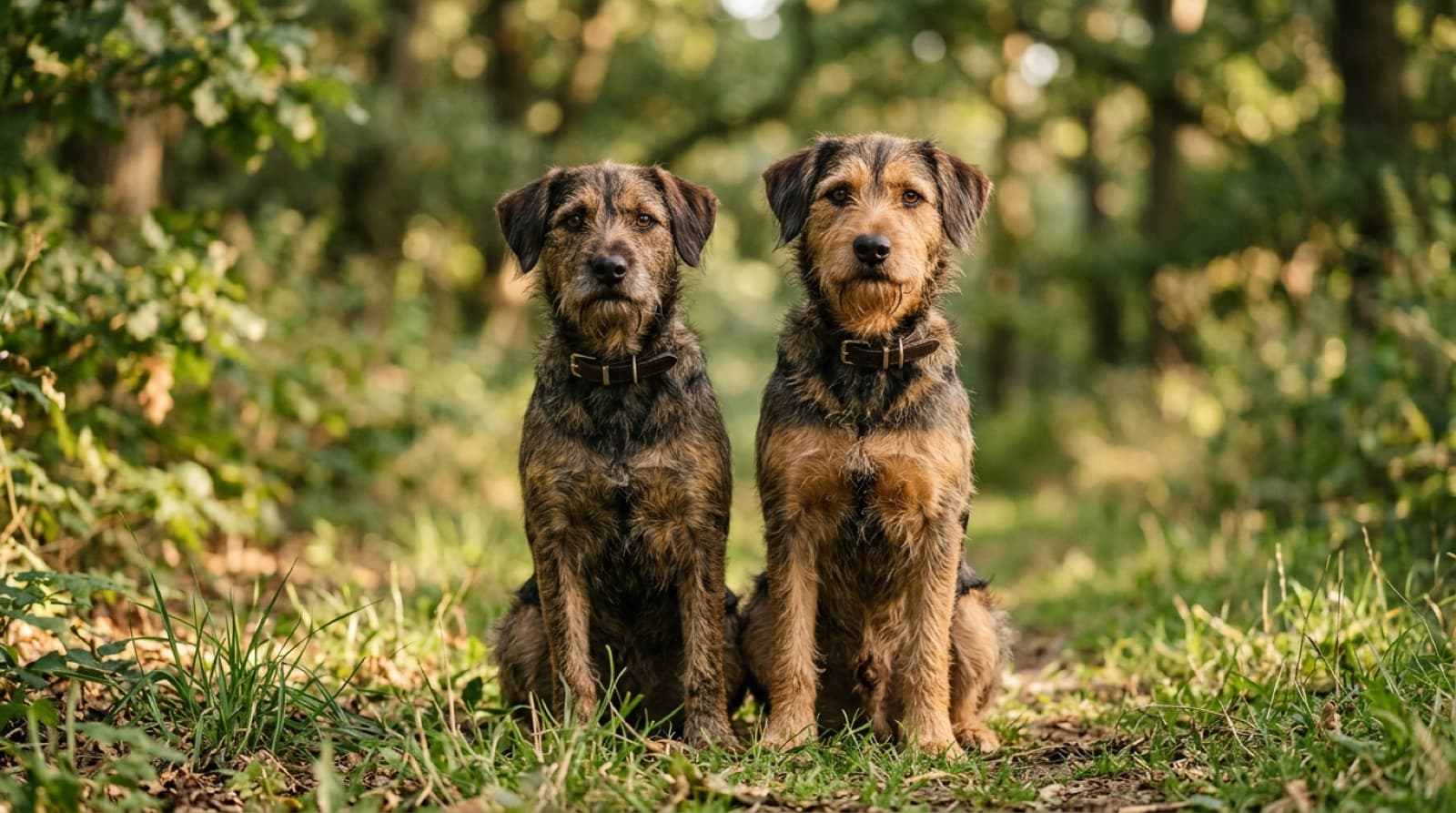
The family tree, traits, and size
Below the breed breakdown, most reports build out a few more panels, and some are more useful than others.
The family tree is the test's best reconstruction of your dog's recent ancestors, estimating what the parents and grandparents likely were. Treat it as a well-informed estimate rather than a certified pedigree, but it is a satisfying way to see how the breed mix came together. The trait predictions cover things like coat type, shedding, and colour, drawn from the genes behind those features; they are a fun confirmation of what you can already see, and occasionally explain a quirk of coat or colouring.
The genuinely practical panel is the size and weight prediction. For an adult dog it just confirms the obvious, but for a mystery-breed puppy it is the most valuable number in the whole report, because the genes controlling adult size are well understood and a DNA estimate beats guessing from paw size every time. If you have adopted a puppy of unknown parentage, this is the figure that tells you whether you are raising a lapdog or a couch-filler, and lets you plan for it. It pairs naturally with our guide to finding out what breed your rescue dog is.
The relative finder: the emotional highlight
The feature that turns a breed report into something people cry over is the relative finder. It matches your dog against every other dog in the test's database and shows the ones that share DNA, along with how much, which lets you identify genetic relatives ranging from close siblings to distant cousins. Embark's is the largest and most established, and it is the feature owners most often credit with genuinely surprising finds, from a rescue's littermate turning up across the country to, occasionally, a parent.
One point of confusion is worth clearing up: shared DNA between full siblings is not always exactly fifty percent. Siblings inherit different halves of each parent's DNA, so full littermates average around fifty percent but can land somewhat above or below, and they are still true siblings. Half-siblings, grandparents, and cousins show lower shared-DNA figures accordingly. If the relative finder is a big draw for you, it is one of the reasons to lean toward Embark, which we lay out in the Embark versus Wisdom Panel comparison.
Some links on this page are Amazon affiliate links — we may earn a small commission at no extra cost to you. It never changes which tests we recommend.
A word on the health panel
If you bought a breed-plus-health test, your report also includes a genetic health section, and it deserves a different mindset from the breed results. A health result is a screening flag, not a diagnosis: a marked condition means your dog carries a genetic variant associated with it, not that your dog has it or definitely will. The terms clear, carrier, and at risk trip people up constantly, and “at risk” in particular does not mean “affected.”
The single most useful health result to look for is MDR1, a drug-sensitivity variant that genuinely changes which medications are safe for your dog, which is worth flagging to your vet especially before any surgery. Beyond that, take any concerning result to your veterinarian to confirm and interpret rather than acting on the dashboard alone, and remember that a clean panel is not a guarantee of a healthy dog, since no test screens for everything. We will cover reading the health section in depth in a dedicated guide.
Haven't tested your dog yet?
The reports that give you percentages, a family tree, and a relative finder come from Embark and Wisdom Panel. Our Canada guide covers which to pick and when to buy on sale.
Best Dog DNA Test in Canada →Frequently Asked Questions
Do dog DNA breed percentages add up to 100?
Yes, they are designed to total roughly one hundred percent. Any ancestry the test cannot confidently assign to a single named breed gets grouped together, which Embark labels Supermutt, so the numbers still add up even for a deeply mixed dog. The larger, well-supported percentages are the reliable part of your result; the small single-digit slivers are the least certain.
What does Supermutt mean on a dog DNA test?
Supermutt is the label for distant ancestry that has been mixed so many generations back that the remaining DNA fragments are too small to assign to one specific breed. It is not an error or a failure of the test; it is an honest answer for a dog whose ancestors were once purebred but whose breed signal has worn down over generations. A large Supermutt percentage simply means your dog is very deeply mixed, which is common in rescues.
What is a village dog in DNA results?
A village dog is a distinct, free-breeding population of dogs that is not descended from modern breeds and carries its own ancestral genetic signature. Street and free-roaming dogs in many parts of the world belong to these populations, so a rescue imported from certain regions can legitimately read as part village dog. Like Supermutt, it is a real category and a correct result, not a mistake.
How reliable are the small breed percentages?
The big percentages are trustworthy; the tiny ones are not. The major breeds a good test reports, the twenty, thirty, and forty percent slices, reflect clear recent ancestry and are reliable. The single-digit traces, the three and five percent slivers, are the least certain part of any result and are often better read as background signal than as a definite ancestor. Hold the small numbers loosely.
Why is my dog's sibling not showing 50 percent shared DNA?
Because siblings do not inherit exactly the same half of each parent's DNA. Full siblings share around fifty percent on average, but the actual figure varies, so a relative finder can show a littermate at somewhat more or less than fifty percent and still be a true full sibling. Half-siblings, parents, and more distant relatives show correspondingly lower shared-DNA percentages.
Can a DNA test predict my dog's adult size?
Yes, and the size and weight prediction is one of the most useful parts of the report, especially for a mystery-breed puppy. The genes that drive adult size are well understood, so a DNA-based estimate is far more reliable than guessing from paw size. For an adult dog the prediction simply confirms what you can already see, but for a puppy it helps you plan for the crate, the car, and any weight limits.
What is the relative finder and how does it work?
The relative finder matches your dog against others in the test's database and shows the ones that share DNA, along with how much, which lets you identify genetic relatives from close siblings to distant cousins. Embark's is the largest and most established, and it is the feature owners most often credit with surprising finds, like discovering a rescue's littermate or even a parent. You can usually contact the other owners through the platform.
What Breed Is My Rescue Dog?
Why shelter labels miss, and what a DNA test actually tells you.
How Accurate Are Dog DNA Tests?
Why the big percentages are trustworthy and the small ones are not.
Embark vs Wisdom Panel
The two tests compared, including the relative finder.
Explore Dog Breeds
Recognise a breed in your results? Read up on its care and temperament.