The short answer
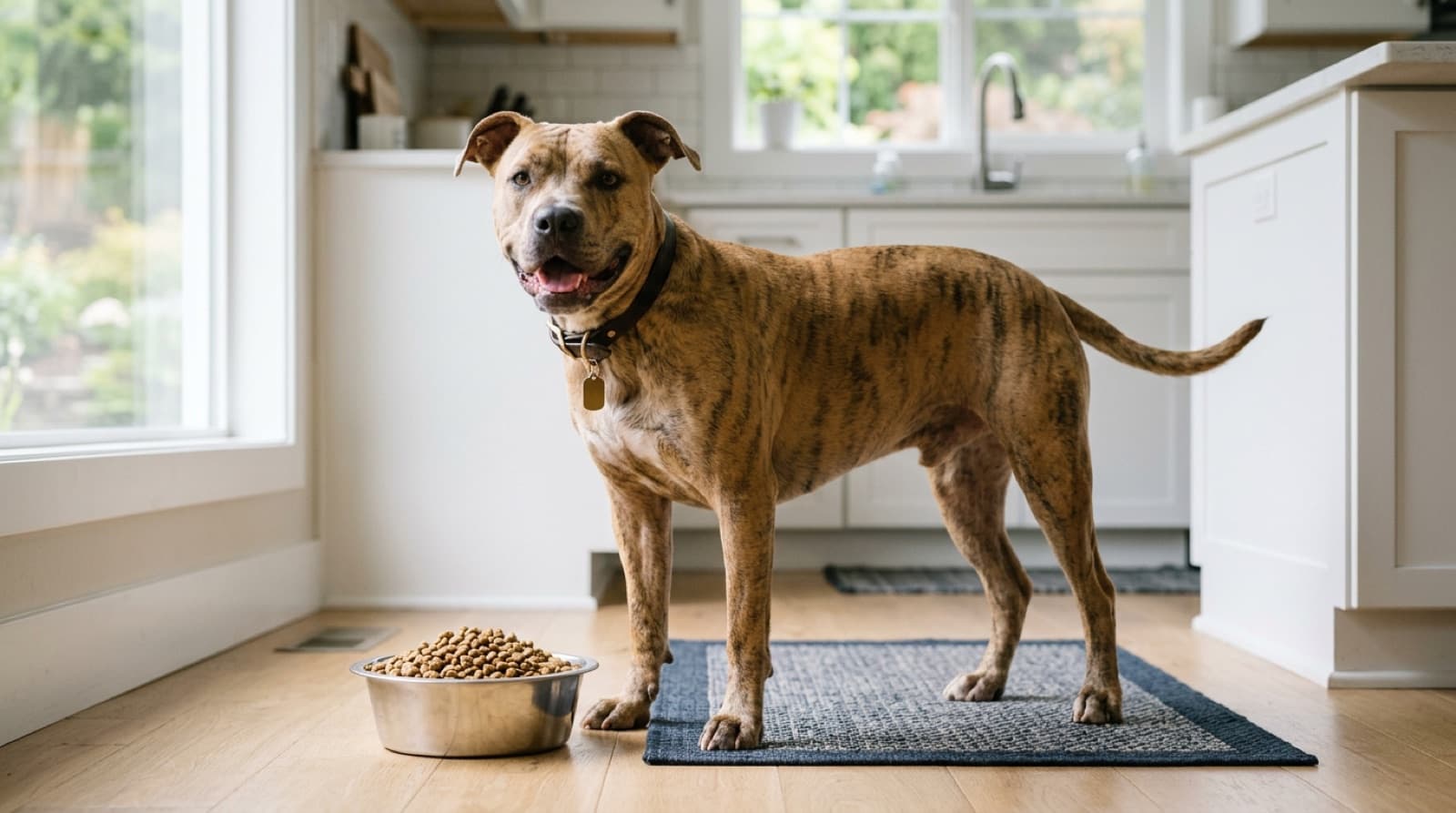
Feed a pit bull a complete, balanced adult food and keep it lean and muscular. “Pit bull” covers everything from a 25 lb Staffy to a large American Bully, so feed to body condition, not a fixed number. The biggest thing to get right: you cannot build muscle with food. Muscle comes from genetics, exercise, and a balanced diet, and the high-protein bags and “muscle builder” supplements sold to bully owners do not add muscle, just cost and, if you over-feed, fat. Pick a brand with a real veterinary nutritionist behind it. The one genuine breed-specific watch-out is skin allergies, which are common in pits but are a vet workup, not a food-switching guessing game.
Can you build muscle on a pit bull with food? No.
No food, protein level, or supplement builds extra muscle. Muscle comes from genetics, exercise, and a balanced diet. Be wary of the bully-supplement industry.
This is the most-searched and most-misunderstood part of feeding a pit, so it goes first. Bully breeds are muscular because of their genetics, that build is realized through progressive exercise, and it is supported by a complete, balanced diet. That is the whole formula.
Extra protein does not become extra muscle. Once a dog has enough protein to maintain and repair its body, the surplus is burned for energy or excreted, not stored as bonus muscle. A bag boasting 38% protein does not build a more muscular dog than a quality 28% food.
Over-feeding to “bulk up” just adds fat, and that extra weight loads the joints of an athletic breed already prone to wear. A fat pit is not a muscular pit.
That leaves the supplement industry. There is a whole category of “muscle builder” and “weight gainer” products marketed straight at bully owners. There is no independent evidence they build muscle, they risk over-supplementing a balanced diet, and a healthy dog does not need them. Save your money for good food and a good walk, and clear any supplement with your vet first.
How much should I feed a pit bull?
It depends on the dog, because “pit bull” is a type, not one breed. A Staffordshire Bull Terrier runs about 24 to 38 lb, an American Pit Bull Terrier about 30 to 60 lb, an American Staffordshire Terrier up to about 70 lb, and an American Bully anywhere from pocket-sized to very large. There is no single “pit bull portion.”
A rough starting point for an active medium-large pit is around 2 to 2.5 cups of quality dry food a day, split into two meals, but that tracks the calories in your food, not a rule. Feed to body condition. Use the WSAVA body condition score: a healthy pit sits at about 4 to 5 out of 9, lean and muscular, with ribs you can feel but not see and a clear waist from above.
Pits gain weight easily, and their heavy muscle can hide it, so judge by feel rather than the scale alone, and do a hands-on check every few weeks.
What is the best food for a pit bull?
There is no single best bag, but there is a sound way to choose one, from the WSAVA nutrition guidelines: pick a brand that employs a board-certified veterinary nutritionist, runs feeding trials, owns its plants, and will share a full nutrient analysis.
On the bag, look for a named animal protein, the AAFCO complete-and-balanced statement for the right life stage, and omega-3s, which support the skin and coat this breed often struggles with. An active pit does well on a quality adult food with adequate protein and fat. The big makers that meet the bar are the safe default: Purina Pro Plan, Royal Canin, Hill's Science Diet, and Eukanuba, with Acana a popular Canadian option. Only the largest American Bully types, or pit mixes headed past about 70 lb, need a large-breed formula.
What should I feed a pit bull puppy?
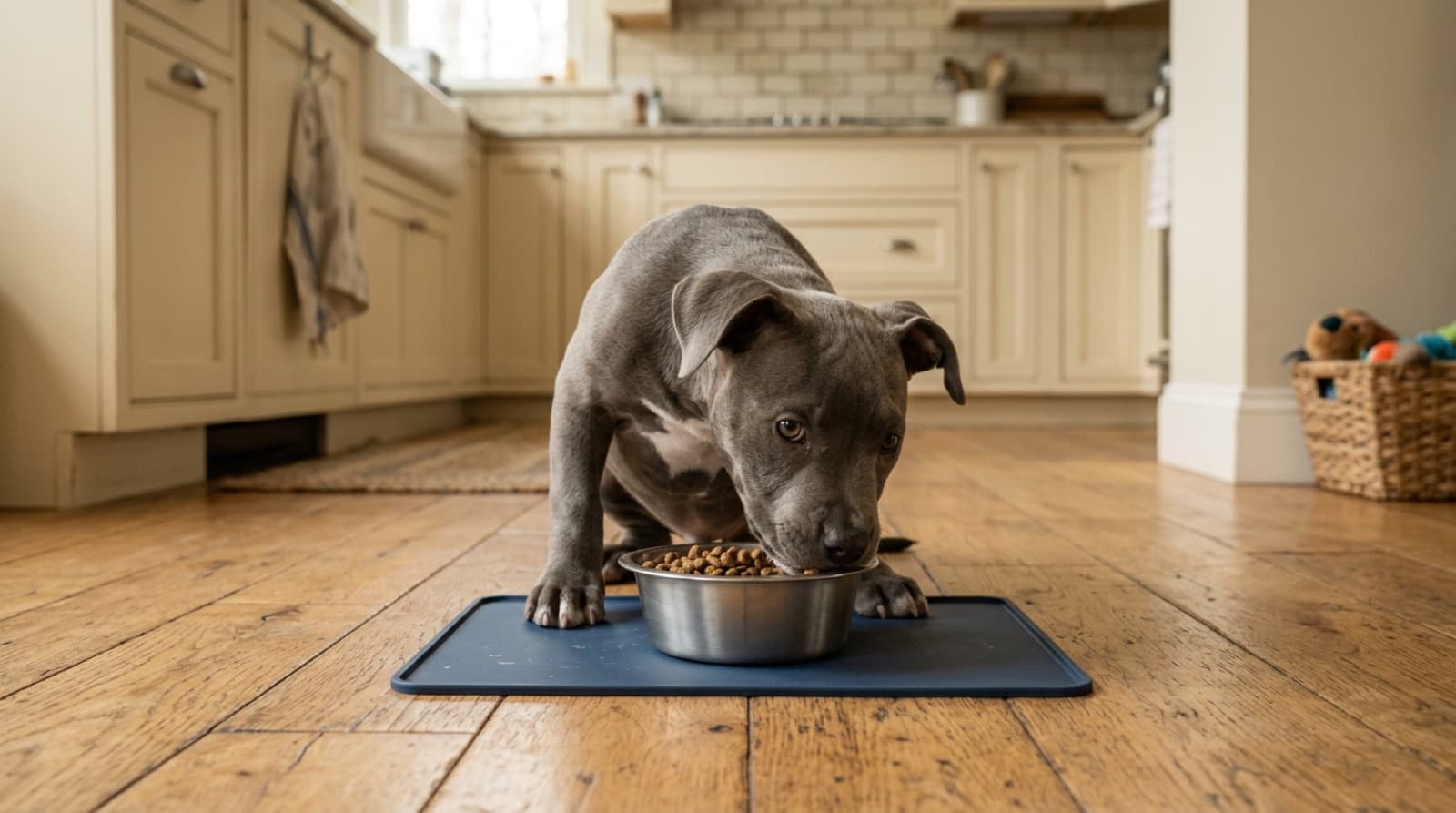
A puppy food labelled for growth or all life stages, fed in measured meals. For most pit types, a Staffy, a standard APBT, an AmStaff, a regular puppy formula is exactly right.
The exception is size. For a large American Bully or a pit mix that will top about 70 lb as an adult, choose a large-breed puppy formula whose AAFCO statement specifically includes “growth of large size dogs (70 lb or more as an adult).” Big puppies cannot regulate calcium well, and a large-breed formula keeps calcium and calories controlled to protect developing joints.
Feed about four meals a day at weaning, dropping to three by a few months and two by six to twelve months. Keep the puppy lean, and skip the calcium and muscle supplements, which a balanced diet already covers and which can do harm in a growing dog.
Skin allergies: the real breed-specific issue
Pit-type dogs are genuinely prone to itchy skin, and atopic dermatitis is named among the conditions the breed is predisposed to. The instinct is to blame the food and start switching bags. Usually that is the wrong move.
In dogs, environmental and flea allergies are far more common than food allergy, and the three look identical: itchy skin, ears, and paws, with recurring infections. You cannot tell them apart by symptoms.
A true food allergy is diagnosed only one way: a strict, vet-run elimination diet over 8 to 12 weeks, then a re-challenge. The blood, saliva, and hair “allergy tests” sold for food allergy are not reliable, and a published study found they flagged allergies in healthy dogs and even in fake samples. Omega-3 fish oil can support the skin as part of a vet's plan, but it is support, not a cure. For chronic itching, see your vet rather than burning months guessing at the shelf.
Demodectic mange is not a dirty-dog disease
Young pits sometimes develop demodectic mange, and it gets unfairly tied to neglect or bad ownership. The truth is the opposite of the stigma.
Demodex is a mite that lives in the skin of virtually every healthy dog, passed from mother to pup. It only causes trouble when a young or run-down immune system cannot keep the mite in check, which is why it shows up most in dogs under about 18 months. It is not caused by dirt, poor care, or being a “bad” dog, and it is not contagious to healthy pets or people. Diet does not cause it and does not cure it. Many localized cases clear on their own, and a generalized case is very treatable with modern veterinary medication. If you see patchy hair loss on a young pit, that is a vet visit, not a reflection on you or the dog.
Strong chewers and food manners
Pits are powerful chewers and often fast eaters. A slow-feeder bowl helps a gulper slow down and adds a little enrichment. For chews, skip the rock-hard ones: antlers, real or cooked bones, and very hard nylon are leading causes of cracked teeth in strong-jawed dogs. Use the thumbnail test: if you cannot dent the chew with your thumbnail, it is too hard for the teeth.
If your pit guards its bowl, know that resource guarding is a normal, manageable behaviour rooted in anxiety, not a breed defect. Manage it by feeding in a quiet spot and trading up to something better rather than taking things away, and never punish it, which makes the worry worse. For established or serious guarding, work with a positive-reinforcement trainer.
Bloat: good news for pit owners
Bloat (gastric dilatation-volvulus) is the emergency that haunts large deep-and-narrow-chested breeds like Great Danes and Shepherds. Pit bulls are broad and barrel-chested rather than deep and narrow, and they are not among the high-risk breeds.
So this is one worry you can mostly set down. It is still good practice to slow a fast eater with a slow feeder and to avoid hard exercise right around big meals, and like every breed, a pit should eat from a floor-level bowl, not a raised one, since raised feeders are linked to higher bloat risk rather than lower. But you do not need to lose sleep over bloat the way a Great Dane owner does.
Foods and products to avoid
Keep these toxic foods away from a pit completely: chocolate, grapes and raisins, xylitol (in sugar-free gum, some peanut butters, and baking), onions and garlic, macadamia nuts, alcohol, and cooked bones. Call your vet or a pet poison helpline right away if your dog eats any of them.
Two more to skip:
- Muscle-builder and weight-gainer supplements. As above, they do not build muscle in a healthy dog and risk over-supplementing a balanced diet.
- Legume-heavy grain-free diets, with a caveat: the FDA has investigated a possible link to a heart condition (DCM) but has not proven it. There is no reason to feed grain-free unless your vet diagnoses a grain allergy.
Should I feed my pit bull a raw diet?
Make it a vet conversation, and be skeptical of the marketing. Raw and “performance” diets are pushed hard in bully circles, promising muscle, coat shine, and energy. Those benefits are not documented in controlled studies, and the major veterinary bodies are cautious.
The AVMA discourages feeding raw or undercooked animal protein because of the pathogen risk to the dog and the people in the home, and the WSAVA finds no documented benefit over a balanced cooked or commercial diet. The honest reframe: coat shine comes from the fat and omega-3s in any complete diet, and muscle comes from genetics and exercise, not from raw. If you still want to feed raw, use a complete commercial product or a recipe from a board-certified veterinary nutritionist, follow strict food-safety handling, and check with your vet first.
Looking to adopt a pit bull?
Sort the food and the slow feeder before day one. Browse pit bulls and bully mixes available right now from the rescues we track.
See Available Pit Bulls →Where to buy pit bull food
Every brand worth feeding a pit is easy to find in store and online:
- Pet specialty chains (Pet Planet, Tail Blazers, Tisol, and similar). Carry Pro Plan, Royal Canin, Acana, and most premium lines.
- Pet Valu and PetSmart. National chains that stock the major adult and active-dog formulas.
- Your vet clinic. The place for any allergy or therapeutic prescription diet.
- Costco. Kirkland Signature is a solid everyday budget option.
Buy a bag size you will finish reasonably fresh and keep it sealed in a storage bin. Online, the same brands ship to your door, and the quality adult formulas are easy to set on a recurring delivery, with no need to pay extra for muscle or weight-gainer products.
Frequently Asked Questions
How much should I feed a pit bull?
It depends on the dog, because "pit bull" covers a big size range, from a 25 lb Staffordshire Bull Terrier to a 70 lb American Staffordshire Terrier or a much larger American Bully. A rough starting point for an active medium-large pit is around 2 to 2.5 cups of quality dry food a day, split into two meals, but the right amount depends on the food’s calories and your dog’s activity. Feed to body condition rather than a number: a healthy pit is lean and muscular, with ribs you can feel but not see and a clear waist. Heavy muscle can hide fat gain, so judge by feel, not the scale alone.
What food makes a pit bull more muscular?
None. This is the biggest myth in bully-breed feeding. Muscle comes from genetics, progressive exercise, and a complete balanced diet, not from a high-protein bag or a "muscle builder" supplement. Once a dog has enough protein to maintain and repair its body, the extra is just burned for energy or excreted, it does not pile on bonus muscle. Over-feeding to "bulk up" a dog adds fat, not muscle, and that extra weight stresses the joints of an athletic breed. A complete-and-balanced adult food plus real exercise is what builds a fit, muscular pit. The weight-gainer and muscle-builder products marketed to bully owners are unnecessary for a healthy dog and worth skipping unless your vet specifically recommends one.
What is the best food for a pit bull?
A complete adult formula from a company that does real nutrition science. Use the WSAVA approach: choose a brand that employs a board-certified veterinary nutritionist, runs feeding trials, and will share a full nutrient analysis. Look for a named animal protein, the AAFCO complete-and-balanced statement, and omega-3s for the skin, which this breed often needs. An active pit does well on a quality adult food with adequate protein and fat; chasing extreme protein percentages does nothing extra. Only the largest American Bully types or pit mixes that will top about 70 lb need a large-breed formula.
What should I feed a pit bull puppy?
A puppy food labelled for growth or all life stages, fed in measured meals. For most pit types (Staffies, standard APBTs, AmStaffs) a standard puppy formula is fine. For a large American Bully or a pit mix that will top about 70 lb as an adult, choose a large-breed puppy formula whose AAFCO statement specifically includes "growth of large size dogs (70 lb or more)," because big puppies need controlled calcium to protect developing joints. Feed about four meals a day at weaning, dropping to three by a few months and two by six to twelve months. Keep the puppy lean, and do not add calcium or muscle supplements to a balanced diet.
My pit bull is itchy or has skin problems. Is it the food?
Usually not, but it is a vet question, not a food-swapping experiment. Pit-type dogs are genuinely prone to skin allergies, but in dogs, environmental and flea allergies are far more common than food allergy. The catch is that they all look the same: itchy skin, ears, and paws. A true food allergy is diagnosed only by a strict, vet-run elimination diet over 8 to 12 weeks, not by switching store-bought foods and not by blood, saliva, or hair "allergy tests," which research has shown are unreliable and flag allergies even in healthy dogs and tap water. Omega-3 fish oil can support the skin as part of a vet’s plan. For chronic itching, see your vet rather than guessing at the shelf.
Is demodectic mange caused by a bad diet or poor care?
No, and this is an unfair myth that follows the breed. Demodectic mange comes from a mite that lives in the skin of virtually every healthy dog, passed from mother to pup. It only causes problems when a young or run-down immune system cannot keep the mite in check, which is why it shows up most in dogs under about 18 months. It is not caused by dirt, neglect, or being a "bad" dog, and it is not contagious to healthy pets or people. Diet does not cause it or cure it. Localized cases often clear on their own; a generalized case needs vet treatment, which today is very effective.
Should I feed my pit bull a raw diet?
Make it a vet conversation, and be skeptical of the marketing. Raw is heavily promoted in bully circles for muscle, coat shine, and energy, but those benefits are not documented in controlled studies, and the mainstream veterinary bodies are cautious. The AVMA discourages raw or undercooked animal protein because of the pathogen risk to pets and people, and the WSAVA finds no documented benefit over a balanced cooked or commercial diet. Coat shine comes from adequate fat and omega-3s in any complete diet, and muscle comes from genetics and exercise, not from raw. If you still want to feed raw, use a complete commercial product or a vet-nutritionist recipe, handle it safely, and talk to your vet first.
How much does it cost to feed a pit bull per month?
Roughly $50 to $120 a month for a medium-large pit on a quality dry food, with budget kibble lower and premium higher. Raw and fresh-cooked diets run more. Treat these as approximate ranges that vary with brand, your dog’s size and activity, and where you shop. Price your chosen food by its calories per cup against your dog’s actual daily portion, and remember you do not need to spend extra on muscle or weight-gainer products.
Pit Bull Health Issues
Skin, hips, heart, and the conditions worth knowing before and after you adopt.
Pit Bull Exercise & Energy
The real way to build a fit, muscular pit: structured exercise, not supplements.
Pit Bull Adoption
Where to find pit bulls and bully mixes, real costs, and what the breed is like.
Pit Bulls for Adoption
Live listings of pit bulls and bully mixes from the rescues we track.