The honest version
A bored Pit Bull will tear your house apart. A tired Pit Bull is the gentlest, goofiest couch companion you have ever met. The difference is 60 to 90 minutes of real physical exercise a day plus 20 to 30 minutes of mental stimulation. Most Calgary Pit Bull surrenders trace back to under-exercise, not bad temperament. The breed is athletic, working-line stock built for stamina, and the energy needs to go somewhere. Mental work counts as much as physical, and on Calgary days when the weather makes a long walk unsafe, it is the whole plan. Off-leash strategy matters too. Same-sex dog aggression often emerges between 8 and 18 months, so parallel walks and fenced spaces beat crowded dog parks. This guide is the routine that actually works.
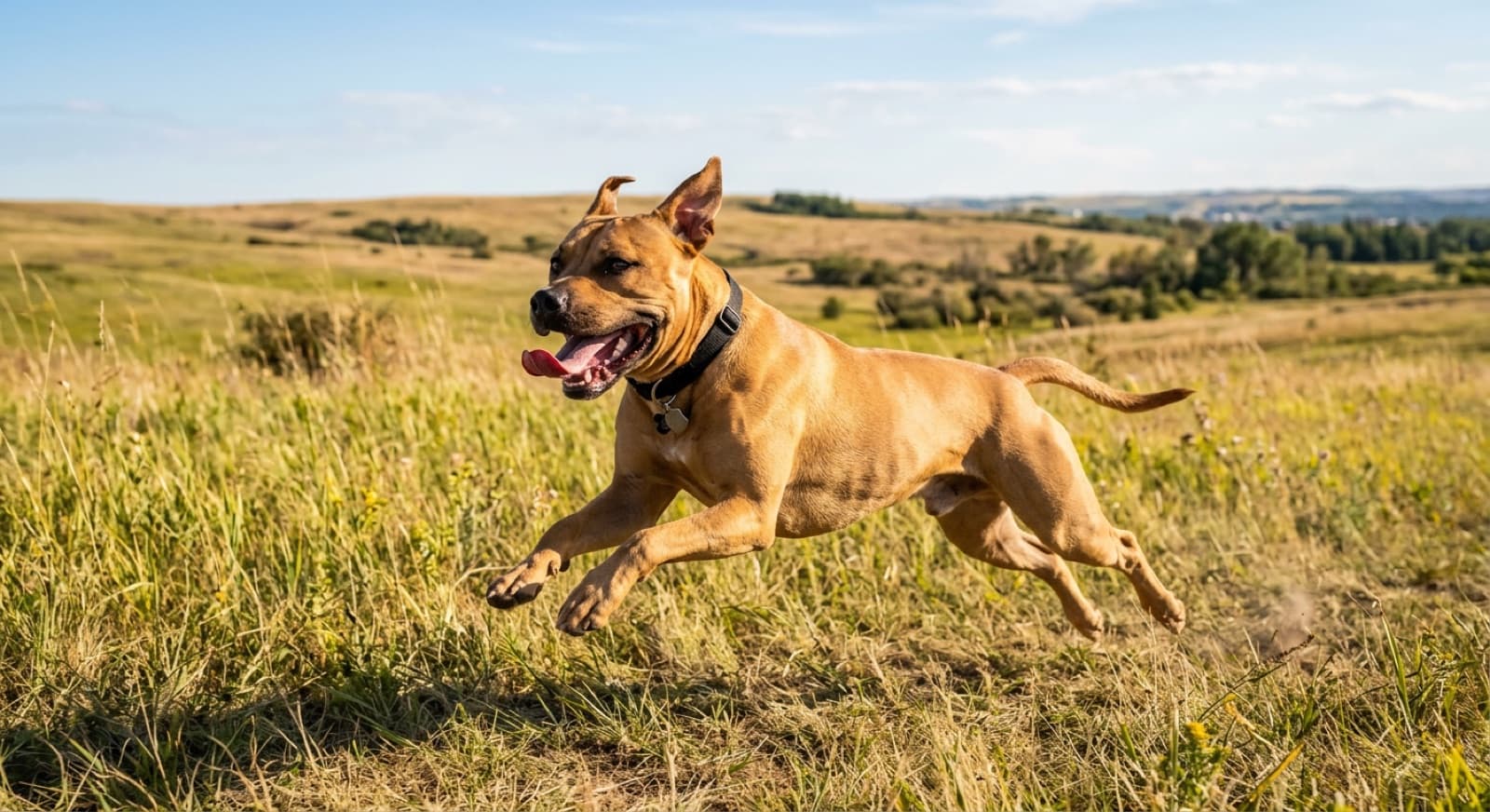
How Much Exercise a Pit Bull Really Needs
The honest number is 60 to 90 minutes of physical exercise daily for an adult, plus 20 to 30 minutes of mental work. Adolescent Pit Bulls between 8 and 18 months often need closer to 90 to 120 minutes total to actually settle in the house. Senior Pit Bulls past 8 years drop to 45 to 60 minutes of lower-impact exercise plus the same mental work.
Split the time across morning and evening sessions. A single long walk leaves a Pit Bull pent up by mid-afternoon. Two 40-minute sessions plus a short midday potty walk drains the breed properly. Pit Bulls do not self-regulate the way some breeds do, so leaving them alone in a yard does not count as exercise. They sit at the door waiting for you. Structured exercise with their person is the only kind that actually drains them.
A tired Pit Bull is a happy Pit Bull. An under-stimulated Pit Bull becomes destructive within days. Chewed baseboards, shredded couch cushions, fence climbing, escaping the yard, and frantic greetings are almost always under-exercise signs, not personality flaws.
Physical Exercise Types That Work
Long leash walks (45 to 60 minutes)
The foundation of every Pit Bull routine. A brisk walk on a 6-foot leash hits cardiovascular needs and gives the dog sniff time, which is mentally tiring on its own. Two of these a day covers most adult Pit Bulls. Add a long-line walk on the Bow River pathways or Edworthy trails on weekends for variety. Build to this duration gradually for senior or out-of-shape rescues.
Jogging or biking partner
Lower-impact than hard fetch on most surfaces, and good for Pit Bulls past 18 months once growth plates close. Start with 2 km and build slowly. Bike attachments like Springer or Bike Tow Leash keep the dog at safe distance. Pit Bulls love a steady trot and will outlast most owners. Avoid hot pavement and watch for joint signs in dogs with hip or elbow history.
Structured play (15 to 20 minute sessions)
Flirt pole, tug, and short fetch in a fenced space. Flirt pole is a 4-foot stick with a rope and a lure tied to the end, and it is the fastest way to drain a Pit Bull mentally and physically. Five minutes of flirt pole work equals 20 minutes of leash walking for high-drive dogs. Keep sessions short to protect joints and avoid overuse. Build clear start and stop signals to make play structured, not chaotic.
Swimming
Excellent low-impact exercise for muscular dogs. Many Pit Bulls love water once introduced properly. Sandy Beach on the Elbow River and the off-leash river access at Edworthy work well in summer. Pit Bulls are not naturally buoyant because of dense muscle mass, so a swim vest for new swimmers and shallow-entry beaches matter. Swimming spares joints and drains a high-energy dog faster than any land-based exercise.
Sniff walks and decompression
Long-line walks where the dog leads and sniffs are mentally exhausting in the best way. Nose Hill, Weaselhead, and Fish Creek Park all have long-line friendly trails. Twenty minutes of free sniffing drains a Pit Bull as much as a 45-minute brisk walk. Especially valuable for reactive Pit Bulls who cannot handle busy parks yet.
Mental Stimulation: Not Optional
Mental work is not a substitute for physical exercise, it is the other half of the equation. Twenty minutes of structured mental work drains a Pit Bull as much as 45 minutes of walking, and stacks on top of physical exercise to push the dog into deep rest. On Calgary days when -25C or +30C makes long walks unsafe, mental stimulation is the rescue plan.
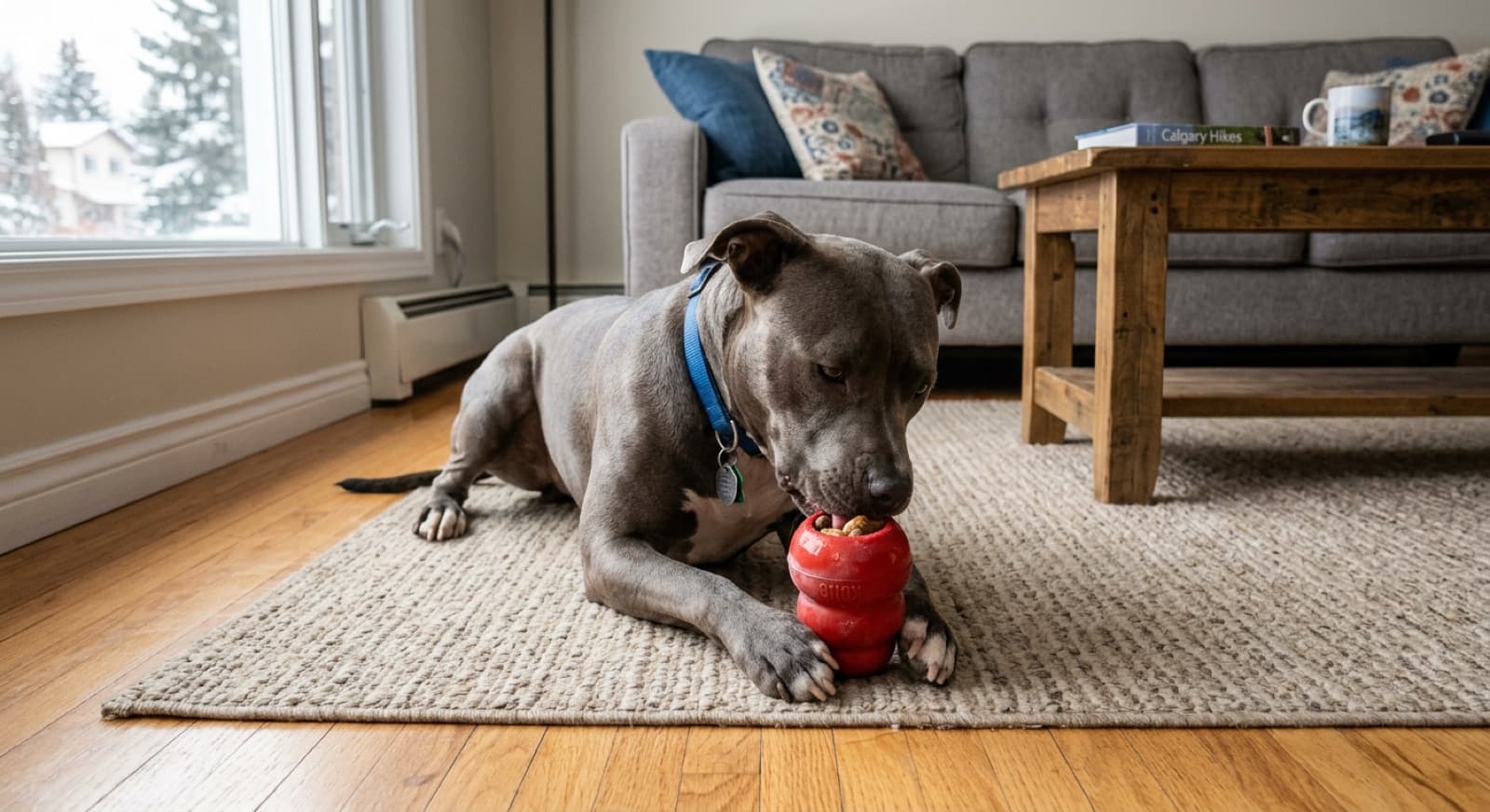
Puzzle feeders for every meal
Stop using a bowl. Kong Wobbler, Outward Hound Twister, snuffle mats, and frozen Kongs turn every meal into 10 to 15 minutes of work. A Pit Bull that finishes breakfast in 8 minutes instead of 30 seconds starts the day with a calmer baseline.
Scent work and nosework
Scatter feeding in the yard or basement, hide-and-seek games with kibble, and structured scent work using birch or anise oil. K9 nosework classes in Calgary teach the structured version. Scent work is the lowest-impact, highest-drain mental exercise available and works for reactive dogs because it does not require other dogs.
Training reps
Three 5-minute training sessions a day beats one 30-minute marathon. Practice sit, down, stay, place, recall, and a trick or two. Pit Bulls are highly trainable and food-motivated. Daily reps also build the reliable cues you need for off-leash safety later.
Flirt pole sessions
Listed under physical exercise too because it is both. Five to 10 minutes of flirt pole work hits mental and physical drains simultaneously. Build start and stop cues so the dog learns to disengage on command, which doubles as impulse-control training.
K9 nosework classes
Calgary has multiple nosework instructors running 6-week introductory courses. The structured version is significantly more draining than backyard scatter feeding and gives you a sport you can compete in if you want. Most classes welcome bully breeds and many reactive dogs do well because they work one at a time.
Off-Leash Safety with Bully Breeds
Pit Bulls have a higher rate of same-sex dog aggression than the average breed, and the risk window opens between 8 and 18 months. A Pit Bull who was friendly with every dog as a puppy can become selective or reactive once the hormones settle. This is genetic, not a training failure, and managing it is the job of every responsible Pit Bull owner.
The off-leash strategy is simple. Parallel walks with known dog friends beat crowded dog parks. Fenced spaces beat open spaces. Off-peak hours beat weekend crowds. Recall must be proofed before any off-leash work in unfenced areas, and most experienced Calgary Pit Bull owners never let their dog off-leash outside a fence at all.
Leave the moment your dog tenses or another dog escalates. Do not test the limit. A fight involving a Pit Bull, even one your dog did not start, ends with your dog blamed under Calgary's general bylaws and possibly your home insurance cancelled. Manage risk proactively.
Calgary Off-Leash Parks Ranked for Pit Bulls
1. Sue Higgins (best overall for bullies)
Fenced areas, multiple sections, lower density on weekday mornings. The fenced layout makes recall practice safe and gives you escape options if another dog escalates. Sue Higgins is the most Pit-Bull-friendly park in Calgary because the fences absorb mistakes. Best windows: weekday mornings before 9 AM and weekday evenings after 7 PM.
2. Bowmont Silver Springs Gate (fenced section, varied terrain)
The Silver Springs entrance has a fenced section ideal for early off-leash work. The varied terrain gives sniff variety and the broader park lets you walk on long-line in the unfenced areas if your dog is not ready for free running. Less crowded than Nose Hill on most days.
3. Nose Hill (open, low-density mornings)
Massive open space, generally low density on weekday mornings. The open layout lets you keep distance from other dogs, which suits a Pit Bull still building social skills. Not fenced, so recall must be solid. Best for parallel walks and sniff time, not free-for-all play. Avoid weekend afternoons.
4. River Park (off-leash hours, often dense)
Popular and often crowded, especially mornings and after work. River Park can be too dense for a Pit Bull still learning dog social skills. Excellent for confident, well-socialized adults during off-peak times. Skip on weekends and warm afternoons when density spikes.
5. Edworthy (large but high-traffic)
Large park with river access, but consistent foot and dog traffic. Better for on-leash trail walks and river swimming than free play. The off-leash sections fill up fast. Use Edworthy for summer swimming at the river access, not for off-leash socialization with a reactive or adolescent Pit Bull.
Calgary Winter Exercise Protocol
Pit Bulls have a short coat and minimal body fat, so Calgary winter changes the exercise plan from October through March. The short coat does not insulate against cold, and Calgary sidewalk salt cracks paw pads. Most Pit Bulls handle -10C for 30 to 45 minutes with a coat and booties.
| Temperature | Walk duration | Gear |
|---|---|---|
| 0C to -10C | 30 to 45 minutes | Coat, optional booties |
| -10C to -20C | 15 to 20 minutes | Coat plus booties, watch paw lifting |
| Below -20C | 10 to 15 minutes (potty only) | Coat, booties, indoor mental work for the rest of the day |
Use musher's wax or booties to protect paws from de-icing salt. On extreme cold days, replace outdoor exercise with flirt pole sessions, hallway recalls, treadmill work if you have one, puzzle feeders, and 5-minute training sessions repeated through the day. A Pit Bull can stay sane indoors on a -30C day if mental work fills the gap.
Calgary Summer Exercise Protocol
July and August routinely hit 22 to 30C in Calgary, and Pit Bulls overheat faster than most owners realize. The short coat does not insulate against heat any better than cold, and bullies tend to push past safe limits because they want to keep working. Hot pavement is the second concern. Direct July sun raises sidewalk surface temperatures to 50C or higher, which burns paw pads in seconds.
| Temperature | Walk window | Notes |
|---|---|---|
| Up to 22C | Any time, normal duration | Pavement check before midday walks |
| 22 to 25C | Before 9 AM or after 7 PM | No midday walks, shorter sessions |
| Above 25C | Before 6 AM or after 9 PM only | Indoor mental work during the day, river swim if accessible |
Use the 5-second pavement rule: press the back of your hand to the pavement, and if you cannot hold it for 5 seconds, the dog cannot walk on it. Swimming at Sandy Beach on the Elbow River or the off-leash river access at Edworthy is the best summer exercise option because water cools the dog while draining energy. Always bring water and watch for signs of overheating: heavy panting, drooling, slow response, dragging gait.
Dog Sports That Drain a Pit Bull
K9 Nosework
Top pick for Pit Bulls of any temperament. Works for reactive dogs because the format is one dog at a time. Calgary nosework classes run 6 to 8 week introductory courses. The structured version is significantly more draining than backyard scent games and gives you a sport with trials and titles if you want to compete.
Agility (joint-aware)
Excellent for athletic Pit Bulls but requires joint protection. No jumping over 8 inches before 18 months while growth plates close. Once mature, agility is one of the best total-body and mental drainers available. Calgary Agility Association runs beginner classes and welcomes bully breeds.
Weight pull (responsible)
Breed-traditional sport that channels harness-pulling drive into structured work. Done responsibly with proper harness fit, gradual weight progression, and adult-only training (no pulls before 18 months), it builds physical conditioning and confidence. Find a club mentor before starting, since improper weight pull is hard on the body.
Barn hunt
Structured prey-drive outlet. Dogs search hay bales for safely contained rats. Drains mental energy fast and satisfies the bully prey-drive in a controlled setting. Calgary has barn hunt clubs running weekly practices and monthly trials. Good fit for high-drive Pit Bulls who would otherwise chase squirrels off-leash.
Dock diving
Pit Bulls that love water do well. Combines swimming (low-impact) with structured retrieve drive. Calgary has limited dock diving facilities but seasonal events happen at outdoor venues. A summer-friendly sport that complements the swimming exercise plan.
Lure coursing
Short, intense bursts of chase. Satisfies prey drive without live targets. Pit Bulls love it. Sessions are 30 to 60 seconds each, so it stacks well with other exercise. Some Calgary clubs run open coursing days that welcome bully breeds.
Calgary Dog Sports Clubs
Calgary Agility Association
Beginner through competition agility classes. Welcomes bully breeds and mixes. Indoor facility runs year-round. Good entry point for Pit Bull owners who want a structured sport with regular weekly classes.
Calgary Companion Dog Club
Obedience, rally, and conformation classes. The obedience track builds the impulse control and recall that Pit Bull owners need most. Open to all breeds. Beginner classes run multiple sessions a year.
Calgary scent detection groups
Multiple independent nosework instructors run 6 to 8 week classes year-round. Search for “Calgary K9 nosework” or “Calgary scent detection” to find current instructors. The format works for reactive dogs because handlers work one at a time.
Ready to commit to the exercise routine? Browse adoptable Pit Bulls in Calgary
Live listings from 15+ Calgary rescues, refreshed regularly. Foster reports usually include energy level, dog social history, and exercise notes so you know what you are matching.
See Available Pit Bulls →Frequently Asked Questions
How much exercise does a Pit Bull really need?
Most adult Pit Bulls need 60 to 90 minutes of physical exercise daily plus 20 to 30 minutes of mental work. Adolescents between 8 and 18 months often need closer to 90 to 120 minutes total to actually settle. Pit Bulls are working-line athletes bred for stamina, not couch dogs. A single 20-minute walk is not enough and shows up as destructive chewing, fence climbing, and house tearing within days. Split the time across morning and evening, mix walks with structured play and training reps, and a tired Pit Bull becomes the gentlest companion in the house.
Can mental stimulation replace physical exercise?
Partly, and it matters more than most owners realize. Twenty minutes of structured nosework, puzzle feeding, or training drains a Pit Bull as much as a 45-minute walk. Mental work stacks on top of physical exercise to push a high-drive bully into deep rest. On Calgary days when -25C or +30C makes long walks unsafe, mental stimulation is the rescue plan. Puzzle feeders for every meal, scatter feeding for scent work, 5-minute training reps three times a day, and short flirt pole sessions cover it.
Best off-leash park in Calgary for a Pit Bull?
Sue Higgins is the top pick. Fenced areas, multiple sections, lower density on weekday mornings. The fences absorb mistakes and give you an escape if another dog escalates. Bowmont Silver Springs Gate is second with a fenced section and varied terrain. Nose Hill is third for open-space parallel walks. River Park and Edworthy are often too dense for a Pit Bull still learning dog social skills. Parallel walks beat free-for-all dog parks for bully breeds.
Is the dog park safe for Pit Bulls?
Conditionally. Same-sex dog aggression emerges in many Pit Bulls between 8 and 18 months even in dogs friendly as puppies. The risk does not make the breed dangerous, it makes management essential. Use fenced spaces at off-peak hours, avoid weekends, leave the moment your dog tenses, and prefer one-on-one walks with known dog friends over open free-for-alls. Many experienced Calgary Pit Bull owners stop using public dog parks by 18 months and switch to sniffspots, hikes, and structured playdates.
How cold is too cold to walk a Pit Bull?
Most Pit Bulls handle -10C for 30 to 45 minutes with a coat and booties. Between -10C and -20C, cap walks at 20 minutes and watch for paw lifting or shivering. Below -20C, limit to 10 to 15 minute potty trips only. The short coat does not insulate against Calgary cold, and de-icing salt cracks paw pads. Use musher's wax or booties October through March. On extreme cold days, shift exercise to indoor mental work and short flirt pole sessions.
When is it too hot to walk a Pit Bull?
Above 22C, walk at 6 AM or after 9 PM only. Above 25C, skip midday entirely and do mental work indoors. Pit Bulls overheat fast because they push past the point of safety. July pavement runs 50C or hotter and burns paw pads in seconds. Use the 5-second rule: hand on pavement, if you cannot hold it for 5 seconds, the dog cannot walk on it. Swimming at Sandy Beach or Edworthy river access is excellent low-impact summer exercise.
What sports work for Pit Bulls in Calgary?
K9 nosework is the top pick, drains mental energy fast and works for reactive dogs. Agility is excellent post-18 months with joint-aware training. Weight pull is breed-traditional when run responsibly. Barn hunt taps prey drive. Dock diving suits water lovers. Lure coursing is short and intense. Calgary Agility Association and Calgary Companion Dog Club run beginner classes welcoming bully breeds.
My Pit Bull has unlimited energy. What is wrong?
Almost always under-exercised or under-stimulated, not a breed defect. Adolescent Pit Bulls between 8 and 18 months need 90 to 120 minutes of physical plus 30 minutes of mental work daily to settle. The most common Calgary failure pattern is a single 20-minute walk and surprise that the dog destroys the house. Track real exercise time for a week. Under 60 minutes plus zero mental work means the routine is too low, not that the dog is too high-energy. Add a midday walker, a daycare day, or a flirt pole session and the problem usually resolves within two weeks.
More Pit Bull guides
Pit Bull Training Calgary →
Force-free training, recall, leash manners, and the foundations that make off-leash safety possible.
Pit Bull Adolescence →
The 8 to 18 month window: energy spikes, dog selectivity, hormones, and how to manage the hardest phase.
Dog Aggression Management →
Same-sex dog aggression, management strategies, and how to keep walks and parks safe for everyone.
Is a Pit Bull Right for You? →
10 honest truths and a self-assessment checklist for prospective Calgary Pit Bull owners.
Bringing Home a Pit Bull (3-3-3) →
Decompression timeline, first-day setup, and the 3-3-3 rule applied to bully breeds.
Pit Bull Separation Anxiety →
Why under-exercise looks like separation anxiety, what is actually clinical, and how to tell the difference.
New dog? Start with these care guides
Everything a new adopter needs to set up a safe, happy home.