The short answer
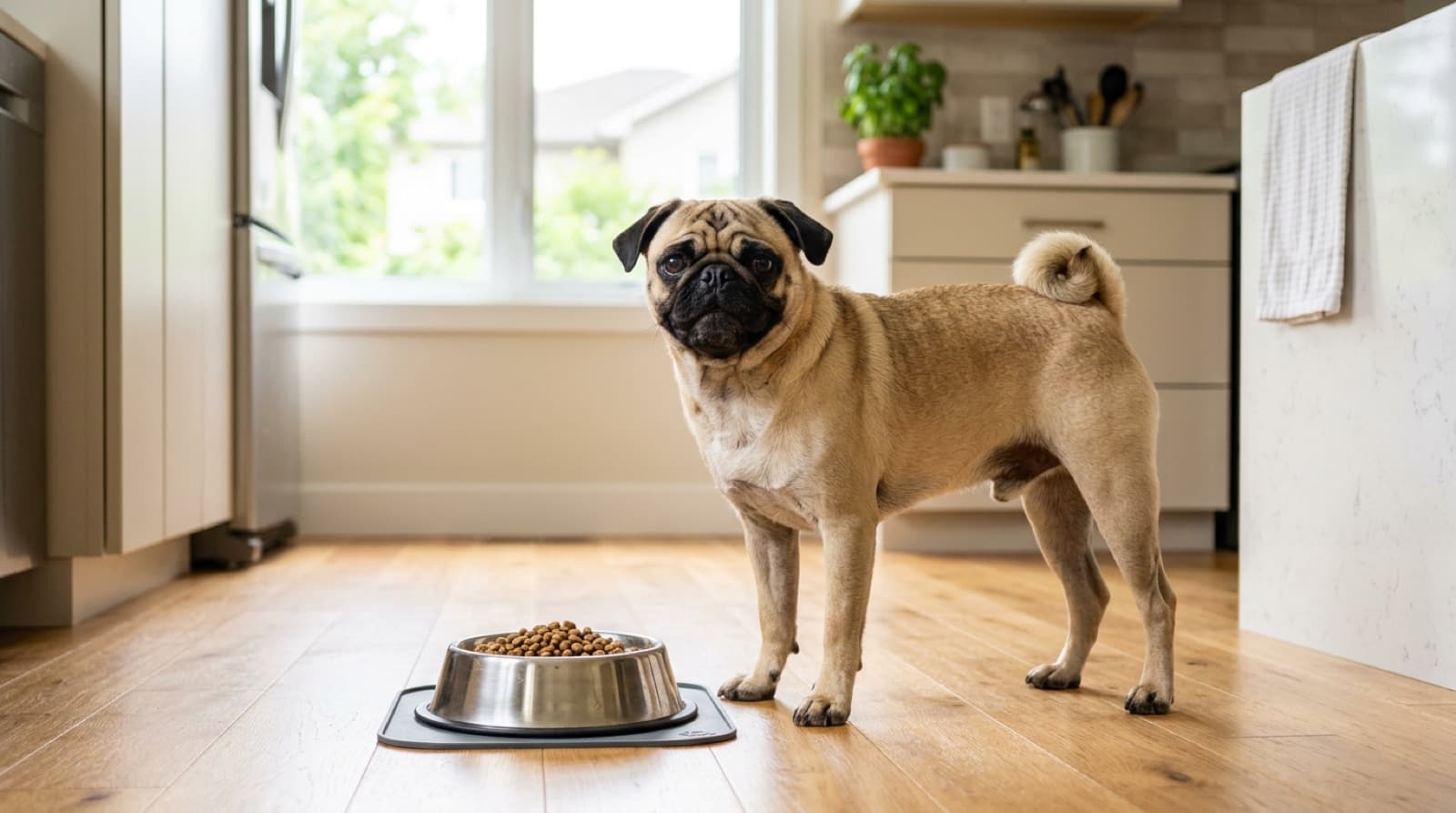
Feed a Pug a complete food from a nutritionist-backed brand, measure every meal, and keep the dog lean. Pugs are the most obesity-prone breed, the bag overfeeds them, and the begging is breed-normal, not hunger. The reason it matters so much is the flat face: a Pug's breathing already has less room to spare, and extra weight makes it worse, so in a Pug weight is a breathing issue. Judge by body condition, not by how hungry the dog acts, and do not be charmed by the round “chonky” look, which is overweight, not healthy. Manage the begging with slow feeders, low-calorie veggies, and meal kibble as treats.
What is the best food for a Pug?
There is no single best bag, and any site that names one is selling something. The standard most vets point to comes from the WSAVA global nutrition guidelines.
Pick a brand that does the science. Ask whether the company employs a full-time, board-certified veterinary nutritionist and runs feeding trials. The safe defaults are Purina Pro Plan, Hill's Science Diet, and Royal Canin.
Because weight is the whole ballgame, a small-breed or weight-management formula is worth considering. A reduced-calorie food lets a food-obsessed Pug eat a satisfying volume without the calories, which makes portion control far easier on everyone's resolve. Then judge the food by the dog: firm stool, settled skin, and above all a lean body condition.
The most obesity-prone breed, and the begging that drives it
Pugs are the breed at the highest risk of obesity in the country. Research from the Royal Veterinary College found Pugs roughly three times more likely to be overweight than crossbreed dogs.
The thing that makes a Pug a Pug, that soulful, persuasive, food-loving personality, is also what makes it fat. A Pug will beg relentlessly, act starving five minutes after a full meal, and in some cases physically overeat to discomfort and still sit at your feet asking for more. That is breed-normal behaviour, not a hunger signal.
Feeding the begging is what creates the obesity, not the cure for hunger. The single most useful reframe for a Pug owner is to stop reading the begging as need. Judge by body condition instead: feel the ribs, see a waist. To take the edge off without adding calories, lean on a slow-feeder bowl, a puzzle toy, low-calorie veggies like green beans or carrot, and meal kibble pulled out to use as training treats. One genuine exception: a sudden, real increase in appetite, not the usual begging, can be medical, so a true change is worth a vet visit.
Why weight is a breathing issue, not a looks issue
This is the part generic feeding articles miss. A Pug is brachycephalic, meaning the flat face comes with a shortened, often narrowed airway that already makes breathing harder. When a Pug gains weight, fat deposits around the airway, neck, and chest narrow that compromised airway further. Veterinary research links a higher body-condition score to worse brachycephalic breathing. So in a Pug, an extra pound is not a cosmetic matter, it is a measurable breathing and heat-tolerance problem.
That is why the round, “chonky” Pug look that the internet adores is genuinely dangerous, and why keeping a Pug lean is the most important thing diet does for the breed. Excess weight also strains the Pug's joints and spine. The honest target is a Pug you can run your hands over and feel the ribs on, with a visible waist, even though that looks leaner than most people expect a Pug to be.
Allergies, gas, grain-free, and foods to avoid
Itchy skin and folds. Pugs are prone to itching, ear infections, and facial-fold dermatitis, and owners often chase a food fix. But most Pug itching is environmental or fold-related, not a food allergy, and a true food allergy is diagnosed with a vet-supervised elimination diet (eight to twelve weeks, single novel protein), not by switching bags. Keep the skin folds clean as a separate, non-dietary job.
Gas. Like all flat-faced dogs, Pugs gulp air while eating, which produces gas. A slow-feeder bowl, smaller meals, and avoiding gas-producing foods help, but some is anatomical.
Grain-free and foods to avoid. Skip grain-free unless your vet diagnoses a grain allergy; the FDA grain-free investigation is reason enough to be cautious. Keep these away from a Pug completely: chocolate, grapes and raisins, xylitol, onions and garlic, macadamia nuts, alcohol, caffeine, and cooked bones. Skip fatty table scraps too, which add calories this breed cannot afford and risk pancreatitis. If your Pug eats something toxic, call your vet or a pet poison helpline right away.
Should I feed my Pug a raw diet?
Only with a vet or veterinary nutritionist involved. Some Pugs do well on a properly built raw or fresh diet, but raw meat carries a pathogen risk for the dog and the household, and a homemade raw diet without a professional recipe routinely runs short on key nutrients. For a weight-prone breed, the bigger practical issue is portion control, which a complete commercial diet makes easier to track. If you want to go raw or fresh, use a complete commercial product or a vet-formulated recipe.
Looking to adopt a Pug?
Sort the measuring cup and a slow-feeder bowl before day one. Browse Pugs and Pug mixes available now from the rescues we track.
See Available Pugs →Where to buy Pug food
Every brand worth feeding a Pug is easy to find in store and online:
- Pet specialty chains (Pet Planet, Tail Blazers, Tisol, and similar). Carry Pro Plan, Hill's, Royal Canin, and weight-management lines.
- Pet Valu and PetSmart. National chains that stock the major small-breed and reduced-calorie formulas.
- Your vet clinic. The place for prescription weight-loss diets if your Pug needs to drop pounds.
- Online. The same brands ship to your door, easy to set on a recurring delivery.
For a Pug, a measuring cup and a kitchen scale matter as much as the brand. The major small-breed and weight-management formulas are all available online.
Frequently Asked Questions
What is the best food for a Pug?
A complete formula from a brand that employs a veterinary nutritionist and runs feeding trials, like Purina Pro Plan, Hill’s Science Diet, or Royal Canin. Because Pugs are the most obesity-prone breed, a small-breed or weight-management formula that lets the dog eat a satisfying volume without the calories is often the right pick. The brand matters less than the calorie count letting you keep a famously food-obsessed dog lean. Start with whatever the rescue was feeding, then transition over seven to ten days.
How much should I feed a Pug?
Less than the bag says. Pugs are low-energy and intensely food-motivated, so the manufacturer chart, which assumes an active dog, overfeeds them. A useful starting heuristic owners share is to feed about three-quarters of what the bag recommends, then adjust by watching the dog. The real guide is body condition: feel the ribs easily under a light cover and see a waist from above. A common adult range is roughly half a cup to a cup a day split into two meals, but feed the dog in front of you, not the chart.
My Pug acts like he is starving all the time. Am I underfeeding him?
Almost certainly not. Relentless begging is breed-normal for a Pug, not a hunger signal. Pugs are food-obsessed and will beg, and act starving, five minutes after a full meal, sometimes after eating so much they are uncomfortable. Feeding the begging is what creates the obesity, it is not the cure for hunger. Judge by body condition, not by how hungry the dog acts. If you want to take the edge off without adding calories, use a slow-feeder bowl, a puzzle toy, and a few low-calorie veggies like green beans or carrot. One exception worth knowing: a sudden, genuine increase in appetite can be medical (diabetes, for example), so a real change is worth a vet visit.
Why does my Pug’s weight matter so much?
Because for a Pug, weight is a breathing problem, not just a waistline one. Pugs are the most obesity-prone breed in the country, and they are also brachycephalic (flat-faced), so their airway already has less room to spare. Fat deposits around the airway and chest make an already-compromised breathing system worse, along with heat tolerance and stamina. So in a Pug, every extra pound is a breathing issue. Excess weight also strains the breed’s joints and spine. Keeping a Pug lean is the single most important thing you do for its health.
Should I feed my Pug grain-free for itching?
No. Most Pug itching is environmental or related to the skin folds, not a food allergy, so grain-free rarely helps. A true food allergy is almost always to a protein, not a grain, and is diagnosed with a vet-supervised elimination diet, not by switching to a grain-free bag. On top of that, the FDA has been investigating a possible link between grain-free diets built on peas, lentils, and potatoes and a heart condition. Unless your vet diagnoses a grain allergy, skip grain-free.
What treats can I give a Pug without making him fat?
Low-calorie ones, counted inside the daily total. On a small, obesity-prone dog, treats should stay under about ten percent of daily calories, and that budget disappears fast. Good options owners use are baby carrots, green beans, a little plain cooked chicken, and small bits of fruit. A reliable trick is to pull a few pieces of kibble from the meal allowance and use those as training treats so they do not add anything. Avoid fatty human food, which also risks pancreatitis.
What should I feed a Pug puppy?
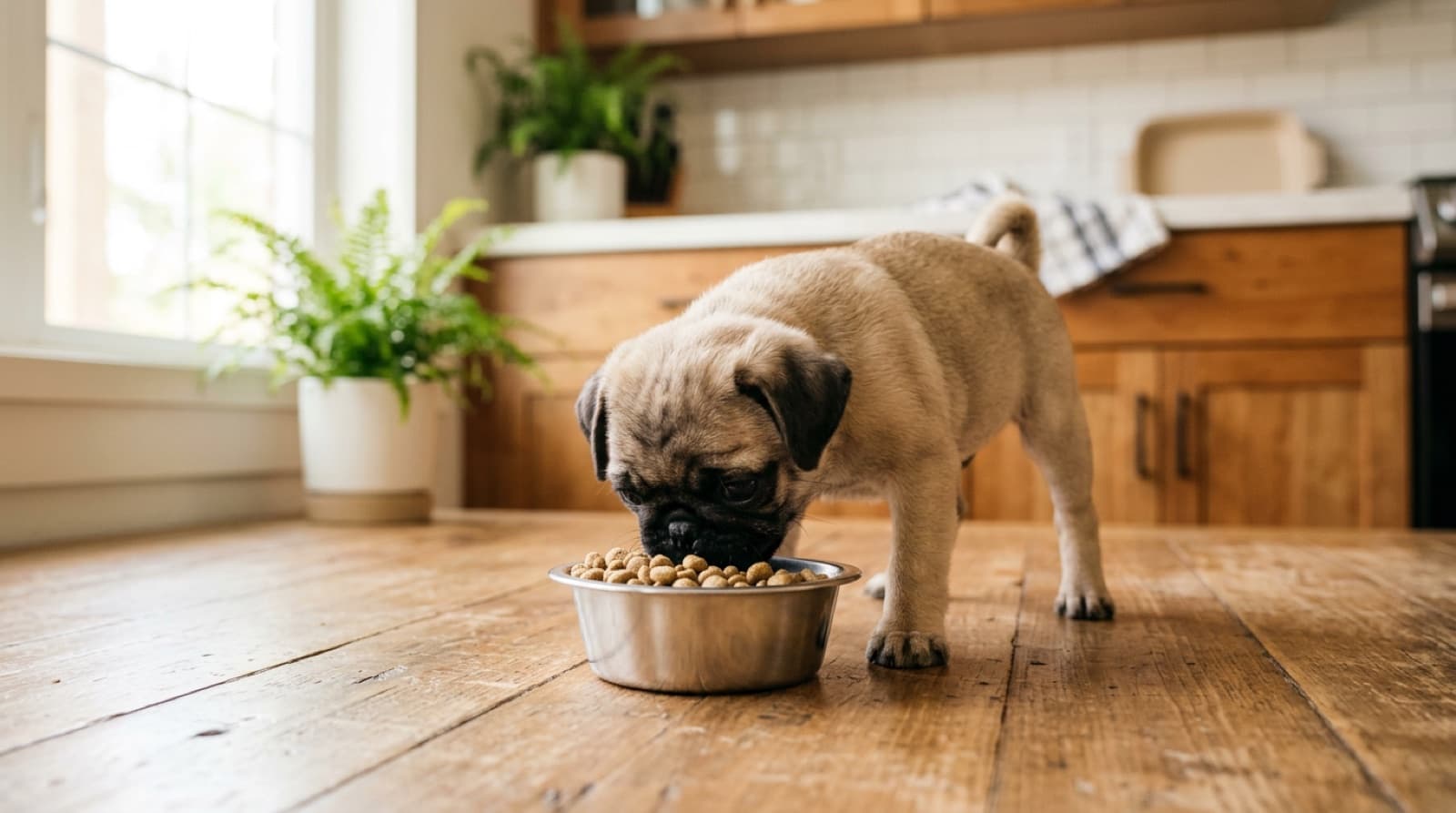
A complete small-breed puppy food, fed three meals a day until about six months, then two. Keep the puppy lean from the start, because a Pug will happily train you to overfeed it and the breed carries weight easily. Stay on puppy food until roughly twelve months, then transition to an adult formula over a week. Measure every meal, and do not free-feed, because Pugs have little self-control around food.
What to Feed a French Bulldog
Another flat-faced breed where weight is a breathing issue and allergies dominate.
What to Feed a Boston Terrier
The gas truth, sensitive stomachs, and the same brachycephalic weight caution.
Breed Feeding Guides
What to feed dozens of breeds, from toy dogs to giants, with the science made practical.
Pugs for Adoption
Live listings of Pugs and Pug mixes from the rescues we track.