The short answer
Buying: $2,000 to $3,000 at most catteries registered with The International Cat Association (TICA) or the Canadian Cat Association, with HCM test results for both parents and a waitlist. Cheap classified-ad kittens: usually scams, walk away. Adopting: purebreds are rare in rescue, but Ragdoll mixes and blue-eyed colourpoint longhairs appear regularly for a few hundred dollars. Browse adoptable Ragdolls and mixes to see what is available now.
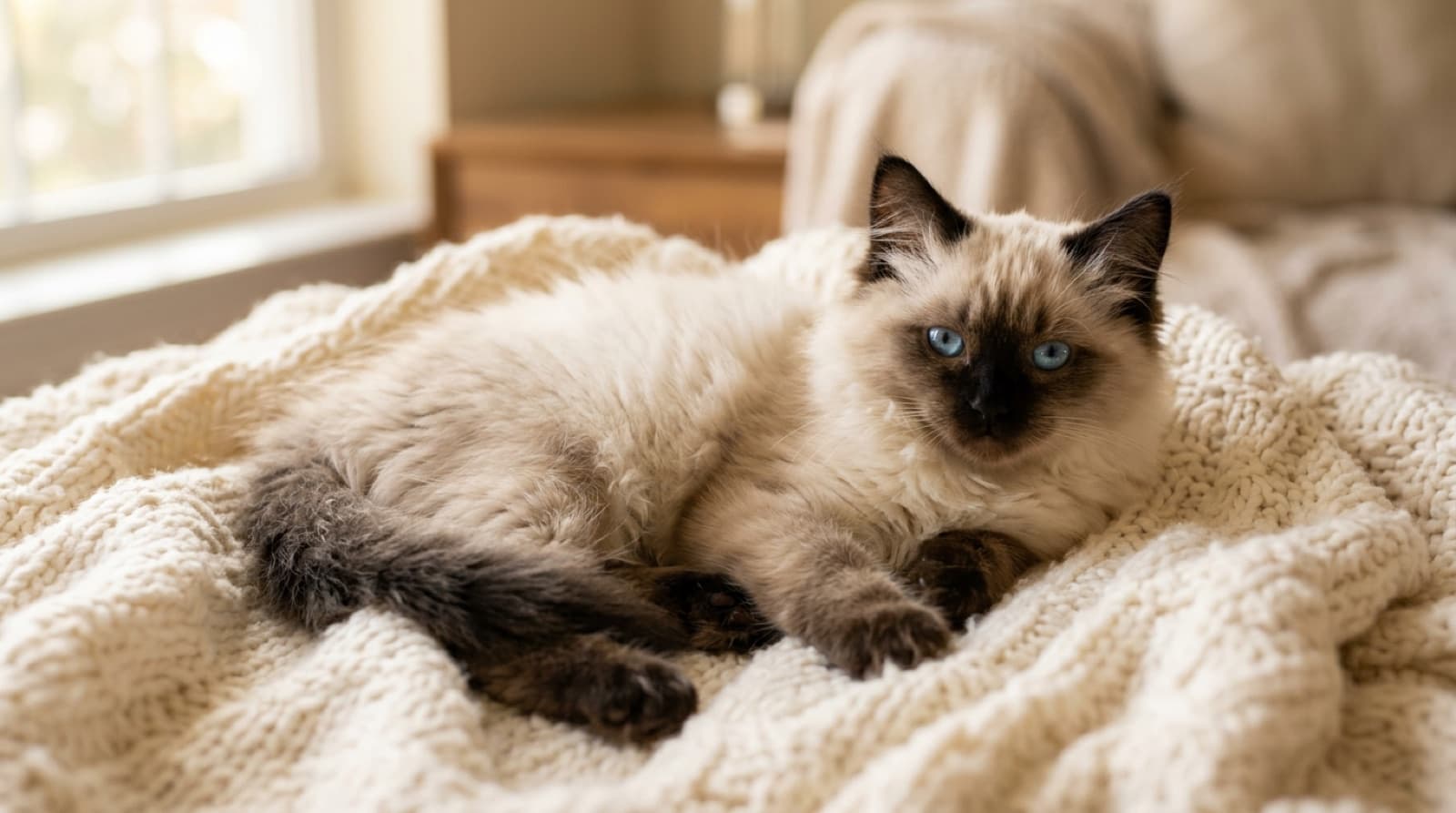
If you searched “Ragdoll kittens for sale,” you want the big, floppy, blue-eyed cat that goes limp in your arms. Fair enough: few breeds earn their reputation as thoroughly as the Ragdoll earns its name. But the search results for that phrase are a mix of scam ads, untested litters, and a handful of real catteries, and the honest answer about where to get one depends on your budget and your patience. There are three real paths.
Path one: a registered breeder, the real price
A pet-quality Ragdoll kitten from a registered Canadian cattery costs $2,000 to $3,000 at most catteries. When we checked the 11 catteries registered with TICA, the Cat Fanciers' Association (CFA) or the Canadian Cat Association (CCA) that publish prices (October 2026), starting prices ran from $1,675 to $3,000 with a median of $2,200, and some colours and patterns went up to $3,600. Show cats and breeding rights cost far more, while a few catteries rehome retired breeding adults for less. Deposits of $300 to $800, usually non-refundable, count toward the price. The number is high because doing it properly is expensive: Ragdolls carry a breed-specific mutation linked to hypertrophic cardiomyopathy (HCM, a heart condition), so ethical breeders DNA-test breeding cats and share the results, register with TICA or the Canadian Cat Association, and run small programs with waitlists, sometimes long ones for specific colours. A clear DNA result rules out only that one mutation, not HCM itself, so some breeders also screen breeding cats by echocardiogram.
What separates a real breeder from a kitten mill is friction, and the friction protects you: an application, a contract with a take-back clause, health documentation you did not have to ask twice for, and kittens raised underfoot with their mother visible. Kittens available right now, no questions asked, at half the market rate is not a lucky find.
Path two: the classified ad, and why it goes wrong
Never send a deposit for a kitten you have not met, at minimum by live video call showing the kitten with its mother. Stolen photos, e-transfer pressure, and surprise “shipping fees” are the standard scam script.
Ragdolls are a popular breed in Canada, and scammers follow the demand. The typical fake ad lifts beautiful photos from a real cattery, undercuts every legitimate price, and applies urgency: a deposit holds your kitten, someone else is coming tonight. After the deposit comes a shipping fee, then an insurance fee, then silence. The other common outcome is a real but untested backyard litter, no HCM testing in a breed with a known heart mutation, sold on the breed name at a “discount” that is not one.
The Canadian Anti-Fraud Centre describes the same pattern: one payment after another for shipping, vaccinations, certificates or insurance, and no pet at the end. The defence is simple: see the kitten with its mother, live, before any money moves. Verify registration with the registry the seller claims. Treat below-market pricing as the red flag it is. For the full red-flag list and the video-call test, see our Ragdoll scam-avoidance guide.
Path three: adoption, the route most people miss
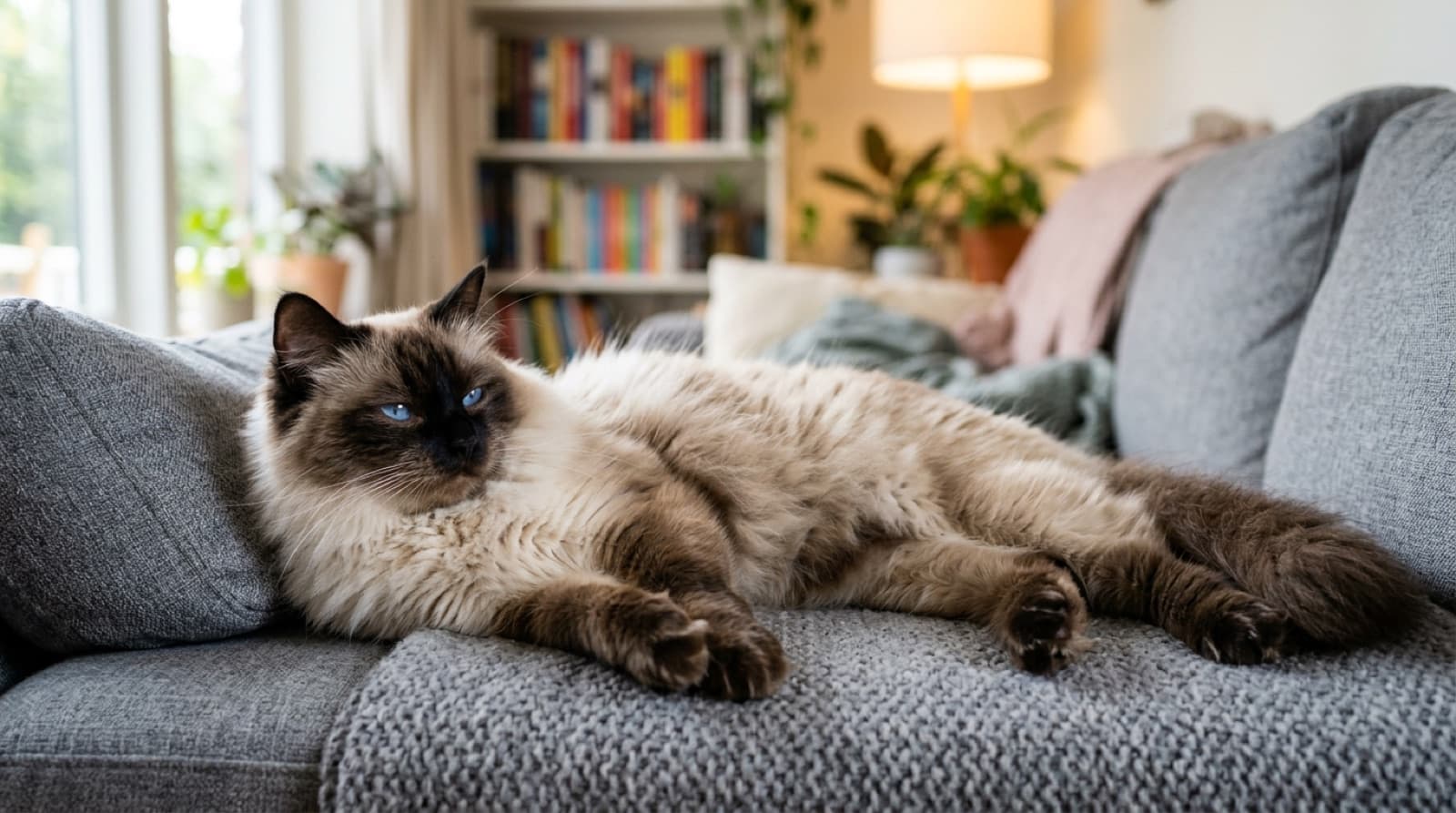
Purebred Ragdolls do land in rescue, through owner surrenders and cattery retirements, and when they do they are usually adopted quickly. But the realistic version of this path is the mix. Blue-eyed, colourpoint, semi-longhaired cats come through Canadian rescues steadily, labelled “Ragdoll mix” or Domestic Longhair, and they carry most of what people love about the breed: the look, and very often the easygoing, people-oriented temperament.
A rescue fee of a few hundred dollars includes spay or neuter, vaccinations, a microchip, and usually FIV/FeLV (feline immunodeficiency and leukemia virus) testing. For Ragdoll look and personality per dollar, the shaggy colourpoint rescue is the best deal in cats. The practical move: watch the Ragdoll breed page, set an alert for long-haired cats, and move quickly when a match appears. Calgary-area adopters can also use our local Ragdoll adoption guide for the city-specific sources and breeder-waitlist reality.
One honest caveat: if only a pedigreed, papered Ragdoll will do, adoption is a waiting game and a registered breeder is the surer path. If what you want is the cat, the mixes deliver it for a fraction of the price.
See adoptable Ragdolls and mixes right now
Colourpoint long-haired cats and Ragdoll mixes from rescues across Canada, searchable in one place, with alerts for new arrivals.
Ragdolls & Mixes →All Adoptable Cats →Frequently Asked Questions
How much is a Ragdoll cat in Canada?
Most registered Canadian catteries charge $2,000 to $3,000 for a pet-quality Ragdoll kitten. Of 11 catteries registered with The International Cat Association (TICA), the Cat Fanciers' Association (CFA) or the Canadian Cat Association (CCA) that published prices in October 2026, starting prices ran from $1,675 to $3,000 (median $2,200), with some colours and patterns up to $3,600 and breeding rights far higher. Prices well below that are a warning sign, not a bargain: usually a scam listing, an untested litter, or a colourpoint mixed-breed kitten sold on the Ragdoll name. Rescue fees for Ragdoll mixes run a few hundred dollars.
Why are Ragdoll kittens so expensive?
Ethical Ragdoll breeding carries real costs. The breed carries a known genetic mutation for hypertrophic cardiomyopathy (HCM, a heart condition), so responsible breeders DNA-test their breeding cats, register with bodies like TICA or the Canadian Cat Association, raise kittens indoors with early vet care, and run small waitlisted programs rather than constant litters. The price reflects that work; a cheap Ragdoll usually means the testing never happened.
Are cheap Ragdoll kitten ads scams?
Very often, yes. The Canadian Anti-Fraud Centre warns that animal frauds often start as classified ads for lower-priced or free animals, most of them puppies or kittens. Scammers follow demand with stolen photos, below-market prices, and deposit pressure by e-transfer, followed by invented shipping or insurance fees. Never send money for a kitten you have not seen, at minimum on a live video call showing the kitten with its mother, and verify any registration claim with the registry. A real breeder screens you as much as you screen them.
Can you adopt a Ragdoll from a rescue in Canada?
Yes, though purebred Ragdolls are uncommon in rescue and get adopted fast, usually via owner surrenders and cattery retirements. What appears far more often is the Ragdoll look in mixed form: blue-eyed, colourpoint, semi-longhaired cats labelled "Ragdoll mix" or Domestic Longhair. They carry most of the look and the famously relaxed temperament for a standard rescue fee. Setting an alert for long-haired and colourpoint cats is the realistic adoption route.
What is a Ragdoll mix?
A cat with Ragdoll ancestry on one side, or simply a colourpoint, semi-longhaired cat that resembles the breed. Rescues label by best guess, so "Ragdoll mix" usually means the pointed coat, blue eyes, and laid-back personality without pedigree papers. For most families the point is the cat, not the papers, and the mixes deliver it with spay/neuter, vaccines, and microchip included in the fee.
How do I find a reputable Ragdoll breeder in Canada?
Start with breeders registered with TICA or the Canadian Cat Association, and ask directly about HCM: the breed has a specific genetic test, and a reputable breeder will show you both parents' results without being pushed. A clear DNA result rules out only that one mutation, not HCM itself, so some breeders also screen breeding cats by echocardiogram. Expect a waitlist, a contract with a take-back clause, and a visit or video call with the kittens and their mother. No waitlist, no questions for you, and no health documentation are the red flags that matter.
Are Ragdolls good family cats?
They are famous for it: large, relaxed, people-oriented cats that usually tolerate busy households and often go limp when picked up, which is where the name comes from. They do need companionship (they attach hard to their people), grooming a couple of times a week for the semi-long coat, and indoor living. The colourpoint rescue mixes that resemble them are broadly similar company.
Where can I see adoptable Ragdolls and Ragdoll mixes right now?
LocalPetFinder aggregates adoptable cats from rescues across Canada, including Ragdoll mixes and colourpoint long-haired cats, into one searchable place. Browse the Ragdoll breed page for current matches, filter by your city, and set an alert so you hear about new arrivals first. Each listing links to the rescue, where you apply directly.
Adoptable Ragdolls & Mixes
Current Ragdoll and Ragdoll-mix listings from rescues.
Ragdoll Adoption in Calgary
The city-specific sources, costs, and breeder waitlist reality.
Maine Coon Kittens: Adopt or Buy?
The same three-path reality for Canada's other giant breed.
Adoptable Cats Across Canada
Cats and kittens from rescues coast to coast, in one place.