The short answer
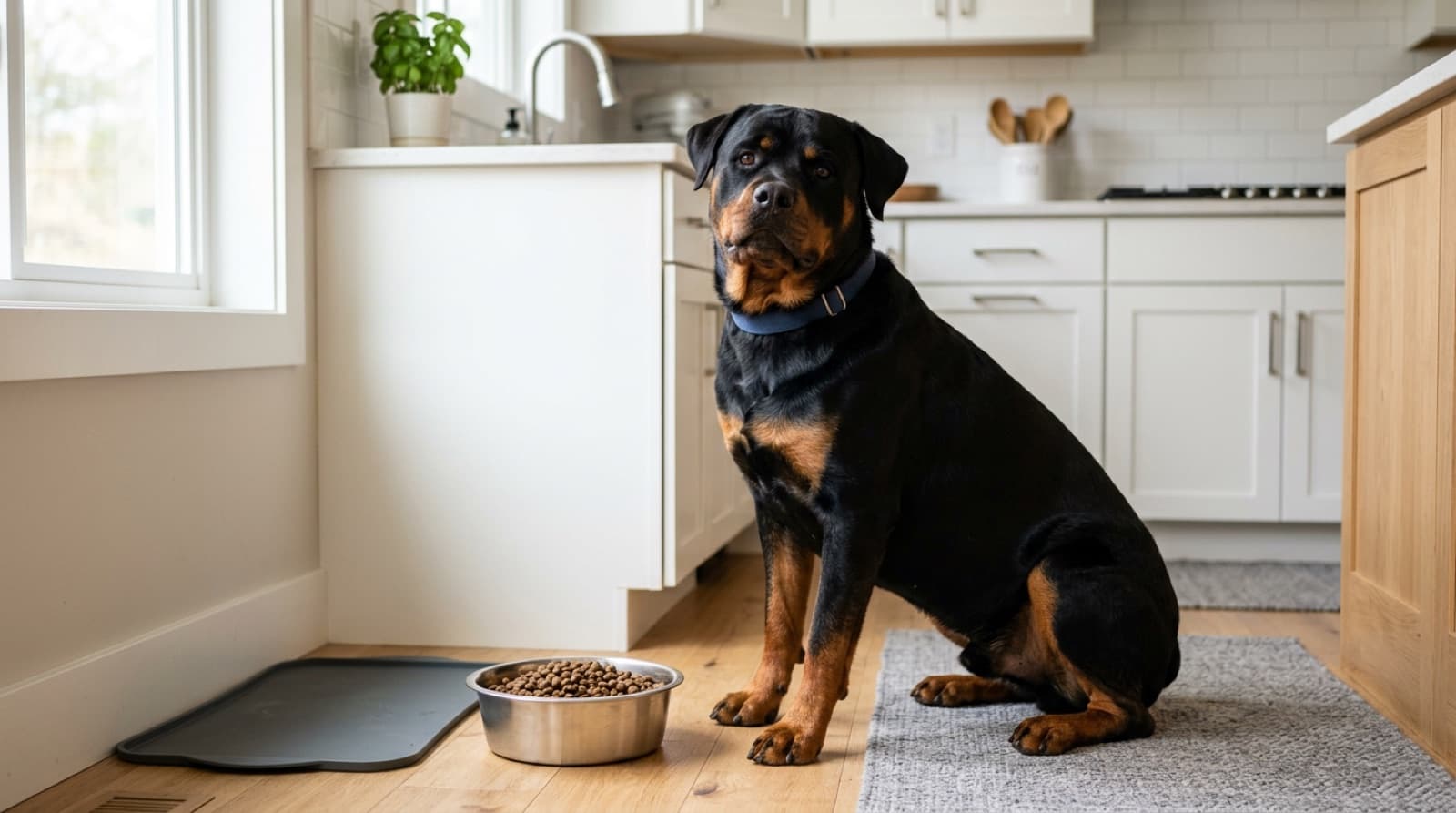
Feed an adult Rottweiler a complete large-breed formula, on a schedule, and keep it lean. The Rottweiler is a big, food-loving, joint-prone breed, so weight management is central: a lean Rottweiler is easier on its hips, elbows, and knees, and lives better for it. Puppies need a large-breed puppy formula to grow slowly and protect their joints, and you should not add calcium to a balanced diet. Choose a brand with a real veterinary nutritionist behind it, judge portions by feel, and because the breed is deep-chested and at elevated bloat risk, feed at floor level (never raised bowls), split the food into two meals, and keep exercise away from mealtimes.
How much to feed, and keeping a Rottweiler lean
A typical adult eats roughly 4 to 8 cups of quality large-breed food a day, split into two meals. That is a wide range on purpose: it depends on the calories in your food and the dog. The breed standard puts males at 95 to 135 lb and females at 80 to 100 lb.
Feed to body condition, not the bag chart, which tends to overfeed a pet Rottweiler. Use the WSAVA body condition score: aim for a 4 to 5 out of 9, where you feel the ribs easily and see a waist from above.
Lean matters more for this breed than most. Rottweilers are highly food-motivated and gain weight easily, and extra weight worsens the hip, elbow, and cruciate problems the breed is already prone to. A landmark study in Labrador Retrievers found dogs kept lean lived a median of about 1.8 years longer and developed arthritis later than littermates allowed to carry extra weight. That study was in Labs, but the lesson holds across large breeds. Measure every meal, keep treats to about 10% of daily calories, and check the body condition monthly.
What is the best food for a Rottweiler?
There is no single best bag, but there is a sound way to choose one, from the WSAVA nutrition guidelines.
Choose a large-breed adult formula. A grown Rottweiler is firmly a large-breed dog, and large-breed foods moderate calories and calcium and often add joint support, which fits a breed prone to hip and elbow problems. Look for a named animal protein first, the AAFCO complete-and-balanced statement for adult maintenance, and omega-3s for the coat and joints.
Then pick a brand that does the science. Ask whether the company employs a board-certified veterinary nutritionist, runs real feeding trials, owns its plants, and will share a full nutrient analysis. The big makers that meet this bar are the safe default: Purina Pro Plan, Royal Canin (which makes a breed-specific Rottweiler line), Hill's Science Diet, and Eukanuba, with Acana a popular Canadian option.

What should I feed a Rottweiler puppy?
A large-breed puppy formula, not a regular puppy food. For a Rottweiler this is one of the most important feeding choices you make, and it is genuinely about joints.
Rottweilers are prone to hip and elbow dysplasia. The predisposition is genetic, but growing too fast, and too much calcium during growth, make it worse. Large-breed puppy formulas control calcium and calories so a big puppy grows at a steady, healthy rate. Look for the AAFCO statement that includes “growth of large size dogs (70 lb or more as an adult).” That single line is the most important thing on the bag.
Do not add calcium or vitamin supplements to a balanced puppy diet. Extra calcium during growth can actively cause skeletal problems, the opposite of what owners intend. Keep the puppy lean (a roly-poly large-breed puppy is at higher joint risk, not lower), feed about three meals a day dropping to two by six months, and stay on large-breed puppy food until growth finishes, often 18 to 24 months, timed with your vet.
Bloat: feed at floor level, never raised
Rottweilers are deep-chested and at elevated risk of bloat (GDV), a true emergency. Do not use raised bowls.
Bloat, or gastric dilatation-volvulus, is a sudden twisting of the stomach that can kill a large dog within hours. Feeding choices lower the risk:
- Feed two or more smaller meals a day, not one big one
- Use a slow-feeder bowl if your Rottweiler gulps its food
- Keep vigorous exercise away from mealtimes
- Feed at floor level. The Purdue research linked raised feeders to a higher risk of bloat in large breeds, which reverses older advice, so skip the elevated bowl unless your vet prescribes one
Active bloat is an emergency: a hard, swollen belly, unproductive retching, restlessness, drooling, and collapse mean you drive to an emergency vet right away. Ask your vet whether a preventive stomach-tacking surgery (gastropexy), often done at spay or neuter, is worth considering for your dog.
Diet and a Rottweiler's joints
Hip and elbow dysplasia and cruciate (knee ligament) injuries are common in this heavy, powerful breed. Diet cannot cure them, but it has real levers, in order of impact:
- Keep the dog lean for life. This is by far the biggest dietary thing you control for joints, and it is free.
- Get the puppy growth right with a large-breed puppy formula, as above.
- Joint-support ingredients (glucosamine, chondroitin, and especially omega-3 fish oil) can help as add-ons, but the evidence is modest and mixed, so treat them as a maybe to discuss with your vet, not a fix.
Diagnosing and treating dysplasia or a torn cruciate is a veterinary job, so if your Rottweiler limps, stiffens, or struggles to rise, that is a vet visit, not a supplement purchase.
Foods to avoid
Keep these toxic foods away from a Rottweiler completely: chocolate, grapes and raisins, xylitol (in sugar-free gum, some peanut butters, and baking), onions and garlic, macadamia nuts, alcohol, and cooked bones. Call your vet or a pet poison helpline right away if your dog eats any of them.
Three more, breed-relevant:
- Over-treating. The daily handful of treats is the most common way a food-driven Rottweiler gets fat. Keep treats to about 10% of calories.
- Antlers, bones, and very hard chews. A Rottweiler's powerful jaws crack teeth on rock-hard chews. The rule of thumb: if you cannot dent it with a thumbnail, it is too hard.
- Legume-heavy grain-free diets, with a caveat: the FDA has investigated a possible link to a heart condition (DCM) but has not proven it. There is no reason to feed grain-free unless your vet diagnoses a grain allergy.
Should I feed my Rottweiler a raw diet?
Make it a vet conversation. The AVMA and the WSAVA discourage feeding raw or undercooked animal protein because of the pathogen risk to both the dog and the people in the home, and there is no documented evidence it beats a balanced cooked or commercial diet.
There is a breed-specific catch worth naming: a bone-heavy raw diet can throw off the carefully balanced calcium a large-breed puppy needs for healthy growth, which is exactly the thing a Rottweiler puppy must get right. If you still want to feed raw, use a complete commercial product or a recipe from a board-certified veterinary nutritionist, handle it with strict hygiene, and talk to your vet first.
Looking to adopt a Rottweiler?
Sort the large-breed food and the slow feeder before day one. Browse Rottweilers and Rottie mixes available right now from the rescues we track.
See Available Rottweilers →Where to buy Rottweiler food
Every brand worth feeding a Rottweiler is easy to find in store and online:
- Pet specialty chains (Pet Planet, Tail Blazers, Tisol, and similar). Carry Pro Plan, Royal Canin, Acana, and most premium large-breed lines.
- Pet Valu and PetSmart. National chains that stock the major large-breed formulas.
- Your vet clinic. The place for therapeutic, weight-management, and joint prescription diets.
- Costco. Kirkland Signature large-breed is a solid everyday budget option.
A Rottweiler goes through food quickly, so buy a bag size you will finish reasonably fresh and keep it sealed in a storage bin. Online, the same brands ship to your door, and the large-breed adult formulas are easy to set on a recurring delivery.
Frequently Asked Questions
How much should I feed a Rottweiler?
A typical adult Rottweiler eats roughly 4 to 8 cups of quality large-breed food a day, split into two meals, but that is a wide range because it depends on the food’s calories and the dog (males run 95 to 135 lb, females 80 to 100 lb). Treat the bag chart as a starting point, since it tends to overfeed a pet Rottweiler. Feed to body condition instead: you should feel the ribs easily and see a waist from above. Rottweilers love food and gain weight easily, so measure every meal, count treats in the daily total, and never free-feed.
What is the best food for a Rottweiler?
A complete large-breed adult formula from a company that does real nutrition science. A Rottweiler is firmly a large breed, so a large-breed adult food, which moderates calories and calcium and often adds joint support, fits the breed’s hip and elbow risk. Use the WSAVA approach: choose a brand that employs a board-certified veterinary nutritionist, runs feeding trials, and will share a full nutrient analysis, and look for a named protein, the AAFCO complete-and-balanced statement, and omega-3s for the coat and joints. The brand name matters less than the science behind it and keeping the dog lean.
What should I feed a Rottweiler puppy?
A large-breed puppy formula, not a regular puppy food. This is one of the most important feeding decisions for the breed, and it is about joints. Rottweilers are prone to hip and elbow dysplasia, and growing too fast on calorie- and calcium-dense food raises the risk. Large-breed puppy formulas control calcium and calories so a big puppy grows slowly and evenly. Look for an AAFCO statement that includes "growth of large size dogs (70 lb or more as an adult)," do not add calcium or vitamin supplements to a balanced diet (excess calcium during growth can actively cause skeletal problems), and keep the puppy lean. Feed about three meals a day, dropping to two by six months, and stay on large-breed puppy food until growth finishes, often 18 to 24 months, timed with your vet.
How do I prevent bloat in a Rottweiler through feeding?
Rottweilers are deep-chested and at elevated risk of bloat (GDV), a fast, life-threatening emergency, so feeding habits matter. Feed two or more smaller meals a day instead of one big one, use a slow-feeder bowl if your dog gulps, and keep vigorous exercise away from mealtimes. Feed at floor level: the Purdue research linked raised feeders to a higher risk of bloat in large breeds, so skip the elevated bowl. Active bloat (a hard, swollen belly, unproductive retching, restlessness, collapse) means you drive to an emergency vet immediately. Ask your vet whether a preventive stomach-tacking surgery (gastropexy) makes sense, often done at spay or neuter.
How do I keep my Rottweiler at a healthy weight?
Measure every meal, feed to body condition (ribs easily felt, a waist from above), and keep treats to about 10% of daily calories, subtracted from meals rather than added on top. Lean matters more for this breed than most, because extra weight worsens the hip, elbow, and cruciate problems Rottweilers are prone to. A landmark study in Labrador Retrievers found dogs kept lean lived a median of about 1.8 years longer and developed arthritis later than those carrying extra weight; that study was in Labs, but the lesson applies across large breeds. Check your dog’s body condition monthly and adjust the portion.
Should I feed my Rottweiler a raw diet?
Make it a vet conversation. The AVMA and WSAVA discourage feeding raw or undercooked animal protein because of the pathogen risk to both pets and people, and there is no documented evidence it beats a balanced cooked or commercial diet. There is also a breed-specific catch: a bone-heavy raw diet can throw off the calcium balance a large-breed puppy needs for healthy growth. If you still want to feed raw, use a complete commercial product or a recipe from a board-certified veterinary nutritionist, handle it with strict hygiene, and talk to your vet first.
How much does it cost to feed a Rottweiler per month?
A Rottweiler eats a lot, so budget roughly $80 to $200 a month for an adult on quality large-breed kibble, with premium brands at the upper end and fresh-cooked or raw diets running higher still, often $250 or more. Add a little for treats and any vet-recommended joint or omega-3 supplements. These are approximate ranges that vary with brand, your dog’s size and activity, and where you shop.
Rottweiler Health Issues
Hips, elbows, heart, bloat, and the conditions weight and diet can help or worsen.
Rottweiler Adolescence
The big, goofy teenage phase, and the growth window that overlaps puppy feeding.
Rottweiler Adoption
Where to find Rottweilers and Rottie mixes, real costs, and what the breed needs.
Rottweilers for Adoption
Live listings of Rottweilers and Rottie mixes from the rescues we track.