The short answer
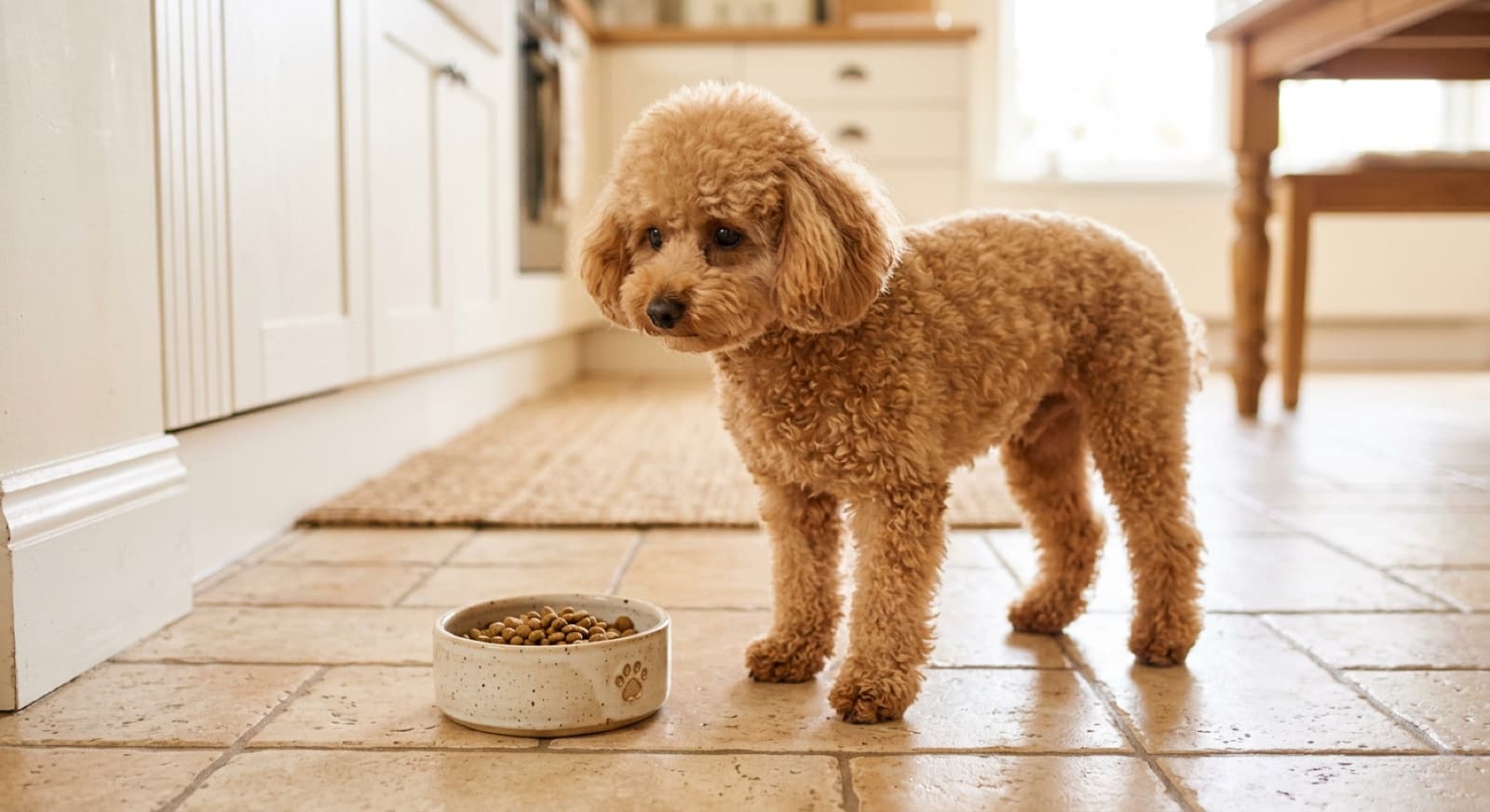
Feed a toy poodle a complete small-breed food in small, frequent meals, and measure precisely. The one rule that can save a life: toy-breed puppies can crash from low blood sugar, so feed them several small meals a day and know the emergency response, which is corn syrup on the gums then straight to the vet. At this size portion precision matters, so use a gram scale and keep treats under 10 percent of calories. Brush the teeth, because kibble does not clean them, and walk on a harness, not a collar, to protect a delicate windpipe.
Puppy hypoglycemia: the rule that saves lives
If a toy-poodle puppy goes weak, wobbly, glazed, or trembling, rub a little corn syrup or honey on the gums, not down the throat, then go to the vet immediately. Sugar on the gums is first aid, not a cure.
This is the most important section in the guide, because hypoglycemia is the real emergency for a tiny puppy and it moves fast. Toy-breed puppies, roughly under four to five months, have very little energy reserve and a high metabolic demand, so a missed meal, a chill, stress, or a bout of diarrhea can drop their blood sugar dangerously low. As Purina's breeder resource explains, a toy puppy cannot mobilize stored energy fast enough to keep up.
The signs are weakness, a drunken wobble, trembling, unusual lethargy, glazed or unfocused eyes, and in severe cases muscle twitching, seizures, or collapse. The first aid, confirmed by veterinary sources including Metropolitan Veterinary Associates, is to rub a small amount of corn syrup, honey, or a sugar gel onto the gums. The sugar absorbs directly through the gum tissue, so the puppy does not need to swallow, and that is exactly why you must not pour syrup down the throat. A listless or seizing puppy can inhale it into the lungs.
Then go to the vet, every time, even if the puppy bounces back, because the underlying cause needs checking and a relapse can follow. Prevention is straightforward: feed a toy poodle puppy three to four small meals a day, keep it warm, never let it go long stretches without food, and keep a sugar source on hand.
Portion precision at a tiny scale
With a big dog a few extra kibble disappear into the day. With a toy poodle they do not. A small adult's entire daily budget is only a couple hundred calories, so a single rich treat or a generous scoop can be a meaningful chunk of the day, and that is how toy poodles quietly become overweight.
Treats are the trap. The AKC points out that a small dog eating around 180 calories a day has only about 18 calories to spare for treats, which one large biscuit can blow on its own. Keep treats under 10 percent of daily calories, break them into tiny pieces, and count training treats toward the meal total.
The practical method: weigh the food with a kitchen gram scale instead of a measuring cup, read the calories-per-cup off the bag, and adjust to keep the dog lean and waisted. Obesity is not just cosmetic in this breed; it directly worsens the joint and windpipe problems covered below.
What is the best food for a Toy Poodle?
There is no single best bag. The test most vets use comes from the WSAVA guidelines: choose a brand that employs a full-time, board-certified veterinary nutritionist and runs feeding trials.
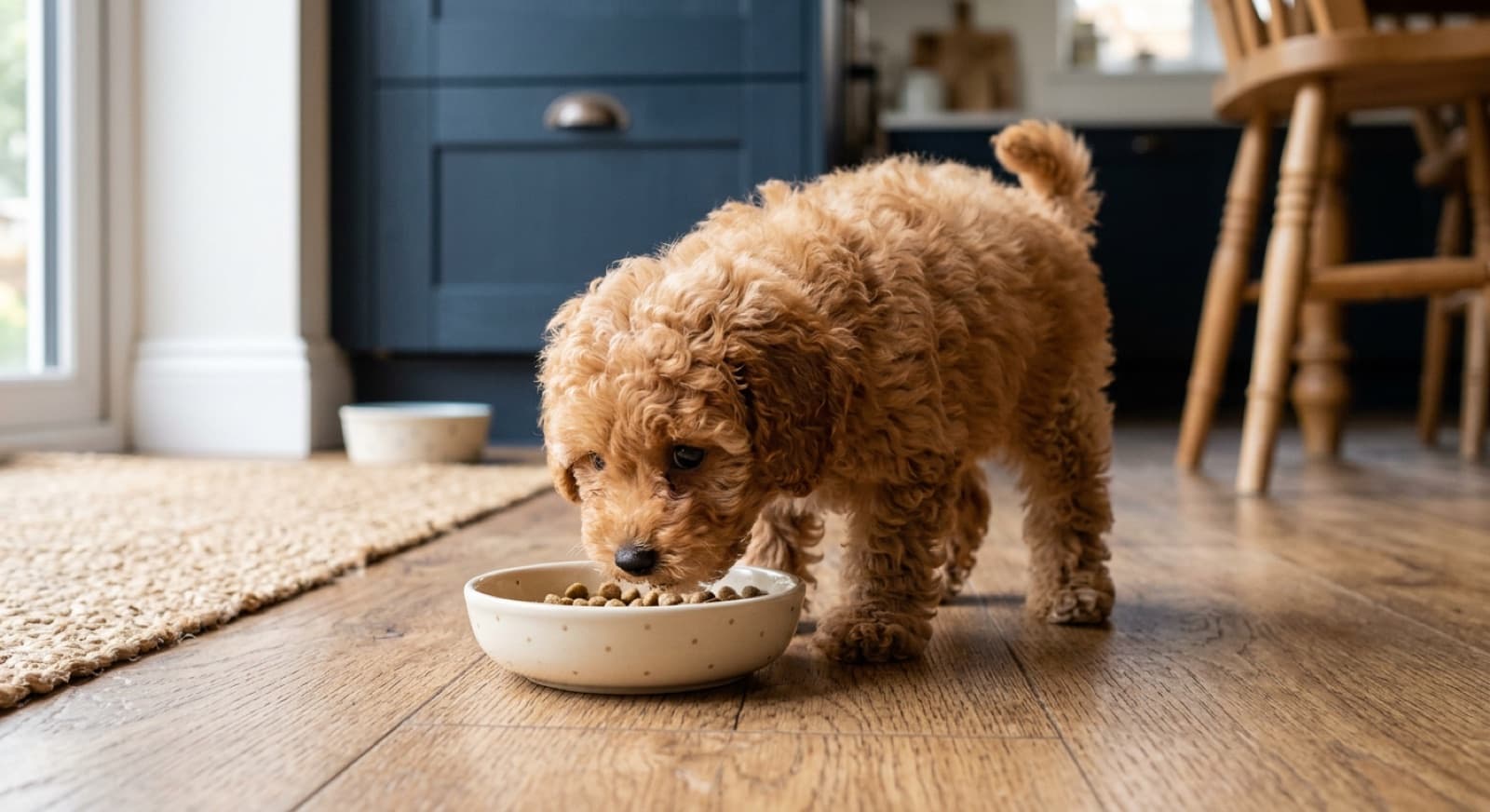
For a toy poodle the safe defaults are Purina Pro Plan Small Breed, Royal Canin (which makes both a toy and a poodle-specific line), and Hill's Science Diet Small Paws. Small-breed and toy formulas matter for two real reasons: the kibble is small enough for a tiny mouth to chew, and the calories are concentrated so a small stomach gets enough energy from a small portion. Toy poodle puppies should be on a small-breed puppy food.
Dental disease, and the kibble myth
Toy poodles have notoriously bad teeth. Crowded jaws and a small mouth make them prone to plaque, tartar, and periodontal disease, which can seed infection elsewhere in the body. So the dental angle is a genuine part of feeding a toy poodle well.
The myth to drop is that dry kibble cleans the teeth. As PetMD covers, ordinary kibble shatters on contact and barely touches the gumline. What actually works is daily brushing with a dog toothpaste, dental chews and diets carrying the VOHC seal (which are specially engineered to scrub or chemically reduce plaque), and professional cleanings. Feed a small-bite formula because it suits the mouth, not because it is doing dental work, and brush regardless.
Picky eating and the free-feeding trap
Poodles have a well-earned reputation for being fussy, and some will hold out rather than eat a food they have decided against. The fix is structure, not a parade of toppers. Put the meal down for about 15 minutes, then pick it up, and offer it again at the next scheduled meal. Constantly swapping in something tastier just teaches the dog to wait for the upgrade.
Avoid free-feeding (leaving food out all day) for two reasons. It makes the portion precision this breed needs impossible, and it hides one of your best early warning signs. A scheduled eater that suddenly turns its nose up is telling you something, and in a toy poodle, especially a puppy, true food refusal is not just pickiness. It risks hypoglycemia and can mean dental pain or illness. Sudden appetite loss is a reason to call the vet, not to wait it out.
Lean weight, harnesses, and a delicate frame
The reason portion discipline matters so much in this breed is the frame it protects. Toy and miniature poodles are prone to tracheal collapse, where the cartilage rings of the windpipe weaken, and to luxating patellas (slipping kneecaps) and Legg-Calvé-Perthes, a hip condition in young toy dogs. Every extra pound makes all three worse.
So two habits go together. Walk a toy poodle on a back-clip harness rather than a neck collar, to keep leash pressure off a fragile windpipe, and keep the dog lean at home so the knees, hips, and trachea are not carrying weight they were never built for. The bowl and the leash are protecting the same small dog.
Foods to avoid
These are dangerous to any dog, and the dose that harms is smaller for a tiny one, so be strict:
- Xylitol (in sugar-free gum, some peanut butters, and baking), which is rapidly fatal and especially dangerous at this body size
- Chocolate (darker is worse)
- Grapes and raisins (can cause kidney failure, even a few)
- Onions, garlic, leeks, and chives
- Macadamia nuts
- Alcohol and caffeine
- Cooked bones (they splinter)
Because a toy poodle is so small, even a little of these goes a long way. If your dog eats something on this list, call your vet, the nearest emergency clinic, or a pet poison helpline right away.
Looking to adopt a Toy Poodle?
Set up the small-meal schedule and a sugar source before a tiny puppy comes home. Browse Toy Poodles and Poodle mixes available now from the rescues we track.
See Available Toy Poodles →Where to buy Toy Poodle food
Every brand worth feeding a toy poodle is easy to find:
- Pet specialty chains (Pet Planet, Tail Blazers, Tisol). Carry Pro Plan Small Breed, Royal Canin toy lines, and small-bite formulas.
- Pet Valu and PetSmart. Stock the major small-breed puppy and adult formulas.
- Your vet clinic. The best source for tiny-puppy feeding guidance and dental products.
Buy a bag your toy poodle finishes within a few weeks, since a small dog gets through one slowly and an opened bag goes stale. The major small-breed formulas and VOHC dental chews are easy to set on a recurring delivery.
Frequently Asked Questions
How much should I feed a Toy Poodle?
A small amount, and precision matters more than with a big dog. A toy poodle's entire daily budget is tiny, often only a couple hundred calories for a small adult, so a few extra kibble or one rich treat is a large fraction of the day. Measure with a kitchen gram scale rather than a scoop, use the calories-per-cup figure on the bag to work out portions, and adjust to keep the dog at a lean, waisted body condition. Feed adults two to three small meals a day. Your vet can give you a target calorie number for your specific dog.
What is toy-breed hypoglycemia and what do I do?
Hypoglycemia is a dangerous drop in blood sugar that toy-breed puppies, roughly under four to five months, are prone to because they have little reserve and high energy needs. Signs include weakness, wobbliness, trembling, lethargy, glazed eyes, and in severe cases seizures or collapse. The emergency first aid is to rub a small amount of corn syrup (Karo) or honey on the gums, not down the throat, because the sugar absorbs through the gum tissue and a weak puppy can choke or inhale liquid poured into the mouth. Then go to the vet immediately, even if the puppy perks up, because sugar on the gums is first aid, not a cure. Prevent it with frequent small meals and never letting a tiny puppy go long without food.
What is the best food for a Toy Poodle?
A complete small-breed formula from a brand that employs a board-certified veterinary nutritionist and runs feeding trials, such as Purina Pro Plan, Royal Canin (which makes a toy and a poodle-specific line), or Hill's Science Diet. Small-breed and toy formulas use a smaller kibble size that a tiny mouth can actually chew, and they pack the calories a small, fast metabolism needs into little portions. Toy poodle puppies should eat a small-breed puppy food. Start with whatever the breeder or rescue was feeding and transition over a week.
Does dry kibble clean a Toy Poodle's teeth?
Mostly no, and this is a myth worth correcting because toy poodles are very prone to dental disease. Regular kibble shatters on contact and does little to scrub the gumline. What actually protects the teeth is daily brushing with a dog toothpaste, dental products carrying the VOHC seal that are engineered to work mechanically or chemically, and professional cleanings. Kibble size still matters for a toy poodle, but mainly so the tiny mouth can eat comfortably, not as a cleaning strategy. Do not skip brushing on the belief that crunchy food is doing the job.
My Toy Poodle is a picky eater. What should I do?
Poodles have a real reputation for pickiness, and the usual fix is structure, not variety. Offer the meal for about 15 minutes, then pick it up, and offer it again at the next meal, so the dog learns mealtimes are when food appears. Avoid constant topper-swapping, which teaches the dog to hold out for something better. One important caveat: in a tiny dog, especially a puppy, a true refusal to eat is not just fussiness, it risks hypoglycemia and can signal dental pain or illness. Sudden appetite loss means a vet, not a waiting game.
Should I use a harness instead of a collar with my Toy Poodle?
Yes, a back-clip harness, because toy and miniature poodles are prone to tracheal collapse, where the windpipe's cartilage rings weaken. Leash pressure on the neck from a collar can aggravate it. Keeping the dog lean is the diet side of the same issue, since extra weight worsens tracheal collapse and loads the luxating patellas and fragile joints toy poodles are also prone to. So a harness for walks and portion discipline at home are two halves of protecting the same small, delicate frame.
Can changing my Toy Poodle's food stop tear staining?
Probably not. Tear stains are reddish-brown marks from porphyrins, pigments in tears, and poodles are predisposed because of facial hair and a tendency toward shallow tear-drainage anatomy that lets tears overflow onto the face. There is little solid evidence that a specific food causes or cures staining, so do not expect a diet change to fix it. Some owners try filtered water, which is harmless but unproven. The useful steps are keeping the eye area clean, dry, and trimmed, and seeing a vet to rule out blocked tear ducts or eye irritation before blaming the food.
Standard vs Mini vs Toy Poodle
How the three poodle sizes differ in care, temperament, and health.
Poodle Health Issues
The conditions poodle owners should plan for, including the toy-size ones.
What to Feed a Chihuahua
The same tiny-dog hypoglycemia and portion rules for another toy breed.
Toy Poodles for Adoption
Live listings of Toy Poodles and Poodle mixes from the rescues we track.