The short answer
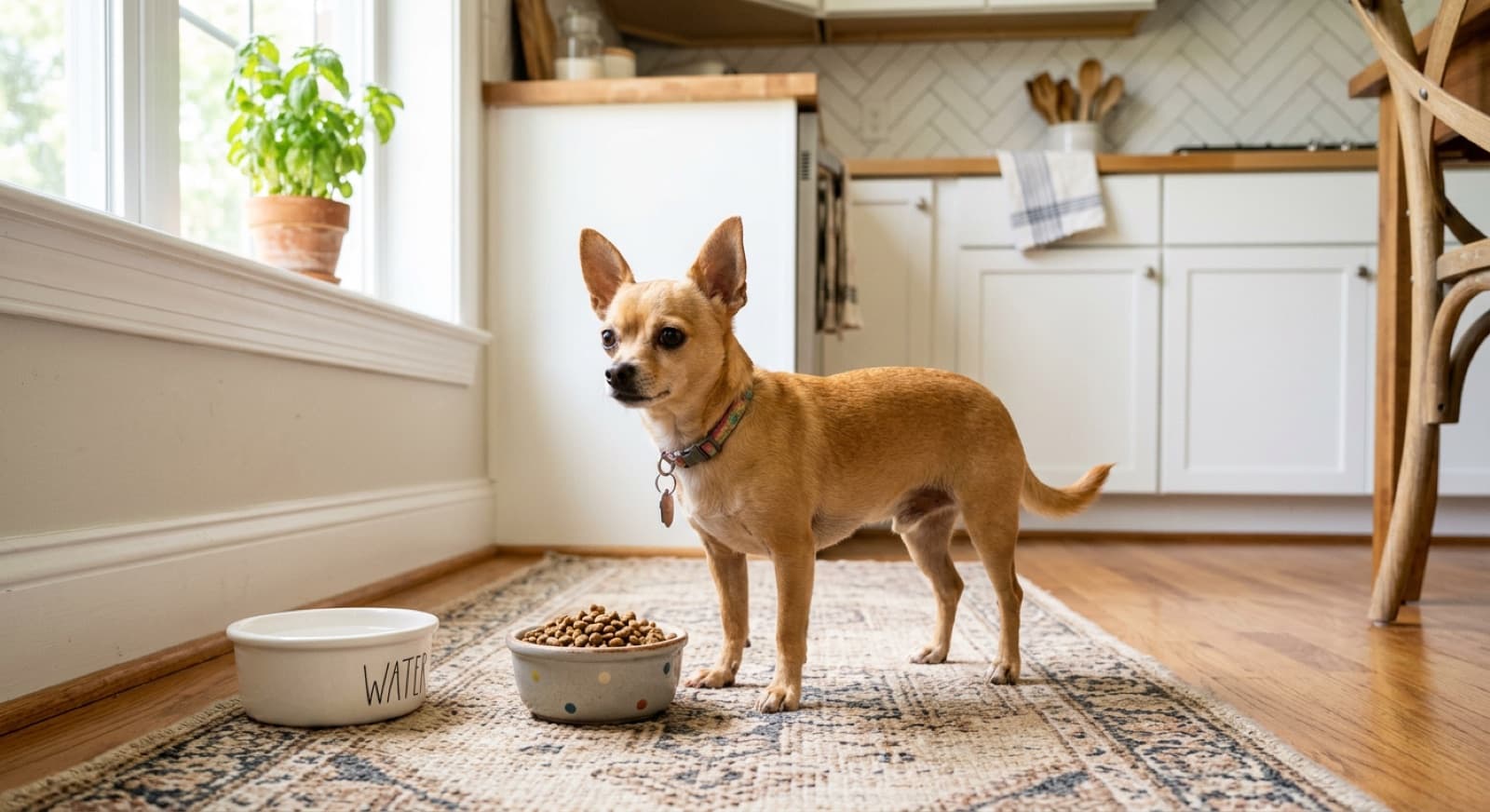
Feed a Chihuahua a complete small-breed formula in small, measured portions, and feed to keep the dog lean. Pick a nutritionist-backed brand with a kibble small enough for a tiny mouth, and ignore the bag chart, which almost always says too much for a four to six pound dog. If yours is “picky,” the cause is usually a learned habit from treats and table food, not the kibble. Puppies need frequent meals to avoid a dangerous blood-sugar drop. Brushing matters more than any food for the breed's fragile teeth, and a couple of extra pounds is a lot on a frame this small.
What is the best food for a Chihuahua?
There is no single best bag, and any site that names one is selling something. The standard most vets point to comes from the WSAVA global nutrition guidelines.
Pick a brand that does the science. Ask whether the company employs a full-time, board-certified veterinary nutritionist and runs feeding trials. The safe defaults for a healthy Chihuahua are the small-breed lines from Royal Canin, Hill's Science Diet, and Purina Pro Plan, with Eukanuba Small Breed a long-time owner favourite.
Choose a small-breed formula with small kibble. A Chihuahua has a tiny mouth and a fast metabolism, so small-breed foods pack more calories into a smaller, easier-to-chew piece. Standard kibble can be physically hard for a Chihuahua to pick up, and a dog that gives up on a too-big piece looks picky when the real problem is the kibble size. Then watch the dog: firm stool, a healthy coat, and a lean body condition mean you have the right food.
How much should I feed a Chihuahua?
A typical adult Chihuahua eats only about a quarter to half a cup of quality kibble a day, split into two meals. It is a startlingly small amount, and the bag chart almost always overstates it. On a four to six pound dog, the margin for error is tiny: a couple of training treats or a few bites of cheese is a meaningful slice of the daily calories.
Feed the dog in front of you, not the chart. Run your hands over the ribs and you should feel them easily under a thin layer. Look down from above and you should see a slight waist. If you cannot feel ribs, feed less. Obesity is a real problem in the breed, and on a body this small “obese” can start around seven pounds. Count treats inside the daily total, and a reliable trick is to pull a few pieces of kibble from the meal allowance to use as treats so they do not add anything.
Why won't my Chihuahua eat? The picky-eater truth
Chihuahuas have a reputation as fussy eaters, and most of the time that reputation is built at the dinner table. The pattern is familiar: the dog refuses kibble, the worried owner offers a little chicken or cheese, the dog eats it, and a clever animal learns the lesson instantly. Refuse the boring food and something better arrives. You have not got a broken eater, you have got a good negotiator.
The fix is consistency, not a tastier bag. Put the food down for fifteen to twenty minutes. If it is untouched, pick it up and offer the same food at the next meal, with nothing in between but water. A healthy adult Chihuahua will eat within a day or two once the rules change. The hard part is the owner.
Two cautions. The wait-it-out approach is for healthy adults, never tiny puppies, who can crash from a missed meal (see the next section). And a sudden loss of appetite in a dog that always ate well is more likely dental pain or illness than fussiness, so book a vet check before deciding it is just an attitude.
The Chihuahua puppy warning: hypoglycemia
A very small Chihuahua puppy can drop into a dangerous low-blood-sugar state from a single missed meal plus stress, cold, or hard play. This is a genuine emergency. Read it before you bring a puppy home.
Toy-breed puppies, and teacup-size Chihuahuas most of all, carry almost no reserve of stored sugar. When a tiny puppy skips a meal, gets chilled, plays to exhaustion, or is stressed by a long car ride home, blood sugar can fall fast. The American Kennel Club and most vets describe the same signs: shaking or trembling, weakness, a wobbly or drunk-looking walk, a glassy or distant stare, pale gums, and in a severe case collapse or a seizure.
Prevention is simple: feed small meals often. Feed a Chihuahua puppy three to four times a day, keep food available for very young pups, keep it warm, and do not let play tip into exhaustion.
If you see the warning signs, act fast. Rub a little corn syrup or honey on the gums (it absorbs through the gums, so the puppy does not need to swallow) and get to a vet immediately. This is first aid to buy time on the way to the clinic, not a treatment that ends there. And do not dose a healthy puppy with sugar gel every day “to be safe,” because routine sugar can spike and then crash blood sugar and mask a real problem. Frequent real meals are the prevention. Sugar on the gums is the rescue.
What should I feed a Chihuahua puppy?
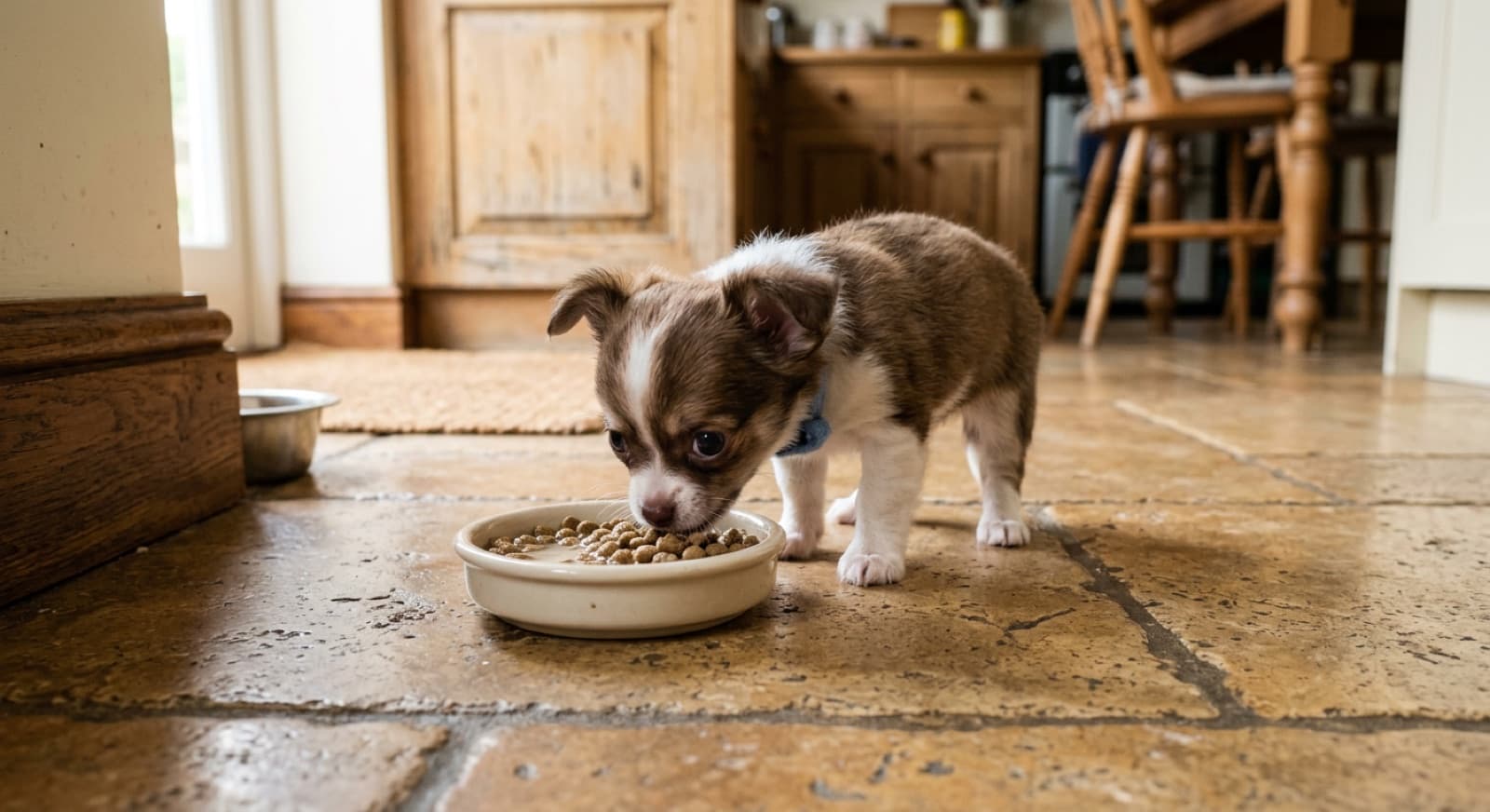
A complete small-breed puppy food, fed three to four times a day. Small-breed puppy formulas put more calories into a small, soft kibble, which matches a fast toy-breed metabolism and a tiny mouth, and the frequent meals also guard against the hypoglycemia covered above.
Keep the puppy lean even now. Chihuahuas are prone to a slipping kneecap (luxating patella), and extra weight makes it worse, so a lean dog is doing its joints a favour. Stay on a small-breed puppy formula until roughly nine to twelve months, then transition to a small-breed adult food over a week. Your vet can confirm a healthy adult weight, which for most Chihuahuas lands in the three to six pound range.
Teeth, kibble, and the dental myth
Dental disease is one of the most common health problems in the breed, because a Chihuahua crams a full set of teeth into a tiny jaw where they crowd and trap plaque. Two things owners get wrong here. First, do not count on dry food to clean teeth: the idea that kibble scrubs them is mostly a myth, and brushing plus the occasional professional cleaning does the real work. Second, wet food is not the enemy, and it is genuinely useful for a senior Chihuahua that has lost teeth and struggles with crunchy food.
The practical link to feeding: a normally good eater that suddenly refuses food often has dental pain, so a quick look in the mouth and a call to the vet beats assuming fussiness. For the slipping-kneecap issue and the breed's other concerns, our Chihuahua health guide covers what to watch for and how weight ties in.
Foods to avoid: small dog, small margin
On a four-pound dog, the amount of a toxic food that does real harm is small. What a big dog might shrug off can land a Chihuahua at the emergency clinic.
Keep these away from a Chihuahua completely:
- Chocolate (darker is worse)
- Grapes and raisins (can cause kidney failure, even a few)
- Xylitol (in sugar-free gum, some peanut butters, and baking), which is rapidly fatal to dogs
- Onions, garlic, leeks, and chives
- Macadamia nuts
- Alcohol and caffeine
- Cooked bones (they splinter)
There is also a quieter risk: fatty human food. Toy breeds are prone to pancreatitis, and a single greasy handout can be enough to trigger it, so the table-scrap habit that makes a Chihuahua picky is a health risk too. If your Chihuahua does eat something toxic, call your vet, the nearest emergency clinic, or a pet poison helpline right away. With a dog this small, speed matters.
Should I feed my Chihuahua a raw diet?
Only with a vet or veterinary nutritionist involved. Some Chihuahuas do well on a properly built raw or fresh diet, and because the dog eats so little, premium fresh services can feel affordable. But raw meat carries a pathogen risk for the dog and the household, and a homemade raw diet without a professional recipe routinely runs short on calcium and other nutrients, which is riskier on a tiny dog with no margin to spare.
For most Chihuahuas, a complete cooked or small-breed kibble diet from a nutritionist-backed brand delivers the same results. If you want to go fresh or raw, use a complete commercial product or a vet-formulated recipe and loop in your vet.
Looking to adopt a Chihuahua?
Sort the small-breed food and a shallow bowl before day one. Browse Chihuahuas and Chihuahua mixes available now from the rescues we track.
See Available Chihuahuas →Where to buy Chihuahua food
Every brand worth feeding a Chihuahua is easy to find in store and online:
- Pet specialty chains (Pet Planet, Tail Blazers, Tisol, and similar). Carry Royal Canin, Pro Plan, and most small-breed lines.
- Pet Valu and PetSmart. National chains that stock the major small-breed and sensitive-stomach formulas.
- Your vet clinic. The place for prescription diets that need authorization.
- Online. The same brands ship to your door, handy when the bag you need is small.
Because a Chihuahua eats so little, buy a bag size your dog finishes within a few weeks so the food stays fresh, and keep it sealed. A small-breed formula on a recurring delivery means you never run out mid-week.
Frequently Asked Questions
What is the best food for a Chihuahua?
A complete small-breed formula from a brand that employs a veterinary nutritionist and runs feeding trials, with a kibble small enough for a tiny mouth. By the WSAVA framework that points to Royal Canin, Hill’s Science Diet, and Purina Pro Plan small-breed lines, with Eukanuba Small Breed a long-time owner favourite. The brand matters less than the small kibble size, the food agreeing with the dog, and a calorie count that keeps a four to six pound dog lean. Start with whatever the rescue was feeding, then transition over seven to ten days.
How much should I feed a Chihuahua?
Very little, which surprises new owners. A typical adult Chihuahua eats only about a quarter to half a cup of quality kibble a day split into two meals, and overweight dogs need even less. On a four to six pound body, a couple of extra treats is a large share of the daily calories. The feeding chart on the bag almost always says too much. Feed to body condition: you should feel ribs easily and see a slight waist. "Obese" on a Chihuahua can start around seven pounds.
Why is my Chihuahua such a picky eater?
Usually because it has been taught to be. Chihuahuas are smart, and when a dog learns that turning up its nose at kibble produces chicken, cheese, or a hand-fed snack, holding out becomes the smart move. It is a learned, owner-reinforced habit far more often than a real problem with the food. The fix is consistency: scheduled meals, food picked up after fifteen to twenty minutes, no table scraps, and no caving. One caution: a sudden new pickiness in a dog that always ate well can be a dental or medical problem, so see a vet before assuming it is just attitude.
How do I prevent hypoglycemia in my Chihuahua puppy?
Feed small meals often. A Chihuahua puppy, especially a very small or teacup-size one, has almost no stored sugar and can drop into a dangerous low-blood-sugar state from one missed meal plus stress, cold, or hard play. Feed three to four times a day, keep food available for very young pups, and do not let a tiny puppy go long stretches empty. Warning signs are shaking, weakness, a wobbly or drunk-looking walk, a glassy stare, and pale gums. If you see them, rub a little corn syrup or honey on the gums and get to a vet immediately. That is first aid to buy time, not a cure, and it is a true emergency.
What should I feed a Chihuahua puppy?
A complete small-breed puppy food, fed three to four times a day. Small-breed puppy formulas put more calories into a small, easy-to-chew kibble, which suits a fast metabolism and a tiny mouth, and the frequent meals also guard against hypoglycemia. Keep the puppy lean even now, because extra weight strains the kneecaps the breed is prone to luxating. Stay on puppy food until roughly nine to twelve months, then transition to a small-breed adult formula over a week.
Does dry food clean my Chihuahua’s teeth?
No, that is mostly a myth, and it matters for this breed because Chihuahuas are very prone to dental disease. Their teeth are crowded into a tiny jaw, which traps plaque, and most kibble does little to scrub it off. Brushing and the occasional professional cleaning do the real work. Wet food is not the enemy either, and it is genuinely useful for senior Chihuahuas that have lost teeth. The bigger point: a normally good eater that suddenly refuses food may have dental pain, so look in the mouth and call your vet.
What foods are toxic to a Chihuahua?
The same foods toxic to any dog, and on a tiny body the harmful dose is small. Keep chocolate, grapes and raisins, onions and garlic, xylitol (in sugar-free gum, some peanut butters, and baking), macadamia nuts, alcohol, and cooked bones away completely. Toy breeds are also prone to pancreatitis, so fatty human food is a genuine risk, not just a calorie one. If your Chihuahua eats something on this list, call your vet, the nearest emergency clinic, or a pet poison helpline right away.
Should I feed my Chihuahua grain-free?
Not unless your vet diagnoses a grain allergy. The FDA has been investigating a possible link between grain-free diets built on peas, lentils, and potatoes and a heart condition called dilated cardiomyopathy, so most vets take the cautious line. A complete small-breed diet from a nutritionist-backed brand is the safer default, and a true food allergy is almost always to a protein rather than a grain anyway.
Chihuahua Health Issues
Luxating patella, dental disease, hypoglycemia, and the conditions weight can affect.
Chihuahua Winter Survival
Keeping a tiny, low-body-fat dog warm and fed through a cold Canadian winter.
Chihuahua Adoption Guide
Where to find Chihuahuas and Chihuahua mixes, real costs, and what to expect.
Chihuahuas for Adoption
Live listings of Chihuahuas and Chihuahua mixes from the rescues we track.