The short answer
Restrain your dog in the back seat with a crash-tested safety harness on the seat belt, or a secured crash-tested crate, and look for Center for Pet Safety certification rather than a “crash tested” label. Build up with short trips, bring water from home, and update ID and microchip first. Never leave a dog in a parked car, never sedate for a flight without your vet, and think twice about flying a short-nosed breed in cargo. Some links here are Amazon affiliate links; we may earn a small commission at no extra cost to you, and it never changes what we recommend.
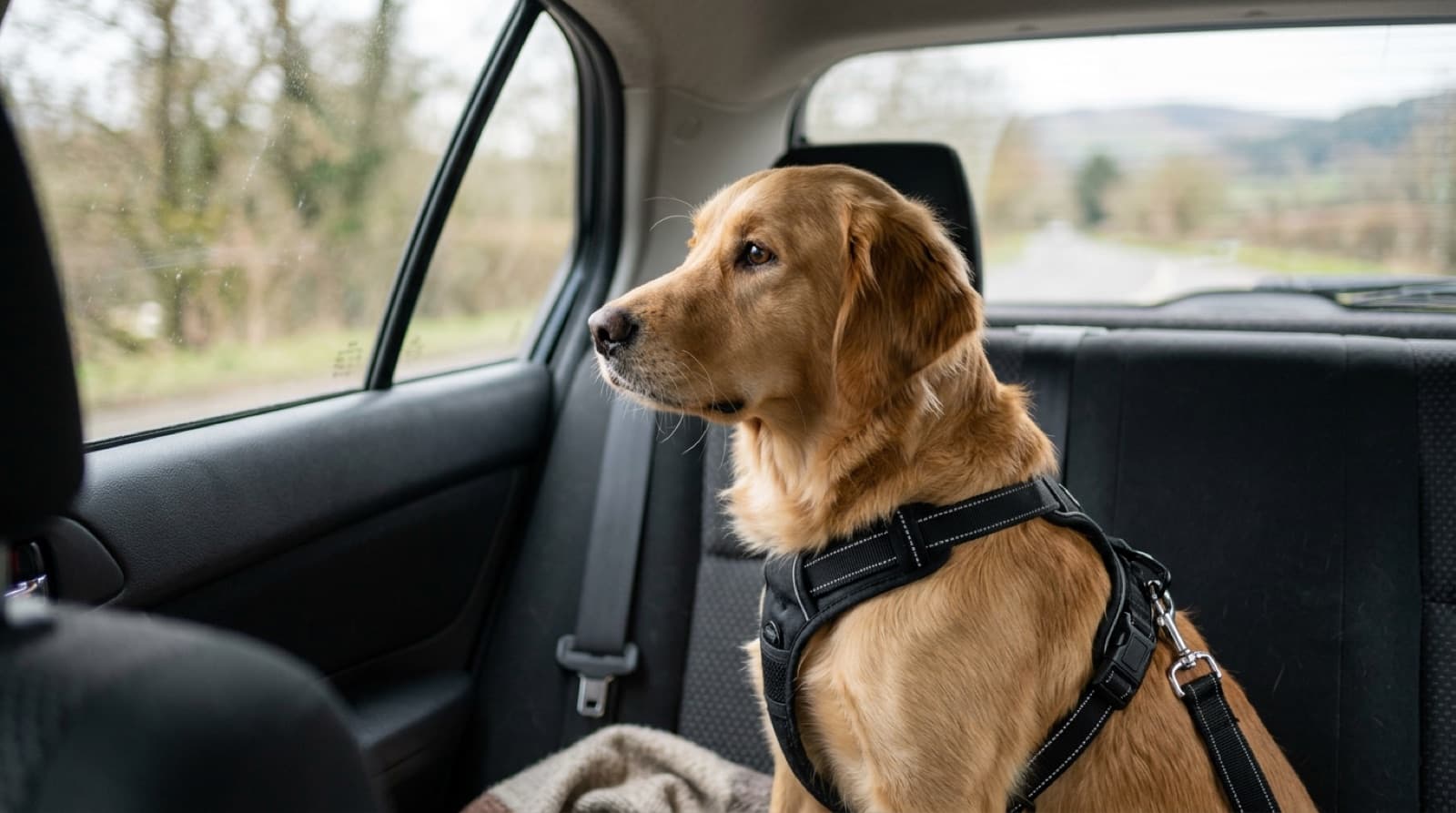
Car safety: restraint is the whole game
A loose dog in a moving car is a danger three ways at once: a distraction to the driver, a heavy projectile in a crash (a mid-sized dog at highway speed carries enormous force), and, after a collision, a frightened animal that can bolt into traffic or keep first responders from reaching you. The AVMA is blunt about it: safely restrain dogs, and keep them out of the front seat where an airbag can kill.
Here is the part almost no one knows. A label reading “crash tested” or “safety” does not mean the product passed. The Center for Pet Safety, which crash-tests these products, has found that of nearly 300 dog restraints tested, only around 15 actually passed, and that being “crash tested” is not the same as passing. So look for the Center for Pet Safety Certified logo, not marketing language.
Ranked best to worst, your options are: a certified crash-tested harness clipped to the seat belt (or a certified carrier for a small dog); a secured travel crate anchored so it cannot move; and last, a back-seat barrier, which keeps the dog out of the front but does not contain it in a crash. Always the back seat, never a loose dog in a truck bed, and never with its head or body out the window.
Some links on this page are Amazon affiliate links — we may earn a small commission at no extra cost to you. It never changes what we recommend. This article is general information, not veterinary advice.
Building comfort, and car sickness
Many dogs, and most puppies, get car sick, with whining, drooling, lip-licking or vomiting. As the VCA explains, puppies are prone because the balance parts of the inner ear are not fully developed, and most outgrow it by about a year; there is also a learned-stress element in dogs that only ever ride to the vet. Build a better association with short, positive trips, starting in a parked car and lengthening gradually, with treats and a calm tone. Travel on a fairly empty stomach, crack a window for air, and give the dog a settled, defined spot, which a washable seat-cover hammock both creates and protects the car with. If the sickness persists, your vet can prescribe an effective anti-nausea medication, so ask rather than letting every trip be miserable.
Never leave a dog in a parked car
Not for a few minutes, not with the windows cracked, not on a mild day, not in the shade. Per the AVMA, a car interior rises about 20°F within ten minutes and roughly 30°F within twenty, and even on a 70°F day the inside tops 110°F, while cracking the windows makes almost no difference. Dogs cool themselves by panting, not sweating, so they overheat far faster than we do, and heatstroke causes organ damage and death. This one is absolute, with no exceptions.
Road-trip prep and rest stops
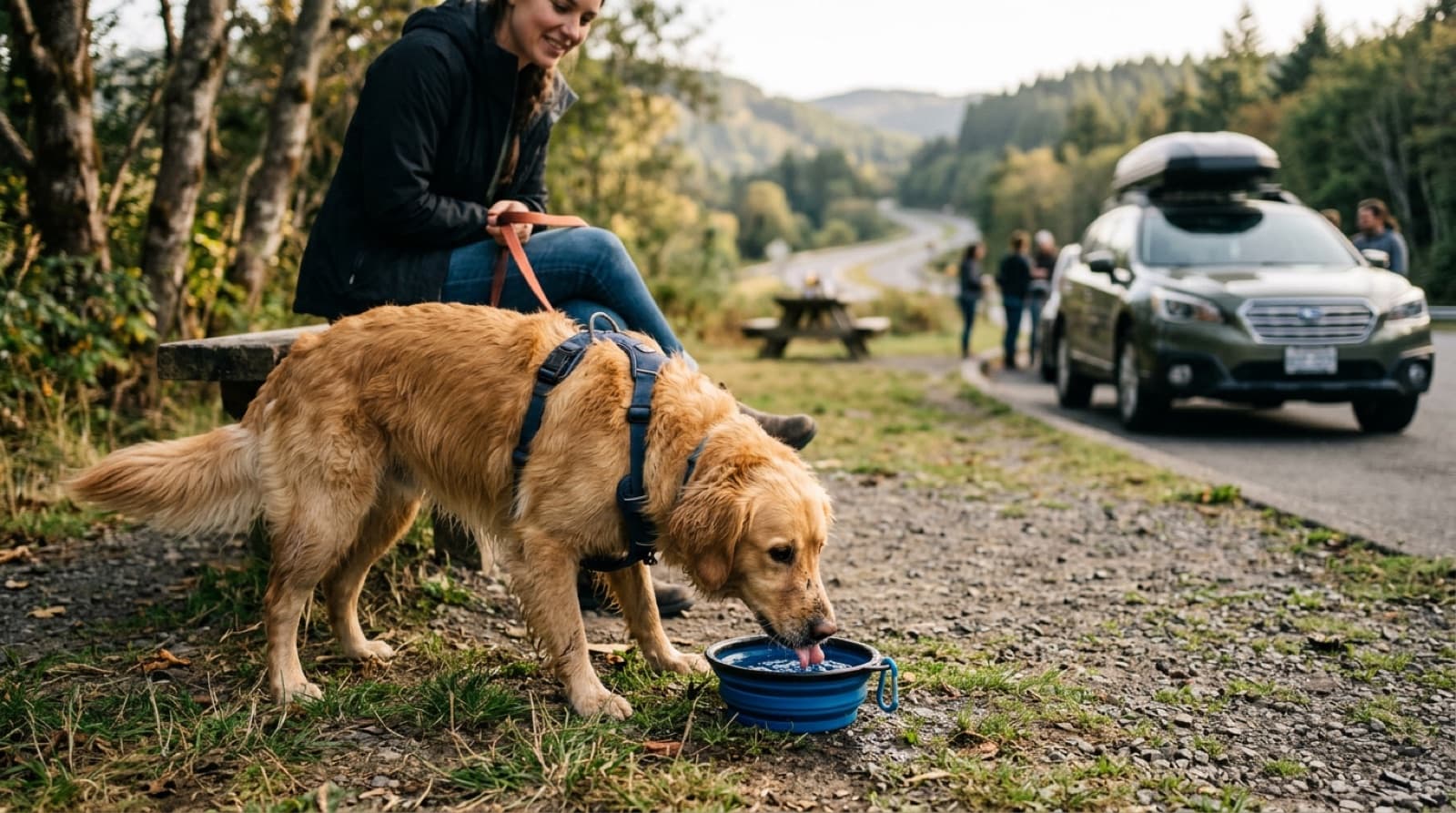
Beyond restraint, a good road trip is about a few small preparations. Bring water from home and a collapsible bowl, since unfamiliar water can upset a dog's stomach, and update the ID tag and microchip registration before you leave, because a dog is most likely to bolt in an unfamiliar place and ID is what gets it home. Keep vaccination and rabies records accessible for border crossings, boarding, or an emergency vet, and keep a spare leash in the car. Stop every two to four hours for a potty and stretch break, always leashed, and never let the dog off-leash at a rest stop in territory it does not know, where a startled dog can be gone in seconds.
Flying with a dog
Short-nosed breeds, Bulldogs, Pugs, Boxers, French Bulldogs, Boston Terriers, are at high risk of overheating and breathing trouble in the air, and many airlines ban them from cargo entirely (AVMA). For these dogs, flying is a stop-and-reconsider decision. Talk to your vet and the airline first.
Small dogs can often fly in-cabin in an airline-compliant under-seat carrier, which is far less risky than cargo, where temperature swings, handling, and terminal time all add up. Whichever applies, check the specific airline's breed rules, carrier dimensions, and health-certificate requirements (a veterinary certificate is generally required within 10 days for air travel), and book early because in-cabin pet spots are limited. On sedation, the AVMA advises against it for flights, because sedatives can impair breathing and temperature regulation at altitude, and many airlines will refuse a sedated dog. The recommended alternative is to acclimate the dog to its crate well in advance. As always, follow your vet's advice for your particular dog.
Talk to your vet, and never sedate on your own
Check with your vet before any big trip, and always for a dog with a health condition, a senior dog, a short-nosed breed, or any air travel. Never sedate a dog for travel without veterinary direction. Motion sickness has real vet-prescribed solutions, so get them rather than guessing. And remember that everything recommended here, a certified harness, a crate, a seat cover, a travel bowl, is a comfort and safety aid, not a medical treatment. A newly adopted rescue may also simply not be ready for a big trip yet; build trust at home first, using the first-week decompression approach, before you ask it to travel.
The first trip is the ride home
Get the harness or crate sorted before adoption day. Browse adoptable dogs from rescues across Canada.
Browse Adoptable Dogs →Frequently Asked Questions
How do I travel with a dog in the car?
Secure your dog with a crash-tested safety harness clipped to the seat belt, or in a securely anchored crate, always in the back seat rather than the front, because of the airbag. Build up to longer drives with short practice trips first, and bring water from home and a leash for every stop. The goal is a dog that is contained and calm, not loose and able to distract you or fly forward in a sudden stop.
What is the safest way for a dog to travel in a car?
A crash-test-certified harness attached to the seat belt, or a securely anchored crash-tested crate, in the back seat. The important detail is certification: look for the Center for Pet Safety Certified logo rather than trusting a marketing label, because a product can say "crash tested" without having actually passed the test. A secured crate or a certified harness protects the dog far better than a barrier alone.
Do dogs need a seatbelt?
Effectively yes. An unrestrained dog is a distraction to the driver, a heavy projectile in a crash, and can bolt into traffic or block first responders afterward. Use a crash-tested harness with a seat-belt tether, or a secured crate, rather than letting the dog ride loose, and keep it in the back seat away from the airbag.
How do I stop my dog getting car sick?
Take short, positive trips to build comfort, travel on a fairly empty stomach, keep the cabin cool with a slightly cracked window, and give the dog a settled, defined spot. Puppies often get car sick because their inner ear is still developing and usually outgrow it by around a year (VCA). If car sickness persists, your vet can prescribe an effective anti-nausea medication, so ask rather than guessing.
Can I leave my dog in the car?
No, never, not even for a few minutes with the windows cracked. Per the AVMA, a car interior climbs about 20°F within ten minutes and tops 110°F on a mild 70°F day, and cracking the windows makes almost no difference. Dogs overheat fast because they pant rather than sweat, so heatstroke can cause organ damage or death. If you are travelling alone and must stop somewhere the dog cannot come, skip the stop.
Can dogs fly in the cabin?
Small dogs can often fly in-cabin in an airline-compliant carrier that fits under the seat, while larger dogs usually travel in cargo, which carries more risk from temperature and handling. Check your specific airline's carrier size, breed rules, and health-certificate requirements, and book early because in-cabin pet spots are limited. Short-nosed breeds are a special case (see below).
Can I sedate my dog for travel?
Not on your own. The AVMA advises against sedating dogs for air travel because sedatives can increase heart and breathing risks at altitude, and many airlines will not accept a sedated animal. Always talk to your vet, and know that the recommended alternative is acclimating the dog to its crate ahead of time, leaving it open at home with a familiar chew inside so it becomes a safe space.
Are short-nosed breeds safe to fly?
Brachycephalic (short-nosed) breeds like Bulldogs, Pugs, Boxers, French Bulldogs and Boston Terriers are at high risk of overheating and breathing trouble during air travel, and many airlines ban them from cargo entirely (AVMA). For these dogs, flying is a stop-and-reconsider decision: in-cabin travel if the dog is small enough, or ground transport, is often the safer option. Talk to your vet and the airline before you book.
How do I road trip with a dog?
Restrain the dog with a crash-tested harness or a secured crate, update its ID tag and microchip before you leave, and pack water from home, a collapsible bowl, a spare leash, and vaccination records. Stop every two to four hours for a potty and stretch break, keep the dog leashed at every stop, and never let it off-leash in unfamiliar territory, where a spooked dog can vanish fast.
How to Dog-Proof Your Home
The safety sweep to do before a new dog comes home.
First Week With a Rescue Dog
Build trust before you ask a new dog to travel far.
Best Orthopedic Dog Bed
A comfortable, familiar bed helps a senior or anxious dog settle.
Explore Dog Breeds
Short-nosed breeds travel differently. Know what yours needs.
Best GPS Dog Collar in Canada
The two US favourites that do not work on Canadian networks.
Best Dog Harness in Canada
Why a new rescue should never be walked on a collar.