The short answer
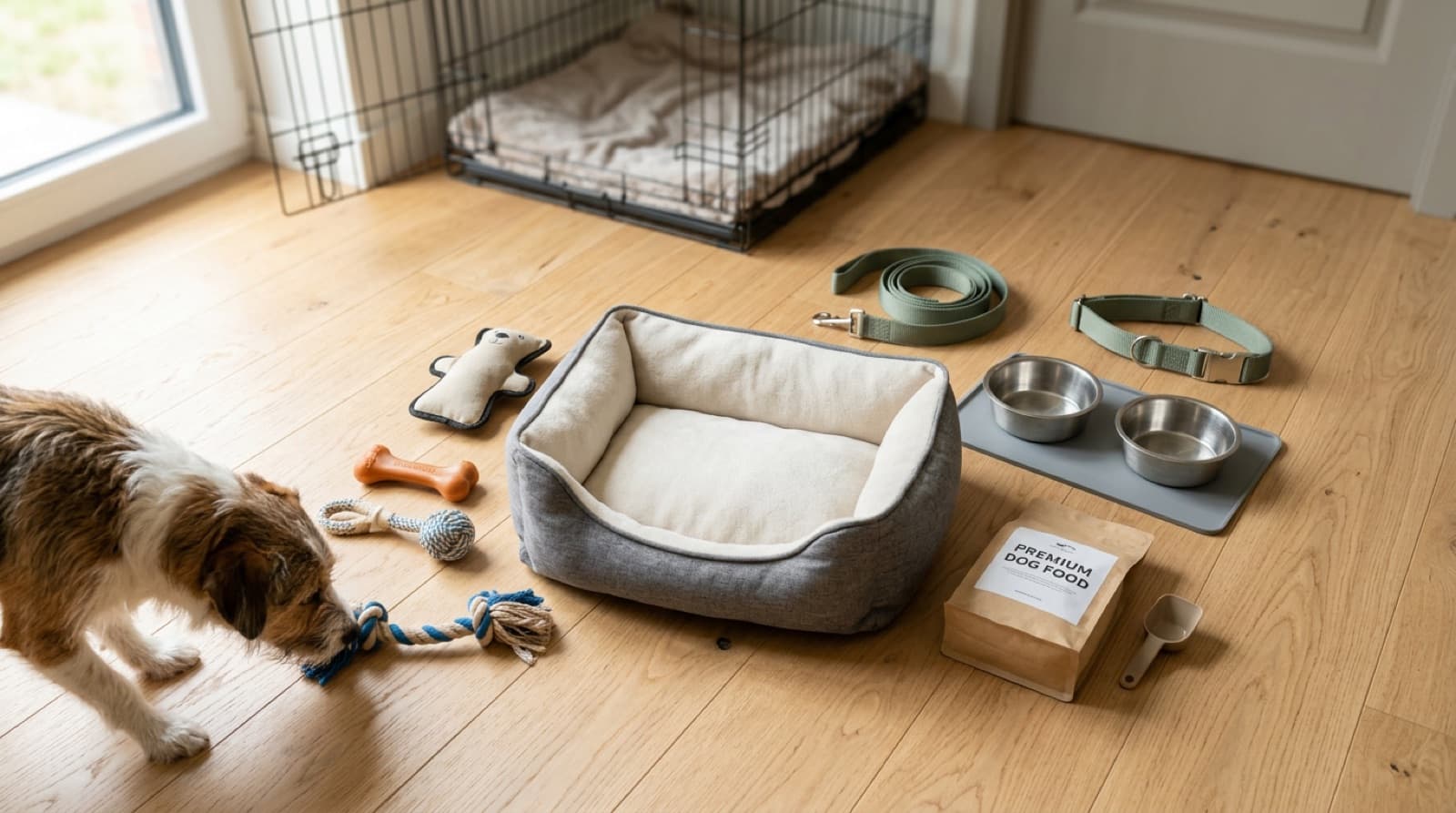
Keep it simple. Before your pet arrives, have the real essentials ready: the food they are already eating, food and water bowls, a bed, a collar with an ID tag, and a way to contain or settle them. For a dog, add a leash, a harness, poop bags, and usually a crate. For a cat, add a litter box, litter, and a scratching post. Set up one quiet room as their safe space, pet-proof it by clearing wires, small objects, and anything toxic, and book a get-acquainted vet visit for the first week or two. You do not need a cart full of gadgets on day one. You can add toys, treats, and extras once you know the animal. Ready beats fancy.
The dog essentials
Start with food and the gear to eat it: a bag of whatever the rescue has been feeding, plus food and water bowls. Switching foods abruptly upsets most dogs' stomachs, so buy what they are already on and change it slowly later if you want to. Add a flat collar with an ID tag, a leash, and ideally a well-fitted harness, which gives you more control and is kinder on the neck than a collar alone.
For containing and settling a dog, a crate is the single most useful item for most homes. Sized so the dog can stand, turn, and lie down, it doubles as a safe den and a house-training tool. Round it out with poop bags, a bed or a washable blanket, and a couple of sturdy chew toys to redirect chewing. That is genuinely the core kit. Everything else is optional and easier to choose once you have met the dog.
The cat essentials
Cats need less hardware than dogs but a few non-negotiables. Top of the list is the litter box, plus litter, and a scoop. A common rule is one box per cat plus one spare, so a single cat is happiest with two boxes in quiet, separate spots. Buy the litter the cat is already used to if you can, since cats can be fussy about sudden changes underfoot.
Beyond that: food and water bowls, the food they are currently eating, and a scratching post or pad, which protects your furniture by giving the cat somewhere it is allowed to scratch. A carrier is essential too, both for the ride home and for vet trips, and leaving it out as a normal piece of furniture helps the cat stop fearing it. Add a bed or a soft hideaway, a couple of toys, and you are set.
What you can skip for now
Pet shopping is designed to make you overbuy, and a lot of the cart is unnecessary on day one. You do not need a mountain of toys before you know what the animal actually likes, an expensive designer bed they may ignore in favour of a cardboard box, a closet of outfits, or every gadget on the shelf. Buying too much up front often means buying the wrong thing.
Hold off on anything sized to the animal until you can see them in person, especially collars, harnesses, and crates, since guessing the fit wastes money. Wait on training tools and enrichment puzzles until you understand the pet's habits. The smarter approach is to buy the essentials now and add the rest in the first few weeks once you know your specific animal. Your wallet and your closet will thank you.
Pet-proofing before they arrive
A new pet will explore with its mouth and paws, so spend an hour making the space safe before they get there. Get down to their eye level and look for trouble: dangling cords and chargers, small swallowable objects, medications, cleaning products, and anything breakable within reach. Secure or move it. For dogs, especially puppies, block off rooms you do not want explored and tuck away shoes and remotes.
Watch for the common toxins, because plenty of everyday things are dangerous to pets. Many houseplants are toxic, as are foods like chocolate, grapes, onions, and xylitol, the sweetener in sugar-free gum. Keep them well out of reach. For cats, check that window screens are secure and that there is nowhere to get stuck behind appliances. Pet-proofing is not about a perfect home. It is about removing the obvious hazards so the first days are safe.
Setting up a calm safe space
The kindest thing you can prepare is a small, quiet space that is just theirs. A new pet has lost everything familiar, and a whole house at once is overwhelming. Pick one calm room and set it up before they arrive with a bed, water, the litter box for a cat, and a couple of low-key toys. This becomes their decompression zone, the place they can retreat to and feel safe while the rest of the home stays off-limits at first.
Resist the urge to throw a welcome party. Keep visitors, noise, and excitement to a minimum for the first several days, and let the pet come out and explore at its own pace rather than forcing introductions. A common rule of thumb is three days to begin decompressing, three weeks to settle into a routine, and three months to truly feel at home. A ready, quiet safe space is what makes those first three days go well.
The first-week admin
A few non-shopping tasks belong on the checklist too. Update the microchip registration to your contact details, since a chip is only useful if the information attached to it is current, and make sure the ID tag on the collar has your phone number. If your municipality requires a pet licence, sort that out, as it is often a legal requirement and helps reunite you if the pet is ever lost.
Book a get-acquainted veterinary visit for the first week or two. It establishes a health baseline, confirms vaccines and parasite prevention are up to date, and gives you a vet relationship before you ever have an emergency. Bring any paperwork the rescue gave you. It is also worth pricing out pet insurance or starting a small emergency fund early, while the pet is healthy, because the time to plan for a big vet bill is before you have one.
What the starter kit costs
The upfront supply haul is real but manageable if you stick to essentials. For a dog, the core kit of crate, bed, bowls, collar, leash, harness, poop bags, food, and a few toys commonly runs somewhere in the range of $150 to $400, with larger dogs and fancier gear pushing higher. For a cat, the litter box, litter, scratching post, carrier, bowls, bed, food, and toys typically land around $100 to $250.
You can trim that meaningfully without cutting corners on welfare. Skip the designer everything, buy mid-range quality where it matters, like a sturdy harness or carrier, and add extras gradually rather than all at once. Remember that this supply cost sits on top of the adoption fee and the first-year veterinary care, so it helps to picture the whole first-year budget, not just the shopping trip. Bought sensibly, the starter kit is a one-time cost that sets you and the pet up well.
Further reading: the ASPCA on general pet care, the Canadian Veterinary Medical Association.
Not adopted yet?
Once you know the process, this checklist gets you ready for the day you bring them home.
See how adoption works →FAQ
Tap a question to expand