The short answer
Puppies get 28 baby teeth starting at two to four weeks old, then lose them from around three to four months as the 42 adult teeth come in, finishing up by about six months. The middle of that, roughly three to six months, is the sore, chewy, nippy stage owners notice most. Help your puppy by giving it plenty of safe chew toys, some chilled for cold relief, and calmly redirecting it from your hands and furniture to a toy. Avoid very hard chews that can crack teeth. A little blood on a toy is normal. If a baby tooth stays put alongside an adult tooth past six months, have a vet check it.
If your puppy has suddenly turned into a tiny crocodile that chews everything in sight, teething is almost certainly why. It is a normal, temporary stage of development, not a behaviour problem, and understanding the timeline makes it far easier to handle. Here is what is happening in your puppy's mouth, how long it lasts, and how to get through it with your hands and your furniture intact.
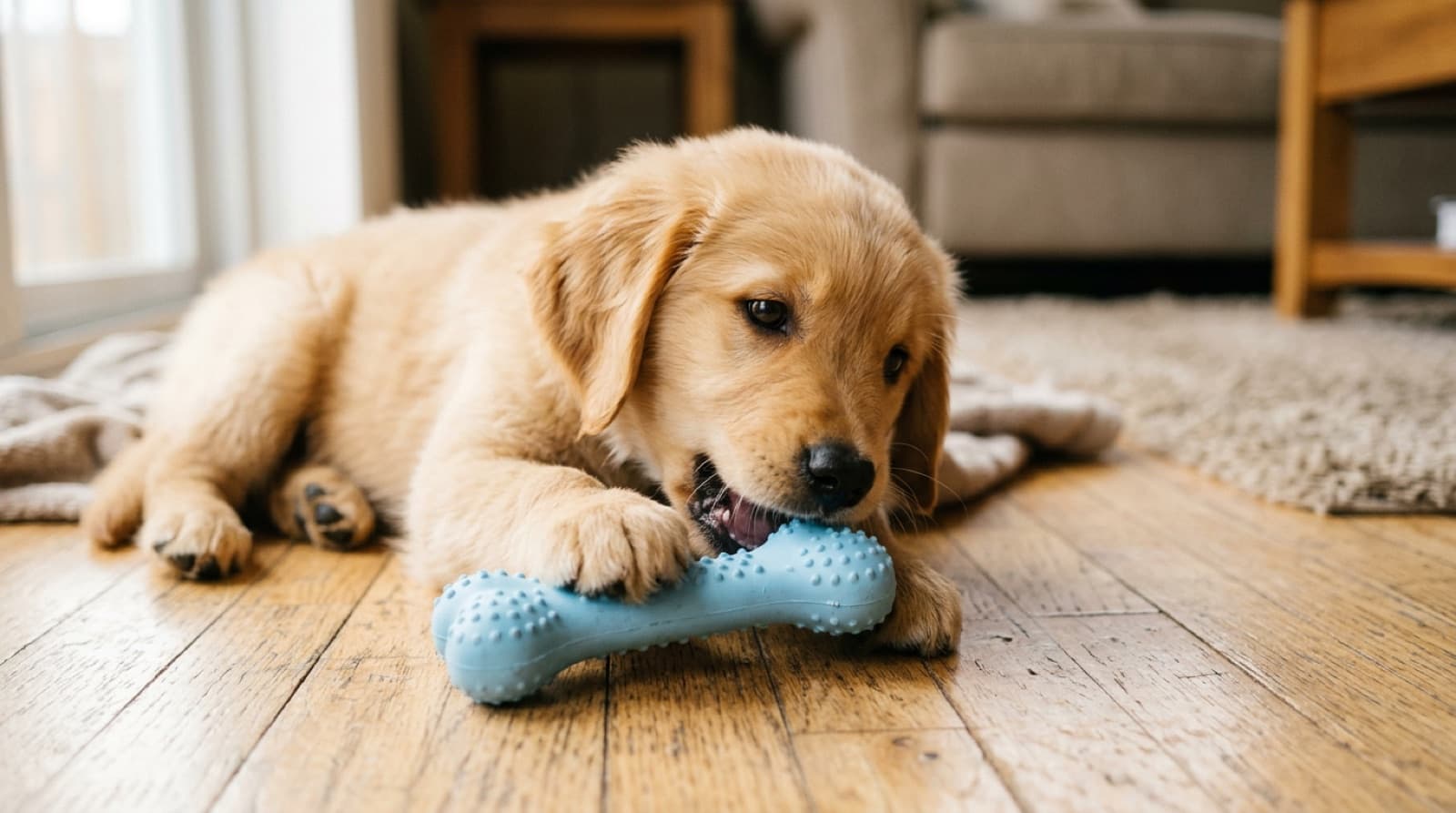
The puppy teething timeline
Teething runs in two waves: the baby teeth coming in, which happens before most puppies go to their new homes, and the adult teeth replacing them, which is the stage new owners live through. Here is roughly how it unfolds.
| Age | What is happening |
|---|---|
| 2 to 4 weeks | First baby (deciduous) teeth begin to come in |
| 5 to 6 weeks | All 28 baby teeth are usually in |
| 3 to 4 months | Baby teeth start falling out; adult teeth begin erupting (the heavy chewing stage) |
| 4 to 6 months | Incisors, canines, premolars, and molars come through |
| About 6 months | All 42 adult teeth are in; teething is complete |
These are general ranges, and some larger breeds finish a little later. The exact dates matter less than knowing the sore, chewy stage is a passing phase that wraps up around six months.
Signs your puppy is teething
In the three-to-six-month window, the signs are usually unmistakable. The big one is a surge in chewing and mouthing, with the puppy trying to gnaw on furniture, shoes, hands, and anything else it can reach, because chewing relieves the ache of teeth pushing through. You may also notice more nipping, extra drooling, small spots of blood on toys, a baby tooth on the floor, and red or slightly swollen gums.
Some puppies are a little fussier or go off their food briefly when their gums are sore, which is usually nothing to worry about for a short spell. None of this is bad behaviour or aggression, it is a developmental stage, and seeing it for what it is changes the response from frustration to simply managing it well until it passes.
How to soothe a teething puppy
The goal is to give the puppy plenty of acceptable things to chew, with cold for extra relief, and to keep everything you do not want chewed out of reach.
- Offer a variety of safe chew toys. Rotate a few so they stay interesting, and keep some within reach in every room.
- Use cold. A chilled rubber chew toy or a damp washcloth twisted and frozen soothes sore gums. Some toys are designed to be frozen for exactly this.
- Redirect, do not punish. When the puppy chews the wrong thing, calmly swap in a chew toy and praise it for using that. See our puppy biting guide for the mouthing side of teething.
- Puppy-proof. Move shoes, cords, and anything precious out of reach while the chewing urge is at its peak.
Avoid anything too hard, which can crack a tooth: real bones, antlers, hard nylon chews, and ice cubes are best skipped. If the chewing is destructive rather than just teething, our guide on destructive chewing covers the boredom and enrichment side.
When to see a vet
Teething itself rarely needs veterinary attention, but a couple of things are worth a check. The main one is a retained baby tooth: normally each baby tooth falls out as the adult tooth comes in, but sometimes a baby tooth stays put and sits right beside the new one, most often a canine. That crowding can trap food and push the adult teeth out of alignment, so if you see a double row of teeth past about six months, have your veterinarian look, since the retained tooth often needs to be removed, frequently during the spay or neuter.
Also call your vet if you notice anything beyond normal teething: bad breath that does not pass, gums that are very inflamed or bleeding heavily, broken or discoloured adult teeth, a puppy that is genuinely unwell or off its food for more than a day or so, or signs of real pain. These are not typical teething and deserve a professional look. For ordinary teething, though, time, the right chews, and a little patience are all it takes.
Teething is just one puppy stage
From biting to potty training to alone-time, our free first-90-days plan walks you through raising a new puppy in the order that works.
See the Free Dog Training Plan →Frequently asked questions
When do puppies start teething?
Teething happens in two phases. The first is when the baby teeth come in, starting at around two to four weeks of age, with all 28 baby teeth usually present by about five to six weeks, while the puppy is still with its litter. The phase most new owners experience is the second one: from around three to four months of age, those baby teeth start falling out and the adult teeth push through, which is the sore, chewy, nippy stage. So a puppy you bring home at eight weeks is between phases and will hit heavy teething a few weeks later.
When do puppies lose their baby teeth?
Puppies start losing their baby teeth at around three to four months of age, as the adult teeth underneath push them out. You may find tiny teeth on the floor or in a chew toy, or simply notice a gap, and a little blood on a toy is normal and not a cause for alarm. Many baby teeth are actually swallowed, which is harmless. The process continues over the next couple of months as different teeth are replaced, finishing up by around six months when the full set of adult teeth is in.
When do puppies stop teething?
Most puppies finish teething by around six months of age, when all 42 adult teeth have come in and the baby teeth are gone. The heaviest chewing and discomfort tends to ease once the adult teeth are through. Some larger breeds run slightly later. After six months, ongoing chewing is usually about boredom, habit, or adolescence rather than teething, so if a six-month-plus dog is still chewing heavily, the answer is more enrichment and outlets rather than teething relief.
How do I help my teething puppy?
Give it appropriate things to chew and make some of them cold, since cold soothes sore gums. Offer a variety of safe, durable puppy chew toys, and try chilling a rubber toy or a damp, frozen washcloth for extra relief. When the puppy chews something it should not, calmly redirect it to a chew toy and praise it for using that instead. Keep valuables and hazards out of reach. Avoid anything too hard that could crack a tooth, like real bones, antlers, or hard nylon, and skip ice cubes for the same reason. Patience helps too, because the worst of it passes within a couple of months.
How can I tell if my puppy is teething?
The classic signs are a sharp increase in chewing and mouthing, gnawing on everything in reach, and more nipping at hands. You might also see drooling, small spots of blood on toys, a found baby tooth, red or swollen gums, and sometimes a temporary dip in appetite or a bit more fussiness because the gums are sore. Most of this lines up with the three-to-six-month window. If you see these signs in that age range, teething is almost certainly the cause, and they ease as the adult teeth finish coming in.
My puppy still has a baby tooth next to an adult tooth. Is that a problem?
It can be, and it is worth a vet visit. Normally each baby tooth falls out as its adult replacement comes in, but sometimes a baby tooth is retained and sits alongside the new adult tooth, most often a canine. That crowding can trap food and cause the adult teeth to come in at the wrong angle, leading to dental problems down the line. Your veterinarian can check it and, if needed, remove the retained baby tooth, often at the same time as the spay or neuter. So if you notice a double row of teeth past about six months, have it looked at.
Further reading: the ASPCA on common dog behaviour issues, the American Kennel Club training library.
How to Stop Puppy Biting
The mouthing and nipping side of teething.
Destructive Chewing
When chewing is boredom, not teething.
Free Dog Training: First 90 Days
Where teething fits in the new-puppy roadmap.
New Pet Checklist
The chew toys to have ready for the teething stage.