The short answer
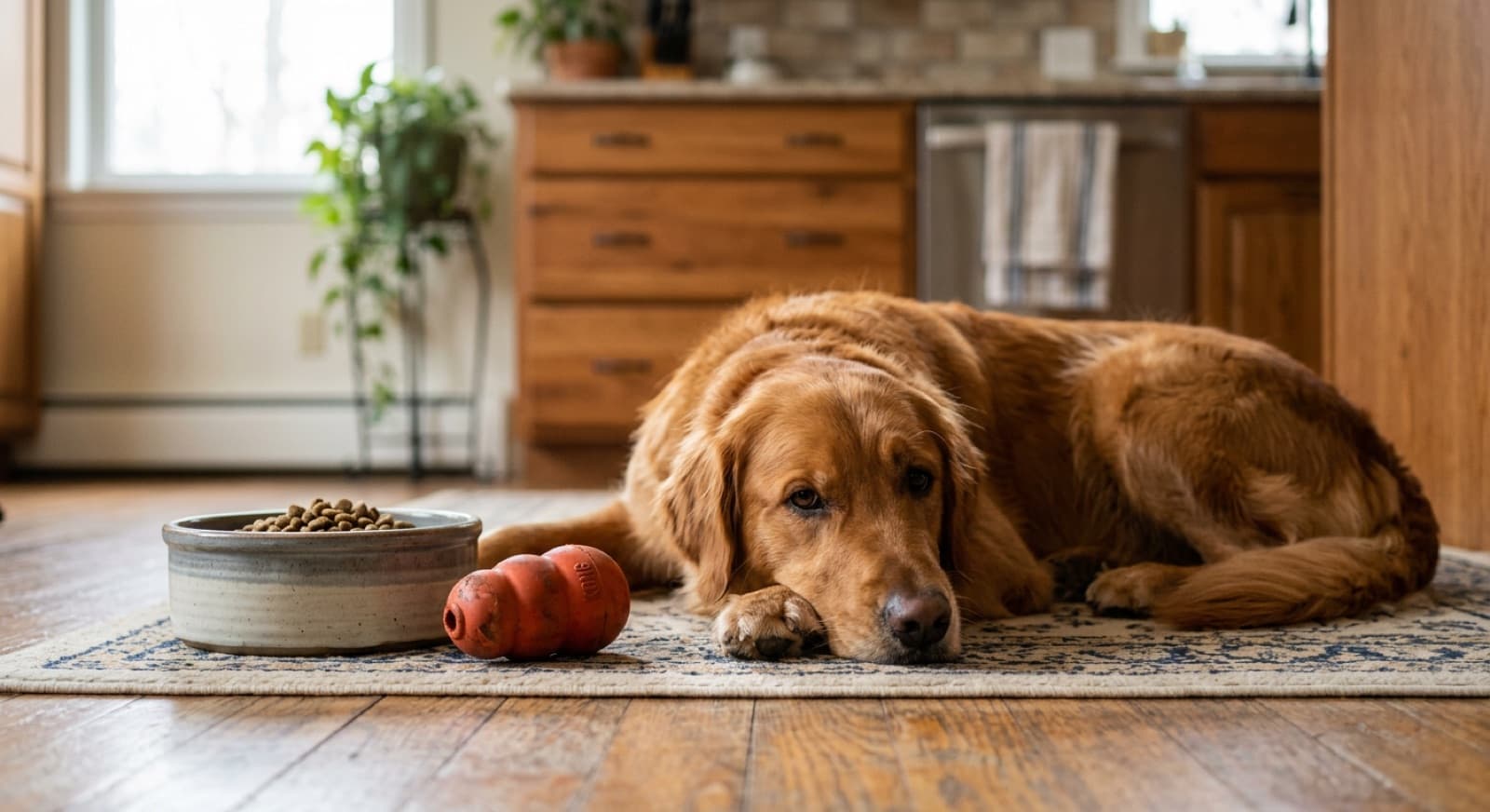
Resource guarding means your pet feels protective of something important to it and fears losing it. A growl or a stiff body is a warning, not a personality flaw, and it is the animal communicating clearly before it ever has to escalate. The single most important thing to understand is that punishing the warning or repeatedly taking the item away makes guarding worse and more dangerous, because it teaches the animal that people approaching its stuff are a threat. The safe path is to manage the environment so guarding is not triggered, trade up for higher-value items instead of grabbing, give your pet space while it eats, and bring in a certified force-free trainer or a veterinary behaviourist for anything beyond mild guarding or any situation involving children.
What resource guarding actually is
Resource guarding is when an animal defends something it considers valuable. That can be a food bowl, a chew or treat, a favourite toy, a spot on the couch or bed, and sometimes even a person it has bonded to. The behaviour can look like a low growl, a hard freeze over the item, a stiff body, a curled lip, snapping at the air, or in more serious cases a bite. Cats do it too, though it often looks different: a cat might hunch over food, flatten its ears, swat, or hiss when you come near its bowl or its safe hiding place.
Here is the part that matters most. A growl, a freeze, or a stiff posture is a warning, not bad behaviour to be stamped out. The animal is communicating, in the clearest way it knows how, that it feels uneasy and wants you to keep your distance. That warning is a gift. It gives everyone a chance to back off before anything escalates. An animal that has learned its warnings work has no reason to skip straight to biting.
It is also worth saying plainly that this is normal, instinctive behaviour. Valuing a resource and wanting to protect it is wired deep into both dogs and cats. It is not your pet being dominant, stubborn, ungrateful, or spiteful. It is a frightened animal trying to hold onto something it does not want to lose.
Why it happens, especially in rescues
Guarding comes down to a simple emotional equation: the animal values something and fears losing it. When a resource feels scarce or unpredictable, protecting it makes perfect survival sense. This is one reason it shows up so often in rescue dogs and cats. An animal that lived on the street, came from a hoarding situation, competed with littermates or other pets for limited food, or simply went hungry has every reason to treat a full bowl as something worth defending.
Past experience teaches the lesson too. A pet that has had food, toys, or comfortable spots taken away from it, sometimes repeatedly, learns that human hands reaching toward its stuff means loss. Over time that turns into a guard response that fires before the hand even arrives.
None of this means a guarding pet is broken or a bad match. It means the animal learned, often before you ever met, that good things do not always stay. With patience, consistency, and the right help, that lesson can be gently rewritten so the animal learns the opposite: that people approaching usually means more good things, not fewer.
Reading the warning signs
Learning to spot the early, quiet signals is one of the most useful skills an owner can build, because catching guarding early lets you manage it before it ever escalates. In dogs, watch for a sudden stillness or freeze over the item, eating faster as you approach, a hard stare, a lifted lip, a low growl, or the body angling to put itself between you and the resource. The body often gets tense and low.
In cats, the signs can be subtler. A cat might hunch protectively over food, flatten its ears, twitch its tail, give a warning hiss or growl, swat the air, or simply tense up and stop eating until you leave. A cat that guards a hiding spot or a perch may strike out if you reach in.
Crucially, these signals exist on a ladder. The quiet ones (stiffening, freezing, a soft growl) come first. If they are ignored or, worse, punished, the animal learns the quiet warnings do not work and may jump straight to the louder ones. Respecting the early signals keeps the whole conversation safe.
What NOT to do
This section matters more than any other, because the most common instincts are exactly the ones that make guarding worse. Do not punish the growl. Yelling, scolding, or correcting an animal for warning you teaches it that warnings get it in trouble, so it stops warning. You have not fixed the fear underneath. You have only removed the early alarm, which makes a sudden, unwarned bite far more likely. A growling pet is a pet still trying to talk to you. Keep that line of communication open.
Do not keep taking the food or item away. Every time you grab the bowl to prove a point, you confirm the animal's worst fear, that people approaching means loss, and you raise the stakes for next time. The same goes for the old advice about sticking your hand in the bowl while your pet eats, or hovering over its food as a test. These do not build trust. They build anxiety, and they directly teach the animal that humans near its resources are a threat to defend against.
Do not try to overpower the behaviour or show it who is boss. Guarding is rooted in fear, and fear does not respond to force, it intensifies under it. Confrontational methods are how mild, manageable guarding becomes a serious bite risk. If you take nothing else from this guide, take this: punishment and repeated removal are the two surest ways to make resource guarding more dangerous.
The safe, general approach
The foundation of handling guarding well is management: arrange daily life so the behaviour does not get triggered in the first place. Feed your pet in a quiet, low-traffic spot where it will not be crowded or interrupted, and let it eat in peace. Give it space. There is almost never a good reason to reach into a bowl or hover over a chewing dog or a cat at its dish. If you simply leave the animal alone with its food, you remove the conflict entirely.
When you genuinely need to get something back, trade up instead of grabbing. Offer something the animal values more (a tastier treat, a better chew) so it chooses to give up the lesser item willingly. Done consistently, this flips the whole dynamic. The animal learns that a person approaching its stuff predicts something even better, which is the opposite of the fear that drives guarding. Tossing high-value treats near the bowl as you pass, rather than reaching toward it, sends the same reassuring message over time.
Be honest about the limits of doing this alone. The trade-up idea is simple to describe and surprisingly easy to get wrong, and getting it wrong can teach the animal the opposite lesson or put you within reach of a bite. Management and trading up are sensible starting points for very mild guarding, but they are not a full training protocol, and this guide deliberately is not one. For anything beyond mild guarding, and for any case where a bite has already happened, the right move is a certified force-free professional. Look for a trainer credentialed through the CCPDT or IAABC, or a veterinary behaviourist. A vet visit is also worth it early on, since pain or illness can make any animal more protective and irritable. Good professional help is the difference between guessing and a real, safe plan, and most guarders improve meaningfully with it.
Kids and guarding: a serious safety note
When children share a home with a guarding pet, the stakes rise and the rules get firmer. Kids are unpredictable, they move fast, they reach for things, and they are at face height with a dog or cat. Many serious bites happen when a child approaches an animal that is eating, chewing, or resting in its safe spot. This is not about a mean pet. It is about a frightened animal and a child who did not know to stay back.
The non-negotiable rules: never let a child approach a guarding pet's food, treats, toys, bed, or hiding place, and never leave young children and a guarding animal together unsupervised. Feed the pet behind a closed door or a baby gate, away from the kids. Make resting spots genuinely off-limits to little hands, and teach children, in simple terms they can follow, to leave the animal completely alone while it eats or rests.
If there are children in your home and your pet is showing any guarding behaviour, this is not a do-it-yourself situation. Get a certified force-free trainer or a veterinary behaviourist involved early. Resource guarding is manageable and it is not a reason to give up on an animal, but around kids it must be handled carefully, safely, and with professional guidance from the start.
Further reading: the ASPCA on resource guarding, the IAABC directory of behaviour consultants, the AVSAB.
Thinking about adopting?
A foster-based rescue can flag any guarding history up front, so you can choose with full information.
Browse adoptable dogs →FAQ
Tap a question to expand