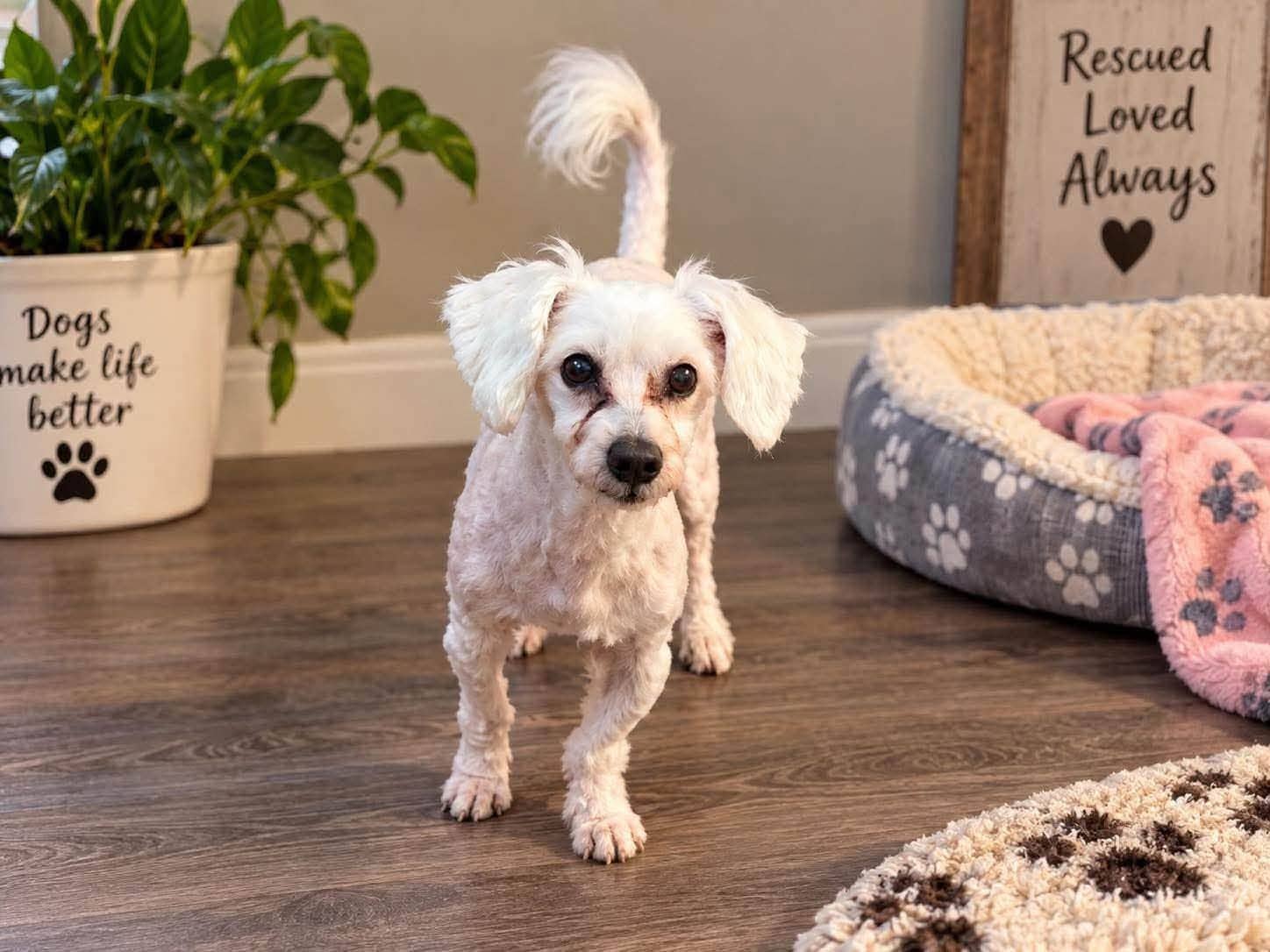
Malteses in Winnipeg, right now
We're currently tracking 1 adoptable Maltese in southern Manitoba, listed by 1 rescue including Penny's All Breed Animal Rescue. Listings update regularly, and most Malteses in Winnipeg get adopted within days of being posted — if one catches your eye, reach out fast.
Adopting a Maltese in Winnipeg
Maltese are common in Winnipeg small-breed surrender pattern and they cycle through rescue more than most adopters realise. The Winnipeg Humane Society on Hurst Way, Manitoba Mutts foster network, D'Arcy's ARC on Century Street and Hull's Haven all see Maltese and Maltese crosses (Maltipoo, Malshi, Malchi) regularly. Most rescue Maltese are 2 to 8 year old adults from households that underestimated the daily grooming, the dental disease cost, the Manitoba winter cold challenge for a 5 to 7 lb dog, or a senior Maltese inherited when an owner passed away or moved into long-term care.
This page pulls every adoptable Maltese from the Winnipeg shelters we cover into one searchable place, refreshed regularly. Maltese are an excellent Winnipeg condo breed on size alone — under 7 lbs is well below every weight cap in Exchange District, downtown and Tuxedo buildings. The catches are health-related and weather-related and they matter more than the housing fit. Tracheal collapse risk requires harness-only walking from day one. Mitral valve disease (MVD) shows up in seniors. Dental disease is the dominant ongoing cost. And the Manitoba winter is brutal for the breed.
Tracheal collapse — harness only, never a collar
Maltese are predisposed to tracheal collapse, a progressive condition where the cartilage rings of the trachea weaken and the airway partially collapses on inspiration. The standard recommendation across the breed is unambiguous: always a Y-harness or H-harness for walking, never a collar. A collar plus a Maltese pulling toward a squirrel in Bonnycastle Park or a passing dog on the Osborne Village sidewalk is a real injury risk, and over time it accelerates the underlying collapse. Every Winnipeg Maltese owner should walk on a harness from day one. The Winnipeg Humane Society and Manitoba Mutts will usually note collar versus harness training in the intake file.
In established cases, tracheal collapse presents as a honking cough, particularly after excitement, exercise, or in cold air — which is constant in Winnipeg from November through March. Diagnostic radiographs and fluoroscopy at MVMA referral practices in Winnipeg cost $800 to $1,500. Medical management (cough suppressants, anti-inflammatories, weight management) handles most cases for years. Stent placement is the surgical option in severe cases at $5,000 to $8,000 at specialty referral, with tertiary work routing to the Western College of Veterinary Medicine in Saskatoon. Pet insurance taken out the week of adoption covers progression that develops after the policy starts.
Manitoba winter is brutal for a 5 to 7 lb dog
Winnipeg January at -35°C with prairie windchill into the -50s is dangerous for a 5 to 7 lb single-coated dog. A Maltese on a Wolseley sidewalk in -35°C wind has minutes, not hours, before hypothermia risk becomes real. From November through April, a Winnipeg Maltese needs an insulated winter coat, booties for road salt and frostbite prevention on pads, and short outdoor sessions only. Many Winnipeg Maltese owners use a pee pad or indoor litter setup for the coldest weeks because outdoor relief is genuinely unsafe below -25°C.
The white silky coat shows every speck of road salt and slush — daily wiping of the legs, belly and face after every walk through winter is realistic. Forced-air heating that Winnipeg homes run November through March dries the coat and skin — a humidifier in the bedroom helps. Booties protect against road salt that cracks pads. The summer humidex pushing into the high 30s is the other extreme and a Maltese in a non-air-conditioned downtown unit needs cooling mats and shaded routine. Walk before 8 AM or after 8 PM through July and August.
Mitral valve disease — the senior Maltese cardiac issue
Mitral valve disease (MVD) is the same condition that defines the Cavalier King Charles Spaniel breed — degeneration of the mitral valve, valve regurgitation, and eventually congestive heart failure if untreated. Maltese carry the genetic load at lower prevalence than Cavaliers but it is still the most common cardiac issue in the breed. Annual cardiac auscultation from age 7 catches the murmur early. Echocardiography at MVMA referral practices in Winnipeg costs $400 to $700, with tertiary cardiology routing to the Western College of Veterinary Medicine in Saskatoon — a five-hour drive that adds cost and time.
Pimobendan and ACE inhibitor therapy from stage B2 onwards is the standard of care, and most diagnosed Maltese live 2 to 4 quality years post-diagnosis on medication. Monthly medication costs run $40 to $100. A senior Maltese adopted in your 60s may already be MVD-positive — ask the foster about cardiac status, last auscultation date, and any current medication. Pet insurance taken out the week of adoption covers MVD diagnosis after the policy starts.
Dental disease, patellar luxation and the rest of the toy breed health load
Dental disease is the dominant ongoing cost for the breed. Small mouths and crowded teeth mean most Maltese need professional cleaning every 12 to 18 months at $800 to $1,500 at MVMA practices in Winnipeg depending on extractions. Daily home brushing helps stretch the interval. Patellar luxation (slipping kneecaps) is common — surgery runs $2,500 to $4,500 per knee at Winnipeg specialty practices if grade 3 or 4. Portosystemic shunt (a liver bypass blood vessel) appears in some Maltese lines and needs early detection — surgery routes through MVMA referrals to the Western College of Veterinary Medicine in Saskatoon at $5,000 to $8,000.
Hypoglycaemia in puppies under six months is the puppy-stage emergency — rub corn syrup or Karo syrup on the gums in emergency, never down the throat (aspiration risk). Tear staining is a cosmetic but persistent issue — daily face cleaning helps but does not eliminate it. A 12 to 15 year lifespan is realistic. Pet insurance is $40 to $80 a month for a young Maltese — get it the week of adoption.
What Maltese are actually like to live with
A well-matched Maltese in Winnipeg is one of the most affectionate, gentle, and intensely bonded companion dogs in any rescue. The realistic parts to plan for:
- Harness only. Tracheal collapse risk means no collars for walking, ever. Y-harness or H-harness from day one.
- Daily grooming. Brush 2 to 3 times weekly, daily through the winter slush season. Professional groom every 4 to 6 weeks at $60 to $100.
- High condo compatibility. Under 7 lbs is well under every Winnipeg condo weight cap.
- Cold-vulnerable. Manitoba winter at -35°C is dangerous — insulated coat, booties, indoor pee pad setup for the coldest weeks November through March.
- Dental care is the budget line. $800 to $1,500 every 12 to 18 months at Winnipeg practices, plus daily home brushing.
- Senior cardiac monitoring from age 7. MVD risk is real — annual auscultation, echocardiogram if a murmur appears.
- 12 to 15 year lifespan. Long commitment for a healthy adopted adult.
- Bonds hard. Separation anxiety appears in households with sudden schedule changes — a busy condo with two remote workers is the better fit than long workday absences.
What the fee usually covers
Maltese adoption fees at Winnipeg rescues typically run $400 to $700 for an adult dog, $500 to $800 for puppies under 1 year. The fee covers spay or neuter, core vaccinations, microchip, deworming, dental assessment at intake, and a vet check before placement. Dental status at intake is worth asking about specifically — a Maltese arriving with severe dental disease may need a cleaning and extractions within the first 90 days at adopter cost. Confirm the exact number on the dog's own listing.
How to actually search
Apply the same day a Maltese appears. Demand in Winnipeg is high and listings move within days. Use the filters above to narrow by size (small), age (seniors are often rewarding adoptions), good with kids (variable), and shelter. Read foster notes on dental condition, harness training, vocalisation in an apartment setting, and tear staining management. Foster homes will set up a video call before you drive across Winnipeg. Senior Maltese (10+) are often the easiest, most rewarding adoptions in the breed.
Looking more broadly? Browse every adoptable dog across the province on Dog Adoption Manitoba.
The rescues that most often list Malteses across Manitoba are Winnipeg Humane Society, Manitoba Mutts Dog Rescue, D'Arcy's ARC, and Hull's Haven Border Collie Rescue. For breed-specific background, the Canadian Kennel Club is a useful reference.
Maltese Adoption FAQ — Winnipeg
How many Maltese are available for adoption in Winnipeg?
As of October 2026, Maltese are rare in Winnipeg rescue — only 1 is listed right now across 1 rescue on LocalPetFinder. They tend to get adopted fast, so setting an alert is the most reliable way to find one.
Where can I adopt a Maltese near me in Winnipeg?
Winnipeg has Maltese and Maltese crosses (Maltipoo, Malshi, Malchi) in rescue regularly. The major sources are the Winnipeg Humane Society on Hurst Way, Manitoba Mutts Dog Rescue's foster network, D'Arcy's ARC on Century Street, and Hull's Haven Border Collie Rescue. Demand is high — set up an alert and apply within 24 to 48 hours of a dog appearing. Senior Maltese (10+) often have shorter listing times and are exceptional adoptions for a quieter household.
Why should I walk a Maltese on a harness instead of a collar?
Tracheal collapse risk. Maltese are predisposed to a progressive condition where the cartilage rings of the trachea weaken — a collar on a Maltese pulling on leash accelerates the underlying collapse and risks acute injury. Every Winnipeg Maltese owner should use a Y-harness or H-harness from day one. In established cases tracheal collapse presents as a honking cough after excitement or in cold air, which is constant in Winnipeg winter. Diagnostic work at MVMA referral practices runs $800 to $1,500, medical management covers most cases for years, and stent surgery in severe cases runs $5,000 to $8,000.
How does a Maltese handle Manitoba winter?
Poorly without serious gear. Winnipeg January at -35°C with prairie windchill into the -50s is dangerous for a 5 to 7 lb single-coated dog. From November through April, a Winnipeg Maltese needs an insulated winter coat, booties for road salt and frostbite prevention, and short outdoor sessions only. Many Winnipeg Maltese owners use a pee pad or indoor litter setup for the coldest weeks because outdoor relief is genuinely unsafe below -25°C. Forced-air heating dries the coat — a humidifier in the bedroom helps. Daily leg and belly wiping after every walk handles road salt.
How serious is mitral valve disease in Maltese?
Less prevalent than in Cavaliers but still the most common cardiac issue in the breed. Annual auscultation from age 7 catches the murmur early. Echocardiogram at MVMA referral practices in Winnipeg runs $400 to $700, with tertiary cardiology routing to the Western College of Veterinary Medicine in Saskatoon. Pimobendan plus ACE inhibitor therapy from stage B2 onwards extends quality life 2 to 4 years post-diagnosis. Monthly medication is $40 to $100. A senior Maltese adopted in your 60s may already be MVD-positive — ask the foster about cardiac status. Pet insurance taken out the week of adoption covers progression after the policy starts.
Are Maltese a good fit for a Winnipeg condo?
Excellent on size — under 7 lbs is well below every Winnipeg condo weight cap in Exchange District, downtown and Tuxedo developments. The catches are health and weather-related, not housing-related. Plan the harness-only walking routine, the daily grooming, the Manitoba winter coat and booties for salted sidewalks, the dental care budget ($800 to $1,500 every 12 to 18 months), and the senior cardiac monitoring from age 7. A busy condo with two remote workers is a better fit than long workday absences — separation anxiety appears when schedules shift.
What is the difference between a Maltese and a Maltipoo?
A Maltipoo is a Maltese crossed with a Poodle, so it is a different dog with its own page here, not a variety of Maltese. The claim you will see most often is that a Maltipoo sheds less, and it is not really true. The purebred Maltese already sheds very little, because the coat is hair rather than fur and grows continuously. What a poodle cross changes is the texture, not the shedding, and a curlier coat traps the hair it loses instead of dropping it, which is also why it mats. Neither dog is hypoallergenic.
How much does it cost to adopt a Maltese in Winnipeg?
Adopting a Maltese in Winnipeg typically costs $250 to $650, and puppies usually carry a premium at $450 to $800. The exact fee varies by rescue, and older dogs are often reduced. That fee is not a purchase price. It covers work already done on the dog: spay or neuter, vaccinations, deworming, microchip, and a basic vet workup, which would cost several hundred dollars more if you arranged it yourself after buying. Buying the same breed from a registered breeder generally runs well over $1,000, usually with a waitlist. Ask the rescue what is included before you apply, since a few include extras like a starter bag of food or a first-month insurance trial.
Are these Maltese for sale in Winnipeg?
Not for sale, for adoption, which is usually the better deal. Every Maltese here comes from a Winnipeg rescue or shelter, not a breeder, pet store, or classified seller. Adoption fees are typically $250 to $650, with puppies at $450 to $800 and already include vaccinations, deworming, microchip and spay or neuter when age-appropriate, versus roughly several thousand dollars to buy a Maltese from a breeder. If you searched "maltese for sale winnipeg" or "maltese puppies for sale," adopting gets you a healthy, vetted dog for a fraction of the price.
Where can I buy a Maltese in Winnipeg, and should I?
You can buy from a registered breeder, but it is worth weighing against adoption first. A reputable Maltese breeder typically charges several thousand dollars and often has a waitlist, while a rescue Maltese costs $250 to $650, with puppies at $450 to $800 fully vetted and may be available now. Be cautious of cheap maltese-for-sale ads on classified sites and marketplaces, which are frequently backyard breeders or puppy-mill resellers with unvetted, sometimes sick animals and no health guarantee. If you do buy, insist on seeing where the puppies were raised and getting vet records. For most families in Winnipeg, adopting a rescue Maltese is cheaper, faster, and gives a dog in need a home.
Are there free Maltese in Winnipeg, or maltese under $500?
Adoption is the closest honest answer, and it is not free. A rescue Maltese in Winnipeg typically costs $250 to $650, with puppies at $450 to $800, so the lower end lands under the "$500" people search for and the rest does not. What the fee buys is work already done, the vaccinations, deworming, microchip and spay or neuter, which would cost more than the fee itself if you arranged it yourself, and it is still far below breeder prices. Be wary of genuinely free maltese listings. An animal advertised free to a good home has usually not been vetted, and free rehoming ads are the route flippers and unregistered breeders use to move animals with no health guarantee and no recourse. Paying a rescue fee buys you a dog someone has already examined, treated, and been honest with you about.
Are there Maltese puppies in Winnipeg, or only adults?
Both, but adults far outnumber puppies, and it is worth knowing that before you start looking. Most Maltese arriving in Winnipeg rescue are adolescents and adults, because that is the age at which first homes tend to give up. Puppies do come through, usually as accidental litters or with a surrendered mother, and they are typically spoken for quickly. Setting an alert beats refreshing the page. It is also worth asking whether you actually want one: an adult arrives with a temperament a foster has already observed and described, where a Maltese puppy is a prediction, and for this breed in particular knowing what you are getting is the more useful thing.
Where can I find a Maltese near me in Winnipeg?
Start with the listings on this page, which pull from Winnipeg rescues and shelters and are refreshed regularly, so what you see is what is genuinely available rather than a stale directory. If nothing suits today, that is normal for this breed: rescue intake is intermittent rather than steady, and a breed with none listed this week often has several next month. Setting an alert beats checking back, and it is worth widening to nearby towns, since most rescues serving Winnipeg will adopt out across a reasonable driving distance rather than only inside one municipality.
Have a dog to rehome?
Rehoming a Maltese in Winnipeg?
List your dog free. Local adopters browsing Winnipeg see owner listings first: no shelter, no fees, you choose the home.
List your pet free →Takes 3 minutes. You stay in control of who adopts.
Not seeing one yet?
Get notified when a Maltese is listed in Winnipeg
We'll email you the moment a Maltese is listed in Winnipeg on LocalPetFinder, from a rescue or an owner rehoming.
One email when there's a match. Unsubscribe anytime.
For rescues & shelters
Are you a Winnipeg-area rescue? List your adoptable dogs free.
Free shelter account: your dogs appear here and across LocalPetFinder, with analytics and adoption applications included.