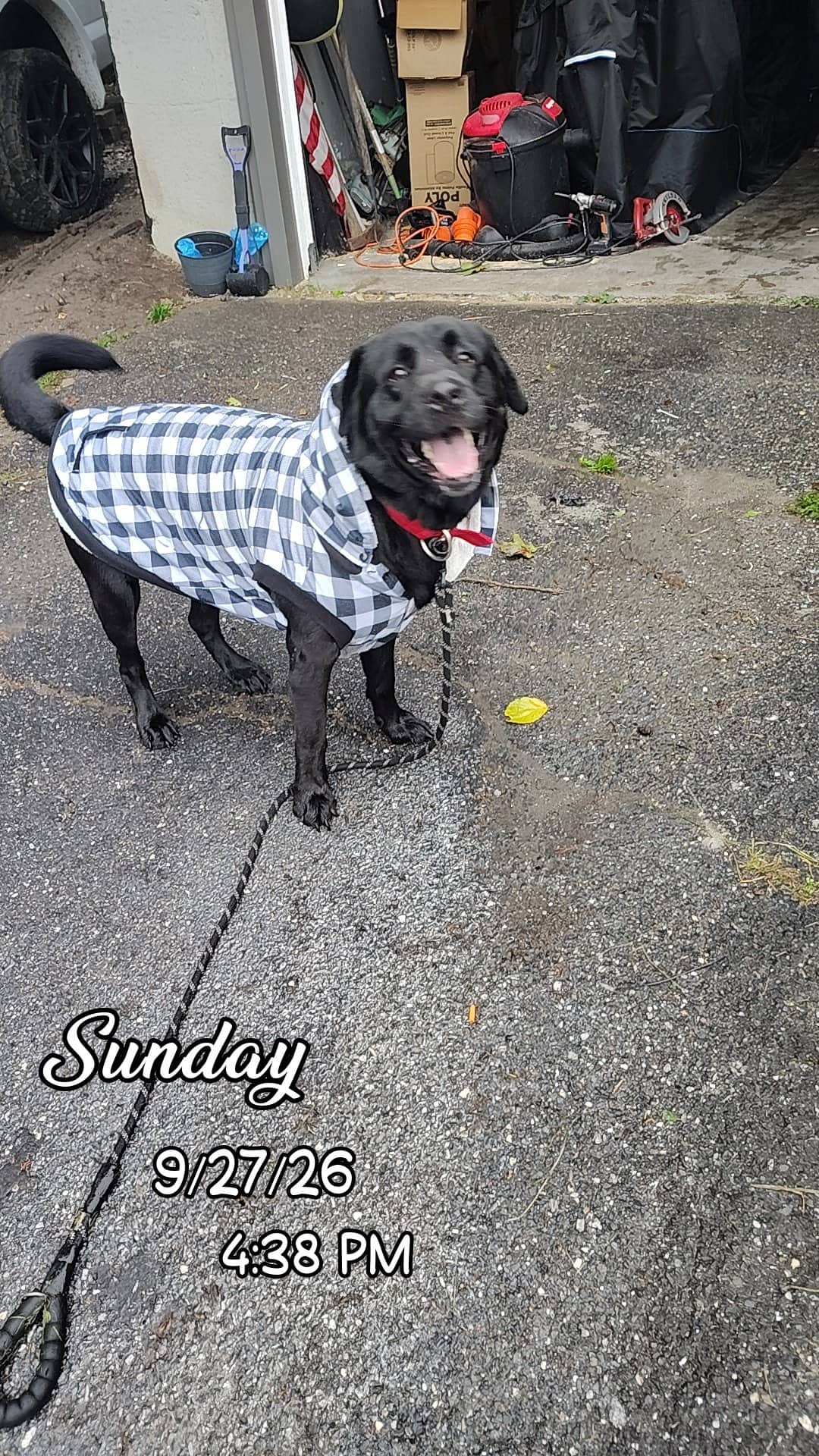
Newfoundland Dogs in St. John's, right now
We're currently tracking 1 adoptable Newfoundland Dog in or near St. John's, listed by 1 rescue including Owner Rehoming. Listings update regularly, and most Newfoundland Dogs in St. John's get adopted within days of being posted — if one catches your eye, reach out fast.
See every adoptable Newfoundland Dog across Newfoundland and Labrador →
Adopting a Newfoundland dog in its home province
The Newfoundland is the province's own breed, a giant working water dog developed on this coast to haul nets, carry lines, and pull drowning fishermen from the cold Atlantic. The legendary swimming ability, webbed feet, water-resistant coat, and famously gentle temperament all come from that working past. For a Newfoundland adopter on the island, there is a real pride in giving a home to the breed that carries the province's name.
Be realistic, though: purebred Newfoundlands are uncommon in rescue, here as everywhere, because of their size and cost. Newf crosses turn up more often than purebreds. This page gathers every adoptable Newfoundland and Newf cross from the NL shelters we cover into one place, refreshed regularly, so you can be ready if one appears. If none are listed today, the City of St. John's Humane Services and breed-specific rescue elsewhere in Atlantic Canada are worth watching.
What to know before you adopt
Newfoundlands are sweet-natured, patient, and famously good with children, the original "nanny dog." They are calm and affectionate rather than high-energy, but they are enormous, often well over 100 pounds, and everything about them is supersized: the food bill, the drool, the shedding, the space they need, and the strength on the leash. They are not a small-apartment dog, and they feel the heat badly, though a Newfoundland winter suits them perfectly.
The heavy double coat needs serious regular grooming to prevent mats, and they shed a great deal. Like most giant breeds they have a shorter lifespan and are prone to hip and heart issues, so ask the rescue about health history and keep them lean. Give a Newfoundland room, grooming, moderate exercise, and a tolerance for drool and dog hair, and you get one of the gentlest, most devoted companions of any breed.
The working history behind the breed
Everything distinctive about a Newfoundland traces back to a job on this coast. The webbed feet, the oily water-shedding outer coat, and the powerful chest were for swimming in cold Atlantic water. The strength and the placid nature were for hauling: nets, carts, and loads of fish and wood in communities with no roads to speak of. The willingness to go into rough water after a person is the trait the breed is most celebrated for, and the reason its water-rescue reputation has outlived the working era.
The breed developed alongside the smaller St. John's water dog, and the two shared the same coastal working world before one became the ancestor of the modern retrievers and the other became the giant we know today. For an adopter on the island, that history is not decoration: it explains why the dog in front of you wants to be in every puddle, leans its whole weight against your leg, and behaves as if supervising the household is a job it was assigned.
Practical giant-breed ownership in this province
Grooming is the daily reality. A Newfoundland coat needs thorough brushing several times a week, more during the heavy seasonal shed, with real attention to the ruff, the trousers, and behind the ears where mats form. In a wet climate the coat holds water and takes a long time to dry, so a towel routine after every walk saves a great deal of trouble. Professional grooming for a dog this size is straightforward to arrange in the St. John's metro and much harder elsewhere in the province.
Then there is scale. A dog of 120 to 150 pounds needs a vehicle that can carry it, a home with room to move around it, and a plan for stairs as it ages. Specialist and emergency veterinary care in Newfoundland is concentrated on the Avalon, which means an owner in central or western Newfoundland faces a long drive with a very large patient. Watch for bloat, keep the dog lean to protect hips and elbows, ask about heart history in the veterinary assessment, and remember that the cold suits this breed while summer heat genuinely does not.
Looking more broadly? Browse every adoptable dog across the province on Dog Adoption Newfoundland and Labrador.
The rescues that most often list Newfoundland Dogs across Newfoundland are St. John's Humane Services. For breed-specific background, the Canadian Kennel Club is a useful reference.
Newfoundland Dog Adoption FAQ — St. John's
How many Newfoundland Dogs are available for adoption in St. John's?
As of October 2026, Newfoundland Dogs are rare in St. John's rescue — only 1 is listed right now across 1 rescue on LocalPetFinder. They tend to get adopted fast, so setting an alert is the most reliable way to find one.
Where can I adopt a Newfoundland dog near me in St. John's?
LocalPetFinder lists any adoptable Newfoundland dogs and Newf crosses from Newfoundland rescue, led by the City of St. John's Humane Services. Purebred Newfoundlands are genuinely rare in rescue because of their size and cost, so crosses appear more often than purebreds. Listings refresh regularly; if none are showing today, it is worth checking back and watching Atlantic-Canada breed rescue.
Are Newfoundland dogs good family pets?
Wonderfully so, if you have the space. Newfoundlands are gentle, patient, and famously trustworthy with children, calm and affectionate by nature. The honest caveats are size and upkeep: they are giant dogs with a giant food bill, heavy drool and shedding, serious grooming needs, and the shorter lifespan common to giant breeds. In a home with room and tolerance for the mess, they are exceptional family dogs.
Did the Newfoundland dog really come from Newfoundland?
Yes. The Newfoundland is a true working breed of this province, developed by fishing communities as a water-rescue and hauling dog. Its swimming ability, webbed feet, and gentle, willing temperament were all bred for that job. The closely related St. John's water dog from the same coast is also the ancestor of the modern retrievers, so this small island has an outsized place in dog history.
How much grooming does a Newfoundland dog need?
Thorough brushing several times a week, and more during the heavy seasonal shed, with particular attention to the ruff, the trousers, and behind the ears. The coat holds a great deal of water in a wet climate and dries slowly, so towelling off after walks is part of the routine. Professional grooming for a dog this size is easiest to arrange in the St. John's metro.
Does a Newfoundland dog suit the local climate?
Winter suits them perfectly. The heavy oily double coat was built for cold Atlantic water and wet, windy conditions, and they are comfortable in weather that keeps other breeds inside. Heat is the real problem: even a warm summer day needs shade, water, and early-morning walks, because a coat that good at holding heat in cannot let it out.
What should I budget for a giant breed in Newfoundland?
Everything scales with the dog. Food portions, medication and preventive doses, boarding, crates, and beds all cost more, and surgery under anaesthesia for a 140-pound dog is a bigger undertaking than for a 30-pound one. Specialist veterinary care in this province is concentrated on the Avalon, so factor in travel if you live further west. Ask the rescue what the dog is currently eating and what its known health history includes.
How much does it cost to adopt a Newfoundland Dog in St. John's?
Adopting a Newfoundland Dog in St. John's typically costs $250 to $650, and puppies usually carry a premium at $450 to $800. The exact fee varies by rescue, and older dogs are often reduced. That fee is not a purchase price. It covers work already done on the dog: spay or neuter, vaccinations, deworming, microchip, and a basic vet workup, which would cost several hundred dollars more if you arranged it yourself after buying. Buying the same breed from a registered breeder generally runs well over $1,000, usually with a waitlist. Ask the rescue what is included before you apply, since a few include extras like a starter bag of food or a first-month insurance trial.
Are these Newfoundland Dogs for sale in St. John's?
Not for sale, for adoption, which is usually the better deal. Every Newfoundland Dog here comes from a St. John's rescue or shelter, not a breeder, pet store, or classified seller. Adoption fees are typically $250 to $650, with puppies at $450 to $800 and already include vaccinations, deworming, microchip and spay or neuter when age-appropriate, versus roughly several thousand dollars to buy a Newfoundland Dog from a breeder. If you searched "newfoundland dog for sale st. john's" or "newfoundland dog puppies for sale," adopting gets you a healthy, vetted dog for a fraction of the price.
Where can I buy a Newfoundland Dog in St. John's, and should I?
You can buy from a registered breeder, but it is worth weighing against adoption first. A reputable Newfoundland Dog breeder typically charges several thousand dollars and often has a waitlist, while a rescue Newfoundland Dog costs $250 to $650, with puppies at $450 to $800 fully vetted and may be available now. Be cautious of cheap newfoundland dog-for-sale ads on classified sites and marketplaces, which are frequently backyard breeders or puppy-mill resellers with unvetted, sometimes sick animals and no health guarantee. If you do buy, insist on seeing where the puppies were raised and getting vet records. For most families in St. John's, adopting a rescue Newfoundland Dog is cheaper, faster, and gives a dog in need a home.
Are there free Newfoundland Dogs in St. John's, or newfoundland dogs under $500?
Adoption is the closest honest answer, and it is not free. A rescue Newfoundland Dog in St. John's typically costs $250 to $650, with puppies at $450 to $800, so the lower end lands under the "$500" people search for and the rest does not. What the fee buys is work already done, the vaccinations, deworming, microchip and spay or neuter, which would cost more than the fee itself if you arranged it yourself, and it is still far below breeder prices. Be wary of genuinely free newfoundland dog listings. An animal advertised free to a good home has usually not been vetted, and free rehoming ads are the route flippers and unregistered breeders use to move animals with no health guarantee and no recourse. Paying a rescue fee buys you a dog someone has already examined, treated, and been honest with you about.
Are there Newfoundland Dog puppies in St. John's, or only adults?
Both, but adults far outnumber puppies, and it is worth knowing that before you start looking. Most Newfoundland Dogs arriving in St. John's rescue are adolescents and adults, because that is the age at which first homes tend to give up. Puppies do come through, usually as accidental litters or with a surrendered mother, and they are typically spoken for quickly. Setting an alert beats refreshing the page. It is also worth asking whether you actually want one: an adult arrives with a temperament a foster has already observed and described, where a Newfoundland Dog puppy is a prediction, and for this breed in particular knowing what you are getting is the more useful thing.
Where can I find a Newfoundland Dog near me in St. John's?
Start with the listings on this page, which pull from St. John's rescues and shelters and are refreshed regularly, so what you see is what is genuinely available rather than a stale directory. If nothing suits today, that is normal for this breed: rescue intake is intermittent rather than steady, and a breed with none listed this week often has several next month. Setting an alert beats checking back, and it is worth widening to nearby towns, since most rescues serving St. John's will adopt out across a reasonable driving distance rather than only inside one municipality.
Have a dog to rehome?
Rehoming a Newfoundland Dog in St. John's?
List your dog free. Local adopters browsing St. John's see owner listings first: no shelter, no fees, you choose the home.
List your pet free →Takes 3 minutes. You stay in control of who adopts.
Not seeing one yet?
Get notified when a Newfoundland Dog is listed in St. John's
We'll email you the moment a Newfoundland Dog is listed in St. John's on LocalPetFinder, from a rescue or an owner rehoming.
One email when there's a match. Unsubscribe anytime.
For rescues & shelters
Are you a St. John's-area rescue? List your adoptable dogs free.
Free shelter account: your dogs appear here and across LocalPetFinder, with analytics and adoption applications included.