The short answer
Get your landlord's permission in writing, decide between a kitten pair and a settled adult, then search across rescues instead of one at a time. Expect an application, a meeting in a foster's home, and a fee that already covers spay or neuter, vaccines, deworming and a microchip. Many listings and forms are in French even at bilingual rescues, so say early if you would rather work in English. Give the cat one quiet room for its first week.
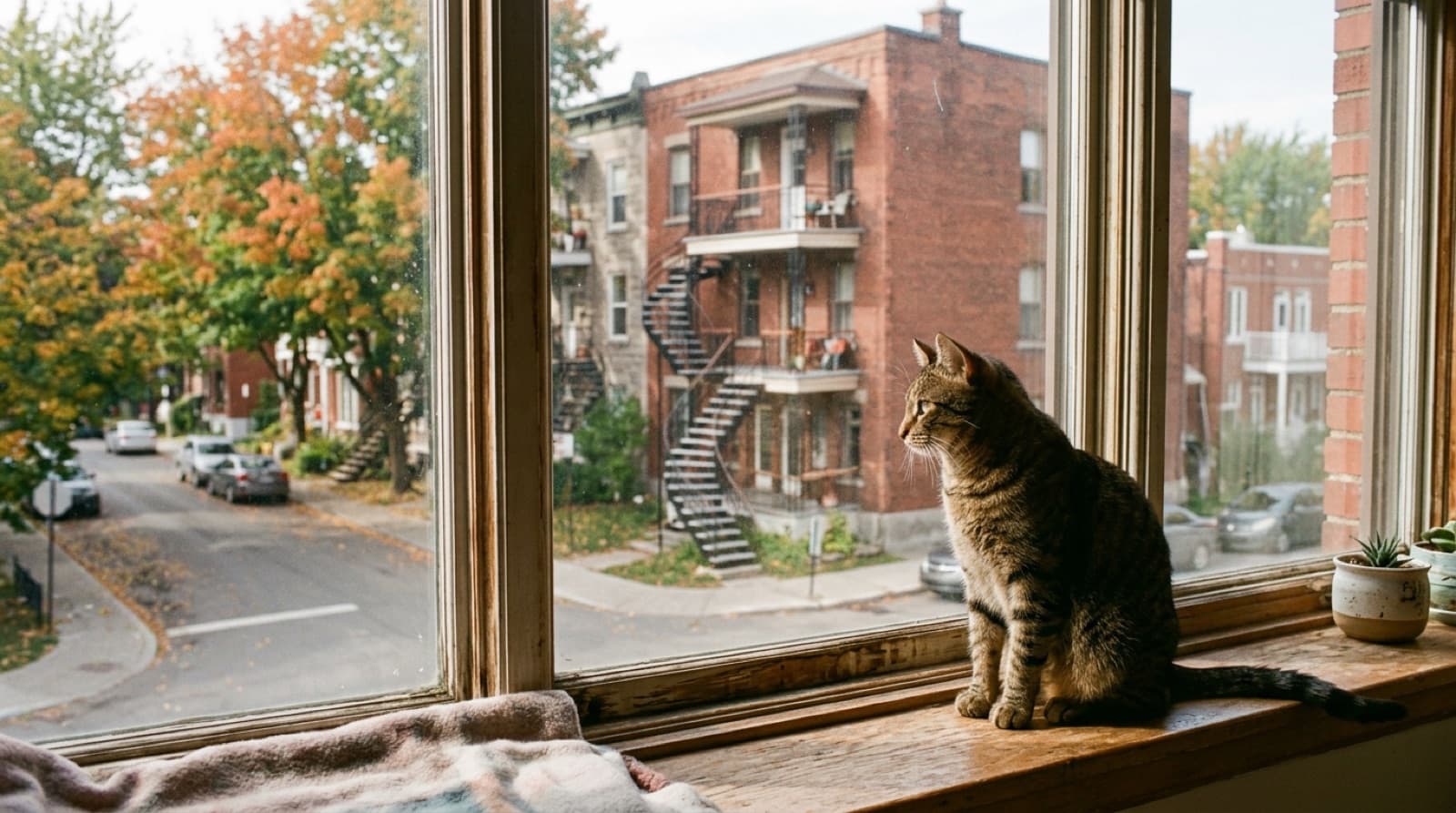
Montreal is a foster city, and that is good news
The thing that surprises first-time adopters here is how few cats are in a building you can walk into. The Montreal SPCA was founded in 1869 and runs a full adoption program, and it is the exception. Beyond it, many of the city's cats are with small foster-based groups such as Chatons Orphelins Montréal and A.B.C.'S Rescue. Regional shelters within driving distance list cats too, including Proanima across the Montérégie and the SPCA Laurentides-Labelle north of the city.
That fragmentation is annoying to search and excellent to adopt from. A cat in foster care has been living in a home for weeks or months, which means somebody can tell you what it is actually like at 6 a.m. You lose the convenience of one big list, which is what browsing every Montreal rescue in one place is for. You gain a description written by someone who has been woken up by the cat.
Adopting in French, as an anglophone
This is the practical Montreal thing nobody tells you. The SPCA works in both languages and most smaller rescues will switch to English if you ask, but listings and application forms are frequently French-only, and a foster call may open in French. None of that should stop you. Say at first contact that you are more comfortable in English, run the forms through a browser translation, and ask for the adoption contract in a language you can actually read before signing. If you would rather do the whole thing in French, we publish this page in French as well.
Moving season, and what actually changed
Quebec residential leases have historically ended on 30 June, which is why so many Montreal moves land on the same July weekend, and why moving season became shorthand for pet abandonment here. Moving season still drives a real surge, and the SPCA says so publicly every June. What has changed is the framing. Shelters now stress that surrenders are spreading across the whole year, and they name the cost of living and the shortage of rentals that accept animals as the drivers. Radio-Canada reported the SPCA taking in roughly 400 animals a year from families who simply could not find pet-friendly housing.
For you that means two things. There is no single best month to look, so adopt when you are ready instead of waiting for July. And if you are the one moving, plan the cat's move deliberately: a carrier, a closed room at both ends, and updated microchip details the same week. Most moving-day losses are ordinary accidents.
The process, step by step
- 1
Sort out the lease before anything else
Most Montreal households rent, and many of us live in a plex or a walk-up with no yard. That is genuinely fine for a cat, and it is worth saying plainly because people talk themselves out of adopting over it. The lease is what matters. Get your landlord's permission in writing before you apply anywhere, because every rescue will ask. Quebec shelters name the shortage of pet-friendly rentals as one of the main reasons cats get surrendered, so this is the step they care most about.
- 2
Decide between a kitten pair and a settled adult
Montreal rescues will tell you kittens do better in pairs. They wear each other out, they learn bite inhibition from each other, and two kittens are usually less destructive in an apartment than one bored kitten alone all day. Several local rescues bond littermates and place them together for that reason, so a listed pair is a deliberate choice and not an upsell. An adult cat is already the personality you meet, which is a real advantage when you are matching a cat to a small space. Some adults would also much rather reign alone, so ask.
- 3
Search across rescues instead of one at a time
Montreal cat rescue is fragmented. The Montreal SPCA is the large, well-known option, but many of the city's cats sit with small foster-based groups that each run their own site and their own waiting list. Browsing adoptable Montreal cats in one place saves a great deal of tab-juggling, and it surfaces the small rescues you would not have thought to check. Set an alert if you are after something specific, because good matches move quickly.
- 4
Apply, and answer honestly
Expect a form covering your home, who lives there, other pets, and whether the cat will live indoors. Many Montreal cat rescues require indoor-only placement and say so up front. Some ask for a reference or a short call. None of this is a test you pass or fail. A foster who has lived with the cat for two months is trying to work out whether your home is the one where it stops hiding, and an honest answer helps them more than an impressive one.
- 5
Meet the cat where it lives
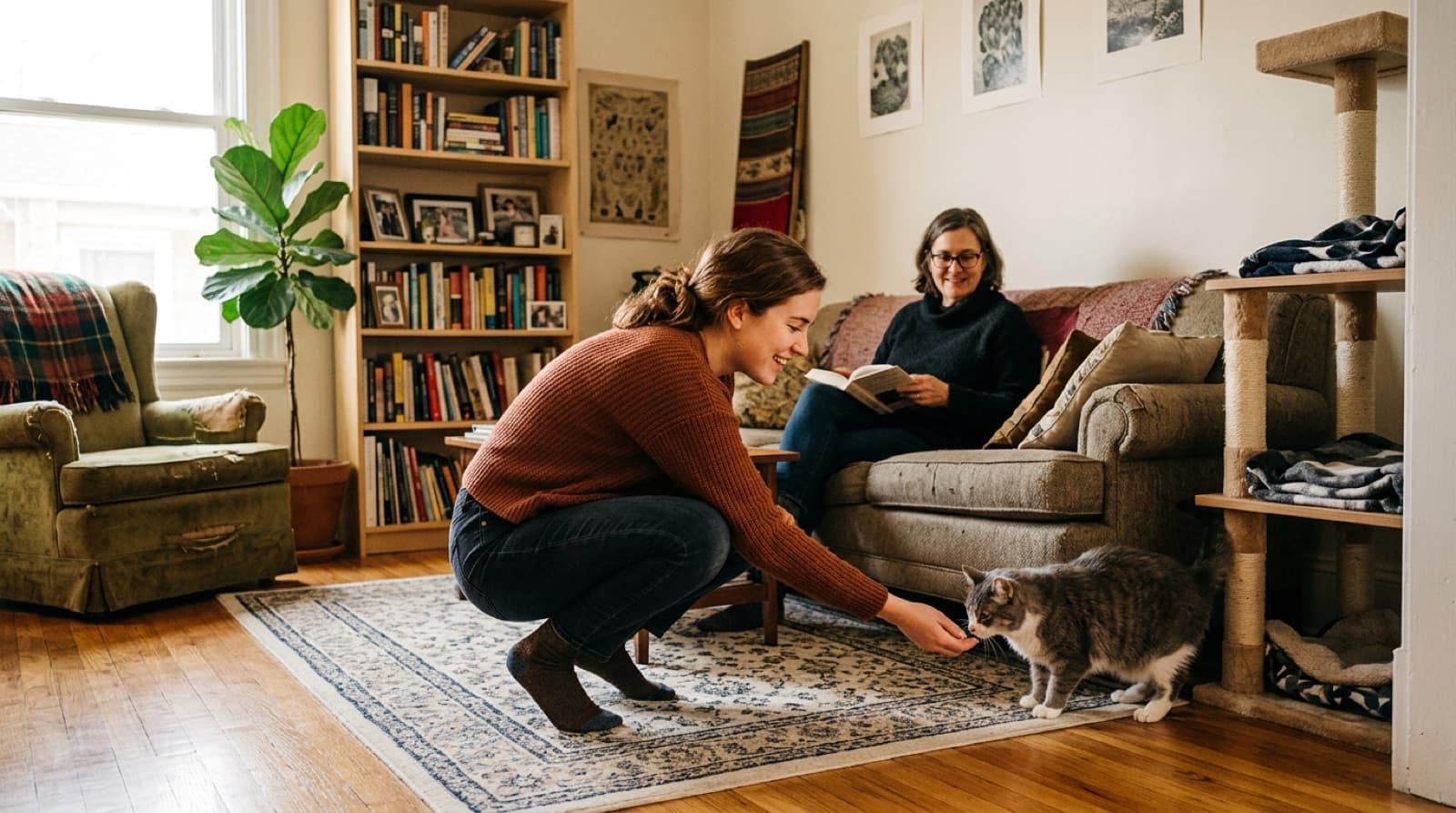
Because so much of Montreal rescue is foster-based, you will often meet a cat in someone's living room instead of a shelter room. Take the opportunity. The foster can tell you whether it sleeps on your head, how it handled the vacuum, whether it hid for a week when it arrived, and what it does around children or a resident dog. That is far richer than a cage-front card, and it is the best predictor of how your first month will go.
- 6
Pay the fee and read the contract
The fee covers work already done, not the cat itself. Expect spay or neuter, core vaccines, deworming, and a microchip to be included, which is why adopting costs a fraction of arranging that yourself. Read the return clause before you sign. A reputable rescue wants the cat back if it ever does not work, instead of seeing it resold or surrendered elsewhere, and that clause protects the cat for its whole life.
- 7
Give it a small room and a lot of patience
Set up one quiet room with litter, food, water, and somewhere to hide, and let the cat stay there before it gets the run of the apartment. Almost everyone opens that door too early. The rough pattern is three days of overwhelm, three weeks of settling, and three months of finally being itself. A cat that spends four days under the bed is not a mistake. It is a cat doing what cats do.
What the fee covers
Adoption fees differ by rescue and by cat, with kittens at the top of the range and seniors often reduced, so treat any single figure you read online with suspicion. What is consistent is the bundle. Spay or neuter, core vaccines, deworming and a microchip are standard inclusions, and paying for that work separately at a clinic would come to considerably more than the fee itself.
Plan for the ongoing costs, because those are the real commitment. Food, litter, annual vet care, and a cushion for the year something goes wrong. A domestic shorthair commonly lives twelve to eighteen years, so this is a budget line that outlasts most apartments you will live in.
One thing Quebec does differently
Since 2015, animals in Quebec are no longer classified simply as property. Article 898.1 of the Code civil du Québec describes them as sentient beings with biological needs, and the Loi sur le bien-être et la sécurité de l'animal sets the welfare standard. It rarely comes up at the moment you adopt, but it is the backdrop to how rescues here write their contracts and why the return clause is taken seriously.
Browse adoptable cats in Montreal
Montreal rescue is spread across the SPCA and a scatter of small foster groups. This is all of them in one list, so you are not checking each rescue’s own site by hand.
See Available Cats →Montreal Cat Adoption FAQ
Tap a question to expand