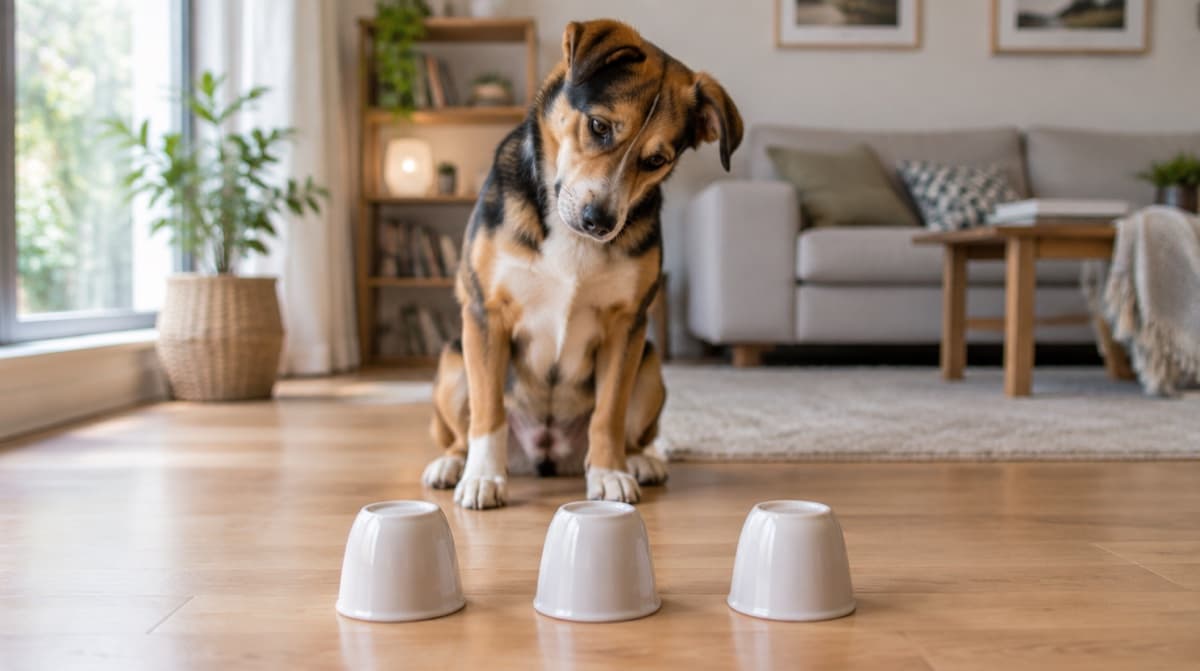
Dog IQ Test
6 simple tasks you run at home, about ten minutes, and an honest read of what the score means. You will need a towel, three cups and some treats.
The towel
Do this first
Let your dog see you, then gently drape a towel over their head and shoulders. Do not hold it down.
How long until they get out from under it?
What this task measures: Problem-solving under mild frustration. A dog that waits is often calm or trusting rather than slow — some dogs simply assume you will fix it.
What this test actually measures
Three different things, which popular dog IQ tests tend to blend into one number. Problem-solving is the towel and the treat under the sofa: what your dog does when the obvious approach fails. Memory is the cups and the moved furniture. Reading people is the pointing task and how quickly a new cue sticks.
Most dogs are strong at one and indifferent to another, which is why the result breaks the score down by task rather than handing you a single verdict. A dog that aces the cups and ignores your pointing finger is a different animal to live with than one that does the reverse — and neither is smarter.
The last task, learning a new cue, is the one closest to what published breed intelligence rankings measure. Those rankings score obedience and working intelligence: how few repetitions a breed needs, and how reliably it responds to a command it already knows. They were never intended to rank problem-solving, and the breeds at the bottom are disproportionately the ones bred to work away from people and make their own decisions.
Before you read anything into a low score
Check the boring explanations first. An older dog, fading eyesight or hearing, a treat your dog does not rate, a hot day, or a dog that simply trusts you to sort the towel out. All of those move the score more than intelligence does.
The one result worth acting on is a change. If a dog that used to solve these easily now cannot, or seems confused in familiar rooms, that is worth raising with your vet rather than repeating the test.
Frequently asked questions
Tap a question to expand
How do I test my dog's IQ at home?▼
Is a dog IQ test accurate?▼
What is the smartest dog breed?▼
My dog scored low. Should I worry?▼
Does a smarter dog make a better pet?▼
How often can I run the test?▼
What dog breed am I?
The personality quiz, if you want the fun one rather than the tasks.
How much exercise does my dog need?
A high scorer with nothing to do is how furniture gets eaten.
Should I get a second dog?
An honest check, for anyone whose clever dog seems bored.
Dogs for adoption in Canada
Rescue dogs from shelters and foster networks across the country.