The short version
Bernese Mountain Dogs are rare in Calgary rescues. Demand is high and the lifespan is short, so few adult Berners enter the rescue system. The breed-specific path is BMDCC Rescue Canada (a 6 to 18 month wait). The local path is alerts on LocalPetFinder and Petfinder, plus relationships with Calgary Humane Society, AARCS, BARCS, Pawsitive Match, and ARF Alberta. Adoption fees run $400 to $700 at general rescues, $500 to $1,000 plus through BMDCC, versus $3,000 to $5,000 from a breeder. Most rescue Berners are 2 to 8 year old adults, often surrendered for cancer cost, hip surgery, or owner life changes. Puppies are almost never available. This guide walks through every legitimate path and how to compete for a placement.
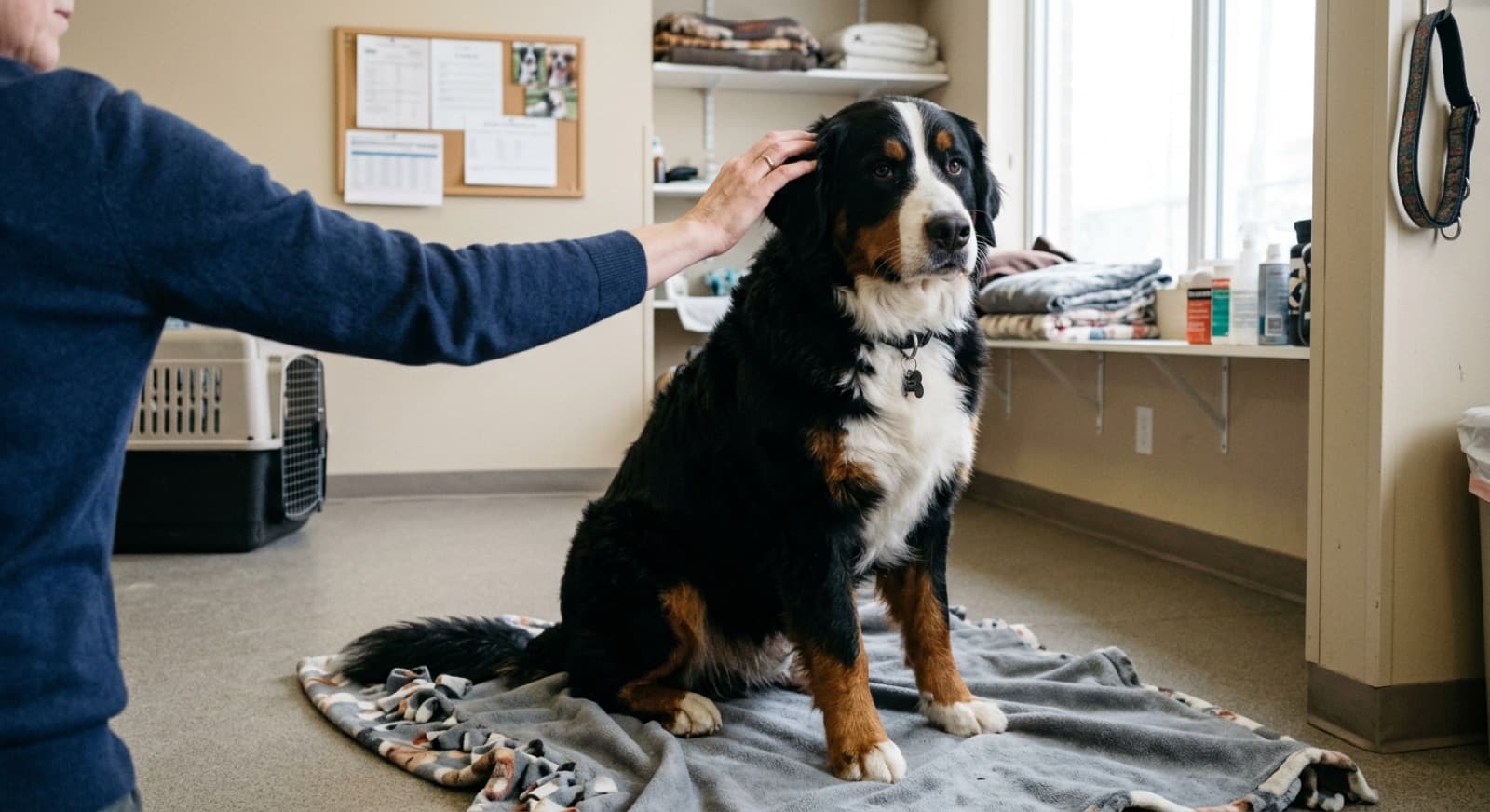
Why Berners Are Rare in Calgary Rescues
Two forces keep Bernese Mountain Dogs out of the local rescue pipeline. The AKC breed profile lists a 7 to 10 year lifespan and a strong cancer predisposition, and that combination is the whole story. Understanding both helps set realistic expectations.
Demand outpaces supply
Berners are famous, photogenic, gentle, and family-bonded. Every Calgary rescue we work with reports the same pattern: a Berner listing draws 50 to 200 applications within 48 hours. Most are placed before the listing trends on social media. If you are not on alerts and ready to apply the same day, the dog is gone before you see it.
Short lifespan limits the surrender window
Berners live 7 to 10 years on average. About half develop cancer by age 10, and histiocytic sarcoma alone accounts for roughly 25% of breed deaths. Many families who might otherwise surrender a senior Berner instead make end-of-life decisions with their vet. The result: most Berner surrenders are 4 to 8 year old adults whose owners face cancer treatment cost, surgery cost, or a major life change. Older dogs and puppies almost never enter the rescue system.
Breeder pipeline is small in Alberta
CKC-registered Berner breeders in Alberta produce small litters (4 to 7 puppies typical) and most run 1 to 2 year waitlists. That limits the total Alberta Berner population, which limits the surrender pool. Unlike Labs or Shepherds where rescue inventory is steady, Berner rescue inventory is event-driven: a divorce, a cancer diagnosis, a senior owner moving to care. You cannot plan around when a Berner will come up.
BMDCC Rescue Canada (The Breed-Specific Path)
BMDCC Rescue Canada is the rescue arm of the Bernese Mountain Dog Club of Canada. The breed parent club in the U.S. is the Bernese Mountain Dog Club of America, which publishes the health and temperament standards Canadian breeders also follow. BMDCC is the only national breed-specific rescue and the most reliable long-term path to a rescue Berner in Alberta.
How BMDCC Rescue works
- National with Alberta volunteers. The org is Canada-wide. Calgary and Edmonton have volunteer fosters who handle Alberta placements.
- Application via the BMDCC website. Submit the rescue application form. There is no phone-first path.
- Waitlist of 6 to 18 months. Approved applicants wait for a suitable match. The wait is breed reality, not org dysfunction.
- Thorough vetting. Vet reference, two personal references, home check (in-person or video), phone interview about your readiness for breed health costs.
- Adoption fee $500 to $1,000 plus. Covers spay or neuter, vaccinations, microchip, and breed-specific medical workup (hip, elbow, cardiac screen where applicable).
- Mostly 2 to 7 year old adults. BMDCC Rescue places adults with documented temperament from experienced fosters. Puppies are very rare.
- Geographic flexibility helps. If you are willing to drive to Edmonton, Red Deer, or even Saskatchewan or BC for the right dog, your odds improve.
Pre-build your application. Vet reference letter, two personal references with email and phone, photos of your home and yard, a written daycare and walker plan, and a one-page summary of why you want a Berner specifically. BMDCC volunteers screen for readiness, not just willingness. Applicants who treat the form casually get passed over.
Calgary General Rescues That Occasionally See Berners
Five Calgary-area rescues report seeing a Berner or Berner mix once or twice a year. Set alerts on all of them and check listings daily. We also cover this from the financial side in our buy or adopt Bernese comparison.
| Rescue | Typical Berner Frequency | Adoption Fee Range | Notes |
|---|---|---|---|
| Calgary Humane Society | 1 to 3 per year | $135 to $400 | Lowest fees in Calgary. Berners go in hours, so first-day applications win. |
| AARCS | 1 to 2 per year | $400 to $700 | Foster-based with detailed temperament reports. Foster-to-adopt available. |
| BARCS Rescue | Occasional Berner mixes | $400 to $600 | Mostly Berner mixes (Bernedoodle, Berner-Lab cross). Pure Berners rare. |
| Pawsitive Match | Occasional | $500 to $700 | Strong foster network. Foster-to-adopt option works well for large breeds. |
| ARF Alberta | Rare | $400 to $650 | Smaller intake but occasional rural surrenders, including livestock-guard-cross Berners. |
Two regional rescues are also worth tracking: Cochrane Humane (30 minutes northwest, occasional rural surrenders) and Heaven Can Wait Rescue Foundation (mostly cats but does take large breeds). Calgary Animal Services (the municipal shelter) occasionally has a Berner as a stray or owner surrender, but adopting through them requires being in the shelter the day the dog is listed. Their licence-and-impound process moves fast. Set a daily Google Alert for “Bernese Calgary Animal Services” if you are flexible on adopting from the city pound.
Where Else to Look (And Where Not To)
Petfinder Canada
Aggregates rescue listings from launched cities across Canada. Set alerts for “Bernese Mountain Dog” and “Bernese mix” with a 500 km radius from Calgary. Many adopters fly or drive from Calgary to Edmonton, Lethbridge, or Saskatoon for the right Berner.
Breed-club rehoming networks
CKC-registered breeders sometimes coordinate private rehoming when one of their puppies is returned years later. These dogs never hit public listings. Build a relationship with an Alberta BMDCC member breeder (even if you do not buy a puppy) and ask to be on their rehoming contact list.
Kijiji and Facebook Marketplace (with caution)
Real owner rehoming happens on Kijiji and Facebook Marketplace. It is also where puppy mills and backyard breeders dump unsellable puppies. Red flags: prices under $2,000 for an unregistered puppy, no parent health testing (OFA hip, elbow, cardiac), multiple litters from the same seller, willingness to meet in parking lots, no questions about your home. Real owner rehoming is fine if you can see vet records, original breeder paperwork, and meet at the dog's home. Skip anything that feels off.
LocalPetFinder alerts
We aggregate listings from 15+ Calgary rescues regularly. Set an email alert for “Bernese Mountain Dog” in Calgary and you will see new listings before they trend on social. Most Berner placements still go fast, but a 2 hour head start can be the difference.
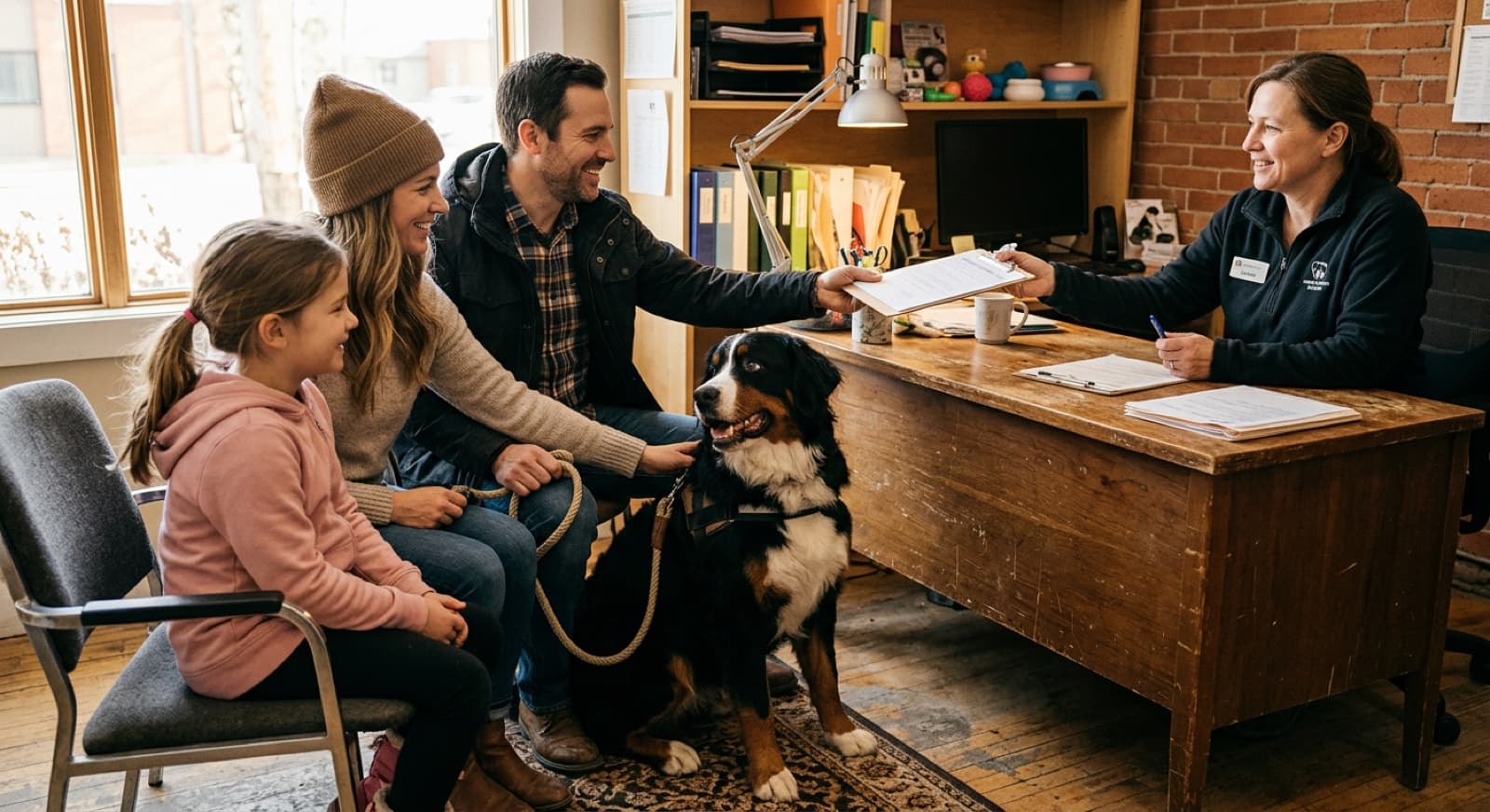
Adoption Fees vs Breeder Pricing
Berners are one of the most expensive purebreds in Canada. Rescue is roughly 1/5 the upfront cost of a breeder puppy, with the additional benefit of known adult temperament and existing medical workup. Lifetime cost of ownership is the bigger number to plan around (covered in our Berner cost of ownership guide).
| Source | Price Range | What Is Included |
|---|---|---|
| Calgary Humane Society | $135 to $400 | Spay or neuter, core vaccines, microchip, behaviour notes |
| AARCS / BARCS / Pawsitive / ARF | $400 to $700 | Spay or neuter, vaccines, microchip, foster temperament report |
| BMDCC Rescue Canada | $500 to $1,000+ | Spay or neuter, vaccines, microchip, hip or cardiac screen, breed-specific medical workup |
| CKC breeder puppy | $3,000 to $5,000 | First vaccines, deworming, microchip, OFA-tested parents, contract, 1 to 2 year waitlist |
Common Surrender Reasons
Knowing why Berners are surrendered helps you anticipate what the dog you adopt may be carrying. Five patterns dominate.
1. Cancer cost overwhelm
Histiocytic sarcoma is the leading Berner killer and costs $8,000 to $20,000 to treat with no cure. Many families surrender mid-treatment when funds run out. These dogs come to rescue with partial medical history and uncertain prognosis. Some live another 2 to 3 good years on palliative care. Hard but real.
2. Hip or elbow dysplasia
Total hip replacement runs $8,000 to $12,000 per hip at Calgary specialty centres. Families who cannot fund surgery surrender the dog. Many of these Berners do well on conservative management (joint supplements, weight control, modified exercise) and live full lives in a financially prepared adopter's home.
3. Owner downsizing or passing
Berners are a favourite of retirees. When the owner moves to assisted living or passes away, the dog needs a new home. These are often the healthiest rescue Berners (well-loved, well-fed, well-vetted) and the most adoptable. They also come pre-loaded with grief and may need 8 to 12 weeks to settle.
4. Allergy mismatch
Family adds a Berner, a kid or partner develops dog allergies, dog gets surrendered. The breed sheds heavily and is on no hypoallergenic list. These dogs are usually 1 to 3 years old and otherwise excellent. If you have no allergies, this is one of the most adoptable Berner patterns.
5. Shedding and drool shock
First-time large-breed owners underestimate the twice-yearly coat blow (fur in piles, on every surface, in your food) and moderate drool. Surrender within 6 to 18 months is common. The dogs are usually young, healthy, and well-socialized. If you can accept a vacuum-every-day life, these are excellent placements. See our Berner grooming and shedding guide for the day-to-day reality.
What to Expect With a Rescue Berner
The 3-3-3 rule applies. The first 3 days, 3 weeks, and 3 months follow a predictable arc for most rescue dogs. Berners tend to be on the slower end because they are deeply family-bonded and grieve previous homes.
First 3 days: decompression
Expect a quiet, withdrawn, or sleepy dog. Some Berners refuse food for 24 to 48 hours. Some hide behind couches or under beds. Resist the urge to introduce them to every friend or take them on long walks. Short potty trips, calm presence, and a quiet bed. House-soiling is common.
Weeks 1 to 3: routine learning
The dog starts to learn your routine: when you wake, when you walk, when you feed. Real personality starts to show. Some Berners get more confident; some get more clingy as bond forms. Start basic training with force-free methods (Berners shut down with aversive handling). Begin short alone-time conditioning if you work outside the home.
Months 1 to 3: full settling
By month 3 the dog is fully your dog. Real temperament, real quirks, real bond. Issues that were hidden during decompression (resource guarding, leash reactivity, separation anxiety) may surface here. This is when working with a Calgary force-free trainer is highest-ROI.
Foster-to-adopt as a safety net
AARCS, Pawsitive Match, and BMDCC Rescue all offer foster-to-adopt. You take the dog home for 2 to 4 weeks before finalizing the adoption. If it is not a fit, the dog returns to foster with no fault. For a large breed where mistakes are costly, foster-to-adopt is the smartest path when offered.
Application Tips for a Rare Breed
When supply is tight and demand is high, application quality wins placements. Six things that move you up the list.
1. Set email alerts on LocalPetFinder, Petfinder, and the rescues directly.
A Berner listing can be filled in 4 to 12 hours. Alerts cut the gap between listing and your application from days to minutes.
2. Pre-write your application.
Have a one-page document ready: vet reference, two personal references, photos of home and yard, work-from-home or daycare plan, why you want a Berner specifically. Paste and submit within an hour of the listing.
3. Get a vet reference letter in advance.
If you have owned a dog before, ask your vet for a one-paragraph reference letter on clinic letterhead. Attach to every application. Rescues weight this heavily.
4. Be flexible on age.
Most Berner surrenders are 4 to 8 year olds. Applicants demanding a 1 to 2 year old wait 5x longer. A 6 year old Berner is still 1 to 4 good years of family life and adopts within days.
5. Be flexible on health status.
Many rescue Berners have managed hip dysplasia, a benign mass, or controlled cardiac history. Applicants open to a dog with known conditions get prioritized.
6. Volunteer or foster for a Calgary rescue.
Known volunteers get first call when a rare breed comes up. CHS, AARCS, and Pawsitive Match all run volunteer-priority placement informally for hard-to-find breeds.
Set a Berner alert in Calgary
Live listings from 15+ Calgary rescues, refreshed regularly. Bernese Mountain Dogs are uncommon; Bernedoodles and Berner mixes show up more often. Set an alert and you will see new listings before they trend.
See Available Bernese Mountain Dogs →Frequently Asked Questions
Why are Bernese Mountain Dogs so rare in Calgary rescues?
Two reasons. Demand is very high, so any Berner that comes up is placed within days. Lifespan is short (7 to 10 years) and cancer takes about half of Berners by age 10, so many owners make end-of-life decisions instead of surrendering. Most Calgary rescues see one to three Berners a year. Calgary Humane Society, AARCS, BARCS, Pawsitive Match, and ARF Alberta all occasionally take in a Berner, but never on a predictable schedule. BMDCC Rescue Canada is the breed-specific path and runs a waitlist.
How do I apply to BMDCC Rescue Canada from Calgary?
BMDCC Rescue Canada is the rescue arm of the Bernese Mountain Dog Club of Canada. It is national with an Alberta volunteer network. Apply through the BMDCC website form. Expect a 6 to 18 month wait. Vetting is thorough: references, home check, vet history if applicable, phone interview. Fees run $500 to $1,000 plus. Most placements are 2 to 7 year old adults. Puppies are extremely rare.
What are typical Berner adoption fees in Calgary?
General rescues run $400 to $700. Calgary Humane Society $135 to $400. BMDCC Rescue Canada $500 to $1,000 plus. Breeder pricing in Alberta runs $3,000 to $5,000 per puppy with a 1 to 2 year waitlist. Rescue fees cover spay or neuter, vaccinations, microchip, often dental work or hip evaluation. The medical workup is usually further along than a breeder puppy.
Why do owners surrender Bernese Mountain Dogs?
Five common patterns. Cancer cost overwhelm (histiocytic sarcoma runs $8,000 to $20,000). Hip or elbow surgery ($8,000 to $12,000 per hip). Owner downsizing or passing (retirees commonly own Berners). Allergy mismatch (Berners shed heavily). Shedding shock (new owners underestimate the twice-yearly coat blow). Most surrenders are 4 to 8 year old adults, not puppies.
Can I find Bernese Mountain Dog puppies for adoption in Calgary?
Almost never. Berner puppies under one year are rare in any Canadian rescue. When they appear, they are usually breeder returns and go to the top of the BMDCC waitlist. Most rescue Berners are 2 to 8 year old adults. For a puppy specifically you are looking at a CKC breeder waitlist of 1 to 2 years and $3,000 to $5,000. Many adopters end up with an adult Berner and never regret it.
Should I look on Kijiji for a Bernese Mountain Dog?
With strong caution. Kijiji Berner listings are mostly puppy mills, backyard breeders, and occasionally a real owner rehoming. Red flags: prices under $2,000 for an unregistered puppy, no parent health testing (OFA hip, elbow, cardiac), multiple litters from same seller, parking-lot meetups. Real BMDCC breeders never sell through Kijiji. Real owner rehoming is fine if you can see vet records and meet at the dog's home.
What should I expect with a rescue Bernese Mountain Dog?
A 4 to 12 week transition following the 3-3-3 rule. 3 days of decompression, 3 weeks of routine learning, 3 months of full settling. Berners are family-bonded and grieve previous homes. Expect low appetite, occasional house-soiling, and clinginess in the first month. Foster-to-adopt through AARCS, Pawsitive Match, or BMDCC is the best way to confirm fit before committing.
How do I improve my chances of adopting a rare-breed Berner?
Set email alerts on LocalPetFinder and Petfinder. Apply to BMDCC Rescue Canada early. Pre-build a strong application: vet reference, two personal references, photos of home and yard, daycare plan. Be flexible on age (4 to 8 year olds adopt faster than puppies). Be flexible on health (consider managed dysplasia or benign masses). Volunteer or foster for a Calgary rescue to build relationships. Known volunteers often get first call.
More Bernese Mountain Dog guides
Is a Berner Right for You? →
Honest 12-question self-assessment for prospective Berner adopters in Calgary. Climate, lifespan, cost, and lifestyle fit.
Berner Health Issues →
Hip and elbow dysplasia, bloat, vWD, degenerative myelopathy, and the breed-specific health profile every adopter should know.
Berner Cancer and Lifespan →
Histiocytic sarcoma, the 7 to 10 year lifespan, Calgary oncology costs, and how to plan for the short arc.
Berner Cost of Ownership →
Lifetime cost breakdown, pet insurance pricing, food and grooming budgets, and the real Calgary numbers.
New dog? Start with these care guides
Everything a new adopter needs to set up a safe, happy home.