The short answer
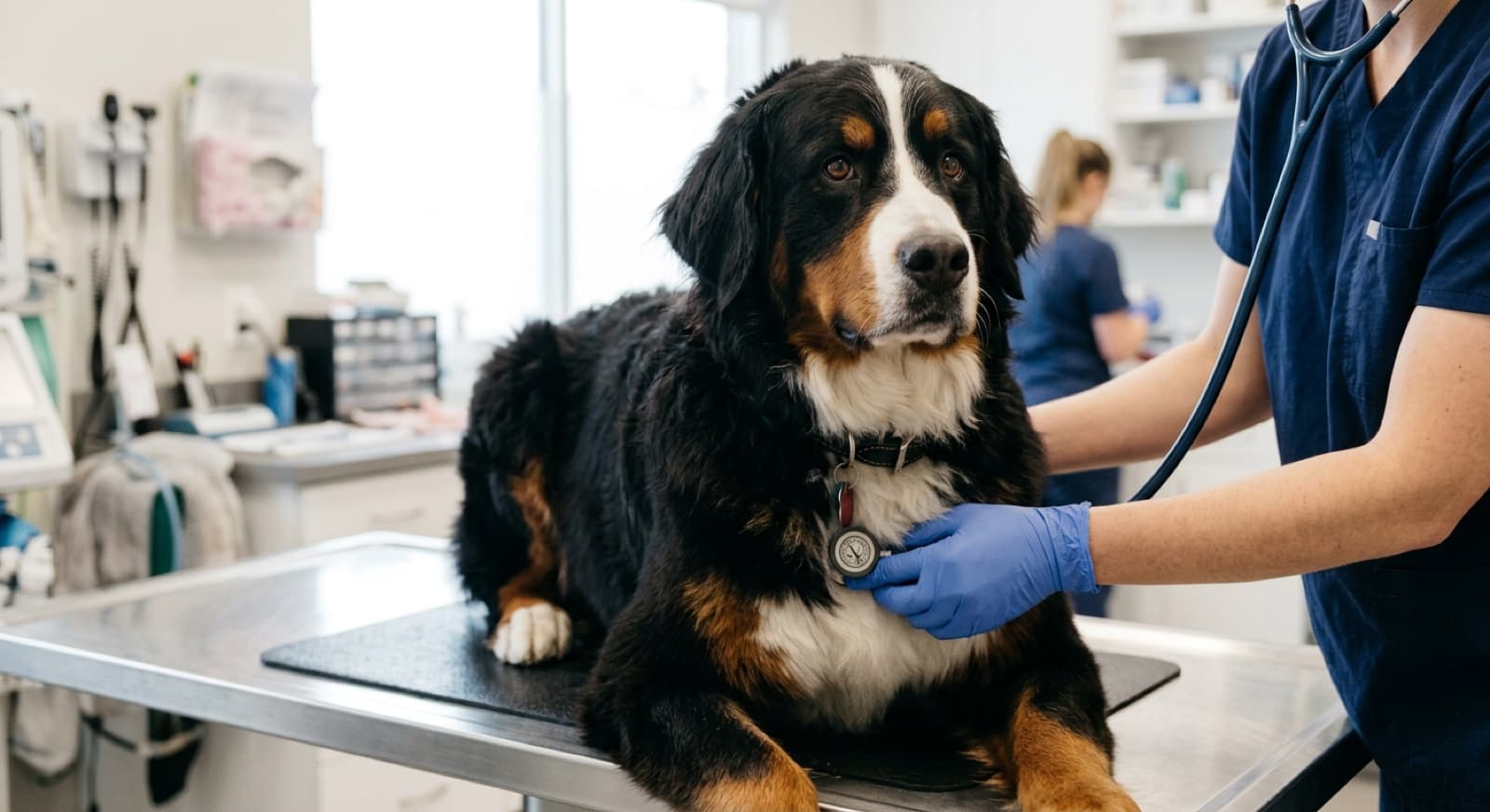
Bernese Mountain Dogs are a beautiful breed with a hard medical profile. Cancer is the leading cause of death in the breed, with histiocytic sarcoma (HS) as the breed-defining one. Cancer rates and lifespan deserve a deeper look, so we cover those in a separate Calgary deep-dive. Beyond cancer, plan around hip dysplasia, elbow dysplasia, bloat and GDV (with preventive gastropexy as a discussion point with your vet), von Willebrand disease, degenerative myelopathy, subvalvular aortic stenosis, hypothyroidism, and heat intolerance. Calgary winters suit the breed. Calgary summers do not. Pet insurance enrolled as a puppy is worth the conversation. Every number, treatment plan, and medication choice in this guide is a starting point for a vet conversation, not a substitute for one.
Cancer drives the Berner lifespan conversation
Cancer is the leading cause of death in the breed, with histiocytic sarcoma documented as the breed-defining cancer (BMDCA, Berner-Garde). Median Berner lifespan sits well below most large breeds. This guide covers the full health picture. For the deeper read on cancer rates, lifespan, and how Calgary owners plan around them, see our separate Bernese Mountain Dog Cancer and Lifespan Calgary deep-dive.
Histiocytic sarcoma: the breed-defining cancer
Histiocytic sarcoma (HS) is an aggressive cancer of histiocytes, a type of immune cell. HS is the breed-defining cancer in Bernese Mountain Dogs. Breed-club and registry sources (BMDCA, Berner-Garde foundation) document that Berners develop HS at far higher rates than other breeds, and that cancer overall is the leading driver of mortality in the breed.
Most cases appear in middle-aged adults. HS can show up as a lameness that does not resolve, sudden weight loss, lethargy, anemia, or a soft tissue mass. Diagnosis uses bloodwork, X-rays, ultrasound, and a biopsy or fine-needle aspirate read by a clinical pathologist.
Treatment generally combines surgery with chemotherapy at a Calgary specialty oncology centre. Any chemotherapy protocol, drug choice, prognosis, or survival estimate has to come from a board-certified veterinary oncologist who knows your individual dog. Localized HS caught early generally has better outcomes than disseminated disease, but the only honest number is the one your oncologist gives you after staging.
Because HS drives so much of the breed risk, the deeper read lives in our cancer and lifespan article. See Bernese Mountain Dog Cancer and Lifespan Calgary for the full breakdown, including cancer planning, financial planning, and end-of-life conversations.
Other cancers: lymphoma, mast cell, osteosarcoma
HS is not the only cancer that hits the breed. Lymphoma, mast cell tumours, and osteosarcoma all show up at meaningful rates.
Lymphoma is a cancer of the lymph system. It shows up as swollen lymph nodes under the jaw, in front of the shoulders, or behind the knees. Treatment is typically a multi-agent chemotherapy protocol delivered through a Calgary specialty oncology service. Specific drug protocols and prognosis estimates belong to your veterinary oncologist.
Mast cell tumours are skin lumps that range from low-grade and surgically curable to aggressive and metastatic. Any new skin lump on a Berner over 4 years old should be aspirated by your Calgary vet. The aspirate is a low-cost step that rules out a mast cell tumour before behaviour like spread, recurrence, or systemic illness develops.
Osteosarcoma is a bone cancer that shows up as lameness in a leg, usually a front leg, that does not resolve with rest. It is painful and aggressive. Treatment generally involves amputation combined with chemotherapy. Any treatment plan and prognosis discussion has to come from a veterinary oncologist after staging, not from this article.
Annual exams, prompt lump aspirates, and yearly bloodwork from age 4 onward help catch many cancers earlier. Earlier detection generally improves the options your vet can offer.
Hip dysplasia: high in the breed
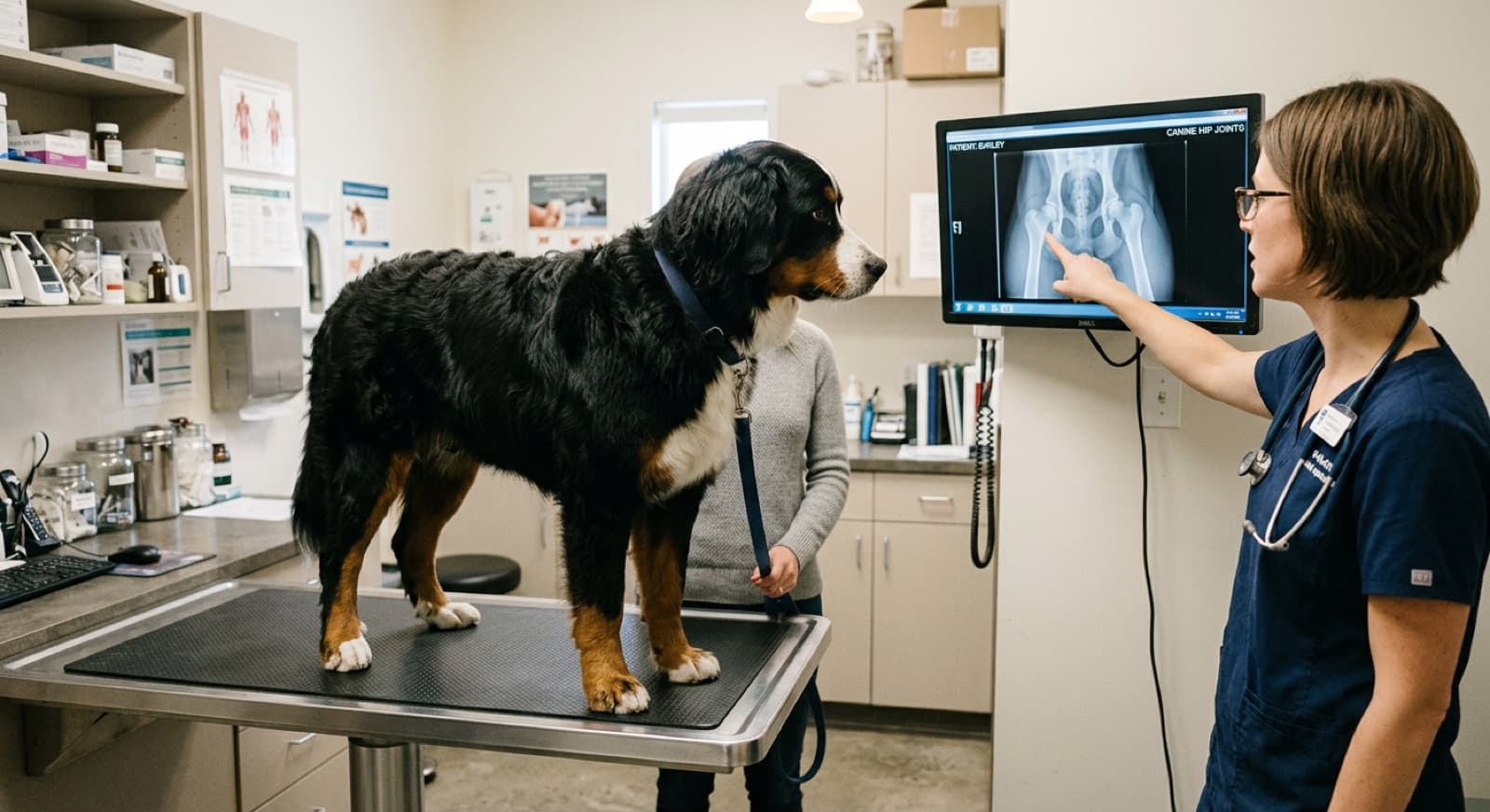
The Orthopedic Foundation for Animals (OFA) lists Bernese Mountain Dogs among the higher-risk breeds for hip dysplasia (see ofa.org breed statistics). Hip dysplasia is a malformed hip joint that leads to arthritis.
Symptoms: bunny-hopping when running, reluctance to climb stairs or jump, stiffness after rest, and a hind-end sway. Diagnosis: a vet exam and X-rays. Calgary screening is generally a standard X-ray plus OFA submission, with PennHIP available as an earlier-age option. Ask your Calgary vet for a written estimate; pricing varies by clinic.
Management:
- Weight control. The single biggest lever you control. Every extra kilo loads the hip joint more.
- Controlled exercise. Swimming and leash walks help. Repetitive jumping does not.
- Joint supplements (such as glucosamine, chondroitin, and omega-3) and any pain medication should be selected and dosed by your vet for the individual dog. Some NSAIDs and over-the-counter products are not safe for dogs.
- Surgery for severe cases. Options include FHO (femoral head ostectomy), total hip replacement (THR), and triple pelvic osteotomy in young dogs. Cost varies by surgeon and centre. Get a written estimate from a Calgary specialty surgery centre.
Ethical breeders OFA hip-screen both parents and only breed dogs rated Fair, Good, or Excellent.
Elbow dysplasia: similar profile to hips
OFA elbow statistics put Bernese Mountain Dogs on a similar high-risk order to hips (ofa.org breed statistics). Elbow dysplasia is a group of developmental conditions including fragmented coronoid process, ununited anconeal process, and osteochondritis dissecans.
Signs appear between 4 and 10 months of age as a front-limb lameness that often shifts from one leg to the other. Diagnosis uses X-rays and sometimes CT or arthroscopy at a Calgary specialty surgery centre. Untreated elbow dysplasia leads to lifelong arthritis.
Treatment ranges from medical management (weight control, controlled exercise, vet-directed pain control and supplements) to arthroscopic surgery. Calgary surgical pricing is directional and varies by surgeon, centre, and disease severity; ask for a written estimate. Ethical breeders OFA elbow-screen both parents alongside hip screening.
Bloat and GDV: the gastropexy option
Bernese Mountain Dogs are a deep-chested giant breed, which puts them in the high-risk group for bloat and gastric dilatation-volvulus (GDV). Bloat is when the stomach fills with gas. GDV is when that gas-filled stomach twists. GDV is a surgical emergency with substantial mortality even when treated quickly (AVMA bloat/GDV references).
Symptoms of bloat/GDV: unproductive retching, a distended belly, restlessness, drooling, and pale gums. Get to a Calgary 24-hour emergency veterinary clinic immediately.
Preventive gastropexy is a surgery that tacks the stomach to the body wall so it cannot twist. It does not prevent bloat. It prevents the volvulus, which is the part that kills. Calgary pricing for a standalone elective gastropexy versus one bundled with spay or neuter varies by clinic and surgeon. Ask your Calgary vet and a specialty surgery centre for written estimates.
Risk reduction at home:
- Feed two or three smaller meals instead of one large meal.
- Avoid heavy exercise for an hour before and after meals.
- Use a slow-feeder bowl if the dog inhales food.
- Skip elevated bowls. Evidence suggests they may increase risk in giant breeds.
Discuss gastropexy timing with your vet around 12 to 18 months of age.
Von Willebrand disease (vWD)
Von Willebrand disease (vWD) is an inherited bleeding disorder caused by low or defective von Willebrand factor, a protein needed for blood clotting. Type 1 vWD is the form most commonly described in Berners (AKC, breed-club references). A meaningful share of Berners are carriers, and a smaller share are clinically affected.
Carriers usually have no symptoms. Affected dogs can have prolonged bleeding from cuts, prolonged bleeding after surgery or dental work, frequent nosebleeds, or bleeding gums.
Diagnosis: a DNA test (Embark Vet is one common option) or a blood vWF antigen level run by your vet. Any Berner heading into surgery should have a vWD screen first.
Management: your Calgary vet selects pain control, surgical premedication, and any clotting-support drug based on the individual dog and procedure. Do not give over-the-counter human pain medications. Keep a vWD note in the dog file at every vet who treats them, and tell your veterinary dental and emergency teams up front. Ethical breeders DNA test both parents and only breed Clear-to-Carrier or Clear-to-Clear pairings.
Degenerative myelopathy (DM)
Degenerative myelopathy (DM) is a late-onset spinal cord disease that causes progressive hind-end weakness. It is often called the dog version of human ALS. DM typically appears in older Berners.
Early signs: hind-end weakness, knuckling of the back feet, dragging the toes, and difficulty rising. DM is painless but progressive, ending in hind-end paralysis. Time course varies between individual dogs.
Diagnosis: a DNA test for the SOD1 mutation (Embark is one common option) combined with ruling out other spinal conditions through imaging. There is no cure. Management focuses on physical therapy, hydrotherapy, controlled exercise, mobility carts, and supportive care from your Calgary vet and a rehab-credentialed clinician.
The DM DNA test gives three results: Clear (N/N), Carrier (N/A), and At Risk (A/A). At Risk dogs may or may not develop clinical DM. Ethical breeders DNA test parents and avoid At Risk by At Risk pairings.
Subvalvular aortic stenosis and cardiac issues
Subvalvular aortic stenosis (SAS) is the most relevant cardiac issue in Berners. It is a narrowing below the aortic valve that forces the heart to work harder. Mild SAS may be silent. Moderate to severe SAS causes exercise intolerance, fainting (syncope), and sudden death in some cases.
Diagnosis: an echocardiogram performed by a board-certified veterinary cardiologist (DACVIM-Cardiology) at a Calgary specialty centre. Pricing varies by centre and specialist; ask for a written estimate.
Mild SAS may need only annual monitoring. Moderate to severe SAS is managed by a veterinary cardiologist, who decides on any cardiac medication and activity restriction for the individual dog. Dilated cardiomyopathy (DCM) is also seen in the breed but at lower rates than in Dobermans or Great Danes.
Ethical breeders cardiac-screen breeding stock annually with an echo, not just a general-practice auscultation. Have your Berner cardiac-screened around 12 to 18 months, again at 3 to 4 years, and annually after any abnormality is found.
Hypothyroidism
Hypothyroidism is an underactive thyroid gland. It is one of the more common Berner endocrine conditions. Signs: weight gain without diet change, lethargy, cold intolerance, thinning or symmetrical hair loss, recurring skin infections, and a slow heart rate.
Diagnosis: a thyroid blood panel (free T4, total T4, TSH) at your Calgary GP vet. Treatment: hypothyroidism is generally managed long-term with a daily thyroid hormone replacement prescribed and dosed by your vet, with periodic blood-level monitoring to keep the dose right. The drug choice, dose, and monitoring schedule are your vet's call for the individual dog. Response to treatment is usually rapid and dramatic.
Hypothyroidism is highly manageable, but it often gets missed when owners assume the weight gain and lethargy are just “the breed slowing down.” A thyroid panel is worth running once a year for any Berner over age 4.
Heat intolerance and obesity: lifestyle levers
The Bernese Mountain Dog was bred for the cold Swiss Alps. Calgary winters are ideal for the breed. Calgary summers are not. Heat intolerance is a meaningful welfare and emergency issue, not just a comfort issue.
Heat rules:
- Walks before 8 AM and after 8 PM on hot days. Anything above 22°C is hot for a Berner.
- Check pavement with the back of your hand. Five seconds without discomfort is the test.
- Always carry water on summer walks.
- Air conditioning at home in July and August. Pet-safe cooling mats help.
- Watch for heatstroke: heavy panting, drooling, bright red gums, weakness, vomiting, collapse. Heatstroke is a Calgary emergency-vet visit.
Obesity compounds every other Berner condition: hip dysplasia, elbow dysplasia, bloat risk, cardiac load, and DM mobility. Target body condition score is 4 to 5 out of 9. You should feel ribs easily, see a defined waist from above, and see a tucked abdomen from the side. Most Calgary Berners run 3 to 7 lbs overweight without their owners noticing.
Practical weight management: weigh kibble on a kitchen scale, eliminate table scraps, cap treats at 10% of daily calories, and re-evaluate calorie needs at every life stage. A lean Berner outlives a chubby Berner by years.
Calgary screening table
Build your Berner screening plan around this table. Print it. Bring it to your first vet visit. Calgary specialty centres handle the items that need a board-certified specialist.
| Age | Screening | Where in Calgary |
|---|---|---|
| 8 to 16 weeks | Baseline puppy exam, deworming, vaccinations. Ask for a vWD DNA test if breeder did not provide results. | Any Calgary GP vet |
| 6 to 12 months | DNA breed-health panel (DM, vWD, drug sensitivities, parentage). PennHIP if breeder offers early hip screening. | Embark Vet (or comparable). Any Calgary GP vet for PennHIP. |
| 12 to 18 months | First cardiac echo (rule out SAS). Optional preventive gastropexy bundled with spay/neuter. OFA hip and elbow X-rays at 24 months. | Calgary specialty cardiology centre. Calgary specialty surgery centre for gastropexy. |
| 2 to 4 years | Repeat cardiac echo. Annual physical, full bloodwork, thyroid panel from age 4. Aspirate any new skin lump within 1 month. | Calgary GP vet. Cardiology referral if a murmur is heard. |
| 4 to 7 years | Annual physical, bloodwork, thyroid panel. Add abdominal ultrasound every 1 to 2 years to screen for HS and splenic masses. Aspirate any new lump. | Calgary GP vet. Calgary specialty centre for ultrasound or oncology consult. |
| 7+ years | Semi-annual senior exams. Annual chest X-ray and abdominal ultrasound. Watch for early DM signs and hind-end weakness. Cardiac echo annually if any prior abnormality. | Calgary GP vet + Calgary specialty centre. |
Calgary specialty contacts
Save these before you need them. The first time you call a Calgary cardiology or oncology centre should not be during an emergency.
- A Calgary specialty cardiology and oncology centre. Board-certified cardiology (DACVIM), oncology, internal medicine, and surgery sit under one roof in Calgary. Your GP vet will know the current referral options. This is the right path for Berner cardiac and cancer cases.
- A Calgary 24-hour emergency veterinary hospital. Calgary has multiple 24-hour emergency veterinary hospitals across the city. Pick the closest one to your neighbourhood and pre-program the phone number before you need it.
- A second specialty-medicine centre. A backup multi-specialty centre (cardiology, surgery, internal medicine) is useful for second opinions and scheduling around wait times.
- Your Calgary GP vet. The hub for annual bloodwork, thyroid panels, lump aspirates, and the dog's health record. Calgary specialty centres coordinate with the GP vet on case management.
Pet insurance providers commonly used by Calgary Berner owners include Trupanion, Pets Plus Us, Petsecure, and Embrace. Coverage caps, deductibles, reimbursement rates, and breed-specific exclusions vary; quote each on the same dog and read the policy. Enrol as a puppy. Pre-existing condition exclusions kick in for anything documented before policy start. See our pet insurance for Bernese Calgary guide for the deeper read.
Sources and further reading
This guide is editorial, not veterinary advice. Every health decision, medication choice, and dose for your individual Berner belongs with your Calgary veterinarian or board-certified specialist. The breed-risk framing draws on the sources below.
- Bernese Mountain Dog Club of America (BMDCA), breed health summary: bmdca.org
- Berner-Garde Foundation, breed-specific health database: bernergarde.org
- Orthopedic Foundation for Animals (OFA), breed statistics for hips and elbows: ofa.org
- American Kennel Club (AKC), Bernese Mountain Dog breed profile: akc.org
- American Veterinary Medical Association (AVMA), bloat and GDV owner references: avma.org
Frequently Asked Questions
Histiocytic sarcoma?
The breed-defining cancer (BMDCA, Berner-Garde). Most cases appear in middle-aged adults. Treatment generally combines surgery and chemotherapy through a Calgary specialty oncology service. Protocols and prognosis are individual; your veterinary oncologist makes the call. See our cancer and lifespan deep-dive for full planning.
Other cancers?
Lymphoma, mast cell tumours, and osteosarcoma all show up. Cancer is reported to drive roughly half of Berner deaths in breed-club surveys. Aspirate any new skin lump on a Berner over age 4. Annual bloodwork and ultrasound from age 4 onward catches more cancers earlier.
Hip dysplasia rate?
High by breed standards in the OFA database (ofa.org). Symptoms: bunny-hopping, stair reluctance, hind-end sway. Calgary X-ray and specialty surgery pricing varies by clinic and severity; ask for written estimates. Weight control is the biggest lever you control.
Elbow dysplasia rate?
High by breed standards, on a similar order to hips (OFA breed statistics). Front-limb lameness between 4 and 10 months of age. Diagnosis and surgical options sit with your vet and a Calgary specialty surgeon. Ethical breeders OFA elbow-screen parents alongside hip screening.
Should I get a preventive gastropexy?
Worth a conversation with your vet for any deep-chested giant breed including Berners. Calgary pricing varies by surgeon and whether it is bundled with spay or neuter; ask for a written estimate. It prevents the volvulus part of GDV, which is the part that kills.
Von Willebrand disease?
An inherited bleeding disorder described in the breed (AKC, breed-club references). DNA testing through Embark or a vet-run vWF antigen level. Any Berner heading into surgery should screen first. Your Calgary vet selects perioperative drugs and pain control for affected dogs.
Degenerative myelopathy?
A late-onset spinal cord disease in older Berners. Painless but progressive hind-end weakness. DNA test for the SOD1 mutation (Embark is one option). No cure. Management with physical therapy, hydrotherapy, and mobility carts under a rehab-credentialed clinician.
Cardiac issues?
Subvalvular aortic stenosis (SAS) is the main one (BMDCA breed health). Calgary cardiology echocardiogram pricing varies by specialty centre; ask for a written estimate. Cardiac-screen at 12 to 18 months, again at 3 to 4 years, and annually after any abnormality. Cardiac medication and activity restriction are cardiologist calls.
Hypothyroidism?
Common Berner endocrine condition. Weight gain, lethargy, cold intolerance, hair thinning. Thyroid blood panel at your Calgary GP vet. Long-term management with a daily thyroid hormone replacement prescribed and dosed by your vet, plus periodic monitoring. Highly manageable, easy to miss.
Heat intolerance?
A serious issue. Calgary winters are ideal for the breed. Calgary summers are dangerous. Walk before 8 AM and after 8 PM on hot days. AC at home in July and August. Watch for heatstroke: heavy panting, bright red gums, collapse. See Bernese exercise and climate Calgary.
Bernese Cancer and Lifespan Calgary
The deep-dive on histiocytic sarcoma, cancer rates, lifespan, and how Calgary owners plan around it.
Pet Insurance for Bernese Calgary
Trupanion, Pets Plus Us, Petsecure, Embrace. Enrol as a puppy. Lifetime vet costs $20K to $50K+.
Bernese Cost of Ownership Calgary
Lifetime budget, vet costs, food, grooming, and what the average Calgary Berner family actually spends.
Bernese Adoption Calgary
Where to find them, rescue versus breeder, health-tested breeding, and Bernedoodle mix considerations.
Is a Bernese Right for You?
Honest readiness check for Calgary households: lifespan, shedding, climate, and the medical bills.
Buy or Adopt a Bernese
Health-tested breeder versus rescue: what each path costs, and which path matches your situation.
Bernese Exercise and Climate Calgary
Winter is ideal, summer is dangerous. Practical Calgary exercise rules season by season.
Bernese Grooming and Shedding
Double-coat care, blowouts in spring and fall, brushing routine, and Calgary grooming costs.
Bernese Training Calgary
Sensitive working breed. Calgary classes, leash skills, and joint-aware puppy training to protect growing hips and elbows.
Bernese with Kids and Cats
The Berner with kids, other dogs, and cats in a Calgary household. What to expect and how to set everyone up to succeed.
New dog? Start with these care guides
Everything a new adopter needs to set up a safe, happy home.