The short answer
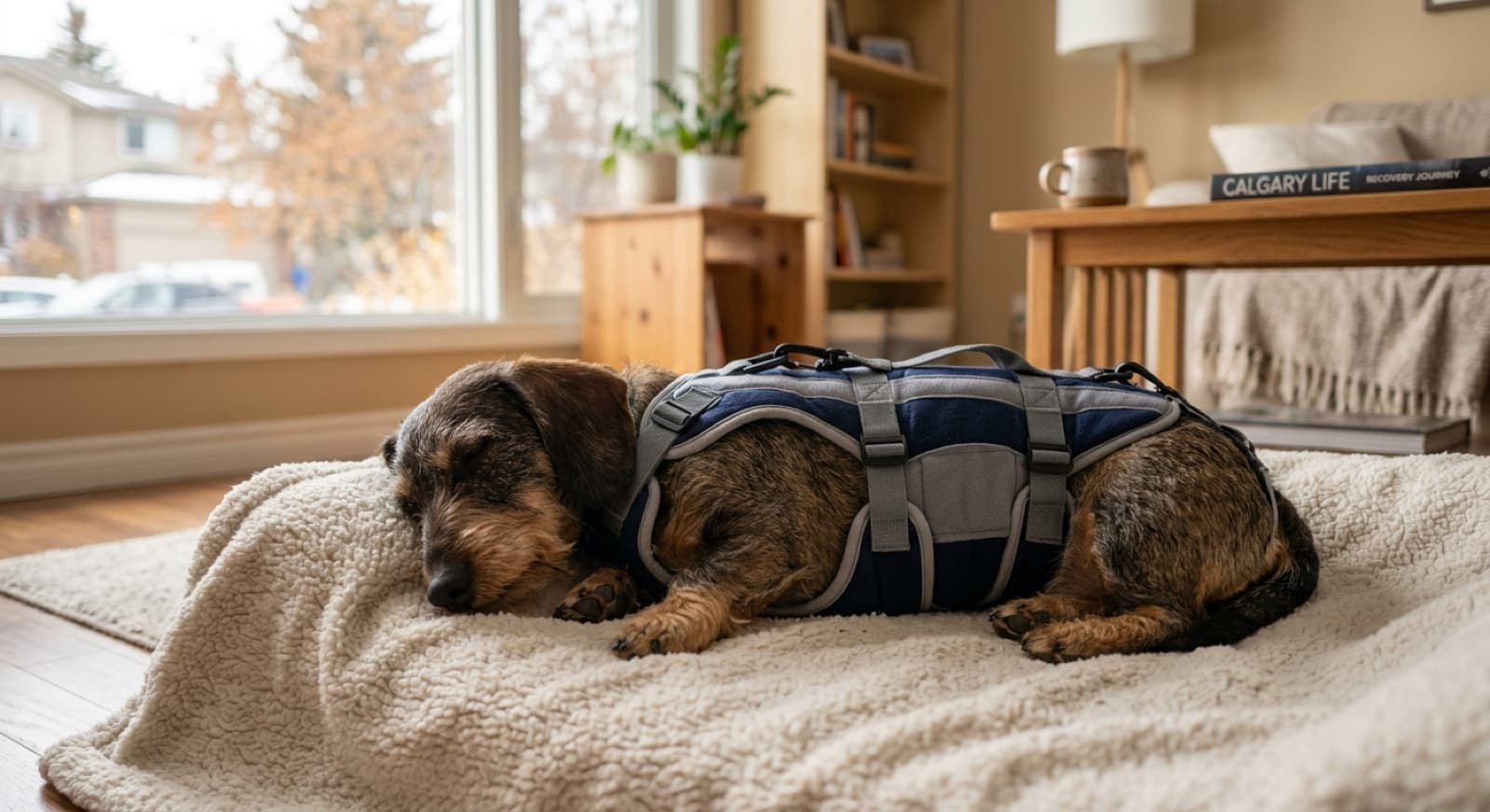
If your Dachshund just got an IVDD diagnosis, here's the path. Start strict crate rest right away (no walking, jumping, stairs). Use pain meds as prescribed. Work through the decision tree of conservative care (Grade 1–2) vs surgery (Grade 3–5 within 24–48 hours). Plan for 8–12 weeks of crate rest. Some dogs need bladder expression. Most need weekly Calgary canine rehab and physiotherapy at $80–$150 per session through Western Veterinary Specialist Centre or Sundance Rehab. A wheelchair runs $400–$1,500 if paralysis turns out to be permanent. Total Calgary cost: $1,000–$3,500 conservative; $9,000–$25,000+ surgical. Recovery rates: Grade 3 surgery 90–95%; Grade 5 with delay under 30%. Recurrence runs 20–30% within 1–3 years. Pet insurance is the most useful financial step you can take. Quality of life with paraplegia is real with a wheelchair and steady care.
If your Dachshund just had a back episode in the last 24 hours
Start strict crate rest now. No walking, no jumping, no stairs. Carry to outdoor potty. Get to your vet today. If you see paralysis OR loss of bladder control, go to Calgary 24-hour specialty neurology at Western Veterinary Specialist Centre or VCA Canada West. An MRI and a surgical decision within 24–48 hours sharply improves Grade 4–5 outcomes. Calgary surgery cost: $5,000–$15,000+. If you have pet insurance, check coverage before treatment when you can.
My Dachshund just got diagnosed with IVDD. What do I do right now?
First 24 hours: don't panic. IVDD severity ranges widely, and most Dachshunds recover with the right treatment.
Immediate steps:
- Start strict crate rest now. No walking, jumping, stairs, or play. Carry to outdoor potty in a sling or harness, then go right back to the crate
- Pain management as prescribed. Usually gabapentin plus an NSAID (carprofen, meloxicam, Galliprant), and sometimes a muscle relaxant (methocarbamol)
- Confirm your treatment plan with your vet:
- Grade 1–2 (mild pain, no paralysis): conservative management for 4–8 weeks
- Grade 3–5 (paralysis or loss of bladder control): surgery within 24–48 hours for the best outcome
- For paralysis cases, go to Calgary specialty neurology at Western Veterinary Specialist Centre or VCA Canada West. Get the MRI ($2,500–$3,500) for surgical planning
- Check pet insurance status before treatment if you can. Some plans need pre-authorization
- Mental shift: this is an 8-week minimum recovery commitment
Calgary IVDD support: the r/dachshund Reddit community, plus Facebook groups for IVDD Dachshund owners.
How do I survive 8 weeks of strict crate rest with my Dachshund?
This is the hardest part of IVDD recovery for owners, both emotionally and logistically.
Survival strategies that work for Calgary Dachshund owners:
- Set up a dedicated recovery zone. Use a large crate or pen (36–42 inch) in a quiet room, NOT in the busy household area. Your dog needs less stimulation, not more
- Position the crate so the dog can see you but is not tempted to move toward you
- Mental enrichment to make up for physical restriction: frozen Kongs (peanut butter, yogurt, canned food), snuffle mats with hidden treats, lick mats, slow-feeding puzzle toys, and gentle training games from inside the crate (sit, watch me, paw) with minimal head and back movement
- Brain games beat physical games. Nose work helps even crate-bound dogs
- Dim lighting and white noise cut down on stimulation that triggers movement
- Outside potty: carry the dog in a sling or supportive harness, set down only on the spot to eliminate, then carry back. NO walking on leash for 8 weeks
- Sponge baths only. No full baths during recovery
- Many Dachshunds object to crate rest with whining, barking, and scratching. Do NOT let them out. This is the single most important rule. Trazodone or other vet-prescribed sedation can help in severe cases
- Owner emotional self-care: this is a marathon. Plan short outings to protect your own mental health. Have family or friends share crate-watch duty
Calgary IVDD support groups on Facebook and Reddit (r/dachshund) provide moral support. Many Calgary owners have done this and made it through.
Should I choose conservative management or surgery for IVDD?
Decision depends on IVDD grade and your circumstances.
| Grade | Symptoms | Recommended | Recovery Rate |
|---|---|---|---|
| 1–2 | Mild pain, no paralysis | Conservative (4–8 weeks crate rest) | ~85% |
| 3 | Significant weakness, deep pain present | Conservative OR surgery | ~90% with surgery |
| 4 | Paralysis, deep pain still present | Surgery within 24–48 hours | ~85–90% |
| 5 | Paralysis, NO deep pain perception | Surgery URGENT within 24 hours | ~50–60% within 24h, <30% after 48h |
Calgary surgical IVDD treatment: $5,000–$15,000+ at specialty neurology (Western Veterinary Specialist Centre, VCA Canada West).
The honest decision factors: your finances, the Grade severity, your dog's age and overall health, your time and energy, and your willingness to manage long-term mobility issues if surgery does not fully restore function. Talk frankly with your vet. If your vet does not have specialty experience, ask for a referral to specialty neurology for the recommendation.
How do I express my paraplegic Dachshund's bladder?
Dachshunds with severe IVDD often lose bladder control during paralysis. Manual bladder expression is essential to prevent UTIs, bladder rupture, and discomfort. Your vet or specialty neurology team should teach you the technique before discharge.
Basic technique:
- Place the dog standing on a towel or sling support
- Find the bladder. It is the soft, balloon-like organ in the lower belly, between the hind legs
- Cup hands around the bladder, then apply gentle steady pressure
- Keep pressure on until urine flow stops
Frequency: 3–4 times per day at first, easing off as recovery moves along.
Important: many male Dachshunds dribble urine but still need expression to fully empty the bladder. Many female Dachshunds leak too, but still need full expression. If you do not fully empty the bladder, UTIs follow at $150–$300 per episode in Calgary.
Watch for UTI signs: blood in urine, foul odor, fever, drop in appetite. Get to the vet right away.
Some IVDD Dachshunds regain bladder function as nerves recover. Others stay incontinent for life. Long-term incontinent dogs may need belly bands ($20–$50 a set) and regular antibiotic UTI prevention.
What physiotherapy and rehab does my Dachshund need post-IVDD?
Veterinary physiotherapy is critical for IVDD recovery. It improves outcomes for both surgical and conservative cases.
Calgary canine physiotherapy options:
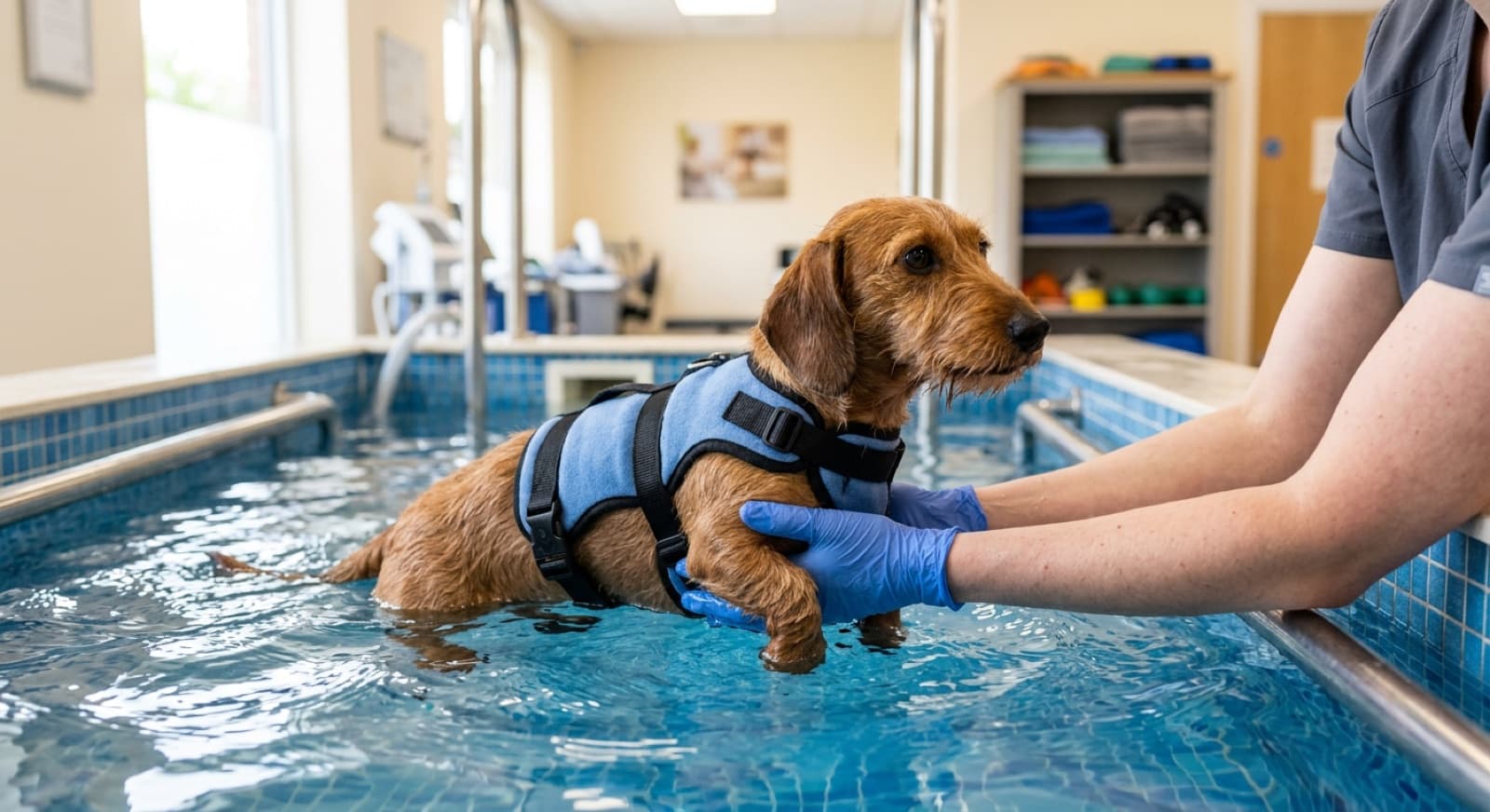
- Western Veterinary Specialist Centre. Specialty rehab including hydrotherapy, laser therapy, range-of-motion work, and electrical stimulation
- Sundance Rehab (Sundance Veterinary Clinic). More general rehab
- Calgary West Vets. Some general practice clinics have in-house rehab options
Cost: $80–$150 per rehab session, weekly during active recovery (8–12 sessions is typical). Initial consult plus treatment plan runs $150–$200.
Treatment modalities:
- Hydrotherapy (underwater treadmill). The gold standard for mobility recovery. Calgary access: Western Veterinary Specialist Centre
- Laser therapy (cold laser). Reduces inflammation
- Electrical stimulation (NMES) for neural pathway recovery
- Range-of-motion work. Gentle stretching
- Massage
- Home exercises taught by your rehab vet
Pet insurance often covers rehab. Check coverage in your policy.
When does my Dachshund need a wheelchair or mobility cart?
Most IVDD Dachshunds do NOT need permanent wheelchairs. Most recover function with proper treatment. For the dogs that do not, wheelchairs sharply improve quality of life.
Appropriate when:
- Permanent paralysis after IVDD recovery
- Conservative management did not restore mobility
- Repeat IVDD episodes that have permanently damaged spinal function
- Severe arthritis or other mobility issues in seniors
Calgary wheelchair sources:
- Walkin' Wheels (Handicapped Pets brand). $400–$1,200 in Calgary at Petsmart, Pet Valu, or direct from the maker
- Eddie's Wheels (custom-fit, US-based). $700–$1,500+, ships to Canada
- K9 Carts. Similar pricing
- Calgary used and loaner options: Facebook groups (Calgary Dachshund Owners, Calgary IVDD support) sometimes have used wheelchairs for sale or loan
Wheelchair fit is critical. A wrong size causes pressure sores. Most companies need measurements. Most paraplegic Dachshunds adapt to wheelchairs within 1–2 weeks.
Quality of life with a wheelchair can be excellent. Some Dachshunds live happily for years post-IVDD with mobility support.
What is the recovery timeline for IVDD post-surgery?
General timeline for Grade 3–5 surgical recovery:
| Phase | Activity |
|---|---|
| Week 1–2 (Acute) | Hospitalized 24–72 hr post-surgery, then home strict crate rest. Pain management critical. Bladder expression 3–4x daily for paraplegic dogs. Watch for surgical complications |
| Week 3–4 (Early) | Pain medication tapering. Begin laser therapy. Some dogs show voluntary leg movement. Bladder function may begin returning |
| Week 5–6 (Rehab) | Physiotherapy/hydrotherapy starts in earnest. Supported standing/walking. Underwater treadmill if available |
| Week 7–8 (Transition) | Gradual return to short controlled walks, leashed and supervised. NO running, jumping, stairs |
| Week 9–12 (Return) | If fully recovered, gradually expand activity within back-safe limits. Permanent lifestyle modifications still required |
Recurrence runs about 20–30% within 1–3 years. Lifelong back protection is essential. Some Dachshunds plateau at “walks with mild ataxia” rather than full recovery. Quality of life is still excellent.
How do I prevent IVDD recurrence in my Dachshund?
Recurrence runs about 20–30% within 1–3 years of the first episode. Prevention is stricter than baseline Dachshund care.
- Lifetime weight management. Every pound matters. Body condition score 4–5 of 9
- Lifelong ramp use. No jumping on or off ANY furniture, with no exceptions
- No stairs. Carry whenever you can. One-level living helps if you can manage it
- Harness only. Never a collar for leash work, never a head halter
- Back-safe exercise only. Leashed walks, no high-impact play
- Ongoing pet insurance with IVDD coverage. Check that post-IVDD coverage continues
- Annual senior wellness exams plus spinal X-rays after age 7
- Pain medication continued as prescribed by your neurologist when recommended
- Joint supplements (glucosamine, chondroitin, omega-3)
- Avoid stress. Stressed Dachshunds are more prone to acute IVDD episodes
- Watch for early warning signs. Reluctance to jump, a hunched back, yelping when picked up. Get to the vet right away at the first sign
- Consider surgical fenestration. This is a preventive step during the first IVDD surgery to remove other discs that may cause trouble later
What does Dachshund IVDD recovery cost in Calgary?
Total recovery costs vary widely by IVDD grade and treatment path.
| Path | Cost Components | Total Calgary |
|---|---|---|
| Conservative (Grade 1–2) | Vet visits + meds $500–$1,500 + rehab/physio $640–$1,800 | $1,000–$3,500 |
| Surgery (Grade 3–4) | MRI $2.5K–$3.5K + surgery $5K–$10K + hospital + rehab + meds + supplies | $9,000–$18,000 |
| Surgery (Grade 5 emergency) | All above + emergency premium + extended hospital + wheelchair likely | $15,000–$25,000+ |
Long-term ongoing costs: insurance premium increases, joint supplements at $20–$50 a month, annual wellness at $200–$400 a year, and possible recurrence costs. Lifetime added cost from one IVDD episode is $10,000–$30,000+ over 8–12 remaining years.
Calgary financial options without insurance: CareCredit (interest-free if paid within the promo period), ScratchPay, vet payment plans, and GoFundMe campaigns.
Pet insurance is the single most useful financial step Dachshund owners can take.
When is euthanasia the kindest choice for an IVDD Dachshund?
A heartbreaking decision that some Calgary Dachshund families face. There's no universal answer, but vets and rehab specialists consider several factors.
Quality of life signs that point toward euthanasia:
- Ongoing pain that medication cannot control
- Repeated severe IVDD recurrences despite management
- Severe paralysis with no real prospect of recovery
- Loss of bladder and bowel hygiene leading to severe UTIs and skin infections
- Owner unable to provide the required care (money, time, lifting capacity, emotional capacity)
- Severe pressure sores from long-term immobility
- Severe behavioural changes from chronic pain
- Loss of joy. Interest in food, family, and surroundings all gone
Quality of life IS possible with paralysis if:
- The dog uses a wheelchair well
- Bladder and bowel can be expressed and managed cleanly
- The dog stays alert and engaged with family
- The owner can keep up the care commitment long term
Many Calgary paraplegic Dachshunds live happily for years post-IVDD with wheelchair support and steady care.
Decision frameworks:
- Quality of life scales. Vet behaviourists can read your dog's daily experience
- Have a vet conversation about prognosis and your family's capacity
- Do not decide in immediate crisis. Give 2–3 days after stabilization for clearer thinking
- Many owners describe a “last good day” feeling that signals time
- Calgary in-home euthanasia services (Compassionate Veterinary Care, Tranquil Paws Mobile Veterinary Services) allow a peaceful passing at home
There is no shame in any decision. Severe IVDD without a real prospect of recovery is a humane reason to choose euthanasia. Many Calgary families care for paraplegic Dachshunds post-IVDD for 5+ years with full quality of life. Both paths are acts of love.
Frequently Asked Questions
Just diagnosed. What now?
Strict crate rest right away, pain management, vet decision tree (conservative Grade 1–2 vs surgery Grade 3–5 within 24–48 hr). Calgary specialty: Western Veterinary Specialist Centre, VCA Canada West.
8 weeks crate rest survival?
Quiet recovery zone, mental enrichment (Kongs, snuffle mats, lick mats), brain games over physical, dim lighting, white noise, carry to potty, sponge baths only. Don't release despite whining.
Conservative vs surgery?
Grade 1–2 conservative ($1K–$3.5K Calgary). Grade 3+ surgery within 24–48 hr ($9K–$25K Calgary). Grade 5 with delay <30% recovery. Discuss with specialty neurology.
Bladder expression?
Cup hands around bladder in lower abdomen, gentle steady pressure, 3–4x daily initially. UTI prevention essential. Vet teaches technique.
Calgary rehab options?
Western Veterinary Specialist Centre (hydrotherapy gold standard), Sundance Rehab. $80–$150/session, 8–12 sessions typical. Pet insurance may cover.
Wheelchair sources?
Walkin' Wheels $400–$1,200, Eddie's Wheels $700–$1,500 (custom). Calgary used/loan via Facebook groups. Most paraplegic Dachshunds adapt within 1–2 weeks.
Recovery timeline?
Week 1–2 acute (hospital + crate), 3–4 early (pain meds taper), 5–6 rehab (hydrotherapy), 7–8 transition, 9–12 return. ~20–30% recurrence within 1–3 years.
Recurrence prevention?
Lifetime weight management, ramps for everything, no stairs, harness only, back-safe exercise, pet insurance, annual X-rays after age 7, joint supplements, watch warning signs.
Calgary cost breakdown?
Conservative $1K–$3.5K. Surgery Grade 3–4: $9K–$18K. Surgery Grade 5 emergency: $15K–$25K+. Lifetime additional cost $10K–$30K+ over 8–12 years.
Euthanasia decision?
Quality of life indicators: uncontrolled pain, severe permanent paralysis, hygiene failure, owner capacity exceeded. QoL possible with wheelchair + care. No shame. Both paths are acts of love.
Dachshund Health Issues
IVDD prevention, back protection protocol, surgery costs, pet insurance ROI.
Dachshund Calgary Care Guide
Back-safe exercise, ramps, harness, prey drive, Calgary winter, do-not-do list.
Pet Insurance for Dachshunds in Calgary
Best plans, IVDD coverage, waiting periods, monthly cost, Calgary providers.
Dachshund Cost of Ownership Calgary
Year-one costs, lifetime spend, vet bills, food, gear, IVDD reserves.
Is a Dachshund Right for You?
Honest fit check covering apartment life, kids, work hours, lifestyle match.
Mini vs Standard Dachshund
Size differences, lifespan, back risks, Calgary suitability, choice guide.
Buy or Adopt a Dachshund in Calgary
Breeder vs rescue tradeoffs, costs, ethics, Calgary options, decision tree.
Senior Dachshund Adoption Calgary
Why seniors deserve homes, health screening, costs, Calgary rescues.
Dachshund Puppies Adoption Calgary
Where to find puppies, ethical sourcing, costs, prep, Calgary breeders.
Bringing Home a Dachshund: First Week
Day-by-day plan, setup, crate intro, potty start, decompression.
Dachshund Crate Training
Crate intro, size, schedule, night work, IVDD recovery setup.
Dachshund Potty Training
Honest timeline, Calgary winter setup, indoor potty pads, regression fixes.
Dachshund Separation Anxiety
Why Dachshunds bond hard, alone-time training, Calgary trainers, meds.
Dachshund Barking and Aggression
Why they bark, reactivity training, bite risk, Calgary behaviourists.
Dachshund with Kids and Cats
Family fit, child age cutoffs, cat introductions, prey drive risks.
Calgary Emergency Vet Guide
24-hour clinics. Save before you need it. IVDD specialty referral pathways.
Dachshund Adoption Calgary
Where to find them, costs, Mini/Teacup warning, dapple ethics, coat varieties.
New dog? Start with these care guides
Everything a new adopter needs to set up a safe, happy home.