One of the easiest family + multi-pet breeds
Havanese are bred for one job: companionship. The Cuban national dog has been a lap and family companion for over 200 years (AKC breed profile). No herding drive, no prey drive, no working-line edge. Calgary families with kids and cats, including foster homes through Calgary Humane Society and AARCS, consistently report that Havanese integrate faster and with less drama than almost any other breed. The breed is gentle with children, social with other dogs, and one of the most cat-friendly small breeds you can adopt. This guide covers what to expect with kids of every age, how to introduce a Havanese to a cat (the protocol works faster than for high-drive breeds), and how to set up a multi-pet household that thrives in a Calgary home through Chinooks, Stampede week chaos, and long winter indoor days.
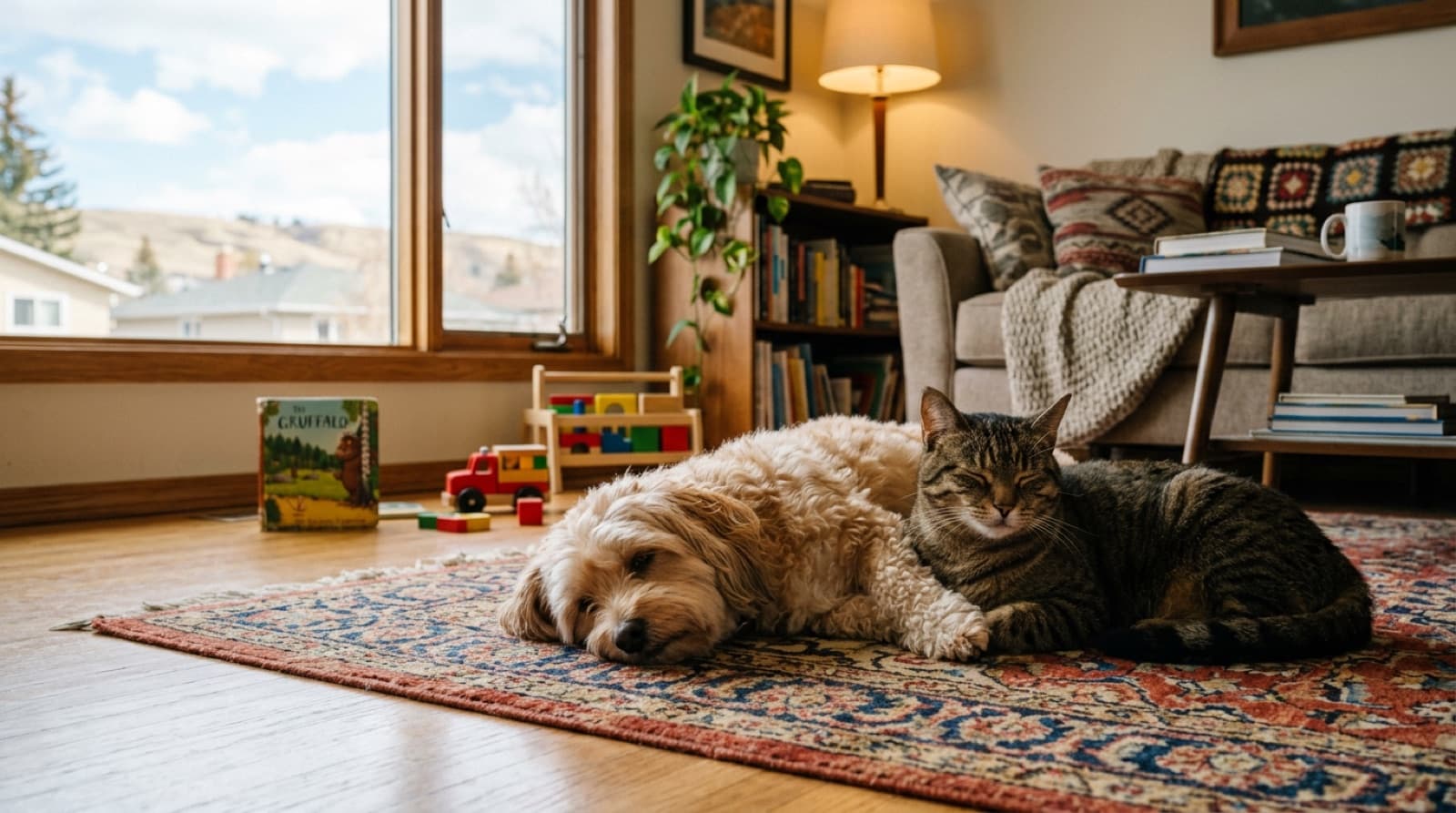
Havanese with Kids by Age
| Kid age | Havanese compatibility | Management needed |
|---|---|---|
| 0 to 2 years (babies) | Good. Gentle, no herding nip risk. Watch for size-safety. | Moderate. Supervise to protect the dog from accidental drops or falls. |
| 3 to 4 years (toddlers) | Good. Best small-breed option for toddler homes. | Moderate. Teach gentle handling. Dog needs a safe retreat space. |
| 5 to 8 years (kids) | Excellent. Playful, patient, affectionate. Bonds quickly. | Low. Teach kids how to read dog body language. |
| 9 to 12 years (older kids) | Excellent. Kids can help with training, walks, and grooming. | Very low. Kid can become a primary handler. |
| 13+ years (teens) | Excellent. Havanese fit easily into busy family life. | Very low. Teen can manage walks and daily care. |
Havanese rank among the safest small breeds for families with young children. The risk profile flips compared to working breeds: the concern is protecting the small dog from accidental rough handling, not protecting kids from the dog. A 7 to 13 lb Havanese can be knocked over, stepped on, or dropped, and small-breed fractures from family accidents are a real after-hours visit pattern Calgary emergency vets see. The Havanese Club of America and Havanese Fanciers of Canada Rescue both emphasize size-safety supervision over behaviour concerns for households with toddlers.
Why Havanese Are So Easy with Kids
Six traits make Havanese one of the top family small breeds:
1. No herding instinct
Unlike Australian Shepherds, Border Collies, or Corgis, Havanese do not nip at running kids. Running and high-energy play do not trigger a chase response.
2. Very low prey drive
Bred as lap dogs, not hunters. Cats, small kids, and household chaos do not flip a predatory switch.
3. Social temperament
Havanese love people. They bond fast with kids, follow them around the house, and tend to be patient with hugs and clumsy affection.
4. Low reactivity
Rarely fear-bites or snaps. Most Havanese tolerate a level of poking and grabbing that would make a Chihuahua or Yorkie snap.
5. Moderate energy
Active enough to play with kids, calm enough to nap on the couch. The energy match for family life is close to ideal.
6. Sturdy for the size
At 7 to 13 pounds, Havanese are small but stockier and more solid than a 4-pound Yorkie or Chihuahua. Less fragile during normal family life.
Browse adoptable Havanese in Calgary
Foster reports include kid-compatibility and cat-tested notes. Havanese tend to show up as “great with kids” and “cat-friendly” in foster intake.
See Available Havanese →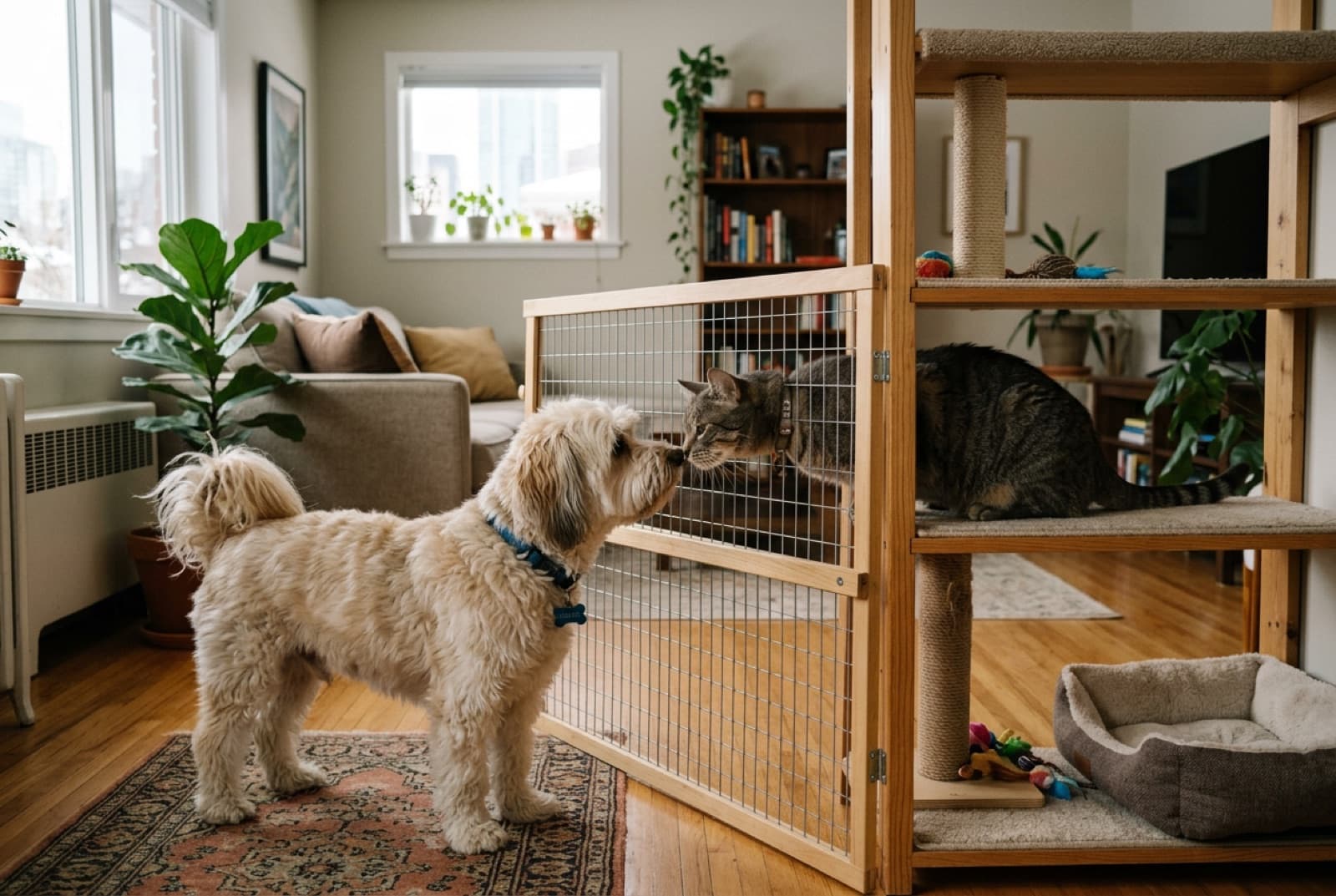
The 7-Step Cat Introduction Protocol
Havanese typically move through this protocol faster than herding or terrier breeds. Most pairings reach unsupervised co-existence in 4 to 6 weeks instead of 2 to 6 months. Watch your individual dog and cat; if either stays stressed, slow down.
1. Full physical separation
Different rooms. Smell each other through closed doors. Feed on opposite sides of the same door so each links the other's scent to food.
2. Scent swapping
Rotate bedding and toys between rooms. Each animal carries the other's scent. Reward calm reactions.
3. Visual contact through barrier
Baby gate or screen door. Both can see but cannot touch. Reward calm. Most Havanese show curiosity, not predatory focus.
4. Leashed in-room exposure
Dog on leash, cat free to approach or leave. 5 to 15 min sessions. End on calm. Most Havanese settle quickly.
5. Longer leashed sessions
Build duration. Drop the leash if both calm. Handler stays within reach.
6. Supervised off-leash
Both free in shared rooms with handler supervision. Watch for any pattern shifts. Havanese rarely escalate.
7. Cautiously unsupervised
Cat needs reliable escape routes (high shelves, cat trees). Many Havanese-cat pairings live happily unsupervised by week 6.
Calgary rescues cat-test Havanese before listing. The vast majority pass with flying colours. If foster reports flag prey drive or cat-reactivity, treat that dog as the rare exception and use the longer 6-week timeline.
Havanese with Other Dogs
Multi-dog homes work well with Havanese. The breed is social and low-conflict. Five-point framework for Calgary multi-dog households:
1. Neutral-territory first meeting
Sidewalk or quiet park before bringing the new Havanese home. Avoid home introductions on day one.
2. Parallel walking
Walk both dogs side by side at distance, then close the gap over several sessions before face-to-face greeting.
3. Watch the size gap
A 12 lb Havanese can be hurt by a 70 lb rough player even when both are friendly. Supervise mixed-size play closely.
4. Separate feeding stations
Some rescue Havanese guard food. Feed dogs in separate rooms or crates to prevent friction.
5. Short supervised play, end on calm
Adolescent Havanese (8 to 14 months) can be pushy with senior dogs. End play before either dog overheats or gets cranky.
Multi-Pet Household Infrastructure
Six setup priorities for Havanese + cat or Havanese + multi-animal homes. Most are quick wins because the breed is so easy:
- Vertical space for cats. Cat shelves, perches, top of bookcases. Even though Havanese rarely chase, cats still need their own territory.
- Size-safe feeding. Feed dogs and cats in separate rooms or behind baby gates. Cats on counters or shelves; Havanese in crates or rooms of their own.
- Block litter access. Havanese will eat cat poop given the chance. Use cat-only litter rooms, covered boxes, or elevated platforms.
- Dog-only retreat space. Crate or dog room where the Havanese can rest away from toddler or cat stimulation. Small dogs need quiet downtime.
- Toddler-safe zones for the dog. Baby gates that let the Havanese exit a room when a toddler gets too active. Protects the dog from accidental rough handling.
- Standard exercise and routine. 30 to 45 minutes of walks plus play each day. A content Havanese integrates faster and barks less at household chaos.
Most Calgary Havanese + multi-pet households reach full integration within 4 to 8 weeks. The breed is genuinely one of the easiest small dogs for blended homes. For broader veterinary guidance on kids + dogs and household safety, the AVMA pet owner resources cover supervised-introduction principles that apply to any small breed.
Frequently Asked Questions
Good with kids?
Yes, one of the best small breeds for families. No herding nip risk, low prey drive, gentle and patient. Best for kids 5+. Toddlers need supervision to protect the small dog from accidental rough handling.
Good with cats?
Yes, often great. Very low prey drive, social temperament. Many Havanese become real friends with the household cat. Most pairings integrate in 4 to 8 weeks rather than the usual 2 to 6 months.
How to introduce to a cat?
7-step protocol over 4 to 6 weeks: separation, scent swap, barrier, leashed, longer leashed, supervised off-leash, cautiously unsupervised. Faster timeline than high-drive breeds.
Good with babies and toddlers?
Yes, with size-safety supervision. The risk flips: protect the small dog from being dropped or grabbed, not the toddler from the dog. Teach gentle handling, give the dog a retreat space.
Good with other dogs?
Usually yes. Social, low-reactivity. Watch size gap with bigger dogs (12 lb Havanese vs 70 lb rough player needs supervision). Separate feeding stations prevent resource guarding.
Good family dogs?
Yes, top small-breed family choice. Pros: gentle, no herding, low prey drive, social, adaptable. Cons: grooming costs, separation anxiety risk, small-size fragility. Ideal: home with at least one adult around most days.
Multi-pet household setup?
Vertical cat space, size-safe feeding, block litter access (Havanese eat cat poop), dog retreat space, toddler-safe zones, normal exercise routine. Most homes integrate in 4 to 8 weeks.
Best small breed for kids and cats?
Havanese consistently ranks at the top. Gentler than Yorkies or Chihuahuas, lower prey drive than terriers, fewer health issues than Cavaliers. Bichon Frise and Cavalier are close seconds.
More Havanese guides
Havanese Adoption Calgary →
Breed overview, cost breakdown, what to expect with a rescue Havanese.
Is a Havanese Right for You? →
Lifestyle fit, daily-care reality, who the breed works for and who it doesn't.
Havanese House Training →
Small-breed house-training timeline, Calgary winter challenges, indoor potty options.
Bringing Home a Havanese →
First-week setup, 3-3-3 decompression, multi-pet introductions on day one.
New dog? Start with these care guides
Everything a new adopter needs to set up a safe, happy home.