The honest version
Pit Bulls are not a single breed. The umbrella covers American Pit Bull Terriers, American Staffordshire Terriers, Staffordshire Bull Terriers, American Bullies, and the many mixes that make up most Calgary rescue Pit Bulls. They are not statistically more dangerous than other breeds, the CDC stopped tracking bites by breed in the 1990s, and Calgary itself repealed its breed-specific bylaw in 2010. They are also not nanny dogs. That myth was retired by modern advocates like Bad Rap and Best Friends Animal Society around 2013 because it set up unsafe expectations for kids and dogs of any breed. The breed reality sits in the middle. Pit Bulls are biddable, athletic, deeply loyal, and easy to love. Adolescence is two years long. Same-sex dog selectivity is real. Calgary rental and insurance restrictions are the single biggest surrender cause. Foster-to-adopt through BARCS, AARCS, or Pawsitive Match removes most of the all-or-nothing risk and is the smartest path for a first-time bully owner.
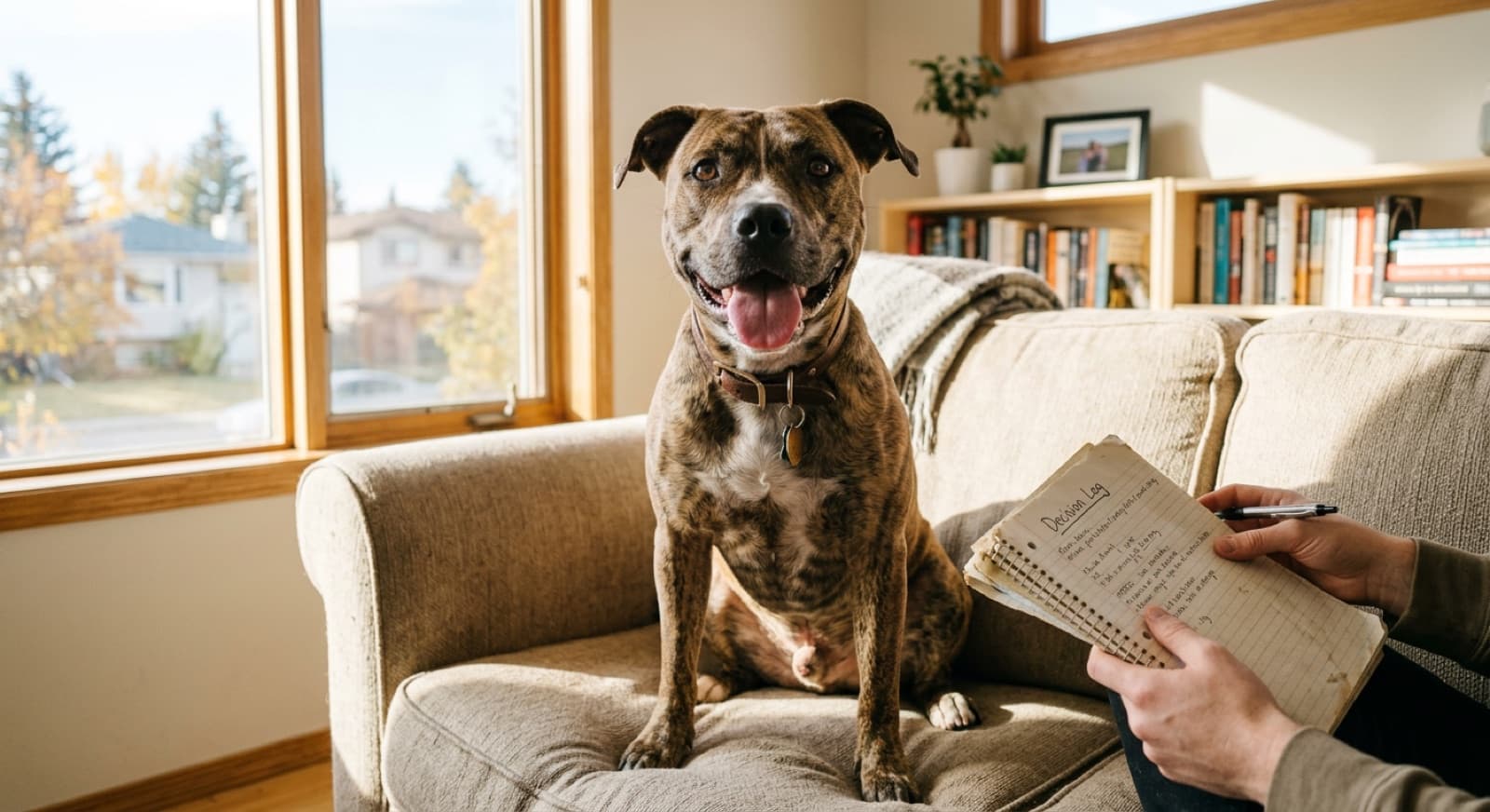
What a Pit Bull actually is
Before any self-assessment, get the breed picture straight. “Pit Bull” is an umbrella term, not a single breed. The dogs you will meet in Calgary rescues fall into four overlapping types.
- American Pit Bull Terrier (APBT): 30 to 60 lbs, athletic, the original working type.
- American Staffordshire Terrier (AmStaff): 40 to 70 lbs, AKC-recognized close cousin to the APBT.
- Staffordshire Bull Terrier (Staffy): 24 to 38 lbs, the smaller, stockier UK-origin version.
- American Bully: 30 to 85 lbs depending on subtype (Pocket, Standard, XL), bred for shorter, broader build.
- Mixes: the majority of Calgary rescue Pit Bulls are mixes of the above, often with Lab, Boxer, or Cattle Dog.
Coat is short and low-maintenance across all types. Lifespan is 10 to 14 years. Allergies (atopic dermatitis) are common in the breed family and the most frequent non-injury vet visit. Pit Bulls are intelligent and biddable, which means they are highly trainable with force-free methods and shut down or escalate with harsh ones. Calgary has no breed-specific legislation, but neighbouring municipalities vary, so check before moving.
Is a Pit Bull a bad idea for a first-time owner?
The most-searched Reddit question on this topic deserves a direct answer. It depends on commitment, not breed. The Pit Bull stereotype as “not a beginner dog” comes from real adolescent challenges, not from temperament problems. A first-time owner who shows up does well. A first-time owner expecting an easy ride struggles. Four things separate success from regret.
Time commitment
Plan for 60 to 90 minutes of structured exercise daily for the first two years. A bored adolescent Pit Bull is the source of nearly every Calgary surrender story. Add 10 to 15 minutes of daily training. The good news: they learn fast.
Training method
Force-free only. Pit Bulls are biddable but sensitive to harsh handling. E-collars, prong collars, leash pops, and alpha-roll training escalate problems instead of solving them. Calgary force-free options include Dogma Training, ImPAWSible Possible Dog Training, and Calgary K-9 Care.
Support network
A force-free trainer on speed dial, a vet who is breed-positive, a doggy daycare that takes Pit Bulls (many Calgary daycares do, some do not), and a foster-care backup for travel. Build this BEFORE you adopt, not after a crisis.
Financial readiness
$1,500 to $3,000 a year for a healthy adult, more during the first year with training and gear. Pet insurance is harder to find for Pit Bulls in Canada, so set aside a $2,000 emergency fund before bringing one home.
The “nanny dog” myth is retired
For decades, Pit Bull advocates promoted the “nanny dog” framing, the idea that the breed was historically chosen to watch over children. Modern rescue advocates have walked this back. Around 2013, organizations like Bad Rap and Best Friends Animal Society publicly stopped using the term. The honest reframe is simple.
New framing: Pit Bulls are not statistically better or worse with kids than any other breed. Individual temperament, supervision, and training matter far more than breed. No dog of any breed should be left unsupervised with young children. Adult-rescue Pit Bulls with documented kid history (from foster homes) are a safer bet for families than puppies of any breed.
The myth was retired because it set families up for the wrong expectations. A “nanny dog” label suggests passive trustworthiness around kids. That is not how dogs work. The healthy version of the truth is that Pit Bulls can be excellent family dogs when they are well-matched, well-trained, and well-supervised, just like any other breed.
10 Honest Questions to Ask Yourself BEFORE Adopting
Answer honestly. 8 or more “yes” answers means a Pit Bull is probably a good fit. Below 6, reconsider or start with foster-to-adopt to test before committing.
1. Do I have written rental and insurance approval for a Pit Bull breed?
The single biggest Calgary surrender cause. Many condos and insurers restrict bully breeds even though Calgary has no BSL.
2. Can I commit 60 to 90 minutes of structured exercise daily for the first two years?
Adolescent Pit Bulls are athletic and high-drive. Under-exercised dogs become destructive.
3. Will I use force-free training only, with no e-collars, prong collars, or leash pops?
Pit Bulls are biddable but shut down or escalate under harsh handling.
4. Am I prepared for two years of adolescence (8 to 24 months) with energy, testing, and possible reactivity?
Most surrenders happen between 12 and 24 months when the puppy honeymoon ends.
5. Can I manage adult same-sex dog selectivity if it develops?
Common in bully types. Often means skipping dog parks with adult dogs and managing multi-dog homes carefully.
6. Do I have $1,500 to $3,000 a year in budget plus a $2,000 emergency fund?
Insurance is harder to get for Pit Bulls in Canada. Set the safety net up front.
7. Am I willing to be a calm public ambassador (no off-leash near unfamiliar dogs, basic obedience in public)?
Stigma is real. Your dog will be judged. Visible good manners change minds, one neighbour at a time.
8. Do I have a force-free trainer, a breed-positive vet, and a daycare or walker plan lined up?
Build the support network BEFORE the dog arrives. Crisis is the wrong time to start phoning around.
9. Am I emotionally ready for the breed stigma at parks, vets, and from neighbours?
You will field comments. Quiet confidence and ignoring the noise matters.
10. Have I considered foster-to-adopt first?
Two-to-four-week trial through BARCS, AARCS, or Pawsitive Match removes the all-or-nothing risk. Smartest path for a first-time bully owner.
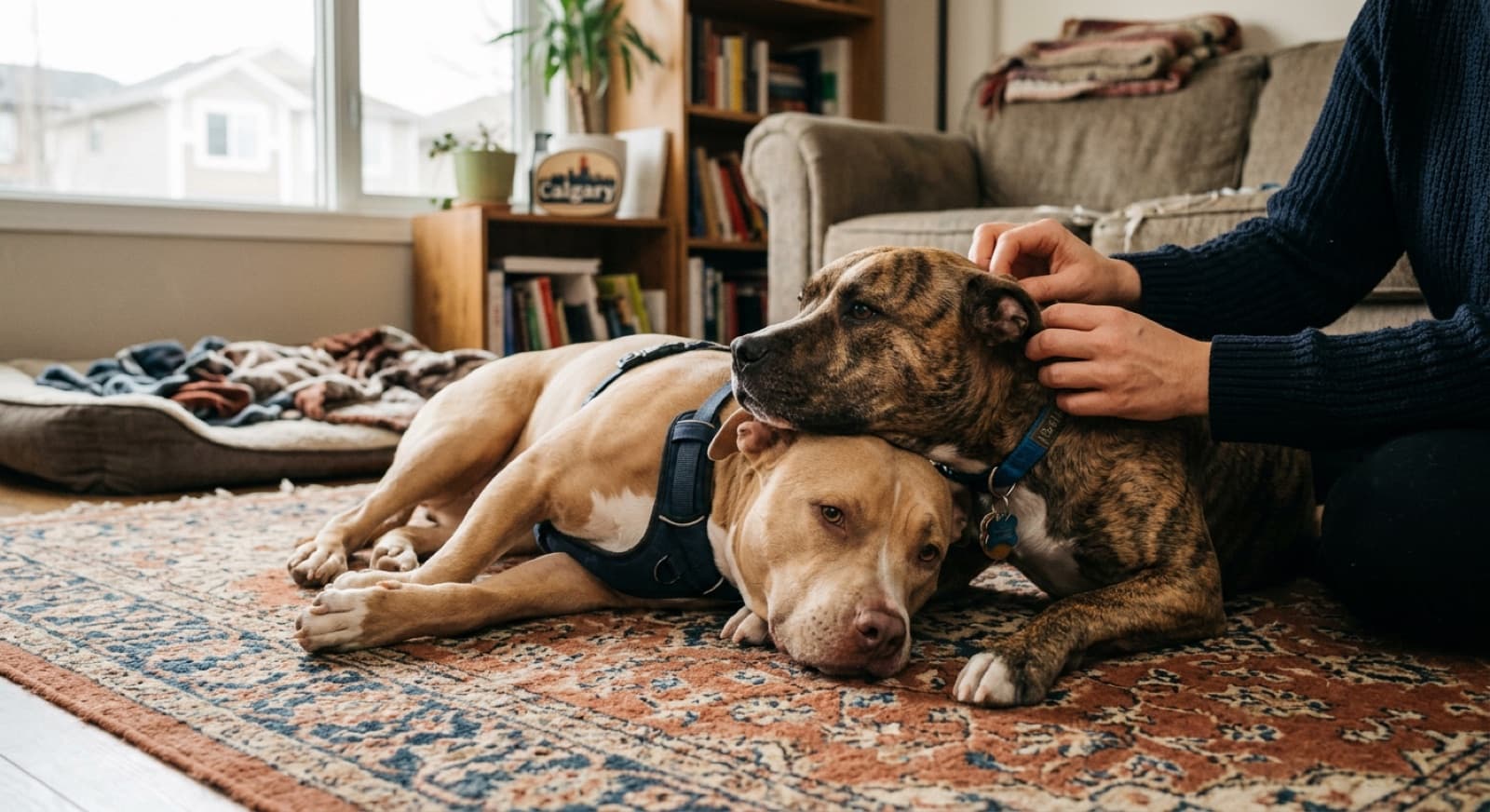
Foster-to-adopt: the low-risk way to test fit
If even one of the 10 questions above leaves you uncertain, foster-to-adopt is the answer. The format is a 2 to 4 week trial where you live with the dog before finalizing the adoption. You cover food and basic care. The rescue covers vet bills. You can return the dog at any time with no penalty if the fit is wrong. The rescue gets useful feedback either way.
Three Calgary rescues run versions of this for Pit Bulls.
- BARCS Rescue: Calgary's bully-breed specialist. Built around foster-based placement. Strong network of experienced bully foster homes. Honest, detailed write-ups on each dog.
- AARCS: Larger general rescue with many Pit Bulls and bully mixes. Offers trial-adoption periods and works with applicants who need time to confirm rental and insurance.
- Pawsitive Match: Foster-based rescue with a careful matching process. Smaller bully volume but high-quality placements.
For a deeper look at the adoption-vs-buy decision and Calgary-specific pricing, see our buy-or-adopt Pit Bull guide.
Pit Bull pros and cons (the honest list)
Pros
- Athletic and outdoorsy: hiking, running, and Calgary off-leash adventures suit them.
- Affectionate: “velcro” with their people, often described as 50 lb lap dogs.
- Biddable: highly trainable with force-free methods, fast learners.
- Deeply loyal: bond hard and stick close, low flight risk once attached.
- Low-maintenance coat: short coat, no professional grooming required.
- Intelligent: excellent at nosework, agility, and trick training.
- Family-oriented: when well-matched, excellent kid dogs with proper supervision.
Cons
- Adolescent same-sex dog aggression: real and common, especially in intact dogs.
- Rental restrictions: many Calgary condos restrict bully breeds in their pet policy.
- Insurance limitations: most Canadian insurers exclude or surcharge Pit Bulls.
- Stigma: you will field comments, sideways looks, and the occasional crossed street.
- High energy: 60 to 90 minutes of daily exercise for the first 2 years is the minimum.
- Allergies: atopic dermatitis is common, expect possible skin and ear treatment.
- Strength: a determined 60 lb bully on leash needs a fit, attentive handler.
What new owners wish they had known on day one
Recurring themes from Calgary BARCS and AARCS foster reports, plus the regrets new owners post on rescue Facebook groups.
“Crate training is non-negotiable.” Even a calm Pit Bull benefits from a crate as a safe zone for downtime, alone time, and vet recovery. Skip it and you regret it later.
“Daycare matters more than I thought.” A tired Pit Bull is a calm Pit Bull. Even 1 to 2 days a week of daycare during the first year of adolescence is the difference between a happy dog and a destructive one.
“I should have skipped the dog park.” Many Calgary owners stopped visiting Nose Hill and Sue Higgins around the 12 month mark when same-sex selectivity emerged. Long-line work on quieter trails replaces the dog park.
“The first vet visit should be at a breed-positive clinic.” A vet who muzzles your Pit Bull before saying hello is the wrong vet. Ask the rescue who they recommend in Calgary. Booking the first visit at the right clinic sets the tone for life.
“Get the insurance and rental approval BEFORE you fall in love.” Surrenders driven by “my landlord said no” are the saddest. Paperwork first, dog second.
“Don't skip the basic obedience class.” Even if your dog already knows sit, a 6-week class in public builds the calmness and focus that matters around strangers. It also gives you a force-free trainer relationship for later, when adolescence hits.
An honest day in the life
A realistic Calgary day with a 2-year-old adopted Pit Bull from BARCS. Not the highlight reel.
- 6:30 AM: 30 to 45 minute on-leash walk in your neighbourhood. Sniffy, slow, mentally tiring.
- 7:30 AM: Breakfast in a puzzle feeder or snuffle mat. 5 to 10 minutes of work, not 30 seconds.
- 8:00 AM: Settle in crate or behind a baby gate while you start your day. Frozen Kong, lick mat, or chew.
- 12:00 PM: Dog walker for 30 minutes, OR you come home and do a sniff walk.
- 3:00 PM: Short training session (5 minutes), then nap.
- 6:00 PM: Bigger activity. Long-line walk in a quieter Calgary park (Edworthy, Bowness, or quieter sections of Nose Hill on-leash), Flirt pole in the backyard, or 45 minutes of off-leash if the trail is empty.
- 7:30 PM: Dinner, then 10 to 15 minutes of trick training or scent work indoors.
- 9:00 PM: Couch time. This is when the velcro shows up.
- 10:30 PM: Final outdoor break. Bed in their crate or designated spot.
Calgary winters compress the outdoor pieces. Below -20C you swap a long walk for indoor scent work, snuffle mats, and trick sessions, plus shorter potty breaks with booties. Skipping exercise entirely for a week is when destruction starts.
Ready to take the next step?
See live Calgary Pit Bull and bully-type listings from 15+ rescues, refreshed regularly. Foster reports usually include kid history, dog history, cat history, and housetraining notes, so you know what you are getting before you apply.
See Available Pit Bulls →Frequently Asked Questions
Is a Pit Bull a bad idea for a first-time dog owner?
It depends on commitment, not breed. Pit Bulls are biddable and bond hard, which makes them trainable for a thoughtful first-time owner. The real question is whether you have time for daily training and structured exercise, plus a force-free trainer on speed dial. A first-timer who shows up consistently does well. A first-timer expecting an easy couch dog struggles, because adolescence (8 to 24 months) brings energy, testing, and possible same-sex dog reactivity. Foster-to-adopt through BARCS, AARCS, or Pawsitive Match is the lowest-risk way to test fit before committing.
Is the nanny dog myth still used?
No. Modern advocates retired it. Bad Rap, Best Friends Animal Society, and most reputable rescues stopped promoting the framing around 2013. The new message is that Pit Bulls are not statistically better or worse with kids than any other breed. Individual temperament, supervision, and training matter far more than breed. No dog of any breed should be left unsupervised with young children.
Are Pit Bulls more dangerous than other breeds?
Not by the data. The CDC stopped tracking bites by breed in the late 1990s because breed identification was unreliable and bite statistics did not support breed-based policy. Multiple peer-reviewed studies have since found that bite injury severity correlates more with dog size, intact status, supervision, and owner behaviour than breed. The AVMA, ASPCA, and CVMA all oppose breed-specific legislation. Calgary repealed its breed-specific bylaw in 2010 in favour of owner-responsibility laws, which produced one of the lowest bite rates among major Canadian cities.
What is foster-to-adopt and which Calgary rescues offer it?
Foster-to-adopt is a 2 to 4 week trial period where you bring a rescue dog home before finalizing the adoption. You cover food and basic care, the rescue covers vet bills, and you can return the dog with no penalty if the fit is wrong. BARCS Rescue (Calgary's bully specialist), AARCS, and Pawsitive Match all run versions of this program for Pit Bulls. It removes the all-or-nothing pressure and lets you test fit with your home, schedule, and other pets.
What is adolescent same-sex dog aggression?
Many Pit Bulls (and most bully-type breeds) develop selectivity with same-sex adult dogs starting between 12 and 24 months. It does not mean every Pit Bull will fight every same-sex dog. It means the genetic baseline for same-sex tolerance is lower than for a Golden Retriever. Day-to-day: stiff body language at the dog park around adult males if you have a male, harder time with daycare, and a need to manage same-sex multi-dog households carefully. Intact dogs show this more than altered dogs. Many Calgary owners simply stop visiting dog parks with adult Pit Bulls and that solves it.
How much does a Pit Bull cost in Calgary?
Adoption fees through Calgary rescues run $135 to $700. Backyard breeder Kijiji listings range $50 to $500, which is cheap up front but expensive long term. Reputable Pit Bull or AmStaff breeders in Alberta run $400 to $1,500. Annual care: $1,500 to $3,000 for a healthy dog. Lifetime cost over 10 to 14 years: $20,000 to $40,000. Pet insurance is harder to find for Pit Bulls in Canada and some providers cap or exclude bite liability. Square One and PetSecure are the most Pit-Bull-friendly Canadian options.
Will my landlord and insurance company allow a Pit Bull?
Often no, and this is the single biggest reason Calgary Pit Bulls get surrendered. Many condo and rental buildings restrict bully breeds in their pet policy even though Calgary has no BSL. Most major home and tenant insurance providers either exclude liability for Pit Bulls or charge a surcharge. Confirm both rental and insurance approval in writing BEFORE you commit, not after. For a deeper look at Calgary housing and insurance specifics, see our Pit Bull housing and insurance guide.
Who should NOT get a Pit Bull?
Seven honest mismatches. Renters who cannot get written breed approval from landlord and insurance. Owners gone 9+ hours daily with no daycare or walker plan. Households with another adult same-sex dog if you are uncertain about managing dog selectivity. Owners committed to harsh or aversive training. First-time owners unwilling to invest in force-free training classes. Owners not ready for stigma at parks and from neighbours. Anyone expecting a low-energy couch dog for the first two years, because adolescence is real.
More Pit Bull guides
Pit Bull Adoption Calgary →
Where to find a rescue Pit Bull in Calgary, real costs, rescue-by-rescue breakdown, and the four bully types you will meet.
Bringing Home a Pit Bull (3-3-3 Rule) →
The decompression timeline, calm first week routines, and what shutdown vs. settling looks like in a rescue Pit Bull.
Pit Bull Training Calgary →
Force-free training basics, Calgary trainer picks, and how to build calm public manners in an adolescent bully.
New dog? Start with these care guides
Everything a new adopter needs to set up a safe, happy home.