The honest version
Rescue Pit Bulls in Calgary often arrive with real history. Shelter time, owner surrender from a housing eviction, transport from a BSL province like Ontario, or backyard-breeder origin with no early socialization. The dog you meet on day one is not the dog you will have on day 90. The 3-3-3 rule is the framework that holds. 3 days to decompress, 3 weeks for real personality to emerge, 3 months to feel fully bonded. Most regret in the Calgary Pit Bull rescue network comes from owners who pushed too much too soon and read shutdown as “the wrong dog.” This is the playbook for not doing that.
The 3-3-3 Rule for Pit Bulls
The standard 3-3-3 framework applies, with a few bully-breed adjustments. Pit Bulls bond hard and bond slowly. They often look fine on day one and crash in week two as the adrenaline of the new environment fades. That is normal, not a setback.
3 Days: Decompression
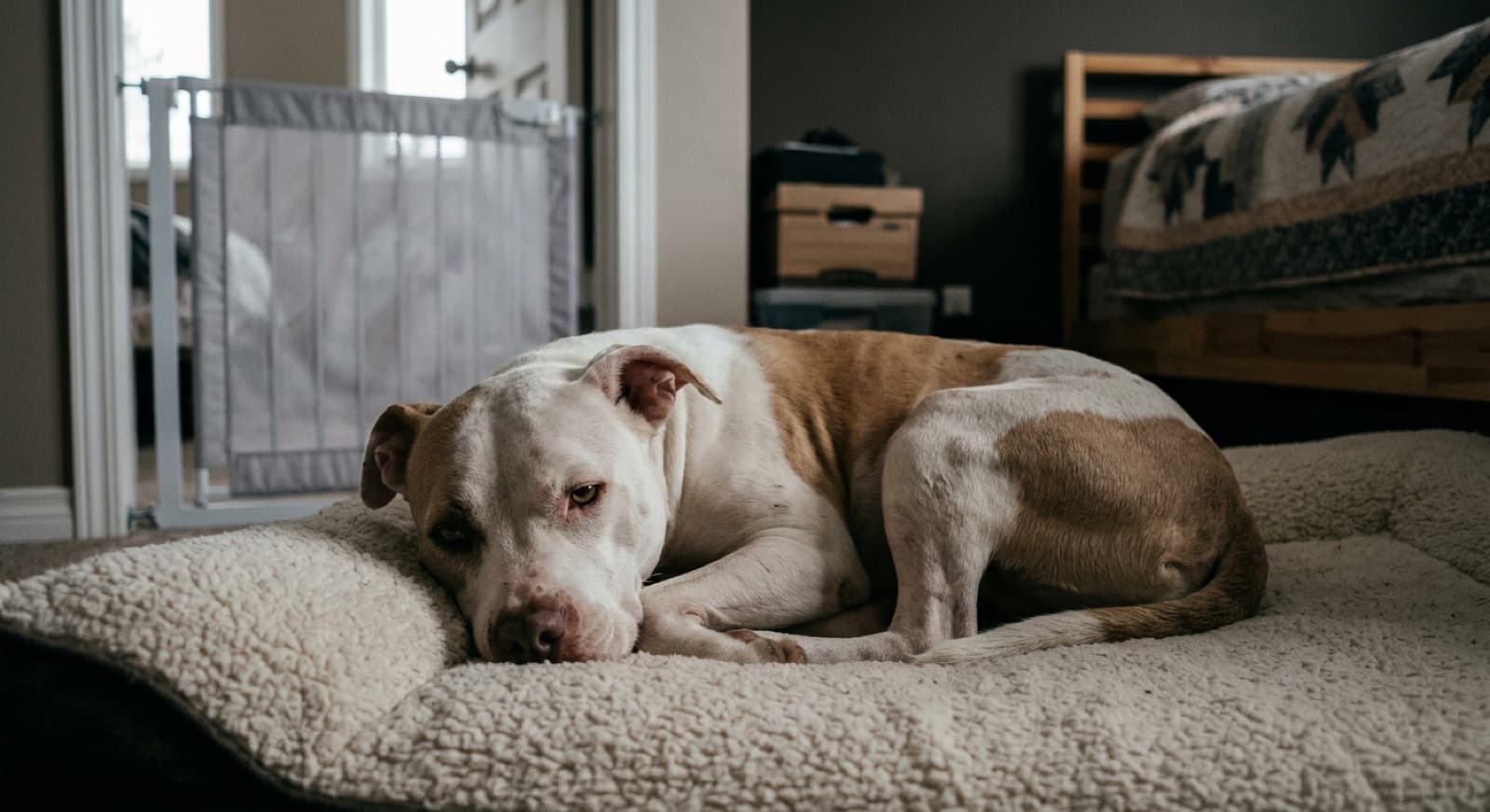
Overwhelmed, scared, possibly shut down. May hide, refuse food, sleep most of the day, ignore eye contact, or pace nervously. Some Pit Bulls mask through day one with a wagging tail and crash on day three. All of this is normal. Your job is to be predictable, quiet, and non-demanding.
3 Weeks: Settling and personality emerges
Routines feel familiar. The dog you actually adopted starts showing up. Could be a velcro lap dog. Could be an anxious chewer. Could be a goofy clown. Could be a boundary-tester who counter-surfs and pushes through doors. Whatever shows up in weeks 2 to 4 is closer to baseline than what you saw on day one. This is when most behavioural surprises hit.
3 Months: Fully bonded
Real bond forms. Recall responsibility starts (your dog now wants to stay near you). Training basics stick. Trust is two-way. By month three, most rescue Pit Bulls are at 80% of their long-term personality. Cracks in confidence (noises, strangers, other dogs) are now visible enough to work on with a trainer if needed.
Day One: Setup and First 24 Hours
Set up before the dog arrives. Decisions made on day one prevent problems for months.
Before the dog arrives
- • Pick a quiet room with a door and a baby gate. Spare bedroom, office, or laundry room works. This is the safe zone.
- • Place a sturdy crate (door open), a comfy bed, water bowl, and a few simple chew options.
- • Confirm the same food the foster fed. Pick up a 5 to 10 kg bag before pickup. Do not switch food in week one.
- • Buy a martingale or escape-proof harness in the right size. Flat collars slip off Pit Bull heads.
- • Walk the yard. Check gate latches, fence height, gaps under the fence. Pit Bulls are strong jumpers and diggers.
- • Brief everyone in the home: no crowding, no visitors for 2 weeks, kids stay calm and let the dog approach first.
- • Stock plain treats (boiled chicken, small dog biscuits) for low-pressure trust building.
First 24 hours
- • Bring the dog in on a leash. Do not carry. Walk straight to the safe room.
- • Keep the leash on inside for the first 24 to 48 hours so you can guide gently without grabbing a collar.
- • Show water and food. Leave food down 15 minutes, remove if untouched.
- • Short on-leash potty walks every 3 to 4 hours. No long walks, no neighbourhood tours.
- • Sit nearby quietly. Read, watch TV. Do not make eye contact, do not reach over the head, do not baby-talk.
- • No visitors. No phone calls with friends meeting the dog. No social media unboxing.
- • Other pets stay separate behind a closed door. Controlled intros wait until day 5 to 7 at earliest.
- • If the dog hides, leave them alone. Place treats at the edge of the hiding spot and walk away.
- • Night one: crate or safe room with door closed. Soft TV or white noise. Most rescue Pit Bulls do not sleep night one. They will by night three.
Week One: Routine and Bonding Only
No training, no daycare, no off-leash, no introductions to anyone outside your household. Week one is one job: build a predictable rhythm.
Daily rhythm to copy
- • Same wake time every day. Same potty walk loop. Same feeding times.
- • 2 to 3 short on-leash walks (15 to 20 minutes each) in quiet neighbourhood streets. No dog parks.
- • 3 short low-pressure interaction sessions (5 to 10 minutes): sitting near the dog, offering treats by hand at low height, calm petting if they invite it.
- • Lots of rest. Rescue dogs need 16 to 18 hours of sleep in week one. Resist the urge to interact more.
- • Same evening wind-down. Lights low, calm energy in the home, predictable bedtime.
Week-one mistakes that cause month-two problems
- • Throwing a “welcome home” gathering. Even one new visitor in week one can trigger fear reactivity later.
- • Taking the dog to a dog park, daycare, or pet store. All three are sensory overload during decompression.
- • Forcing handling: nail trims, baths, brushing, ear cleaning. Save all of it for week 3+.
- • Letting kids crowd the dog, hug, climb, or follow into the safe room. Kids must let the dog come to them.
- • Leaving the dog alone for 6+ hours on day one. Build alone-time gradually starting at 15 to 30 minutes.
- • Allowing off-leash anywhere outside a fully fenced yard. Flight risk in the first month is the highest it ever gets.
- • Switching food. Stick with what the foster fed for at least 2 weeks, then transition over 7 to 10 days.
Weeks 2 and 3: The Real Dog Shows Up
This is the chapter most adopters are not warned about. Week one was the muted, polite version. Weeks 2 and 3, the actual personality starts to emerge as the dog feels safe enough to behave normally. The behavioural surprises in this window are not regression. They are honesty.
Energy goes up
The flat, sleepy dog of week one starts zooming, mouthing toys, and wanting more walks. Now you see the actual energy level you need to plan around.
Vocalisation appears
Some rescue Pit Bulls are quiet on day one and become loud in week two: barking at the door, woo-woo vocalising, alert barking at the window. Manageable, but a real factor for apartment dwellers.
Boundary testing
Counter-surfing, stealing socks, claiming the couch, pulling on leash. Normal. Establish the house rules now with calm management (baby gates, leashing indoors during meals) rather than scolding.
Anxiety patterns surface
Separation anxiety, resource guarding, leash reactivity, fear of certain triggers (men with hats, garbage trucks, other dogs). If anything looks unsafe or persistent past week 3, contact a Calgary force-free trainer early. Patterns are easier to interrupt at week 4 than month 4.
First gentle training
Short sessions (3 to 5 minutes), high-value treats, force-free. Name response, hand target, sit. Build the marker word (“yes” or a clicker). No leash corrections, no e-collars, no “dominance” talk. Pit Bulls are sensitive and shut down or escalate under harsh handling.
Months 2 and 3: Bond Solidifies
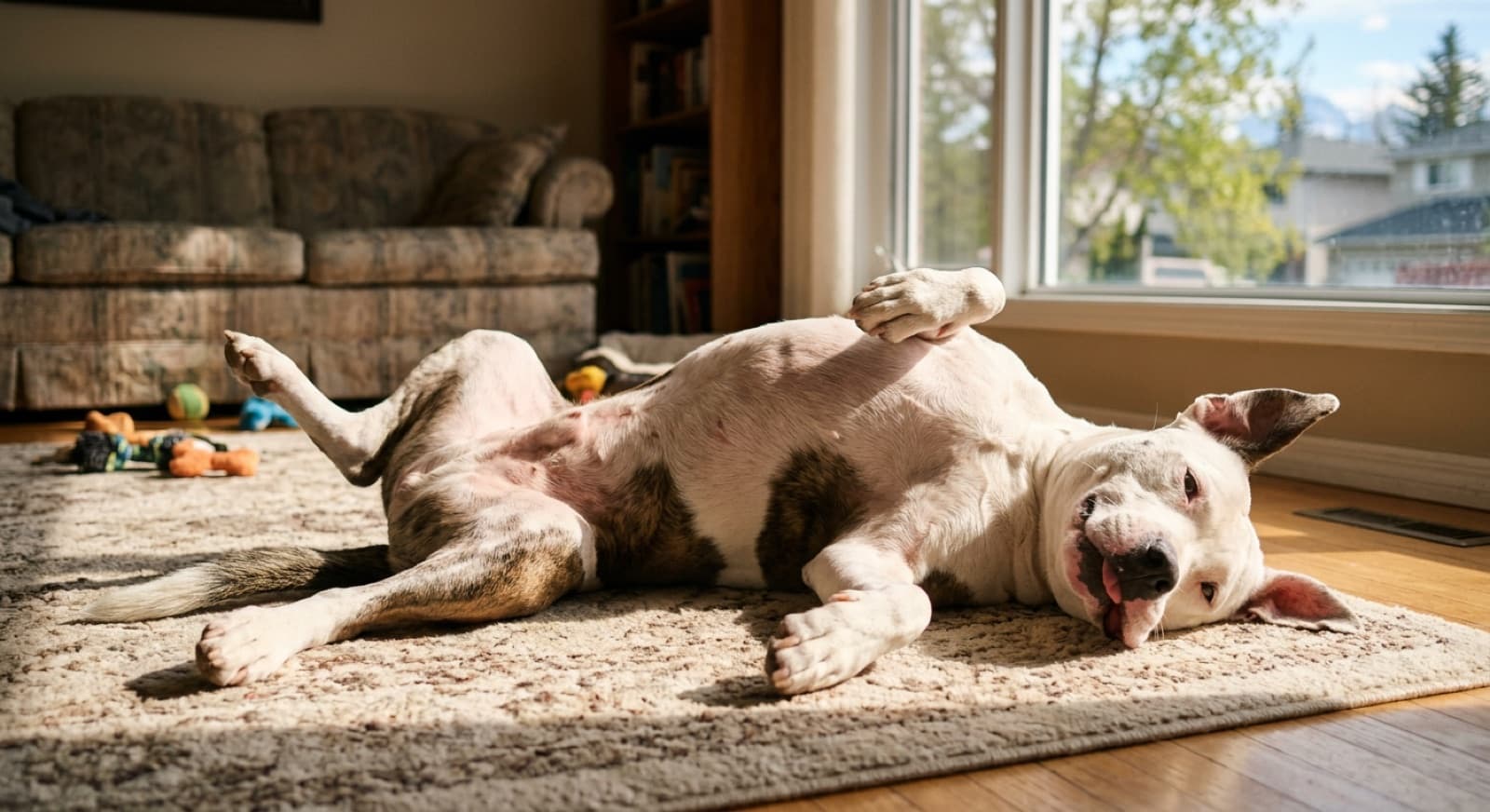
By week 5 to 6, your Pit Bull recognises you as theirs. By month 3, the bond is real enough that recall responsibility starts to mean something. This is when you can layer in the bigger parts of life.
What to add by month
- • Month 2: Group training class (force-free only). Long-line recall practice at Nose Hill or Fish Creek. First careful visitor introductions. Slow handling work: paw touches, ear checks, mouth peeks.
- • Month 2: First short alone-time stretches built up to 3 to 4 hours. Use enrichment puzzles, frozen Kongs, lick mats.
- • Month 2 to 3: First grooming visit if needed (nails, bath). Pick a fear-free Calgary groomer and book a 15-minute meet-and-greet first.
- • Month 3: Daycare evaluation if the dog is dog-social. Many Pit Bulls do not love daycare and are happier with a walker.
- • Month 3: Off-leash evaluation. Long-line first. Fenced areas only. Many Calgary owners never use off-leash parks and that is a valid choice.
- • Month 3: First real vet visit beyond the rescue check-up. Establish a fear-free clinic and discuss long-term skin allergy or joint care if the rescue flagged either.
Trauma Signs to Watch For
Most rescue Pit Bulls show some of these in the first weeks. They usually resolve with patience. A few are flags worth calling the rescue or a fear-free vet about.
Common and usually resolve in 2 to 8 weeks
- • Lip licking when nothing is happening (stress signal)
- • Whale eye (whites visible at the corners) when approached
- • Tucked tail held constantly
- • Hiding for hours
- • Refusing food the first 24 to 48 hours
- • Flattened ears around new people
- • Freezing in place when called
- • Sleeping facing the door or wall
Call the rescue or a fear-free vet within 24 to 48 hours
- • No food OR water for more than 48 hours
- • Fearful aggression you cannot safely manage (lunging, snapping when approached on the bed or near food)
- • Severe shutdown past day 5 (no movement, no eye contact, will not leave the safe spot for water)
- • Going completely limp when handled (extreme stress shutdown)
- • Bloody diarrhea, persistent vomiting, or uncontrollable shaking
- • Kennel cough symptoms (honking cough, eye or nose discharge)
- • Bite incident with anyone in the home
Calgary rescues like BARCS, AARCS, and Pawsitive Match expect post-adoption support calls. That is part of why their adoption fees are higher than direct shelter pickup. Use them.
The Honest Reality of Rescue Pit Bulls in Calgary
Calgary rescue Pit Bulls are rarely “clean slate” dogs. Knowing the common patterns helps you read foster notes and ask the right questions.
Skin allergies are common
Itchy skin, recurring ear infections, hot spots. Often manageable with a limited-ingredient diet, regular wipes, and occasional vet visits. Budget $300 to $1,500 a year on top of routine care. Confirm what the foster fed before bringing the dog home.
BSL refugees from other provinces
Calgary has no breed-specific legislation, which is why some rescues transport Pit Bulls from Wood Buffalo, BC municipalities with restrictions, or Ontario. These dogs often arrive after long transport stress and weeks in foster. The behaviour preview from the foster matters even more for transport dogs.
Owner-surrender housing cases
Calgary apartment rules and condo board restrictions still target bully breeds despite no city BSL. Many rescue Pit Bulls were surrendered when an owner moved into a no-bully building. These dogs often have full house-training, kid history, and bonded personalities. They tend to be the strongest adoption matches.
Backyard-breeder origins
Younger Pit Bulls from undersocialized backyard litters may have weaker bite inhibition, more leash reactivity, and longer settling times. They are not a worse choice, just a longer commitment. Foster notes from 4+ weeks in care are the best predictor.
Foster Network vs Direct Shelter
Most Calgary Pit Bull rescues (AARCS, BARCS, Pawsitive Match, ARF Alberta) are foster-based. Calgary Humane Society is direct-shelter. The difference matters in week one.
Foster-based (BARCS, AARCS, Pawsitive Match)
- • Weeks of in-home behavioural notes
- • Documented kid, cat, and dog tolerance
- • House-training status known
- • Alone-time limit estimated
- • Foster available for post-adoption questions
- • Higher fee ($400 to $750) reflects this work
Direct shelter (Calgary Humane Society)
- • Kennel behaviour ≠ home behaviour
- • Less behavioural history
- • Faster intake-to-adoption timeline
- • Lower fee ($200 to $400)
- • Strong medical screening
- • Watch closely in weeks 2 to 3 for personality surprises
Calgary Climate Notes
Winter (-10C to -30C)
Pit Bulls have short single coats. Most tolerate walks down to about -15C with a coat. Below -20C cap walks at 10 to 15 minutes, use booties, and watch for shivering or paw lifting. Build indoor enrichment (snuffle mats, frozen Kongs, training games) to replace long winter walks. Calgary salt and de-icer crack short-coat paw pads fast.
Summer (22C to 30C)
Heat is the bigger Calgary risk for bully breeds. Walk early morning or late evening. Avoid midday walks above 25C. Carry water. Test pavement with the back of your hand (7-second rule: if it hurts you, it burns paws). A panting Pit Bull on a hot sidewalk is in trouble within minutes. Indoor play and water-bowl games beat long summer walks.
Shoulder seasons (October, April, May)
Easiest months for Calgary Pit Bull walks. Cool but not bitter, dry trails at Fish Creek, Edworthy Park, Bowmont Park, and Nose Hill on-leash loops. Use these months to build outdoor confidence before extreme weather returns.
Ready to start the search?
Live Pit Bull listings from 15+ Calgary rescues, refreshed regularly. Foster reports usually include kid history, cat history, alone-time tolerance, and skin allergy status.
See Available Pit Bulls →Frequently Asked Questions
Does the 3-3-3 rule apply to rescue Pit Bulls?
Yes, and often more intensely. 3 days to decompress, 3 weeks for personality to emerge, 3 months to feel fully bonded. Many Calgary rescue Pit Bulls arrive with shelter trauma, BSL displacement history, or owner-surrender stress, so the first 3 days can be deeply shut down. Personality often does not fully emerge until weeks 4 to 8.
What should I do on day one?
Minimal stimulation. Quiet room with a baby gate, water, bed, and the same food the foster used. Keep the leash on indoors the first 24 to 48 hours. No visitors. No dog parks. No other pets in the room yet. Short on-leash potty breaks every 3 to 4 hours. Sit nearby quietly and let the dog approach.
When should I start training?
Not in week one. Week one is bonding and routine only. Week 2 to 3, start short low-pressure sessions on name, sit, hand-target. Month 2, layer in recall on a long line and loose-leash walking. Group classes wait until month 2 to 3. Force-free methods only. Pit Bulls shut down under harsh handling.
What are trauma signs I should watch for?
Lip licking, whale eye, constantly tucked tail, freezing, hiding for hours, refusing food past 48 hours, flattened ears, full-body shaking that is not cold, growling when approached on the bed or food, or going limp when handled. Most resolve over 2 to 8 weeks. Severe shutdown past day 5 with no food or water, or fear-aggression you cannot safely manage, is a call to the rescue or a fear-free vet.
Can I take my new rescue Pit Bull to a dog park in the first week?
No. Calgary off-leash parks are the highest-risk place in the first month. Flight risk peaks during decompression. Even friendly Pit Bulls may snap at unknown dogs in a high-arousal environment while still settling. Wait until month 2 to 3 minimum, after recall is built on a long line.
My new Pit Bull is not eating. Is this normal?
First 24 to 48 hours: normal. Stress suppresses appetite. Use the same food the foster fed. Offer in a quiet spot, leave it down 15 minutes, remove if untouched. Most rescue Pit Bulls eat by day 2 or 3. Past 48 hours of no food or water, or bloody diarrhea, call your vet.
How does the foster home preview help?
Most Calgary Pit Bull rescues are foster-based. An experienced foster has lived with the dog for weeks or months. Foster notes on house training, kid tolerance, cat tolerance, dog-dog behaviour, separation anxiety, alone-time limit, and triggers are the truest preview you will get. Ask for foster notes before applying.
How do Pit Bulls handle Calgary winters and summers?
Short single coats. Tolerate winter walks to about -15C with a coat. Below -20C limit to 10 to 15 minutes with booties. Summer above 25C is the bigger risk because bully breeds overheat. Walk early or late, carry water, and avoid hot pavement. Indoor enrichment replaces extreme-weather walks.
More Pit Bull guides
Pit Bull Adoption Calgary →
Where to find a rescue Pit Bull in Calgary, real costs, foster network, and what to expect from each rescue.
Is a Pit Bull Right for You? →
Honest 12-question self-assessment for prospective Pit Bull owners in Calgary.
Pit Bull Training Calgary →
Force-free training plan, Calgary trainers, recall, leash manners, and the bully-breed sensitivity profile.
Pit Bull Exercise & Energy →
Daily exercise minimums, Calgary trail recommendations, mental enrichment, and seasonal adjustments.
Pit Bull Separation Anxiety →
Bully-breed separation anxiety patterns, alone-time conditioning, and when to call a behaviourist.
Pit Bulls with Kids & Cats →
Honest patterns on kid tolerance, cat compatibility, and the introduction protocol that actually works.
Pit Bull Cost of Ownership →
Calgary-specific lifetime cost breakdown including skin allergy management and insurance.
Pit Bull BSL & Bylaws Calgary →
Calgary has no BSL but neighbouring municipalities and condo boards may. Know before you adopt.
Buy or Adopt a Pit Bull? →
Comparison of rescue, foster, and breeder paths for prospective Pit Bull owners in Calgary.
Pet Insurance for Pit Bulls →
Which Calgary insurers cover bully breeds, what to budget, and breed-specific exclusions to verify.
Pit Bull Health Issues Calgary →
Skin allergies, joint issues, heart conditions, and the breed-specific health profile every adopter should know.
Pit Bull Housing & Insurance →
Calgary condo board restrictions, rental restrictions, and home insurance exclusions to check.
Pit Bull Adolescence →
The 9 to 24 month chapter most adopters are not warned about and how to ride it out.
Pit Bull Dog Aggression Management →
Honest guide on managing dog-dog reactivity in adult Pit Bulls and when to call a behaviourist.
New dog? Start with these care guides
Everything a new adopter needs to set up a safe, happy home.