The short answer
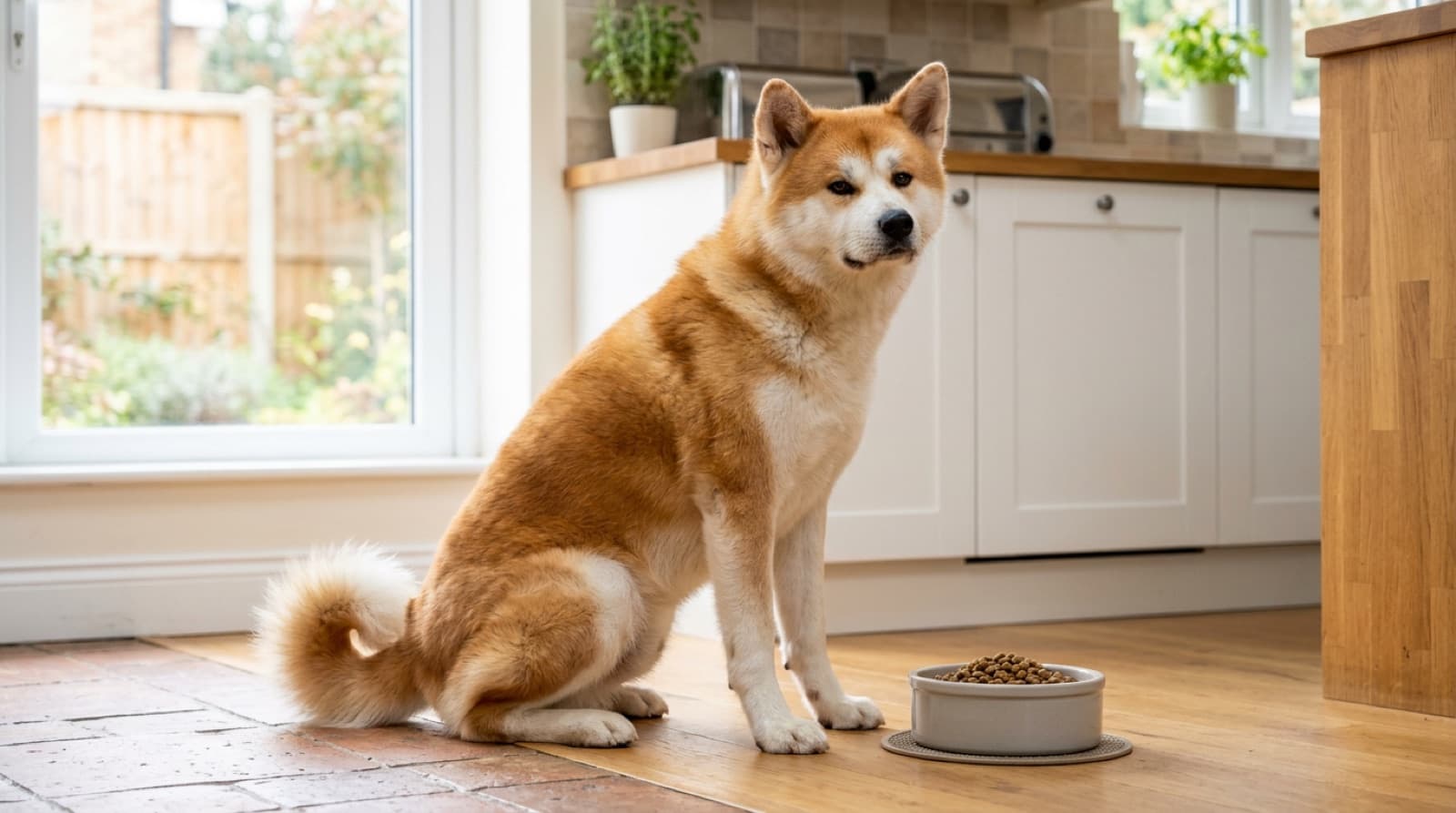
Feed an Akita a complete large-breed diet from a nutritionist-backed brand, and keep the dog lean. Akitas are allergy-prone and often develop food sensitivities in adulthood, so a limited-ingredient or fish-based food is a common starting point, but persistent skin issues need a vet because the breed is also prone to a skin disease called sebaceous adenitis. Grow a puppy slowly on a large-breed puppy formula. Feed two or more smaller meals a day, use a slow feeder, and skip raised bowls, because this deep-chested breed is at real risk of bloat.
What is the best food for an Akita?
There is no single best bag, and any site that names one is selling something. The standard most vets point to comes from the WSAVA global nutrition guidelines.
Pick a brand that does the science. Ask whether the company employs a full-time, board-certified veterinary nutritionist and runs feeding trials. The safe defaults for a healthy Akita are Purina Pro Plan Large Breed, Royal Canin, and Hill's Science Diet.
Because Akitas are allergy-prone, a limited-ingredient or fish-based formula is a common starting point, and many owners favour fish-based foods for both allergy avoidance and the coat. Then watch the dog: firm stool, settled skin, a glossy coat, and a lean body mean it is working.
Allergies, itchy skin, and sebaceous adenitis
Allergy-prone skin is the defining feeding issue for the breed, and it deserves a careful answer because the Akita's skin has more than one thing going on.
Food sensitivities often appear in adulthood, with chicken, wheat, and corn the usual suspects, and many owners end up switching foods when itching starts. A vet-run elimination diet (eight to twelve weeks on a single novel protein, no other treats) is the way to confirm a food allergy. But the breed is also prone to environmental allergies and to sebaceous adenitis, an inherited autoimmune skin disease that the breed shares a predisposition to with the Standard Poodle, and the thick double coat hides early signs.
So a food change alone often does not fix the itch. For sebaceous adenitis specifically, diet supports the skin but does not cure it: most affected dogs need a quality complete food plus vet-recommended supplements (omega-3 EPA and DHA are commonly used for the skin barrier), as part of a plan managed with your vet. PetMD describes the condition. The honest bottom line: persistent skin problems need a vet to tell a food allergy from environmental allergy, skin disease, or something else, not endless bag-swapping.
Growing a large-breed puppy
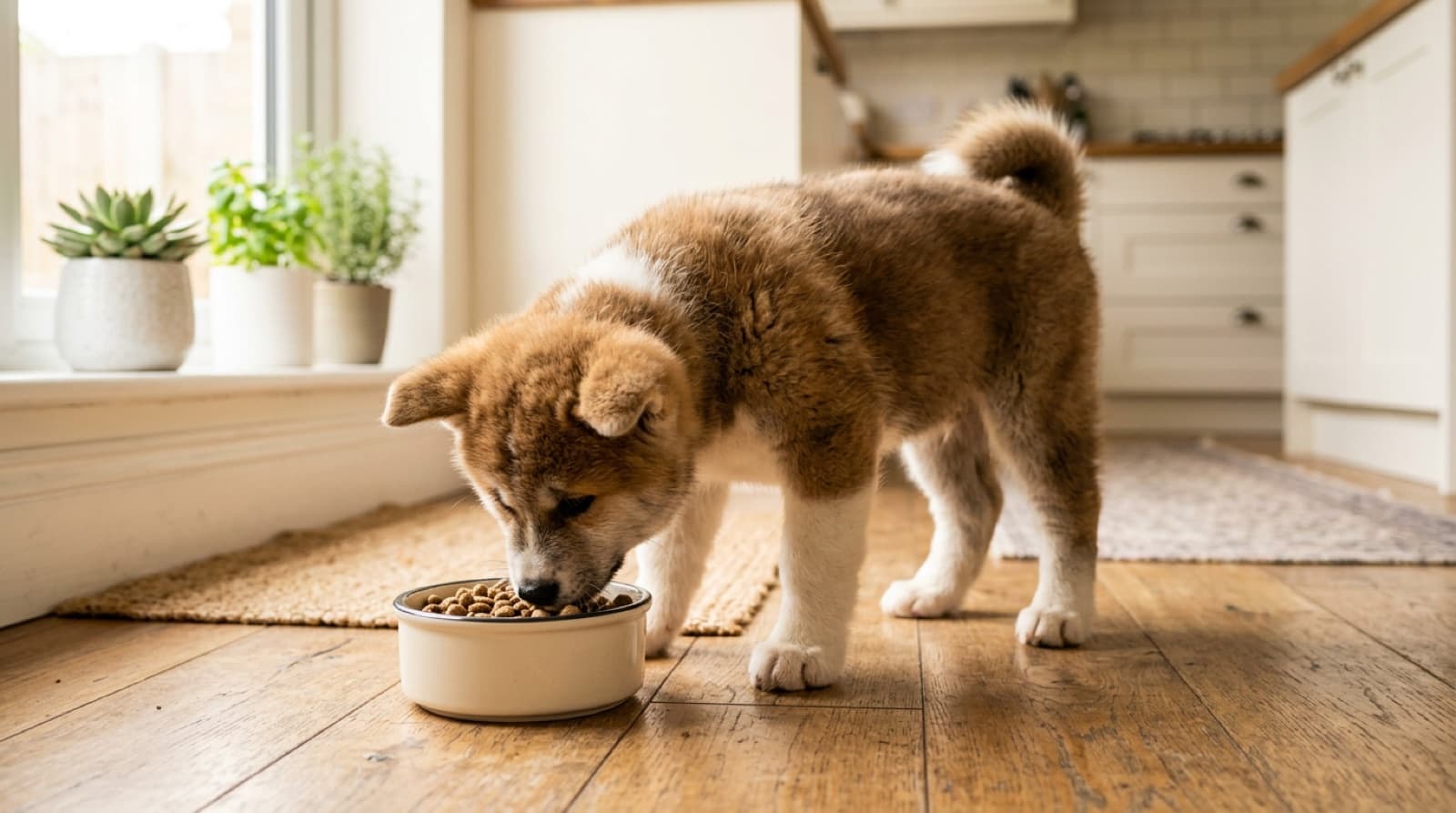
Feed an Akita puppy a large-breed puppy formula and grow it slowly and lean. Large-breed puppy foods control calcium and calories so a big-breed puppy does not grow too fast, which protects the developing hips and joints the breed is prone to.
One myth to clear: the lever is controlled calcium and calories, not low protein. Do not avoid a quality food just because the protein number looks high, and do not add calcium supplements on top of a complete puppy food, which is harmful for a large-breed puppy. Keep the puppy lean enough to feel the ribs, keep exercise gentle while it is growing, and confirm the timing of the switch to adult food with your vet.
Feeding to lower bloat risk
Akitas have a deep chest and are at elevated risk of bloat (gastric dilatation-volvulus), a true emergency. A swollen belly, unproductive retching, or sudden distress means go to an emergency vet immediately.
The feeding habits that lower the risk: feed two or more smaller meals a day instead of one big one, slow a fast eater with a slow-feeder bowl, and avoid hard exercise for about an hour before and after meals.
One common piece of advice is wrong: raised or elevated bowls are associated with substantially higher bloat risk in large and giant breeds, not lower, so feed from the floor. The American Kennel Club's bloat overview is a good primer, and the most reliable protection is a preventive stomach-tacking surgery (gastropexy), worth discussing with your vet.
How much to feed, grain-free, and foods to avoid
Feed to body condition, not the chart. A typical adult Akita lands somewhere in the 3 to 5 cup range a day split into two or more meals, but the right number depends on size and activity, and the breed gains weight easily, so most do well at the lower end. Feel the ribs under the coat and look for a waist, and count treats inside the daily total. Some owners also keep an eye on sodium for this breed and avoid very salty foods and scraps.
Skip grain-free unless your vet diagnoses a grain allergy; the trigger is almost always a protein, and the FDA grain-free investigation is reason for caution in a large breed.
Keep these away from an Akita completely: chocolate, grapes and raisins, xylitol, onions and garlic, macadamia nuts, alcohol, caffeine, cooked bones (which splinter), and rawhide and cow hooves (poorly digestible). One clarifying note: Akitas have documented sensitivities to certain drugs and an autoimmune streak, so a flare is not always dietary. If your Akita eats something toxic, call your vet or a pet poison helpline right away.
Should I feed my Akita a raw diet?
Only with a vet or veterinary nutritionist involved. Raw has a real following among Akita owners, often driven by skin and allergy hopes and a wish to control sodium, and some dogs do well on a properly built raw diet. But raw meat carries a pathogen risk for the dog and the household, and a homemade raw diet without a professional recipe routinely runs short on calcium and other nutrients, which matters most for a growing large-breed puppy. If you go raw, use a complete commercial product or a vet-formulated recipe rather than guessing.
Looking to adopt an Akita?
Plan for allergy-prone skin and a slow-feeder bowl before day one. Browse Akitas and Akita mixes available now from the rescues we track.
See Available Akitas →Where to buy Akita food
Every brand worth feeding an Akita is easy to find in store and online:
- Pet specialty chains (Pet Planet, Tail Blazers, Tisol, and similar). Carry Pro Plan, Royal Canin, and limited-ingredient and fish-based lines.
- Pet Valu and PetSmart. National chains that stock the major large-breed and sensitive-skin formulas.
- Your vet clinic. The place for prescription hydrolyzed and limited-ingredient diets used in allergy work-ups.
- Online. The same brands ship to your door, easy to set on a recurring delivery.
Once you find a food your Akita's skin and stomach are happy on, stick with it. The major large-breed and limited-ingredient formulas are all available online.
Frequently Asked Questions
What is the best food for an Akita?
A complete large-breed formula from a brand that employs a veterinary nutritionist and runs feeding trials, like Purina Pro Plan, Royal Canin, or Hill’s Science Diet. Because Akitas are allergy-prone and many develop sensitivities to chicken, wheat, and corn, a limited-ingredient or fish-based formula is a common starting point, and many owners favour fish-based foods for both allergies and the coat. The brand matters less than the food agreeing with your dog. Start with whatever the breeder or rescue was feeding, then transition over seven to ten days.
How much should I feed an Akita?
A typical adult Akita eats somewhere in the range of 3 to 5 cups of quality food a day split into two or more meals, but that is a wide range because it depends on the dog’s size, age, and activity, and the bag chart over-states for many dogs. Feed to body condition rather than a fixed cup count: you should feel the ribs easily under the coat and see a waist from above. Akitas gain weight easily, so most do well at the lower end. Raw feeders often use roughly 2 to 3 percent of ideal body weight a day.
Why is my Akita so itchy, and is it the food?
It might be, but the Akita’s skin is complicated. The breed often develops food sensitivities in adulthood, with chicken, wheat, and corn the usual suspects, and many owners switch foods when this appears. But Akitas are also prone to environmental allergies and to sebaceous adenitis, an inherited autoimmune skin disease, and the thick double coat hides early signs. So a food change alone often does not fix the itch. Confirming a food allergy means a vet-run elimination diet, eight to twelve weeks on a single novel protein with no other treats. Persistent skin problems need a vet to distinguish a food allergy from environmental allergy, skin disease, or something else.
My Akita has sebaceous adenitis. Does diet help?
Diet supports the skin but does not cure sebaceous adenitis, which is an inherited condition managed with your vet. Most affected Akitas do not need a special diet, just a high-quality complete food plus supplements your vet recommends. Owners and breed clubs commonly use omega-3 fish oil (EPA and DHA) for the skin barrier, sometimes alongside vitamins and topical care, but this is part of a vet-directed plan, not a do-it-yourself protocol. Do not rely on diet alone, and do not over-supplement on your own.
How do I feed an Akita puppy for healthy growth?
Use a large-breed puppy formula and grow the puppy slowly and lean. Large-breed puppy foods control calcium and calories so a big-breed puppy does not grow too fast, which protects the developing hips and joints the breed is prone to. The lever is controlled calcium and calories, not low protein, so do not avoid a quality food just because the protein looks high, and do not add calcium supplements on top of a complete food. Keep the puppy lean enough to feel the ribs, and confirm the timing of the switch to adult food with your vet.
How do I prevent bloat when feeding my Akita?
Akitas have a deep chest and are at elevated risk of bloat (gastric dilatation-volvulus), a true emergency. Feed two or more smaller meals a day instead of one big one, slow a fast eater with a slow-feeder bowl, and avoid hard exercise for about an hour before and after meals. Skip raised or elevated bowls, since research links them to substantially higher bloat risk in large and giant breeds, not lower. A swollen belly, unproductive retching, or sudden distress means go to an emergency vet immediately, and ask your vet whether a preventive stomach-tacking surgery makes sense.
Should I feed my Akita grain-free?
Not unless your vet diagnoses a grain allergy. Most Akita food allergies are to a protein like chicken, not to grain, so grain-free rarely fixes the itch. On top of that, the FDA has been investigating a possible link between grain-free diets built on peas, lentils, and potatoes and a heart condition called dilated cardiomyopathy, and large breeds may be more vulnerable. A complete diet from a nutritionist-backed brand is the safer default.
What to Feed a Chow Chow
Another thick-coated, allergy-prone, deep-chested breed with similar feeding cautions.
What to Feed a Great Dane
The large-breed puppy growth and bloat principles, in a giant breed.
Breed Feeding Guides
What to feed dozens of breeds, from toy dogs to giants, with the science made practical.
Akitas for Adoption
Live listings of Akitas and Akita mixes from the rescues we track.