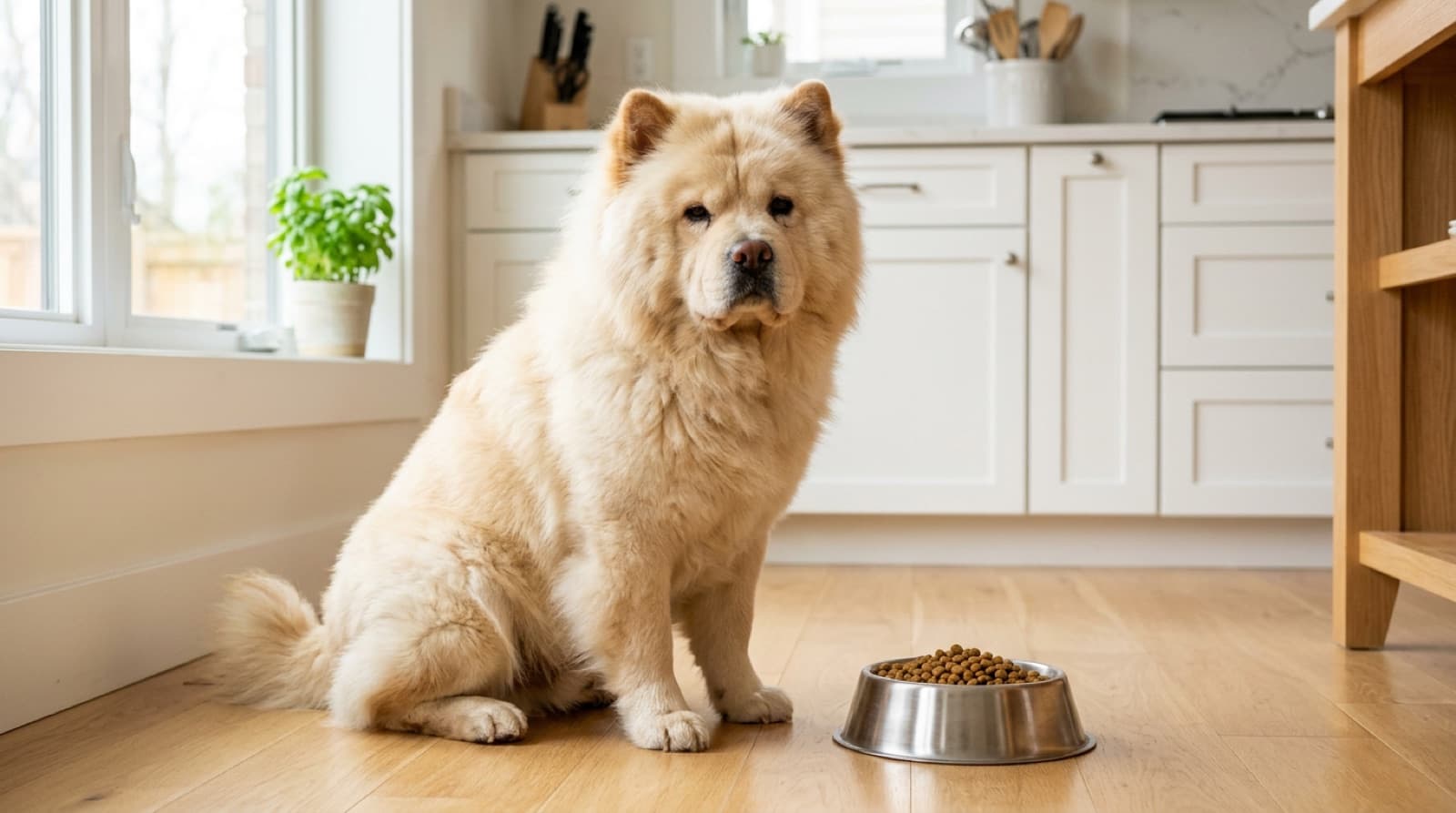
The short answer
Feed a Chow Chow a complete diet from a nutritionist-backed brand, transition foods slowly, and keep the dog lean. Chows are prone to itchy skin and sensitive stomachs, so a sensitive-skin-and-stomach line is often a good start, but the skin is complicated and not always a food problem. The breed is aloof and often picky with a low metabolism, so a Chow eating less than the bag says is frequently normal. Feed two or more smaller meals a day, use a slow feeder, and skip raised bowls, because this deep-chested breed is at real risk of bloat.
What is the best food for a Chow Chow?
There is no single best bag, and any site that names one is selling something. The standard most vets point to comes from the WSAVA global nutrition guidelines.
Pick a brand that does the science. Ask whether the company employs a full-time, board-certified veterinary nutritionist and runs feeding trials. The safe defaults are Purina Pro Plan, Royal Canin, and Hill's Science Diet.
Because Chows run sensitive, a sensitive-skin-and-stomach or limited-ingredient formula is often the right starting point. Then watch the dog: firm stool, settled skin, and a lean body mean it is working. Whatever the brand, transition slowly to avoid the loose stool this breed is prone to.
Itchy skin and allergies: more than just food
Itchy skin is the number-one feeding worry for Chow owners, and it deserves a careful answer, because the Chow's skin has several things going on at once.
Food can be a trigger, with chicken, beef, wheat, and corn the usual suspects, and ruling it out with a vet-run elimination diet (eight to twelve weeks on a single novel protein, no other treats) is worthwhile. But food is only one factor. Chows are also prone to environmental allergies and to sebaceous adenitis, an inherited skin disease, and the dense double coat traps moisture and warmth and hides early symptoms until a secondary infection takes hold. So a food change alone often does not fix the itch, and skin can take six to eight weeks to respond even when the diet is right.
The practical takeaway: try the food angle properly with your vet, but if persistent scratching, raw patches, or recurrent ear infections continue, that needs veterinary diagnosis and treatment, not endless bag-swapping. For the breed's broader health picture, see our Chow Chow health guide.
The picky eater, and a low metabolism
Chows are aloof and often genuinely picky, and they have a lower metabolism than many breeds. Put those together and you get the breed's most common false alarm: a healthy, active Chow that eats only a third to a half of the amount on the bag. Owners panic that something is wrong, but for this breed that intake is frequently normal. The bag chart over-states portions.
Feed to body condition rather than the chart: you should feel the ribs easily under the coat and see a waist. Keep a consistent schedule, put the food down for fifteen to twenty minutes, and pick it up if untouched. The thing that turns normal selectiveness into a real problem is panic-stacking toppers and tastier food every time the dog refuses, which teaches a smart Chow to hold out. A bland reset of plain boiled chicken and rice is fine for a day or two of an upset stomach, but it is not a complete long-term diet.
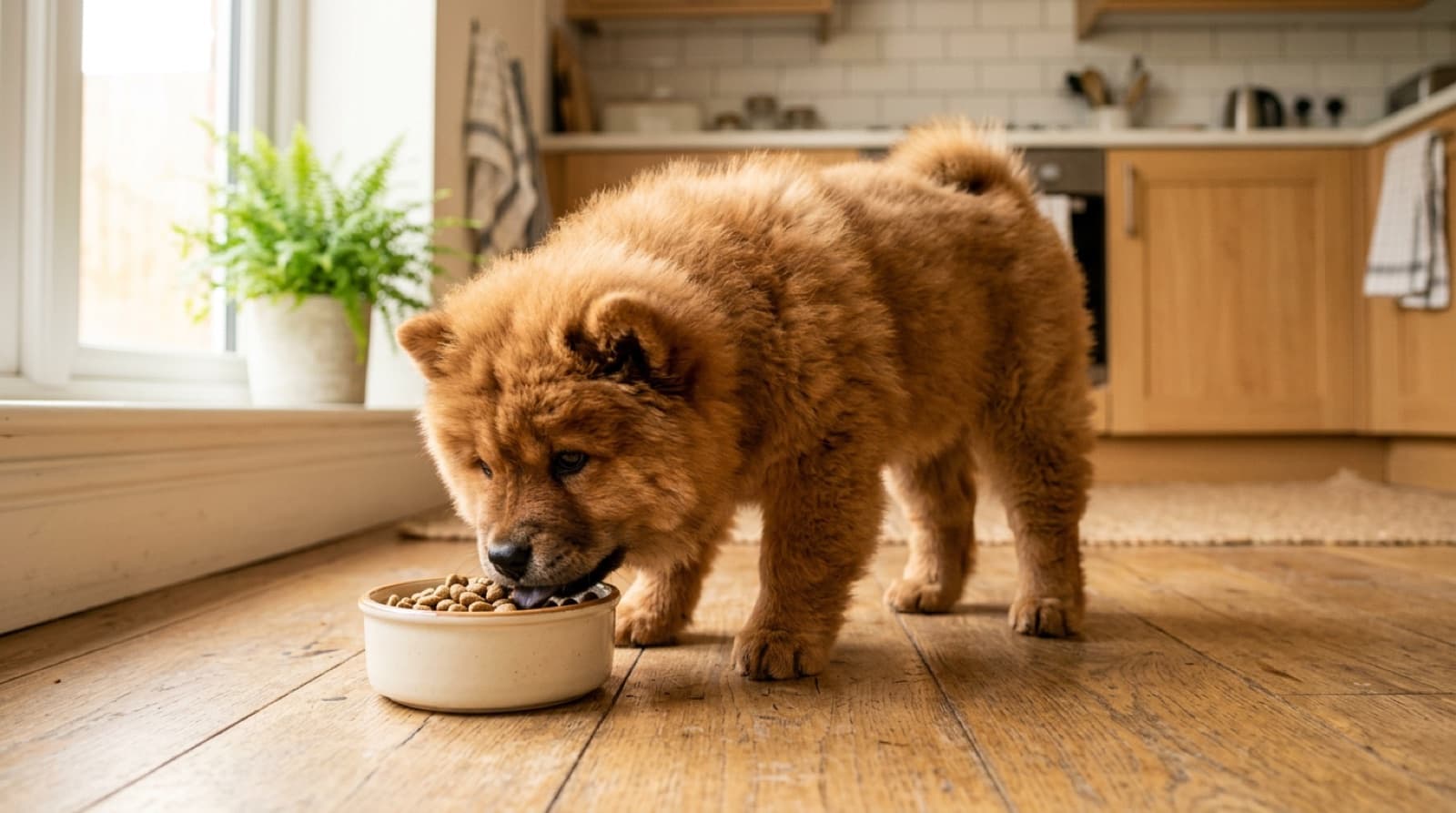
Feeding to lower bloat risk
Chows have a deep chest and are among the breeds at higher risk of bloat (gastric dilatation-volvulus), a true emergency. A swollen belly, unproductive retching, or sudden distress means go to an emergency vet immediately.
The feeding habits that lower the risk: feed two or more smaller meals a day instead of one big one (once-daily feeding roughly doubles the risk), slow a fast eater with a slow-feeder bowl, and avoid hard exercise for about an hour around meals. These habits also help with the bile-vomiting problem, since they keep the stomach from sitting empty too long.
One common piece of advice is wrong: raised or elevated bowls are linked to higher bloat risk in large breeds, not lower, so feed from the floor. The American Kennel Club's bloat overview is a good primer, and a preventive stomach-tacking surgery is worth discussing with your vet.
Grain-free, the coat, and what is not a food problem
Skip grain-free unless your vet diagnoses a grain allergy. The trigger is almost always a protein, and the FDA grain-free investigation is reason for caution.
The coat and zinc. Chows have a higher zinc requirement than many breeds, and a diet very high in calcium or certain plant compounds can block zinc absorption, so a dull coat and skin lesions can sometimes be a zinc-absorption issue, a condition called zinc-responsive dermatosis, rather than a simple allergy. The Purina Institute describes it. This is a vet diagnosis, not a guess.
What gets blamed on food but usually is not: a dull coat and weight gain can be hypothyroidism, which is common in the breed; eye irritation that looks like an allergy can be entropion (inward-rolling eyelids); and stiffness is often hip dysplasia. None of these are diet problems, so a persistently poor coat, sore eyes, or mobility change is worth a vet visit rather than a new bag.
Foods to avoid
Keep these away from a Chow Chow completely: chocolate, grapes and raisins, xylitol (in sugar-free gum, some peanut butters, and baking), onions and garlic, macadamia nuts, alcohol, caffeine, and cooked bones. If your Chow eats something toxic, call your vet, the nearest emergency clinic, or a pet poison helpline right away.
Should I feed my Chow Chow a raw diet?
Only with a vet or veterinary nutritionist involved. Some owners turn to raw or fresh diets out of frustration with skin or stomach issues, and a well-built one can suit the breed. But raw meat carries a pathogen risk for the dog and the household, and a homemade raw diet without a professional recipe routinely runs short on key nutrients, which is especially important given the breed's zinc and skin needs. If you want to try fresh or raw, use a complete commercial product or a vet-formulated recipe.
Looking to adopt a Chow Chow?
Plan for a sensitive stomach and a slow-feeder bowl before day one. Browse Chows and Chow mixes available now from the rescues we track.
See Available Chow Chows →Where to buy Chow Chow food
Every brand worth feeding a Chow is easy to find in store and online:
- Pet specialty chains (Pet Planet, Tail Blazers, Tisol, and similar). Carry Pro Plan, Royal Canin, and sensitive-skin lines.
- Pet Valu and PetSmart. National chains that stock the major sensitive-stomach and limited-ingredient formulas.
- Your vet clinic. The place for prescription hydrolyzed and limited-ingredient diets used in allergy work-ups.
- Online. The same brands ship to your door, easy to set on a recurring delivery.
Once you find a food your Chow's skin and stomach are happy on, stick with it. The major sensitive-skin formulas are all available online.
Frequently Asked Questions
What is the best food for a Chow Chow?
A complete formula from a brand that employs a veterinary nutritionist and runs feeding trials, like Purina Pro Plan, Royal Canin, or Hill’s Science Diet. Because Chows are prone to itchy skin and sensitive stomachs, a sensitive-skin-and-stomach or limited-ingredient line is often the right starting point. The brand matters less than the food agreeing with your dog and keeping the skin settled and the stool firm. Start with whatever the rescue was feeding, then transition over seven to ten days.
Why is my Chow Chow so itchy, and is it the food?
It might be, but the Chow’s skin is complicated. The breed is prone to food allergies (chicken, beef, wheat, and corn are the usual suspects), but also to environmental allergies and to sebaceous adenitis, an inherited skin condition, and the dense double coat traps moisture and hides early symptoms. So food is one factor among several. Confirming a food allergy means a vet-run elimination diet, eight to twelve weeks on a single novel protein with no other treats, and skin can take six to eight weeks to respond. Persistent scratching, raw patches, or recurrent ear infections need a vet, not just a food swap.
My Chow Chow only eats half of what the bag recommends. Is something wrong?
Usually not. Chows are famously aloof, often-picky eaters with a lower metabolism than many breeds, so a healthy, active Chow eating a third to half of the bag’s recommended amount can be perfectly normal. The bag chart over-states portions for this breed. Feed to body condition (feel the ribs, see a waist) rather than to the chart, keep a consistent schedule, and do not panic-stack toppers, which can train the pickiness. That said, a sudden change in appetite, weight loss, or other symptoms is worth a vet check.
My Chow vomits yellow bile in the morning. What does that mean?
Yellow bile vomiting on an empty stomach is common in dogs that go long stretches without eating, and it is a frequent complaint in this often-picky breed. Splitting the daily food into two or more smaller meals, and sometimes a small bedtime snack, often resolves it by keeping the stomach from sitting empty too long. If the vomiting is frequent, comes with other symptoms, or does not settle with more frequent meals, see your vet to rule out a medical cause.
How do I prevent bloat when feeding my Chow Chow?
Chows have a deep chest and are among the breeds at higher risk of bloat (gastric dilatation-volvulus), a true emergency. Feed two or more smaller meals a day instead of one big one (once-daily feeding roughly doubles the risk), slow a fast eater with a slow-feeder bowl, and avoid hard exercise around mealtimes. Skip raised or elevated bowls, since research links them to higher bloat risk in large breeds, not lower. A swollen belly, unproductive retching, or sudden distress means go to an emergency vet immediately.
Should I feed my Chow Chow grain-free?
Not unless your vet diagnoses a grain allergy. Most Chow food allergies are to a protein like chicken or beef, not to grain, so grain-free rarely fixes the itch. On top of that, the FDA has been investigating a possible link between grain-free diets built on peas, lentils, and potatoes and a heart condition called dilated cardiomyopathy. A complete diet from a nutritionist-backed brand is the safer default.
My Chow has a dull coat. Is it the food?
Possibly, but not always in the way owners expect. Chows have a higher zinc requirement for skin and coat health, and a diet very high in calcium or certain plant compounds can block zinc absorption, so a dull coat and skin lesions can sometimes be a zinc-absorption problem rather than a simple allergy, a condition called zinc-responsive dermatosis. A dull coat can also signal hypothyroidism, which is common in the breed and has nothing to do with diet. Both are vet diagnoses, so a persistently poor coat is worth a vet conversation rather than just a new bag.
Chow Chow Health Issues
Skin, eyes, hips, thyroid, and the conditions that get blamed on diet but are not.
Chow Chow Temperament
The aloof, independent personality behind the picky eating and the food guarding.
Chow Chow Adoption
Where to find Chows and Chow mixes, real costs, and what to expect from the breed.
Chow Chows for Adoption
Live listings of Chow Chows and Chow mixes from the rescues we track.