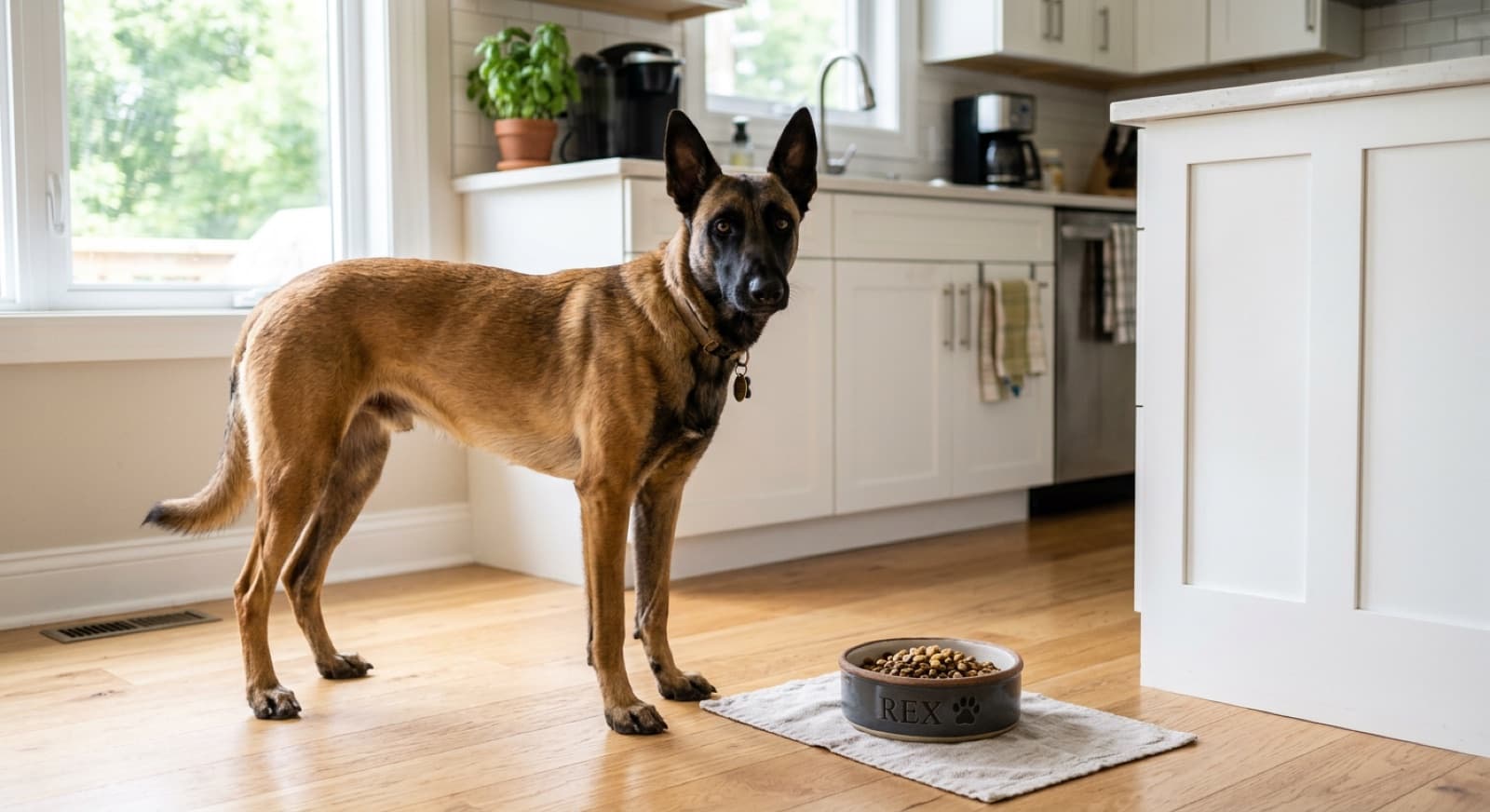
The short answer
Feed a Belgian Malinois a complete, calorie-dense food matched to its real workload, and keep it lean. The most common problem is keeping weight on a hard-burning dog, so a calorie-dense food and enough of it matter, with fat as the key endurance fuel for a working dog. A correct Malinois looks lean, so do not let anyone push you to bulk it up. Feed two or three meals from the floor, never raised, grow the puppy slowly on controlled calcium, and ignore the myth that protein makes a Malinois hyper; the answer to a wild Malinois is exercise, not a lower-protein bag.
The protein-hyperactivity myth, retired
Start here, because it is the feeding belief that trips up the most Malinois owners. The breed is so intense that owners reach for an explanation, and food is an easy target: surely all that protein is winding the dog up. It is not. A controlled veterinary study by Dodman and colleagues tested low, medium, and high-protein diets and found the protein level had no effect on hyperactivity.
Owner experience matches the science. People who, on a trainer's advice, dropped a wired dog from a high-protein food to a very low-protein one for months report the dog was just as hyper, only hungrier. As Tufts nutritionists conclude, the evidence for protein-driven behaviour is not strong, and the real levers are training, exercise, and routine. A Malinois's drive is breed temperament plus a genuine need for hard daily exercise and mental work. A bored, under-exercised Malinois is a destructive one, and no diet fixes that. The honest nuance: there is a narrow clinical use of lower-protein plus tryptophan for specific behaviour cases under a vet, but that is a targeted tool, not evidence that protein causes the breed's energy.
Fueling the athlete and keeping weight on
The number-one real feeding problem in the breed is the opposite of overfeeding: keeping weight on a dog that burns through everything. Working-Malinois owners cycle through calorie-dense kibbles hunting for one that holds the dog's condition, because standard bag guidelines badly undershoot for a hard-working Mal.
Fat is the key. As Cornell explains, fat is the primary fuel for endurance work, so a genuinely working or sport Malinois does well on a higher-fat, calorie-dense performance formula, with a few weeks of acclimatization before a busy season. Match the fuel to the real workload, though: a pet Malinois that gets good daily exercise is mid-tier, not a sled dog, and does not need an extreme performance diet. Two practical notes from owners: a very rich, high-fat food gives some dogs loose stools, so transition slowly or step down slightly, and a calorie-dense food lets you feed a smaller, more manageable volume to a big eater.
Lean is the healthy look, not bulk
A correctly conditioned Malinois is lean and athletic, with ribs you can feel easily, a clear waist from above, and a tuck from the side, which is a 4 to 5 on the 9-point body condition scale. Lean but not bony is the phrase experienced owners use, and worried family members often misread a fit Malinois as underfed.
A useful field test: if your Malinois looks visibly different before and after hard exercise, it is burning through its reserves and needs more food. The opposite temptation, bulking the dog up to look more muscular, is a mistake. Muscle comes from conditioning and work, not from extra calories, and overfeeding just adds fat that strains the joints. Some Malinois are simply built lean and always will be. Keep the dog at that lean working condition, build muscle through proper exercise, and remember that, as covered below, a too-thin dog and an anxious temperament are both bloat risk factors, so the target is genuinely lean, not skeletal.
Growing a Malinois puppy
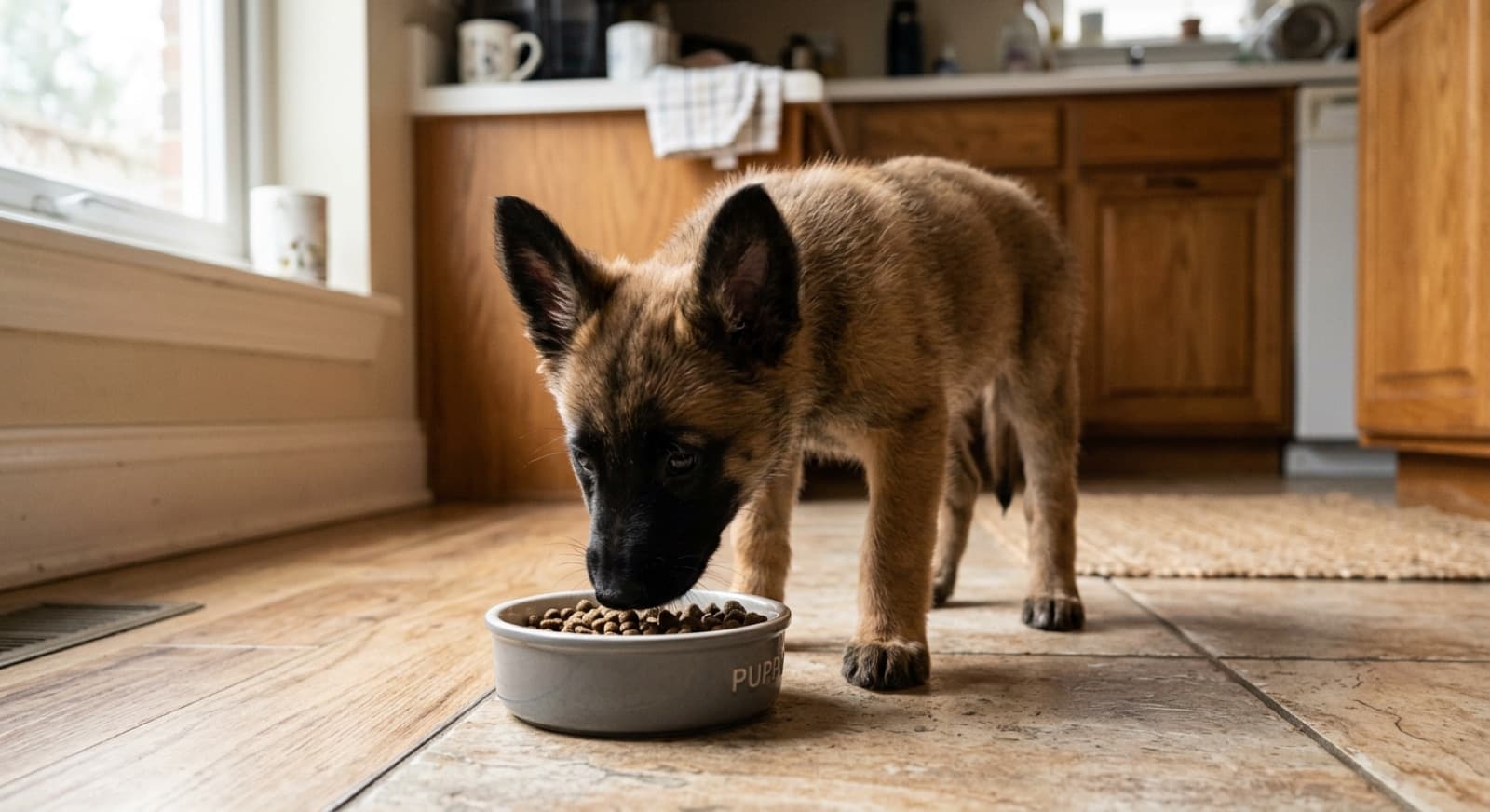
Feed a Malinois puppy a large-breed puppy formula, and understand that the reason is calcium, not protein. As the AKC explains, large-breed puppy foods deliberately control calcium, calories, and fat to slow growth, because a large-breed puppy cannot down-regulate the calcium it absorbs and excess calcium causes developmental orthopedic disease.
So two rules: do not add a calcium supplement or multivitamin to a complete puppy food, and do not overfeed for fast growth, since rapid growth is itself a risk factor for joint problems. Keep the puppy lean, feel for the ribs rather than going by the bag, and transition to adult food around 12 months, when a Malinois is largely grown in height even if it fills out to around two years. A Malinois is intensely food-driven from the start, which makes it easy to overfeed, so build measuring habits early.
Bloat, and the raised-bowl myth
Raised or elevated bowls do not prevent bloat. The leading study linked them to an increased risk. Feed a Malinois from the floor.
Bloat, or gastric dilatation-volvulus, is when the stomach fills with gas and twists, and it is rapidly fatal without emergency surgery. As a deep-chested breed the Malinois carries an elevated risk, though it is moderate rather than giant-breed level. One detail worth flagging for this breed: VCA notes an anxious or high-strung temperament is itself a risk factor, and a too-thin dog is as well, which is why the goal is lean rather than skeletal.
The prevention is straightforward but takes discipline with a dog that always wants to go. The Glickman research found raised feeders increased risk, so feed from the floor, give two or three smaller meals a day rather than one large one, slow a fast eater, and avoid hard exercise for about an hour around meals. Splitting meals also tends to settle the gas a hard-working Mal can get. A preventive gastropexy, which tacks the stomach so it cannot twist, is worth discussing with your vet. A swollen, drum-tight belly with unproductive retching is an emergency.
Sensitive stomachs, allergies, and the treat economy
Some Malinois have sensitive stomachs, often from rich food or a too-fast switch, so transition any new food gradually over seven to ten days, and splitting into smaller meals helps. If you suspect a true food allergy behind itchy skin or chronic GI upset, the only reliable diagnosis is a vet-supervised elimination diet using a novel or hydrolyzed protein for several weeks, then a re-challenge, as the Purina Institute describes. The popular blood and saliva allergy tests are not reliable for diagnosing food allergy.
The flip side of the breed's food drive is the treat economy. Malinois are so food-motivated that kibble becomes training currency, which is great, but the calories add up fast. Keep treats under about 10 percent of daily calories, and the cleanest trick is to train using part of the measured daily kibble ration so the rewards come out of the bowl rather than on top of it. On grain-free, the FDA investigated a possible link to heart disease without proving it, so an established, nutritionist-backed brand is the cautious default.
Foods to avoid
Keep these away from a Malinois completely:
- Chocolate (darker is worse)
- Grapes and raisins (can cause kidney failure, even a few)
- Xylitol (in sugar-free gum, some peanut butters, and baking), which is rapidly fatal to dogs
- Onions, garlic, leeks, and chives
- Macadamia nuts
- Alcohol and caffeine
- Cooked bones (they splinter)
A clever, driven Malinois will work out how to reach food it wants, so keep counters and bins secured. If your dog eats something on this list, call your vet, the nearest emergency clinic, or a pet poison helpline right away.
Looking to adopt a Belgian Malinois?
Plan to fuel for real activity and keep the dog lean before day one. Browse Belgian Malinois and Mal mixes available now from the rescues we track across Canada.
See Available Belgian Malinois →Where to buy Belgian Malinois food
Every brand worth feeding a Malinois is easy to find:
- Pet specialty chains (Pet Planet, Tail Blazers, Tisol). Carry calorie-dense active-dog and performance formulas plus sensitive-stomach lines.
- Pet Valu and PetSmart. Stock the major large-breed puppy, adult, and active-dog formulas.
- Your vet clinic. The best source for a gastrointestinal diet if your dog has a genuinely sensitive stomach.
For a hard-working Malinois, a calorie-dense performance food keeps weight on; for a pet, a quality active-dog formula is right. Either way, weigh portions and feed to body condition.
Frequently Asked Questions
Does high-protein food make a Belgian Malinois hyperactive?
No. This is the most common feeding myth about the breed, and the science does not support it. A controlled veterinary study tested low, medium, and high-protein diets and found the level of protein had no effect on hyperactivity. Owners who dropped their Malinois to a very low-protein food report the dog was just as wired, only hungrier. A Malinois's intensity comes from being one of the most driven working breeds there is, plus a need for serious daily exercise and mental work, not from its dinner. The fix for a wild Malinois is more physical and mental outlet, not a lower-protein bag.
How much should I feed a Belgian Malinois?
Usually more than the bag suggests, because a working Malinois burns through calories and the single most common owner complaint is struggling to keep weight on one. There is no fixed number: it depends on the food's calorie density and, above all, on how hard the dog actually works. An active adult often eats several cups a day of a calorie-dense food, and a genuinely working dog eats a great deal more than a companion of the same size. Start from the label, then adjust to hold a lean, athletic body condition. A calorie-dense food lets you feed less volume.
My Malinois looks too thin. Is that a problem?
Probably not, if it is fit and active. A correctly conditioned Malinois is lean and athletic, with ribs you can feel easily and a clear waist and tuck, which strangers and worried family often read as underweight. The target is a 4 to 5 on the 9-point body condition scale: lean but not bony. A useful field test from experienced owners is whether the dog looks visibly different before and after hard exercise; if it does, it is burning through its reserves and needs more food. If your Malinois is genuinely losing weight or looks bony rather than lean, increase food in small steps and see your vet to rule out a medical cause.
Should I bulk up my Belgian Malinois to look more muscular?
No. Feeding a Malinois heavy to build bulk is a mistake the owner community pushes back on hard, and rightly so. Muscle comes from conditioning and work, not from extra calories, and overfeeding just adds fat that strains joints and harms health. Some Malinois are simply built lean and will always look that way no matter how they are fed. Keep the dog at a lean, athletic body condition and build muscle through proper exercise and conditioning. A fit, lean Malinois is a healthier and more capable dog than a bulked-up one.
Does a Malinois need a high-fat performance diet?
It depends on the real workload. Fat is the primary fuel for endurance work, so a genuinely hard-working or sport Malinois often does well on a higher-fat, calorie-dense performance formula, and high-fat diets need a few weeks of acclimatization before a busy season. But a pet Malinois that gets good daily exercise is mid-tier, not a sled dog, and does not need an extreme performance diet; over-fatting one just adds weight, and very rich foods give some dogs loose stools. Match the fuel to what the dog actually does, and let body condition tell you whether you have it right.
Do I feed a Belgian Malinois puppy large-breed puppy food?
Yes, feed a large-breed puppy formula. The reason is calcium, not protein: a large-breed puppy cannot regulate the calcium it absorbs, and excess calcium causes developmental joint and bone problems, so large-breed puppy foods deliberately control calcium and calories to keep growth steady. Do not add a calcium supplement to a complete food, and do not overfeed for fast growth, since rapid growth is itself a risk factor for joint disease. Keep the puppy lean, and transition to adult food around 12 months, when a Malinois is largely grown in height. Confirm timing with your vet.
Do raised or elevated bowls prevent bloat in a Malinois?
No. The leading research found raised bowls were associated with an increased risk of bloat, not a reduced one, so feed a Malinois from the floor. Malinois are deep-chested and carry an elevated bloat risk, though it is moderate rather than giant-breed level, and an anxious or high-strung temperament is itself a recognized risk factor, which is worth noting for this breed. The habits that help: feed two or three smaller meals a day rather than one large one, slow a fast eater, and avoid hard exercise for about an hour around meals, which takes real discipline with a dog that always wants to work. Ask your vet about a preventive gastropexy.
What to Feed a German Shepherd
Large-breed growth, sensitive stomachs, and bloat for another working breed.
What to Feed a Vizsla
Fueling another high-energy athlete, with the same protein-myth debunk.
What to Feed a Doberman
Lean body condition and deep-chest bloat care for another working athlete.
Belgian Malinois for Adoption
Live listings of Malinois and Mal mixes from the rescues we track.