The short answer
Feed a Vizsla a complete, quality food, match the amount to how active it really is, and keep it lean. A healthy Vizsla looks ribby to most people, so do not let anyone talk you into fattening it. These dogs burn calories fast, so portions skew higher than the bag suggests for an active dog, but feed to body condition, not a chart. Genuine athletes benefit from more fat; couch-and-walks pets do not. Feed two meals from the floor, never raised, grow the puppy slowly on controlled calcium, and ignore the myth that protein makes a Vizsla hyper.
Lean is the healthy look
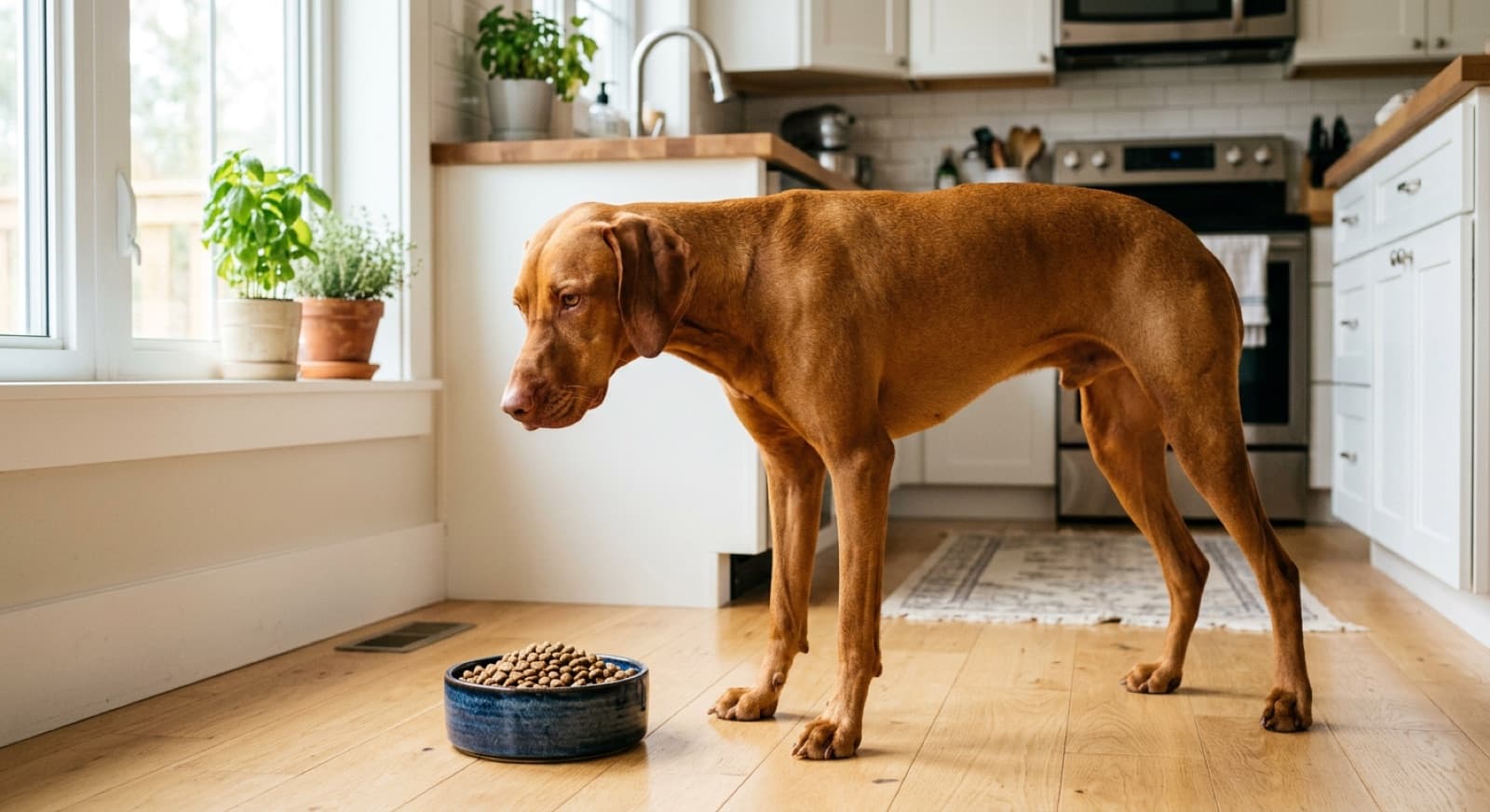
The most common Vizsla feeding worry is “is my dog too thin?”, and the answer is almost always no. A Vizsla is a lean, athletic pointer built for endurance, so a fit one shows a clear waist from above, an abdominal tuck from the side, and ribs that are easily felt under a thin layer, sometimes with the last rib or two faintly visible. On the standard 9-point body condition scale, an athletic Vizsla sits around a 4, slightly leaner than the 5 that suits an average pet.
That naturally lean build fools people, and Vizsla owners regularly get told their healthy dog looks underweight, sometimes even by a vet unfamiliar with the breed. The AKC notes lean breeds are routinely mistaken this way. The honest line is whether bones are easily felt, which is healthy, versus sharply visible and prominent, which is genuinely underweight. Keeping a Vizsla lean is not neglect; it is health. The landmark Purina lifespan study found dogs kept lean lived a median of nearly two years longer than their overweight littermates. If your Vizsla is truly losing weight, though, see the vet to rule out parasites.
Fueling the athlete, honestly
Vizslas burn calories fast, so portions genuinely skew higher than the bag's chart for an active dog, and owners of hard-working dogs report feeding well above the “average” amount. Fat is the key here: as Cornell explains, fat is the primary fuel for endurance work, so a genuinely athletic Vizsla can do well on a higher-fat performance formula, especially during an active hunting or sport season.
But here is the honest caveat the marketing skips: most Vizslas are pets whose exercise is walks, fetch, and play, not sled-dog mileage. A companion Vizsla does not need an endurance-athlete diet, and over-fatting one just adds weight. Match the fuel to the real workload, feed more in the busy season and less in the off-season, and let body condition be the referee. Whatever the activity level, weigh the food rather than eyeballing it, and adjust to hold that lean 4-out-of-9 condition.
Sensitive stomachs and the allergy question
Plenty of Vizslas have sensitive stomachs and loose stools, especially when switched foods too fast or fed a very rich diet, so transition any new food over seven to ten days. When it comes to itchy skin, though, an important distinction matters: Vizslas are predisposed to environmental allergy (atopic dermatitis), not specifically to food allergy. So before you blame the bag, know that pollen, dust, and grass are more likely culprits than the food.
If a food allergy is genuinely suspected, the only reliable diagnosis is a vet-supervised elimination diet using a novel or hydrolyzed protein for eight to twelve weeks, then a re-challenge. As Tufts bluntly puts it, the blood, saliva, and hair allergy tests are inaccurate and not worth the money. And grain is rarely the trigger: the Merck Veterinary Manual notes the common food allergens are proteins like beef, dairy, and chicken, not grains. On grain-free specifically, the FDA has investigated a possible link between legume-heavy grain-free diets and heart disease without proving causation, so the cautious default is an established, nutritionist-backed brand.
Growing a Vizsla puppy
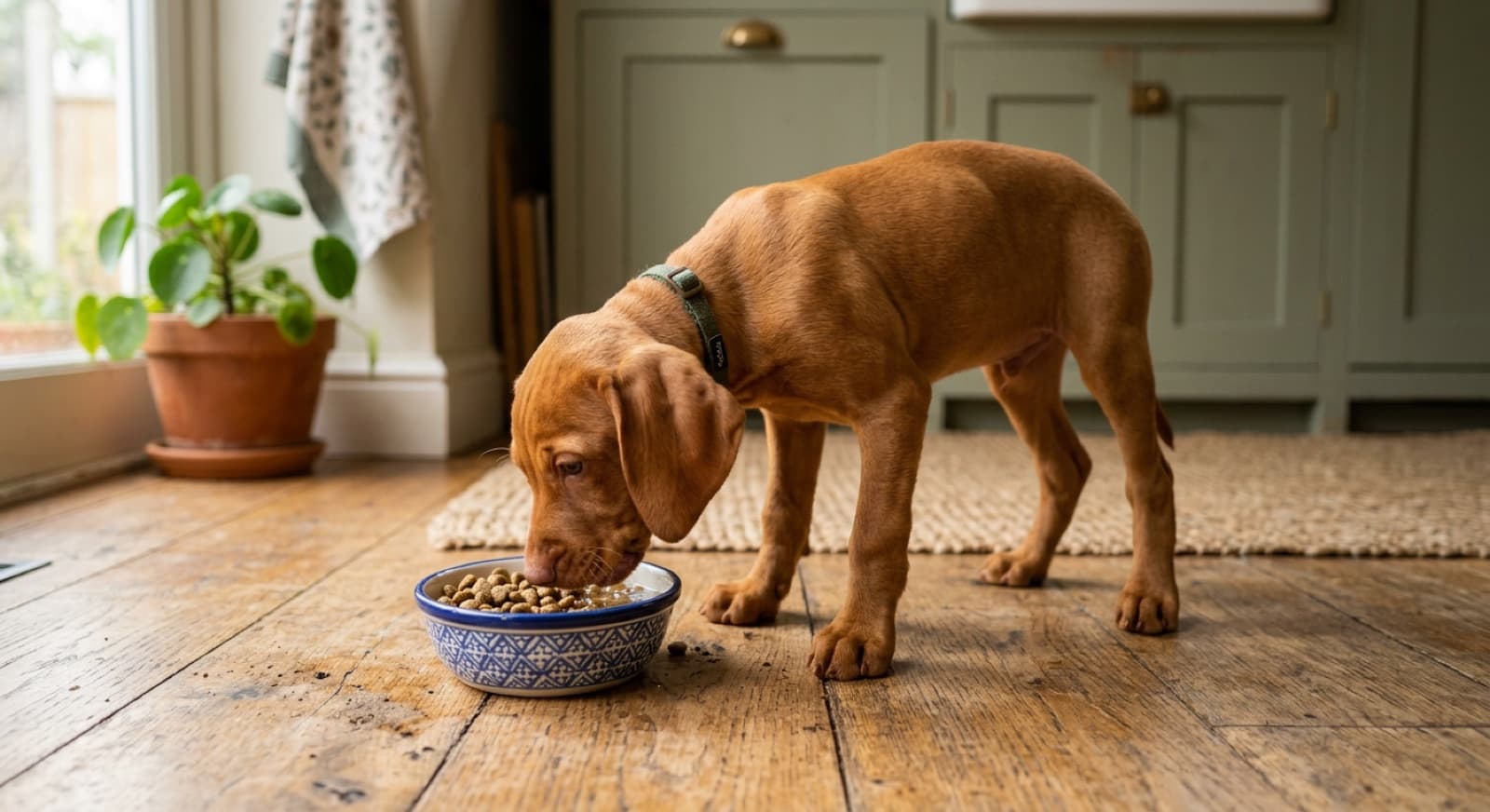
A Vizsla sits right on the size line for puppy nutrition. By the strict regulatory definition a large breed matures at 70 pounds or more, and most Vizslas are lighter, but many vets sensibly recommend treating a dog that will mature over about 50 pounds as a large breed for growth purposes. Either way the practical rule is the same: feed a complete-and-balanced growth food with controlled calcium, and do not push fast growth.
The danger is excess calcium and overfeeding, both established causes of developmental joint disease in growing dogs, and a puppy cannot regulate the calcium it absorbs. So do not add a calcium supplement or multivitamin to a complete puppy food. Keeping the puppy lean genuinely protects the joints: VCA describes research where free-fed puppies developed far more hip dysplasia than measured-fed ones. Most Vizslas transition to adult food around 12 months; confirm timing with your vet.
Bloat, and the raised-bowl myth
Raised or elevated bowls do not prevent bloat. The leading study linked them to an increased risk. Feed a Vizsla from the floor.
Bloat, or gastric dilatation-volvulus, is when the stomach fills with gas and twists, and it is rapidly fatal without emergency surgery. Vizslas are deep-chested and carry an elevated risk compared with a non-deep-chested dog, though it is fair to note their risk sits below the giant breeds that dominate the statistics. The AKC summarizes the risk factors from the major study, including the counterintuitive finding that raised bowls increase risk, along with fast eating, one large daily meal, and oils listed in the first few ingredients.
So feed from the floor, give two or more smaller meals a day, slow a fast eater with a slow-feeder bowl, and avoid hard exercise right around meals, which for an exercise-mad Vizsla takes real discipline. The single most reliable protection is a preventive gastropexy, which tacks the stomach so it cannot twist and is often bundled with spay or neuter. A swollen belly with unproductive retching is an emergency.
The protein-hyperactivity myth
Because Vizslas are so high-energy, owners often wonder whether a high-protein food is winding the dog up, and some try cutting protein to calm it down. It does not work, because the premise is wrong. A controlled veterinary study by Dodman and colleagues tested low, medium, and high-protein diets and found protein level had no effect on hyperactivity. Protein is not the body's main energy source, so the idea that extra protein revs a dog up is not how canine metabolism works.
A Vizsla's famous arousal is breed temperament plus a genuine need for exercise and mental work, not a dietary problem. As the AKC notes, running tires the body but does not meet the mind's needs, so a wired Vizsla needs more physical and mental stimulation, not a lower-protein bag. Feed a complete, quality diet and solve the energy with activity.
Foods to avoid
Keep these away from a Vizsla completely:
- Chocolate (darker is worse)
- Grapes and raisins (can cause kidney failure, even a few)
- Xylitol (in sugar-free gum, some peanut butters, and baking), which is rapidly fatal to dogs
- Onions, garlic, leeks, and chives
- Macadamia nuts
- Alcohol and caffeine
- Cooked bones (they splinter)
A curious, athletic Vizsla will investigate anything it can reach, so keep food and bins secured. If your dog eats something on this list, call your vet, the nearest emergency clinic, or a pet poison helpline right away.
Looking to adopt a Vizsla?
Plan to feed lean and fuel for real activity before day one. Browse Vizslas and Vizsla mixes available now from the rescues we track across Canada.
See Available Vizslas →Where to buy Vizsla food
Every brand worth feeding a Vizsla is easy to find:
- Pet specialty chains (Pet Planet, Tail Blazers, Tisol). Carry active-dog and performance formulas plus sensitive-stomach lines.
- Pet Valu and PetSmart. Stock the major puppy, adult, and active-dog formulas.
- Your vet clinic. The best source for a gastrointestinal diet if your Vizsla has a genuinely sensitive stomach.
For a hard-working Vizsla in season, a higher-fat performance food suits the workload; for a pet, an ordinary quality active-dog formula is right. Either way, weigh the portions and adjust to body condition.
Frequently Asked Questions
Is my Vizsla too skinny?
Almost certainly not. Vizslas are lean, athletic sporting dogs, and a healthy one shows a clear waist, an abdominal tuck, and ribs you can easily feel under a thin layer, often with the last rib or two faintly visible. On the 9-point body condition scale, an athletic Vizsla sits around a 4, leaner than the 5 that suits an average pet. Owners are routinely told by people, and sometimes vets unfamiliar with the breed, that a normal Vizsla looks underweight. The line that matters is whether bones are easily felt (healthy lean) versus sharply visible and prominent (genuinely underweight). If your dog is truly losing weight, see the vet to rule out parasites.
How much should I feed a Vizsla?
More than the average dog its size, because Vizslas burn through calories. There is no fixed number: it depends on the food and, above all, on how active the dog really is. An active adult often eats noticeably more than the bag suggests, and a genuinely hard-working dog can eat a great deal, while a calmer pet needs less. Start from the food label for the dog's ideal weight, then adjust to hold a lean body condition. Feed adults twice a day, weigh portions rather than eyeballing, and let the body, not the chart, set the amount.
Does a Vizsla need a high-fat performance diet?
Only if it genuinely works at that level. Fat is the main endurance fuel for a canine athlete, so a Vizsla that runs, hunts, or does long sessions of dog sport may do well on a higher-fat performance formula, especially in its active season. But most Vizslas are pets whose exercise is walks, fetch, and play, and for them an ordinary good-quality active-dog food is right. Over-fatting a companion dog just adds weight. Match the fuel to the real workload, and let body condition tell you whether you have it right.
Why is my Vizsla a picky eater?
Pickiness is a recognized breed trait, and the most reliable fix is structure rather than a parade of toppers. Put the food down, give the dog about 15 minutes, then pick the bowl up and offer nothing until the next meal. A healthy Vizsla learns quickly that mealtimes are when food appears. Constantly adding tastier toppers teaches the opposite, that holding out gets an upgrade. The one caveat: rule out a medical cause first, especially dental pain, and treat a sudden change in a normally good eater as a reason to see the vet rather than a training issue.
Does high-protein food make a Vizsla hyperactive?
No. This is a common myth, and a controlled veterinary study found that the level of protein in the diet had no effect on hyperactivity in dogs. Protein is not the body's main energy source, so the idea that extra protein winds a dog up is not how canine metabolism works. A Vizsla's famous high arousal comes from breed temperament and a real need for exercise and mental stimulation, not from its food. If your Vizsla is bouncing off the walls, the answer is more physical and mental work, not a lower-protein diet.
Is a Vizsla a large breed for puppy food?
It sits on the line, so play it safe. By the strict regulatory definition a large breed is one that matures at 70 pounds or more, and most Vizslas are lighter than that, but many vets recommend treating a dog that will mature over about 50 pounds as a large breed for growth purposes. The practical point is the same either way: feed a complete-and-balanced growth food with controlled calcium, do not overfeed for fast growth, and never add a calcium supplement, because excess calcium and rapid growth cause joint problems. Keep the puppy lean and confirm the approach with your vet.
Do raised or elevated bowls prevent bloat in a Vizsla?
No. The leading study actually linked raised bowls to an increased risk of bloat, not a reduced one, so feed a Vizsla from the floor. Vizslas are deep-chested and at elevated risk compared with a non-deep-chested dog, though their risk sits below the giant breeds that dominate the statistics. The habits that genuinely help: feed two or more smaller meals a day, slow a fast eater with a slow-feeder bowl, and avoid hard exercise right around meals. A preventive gastropexy, often done at spay or neuter, is worth discussing with your vet.
What to Feed a German Shorthaired Pointer
Fueling another lean, high-drive, deep-chested pointing breed.
What to Feed a Rhodesian Ridgeback
The lean-is-healthy body condition story for another athletic breed.
What to Feed a Doberman
Lean condition and deep-chest bloat care for another athletic breed.
Vizslas for Adoption
Live listings of Vizslas and Vizsla mixes from the rescues we track.