The short answer
Start with a highly digestible over-the-counter food: Purina Pro Plan Sensitive Skin & Stomach, Hill's Science Diet Sensitive Stomach & Skin, or Royal Canin Digestive Care. If you suspect a specific ingredient, try a limited-ingredient diet with a single protein. Switch foods slowly over a week. Most importantly: blood in the stool, repeated vomiting, lethargy, or diarrhea lasting more than two days means see a vet first, not the pet store. Some links here are Amazon affiliate links; we may earn a small commission at no extra cost to you, and it never changes what we recommend.

“Sensitive stomach” covers a lot of ground: gas, soft or loose stool, the occasional throw-up, a dog who seems fine but whose poops never quite firm up. For a lot of dogs it really is a diet problem you can fix with a gentler food and a slower routine. For some dogs it is the first sign of something a vet needs to find. This guide does both halves honestly: which foods are worth trying and easy to buy in Canada, and how to tell when the bowl is not the answer. We earn a commission if you buy some of the foods through our Amazon links, and we have kept the medical advice grounded in veterinary sources rather than marketing.
First: is it the food, or is it a vet problem?
This is the part the food ads skip, and it is the most important section on the page. An upset stomach can be a simple food issue, or it can be parasites, an infection, pancreatitis, a swallowed object, or worse. Do not reach for a new food and wait it out if you see any of these warning signs. Call your vet, often urgently:
- Blood in vomit or stool, or black tarry stool.
- Repeated vomiting, or diarrhea that lasts more than about 48 hours.
- Lethargy, weakness, or a painful, swollen belly. A distended abdomen with retching can mean bloat, which is a life-threatening emergency.
- Refusal to eat, fever, or dehydration (tacky gums, sunken eyes, skin that stays tented when lifted).
- A puppy or senior dog, who dehydrate faster and have less reserve. Do not wait as long.
A good rule of thumb: when two or more of these show up together, the odds of something serious go up, and a phone call to your vet is cheaper than a delayed emergency. Nothing below replaces a diagnosis. The food advice that follows is for the common case of a basically healthy dog with mild, ongoing digestive sensitivity.
Sensitivity vs allergy: it is usually the protein, not the grain
These two get mixed up constantly, and the mix-up sends people to the wrong food. A food sensitivity or intolerance is a digestive issue with no immune system involved, the mild gas-and-loose-stool kind of problem. A true food allergy is an immune response, and it often shows up as itchy skin and ear infections as much as a bad stomach. Per VCA Hospitals, the most common food allergens in dogs are proteins, especially dairy, beef, chicken, egg, soy, or wheat gluten.
Notice what is not on that list as a leading cause: grain in general. This is the single most useful thing to understand. Allergies are usually to a protein, which is why swapping to a novel protein (fish, duck, rabbit, venison) is a smarter experiment than blindly going grain-free. The American Kennel Club notes the same common culprits and that a proper diagnosis comes from an elimination diet, not a guess at the pet store.
The best sensitive-stomach foods you can buy in Canada
These are over-the-counter foods, available on Amazon.ca and at Canadian pet retailers. Think of them as management for mild sensitivity, not a cure and not a diagnostic tool. Prices below are approximate; check the current Amazon.ca listing.
The vet-shelf staples
- Purina Pro Plan Sensitive Skin & Stomach (Salmon & Rice) is the one you see most in vets' offices. Salmon as the first ingredient, oatmeal and rice for easy carbs, prebiotic fibre, and no corn, wheat, or soy. A large bag runs around CA$105. A sensible default first try.
- Hill's Science Diet Sensitive Stomach & Skin is the other big vet-recommended line, built around highly digestible ingredients plus omega-6 and vitamin E for the coat. One note: it is chicken-based, so it is not the pick if your dog reacts to chicken specifically.
- Royal Canin Digestive Care rounds out the big-three vet brands, with a prebiotic and fibre blend aimed at firmer, more consistent stool.
Limited-ingredient and Canadian-made options
- Blue Buffalo Basics Limited Ingredient uses a single animal protein (lamb, turkey, or salmon) and skips chicken, beef, corn, wheat, soy, dairy, and egg. The natural first move when you suspect a specific ingredient.
- Acana Singles is an Alberta-made limited-ingredient line (single animal protein), a good pick if you want to keep it Canadian-made.
- Stella & Chewy's freeze-dried raw offers single-protein, minimally processed options for owners who want to move further from kibble.
Whatever you choose, look for an AAFCO complete-and-balanced statement for your dog's life stage on the bag. That label matters far more than marketing words like “human-grade” or “no fillers,” which are largely unregulated.
Adopting a dog with a sensitive stomach?
Plenty of rescue dogs settle right down once their diet and routine stabilise. Browse adoptable dogs from shelters across Canada.
Browse Adoptable Dogs →When you need a prescription diet (and when you do not)
If an over-the-counter sensitive-stomach or limited-ingredient food has not solved a persistent problem, the next step is your vet, not a fourth bag of retail food. For a true, diagnosed food allergy, vets use hydrolyzed-protein prescription diets, where the protein is broken into pieces too small for the immune system to recognise. Per VCA, the gold-standard diagnosis is a hypoallergenic elimination trial of 8 to 12 weeks with nothing else fed, not even flavoured treats or chews.
Brands like Hill's z/d and Royal Canin Hypoallergenic are veterinary diets that need authorization. We deliberately do not link them as products, because they are not something you should buy off a shelf without a vet's say-so. If you have reached this point, book the appointment; it is the step that actually ends the cycle.
The bland-diet home remedy, and its limits
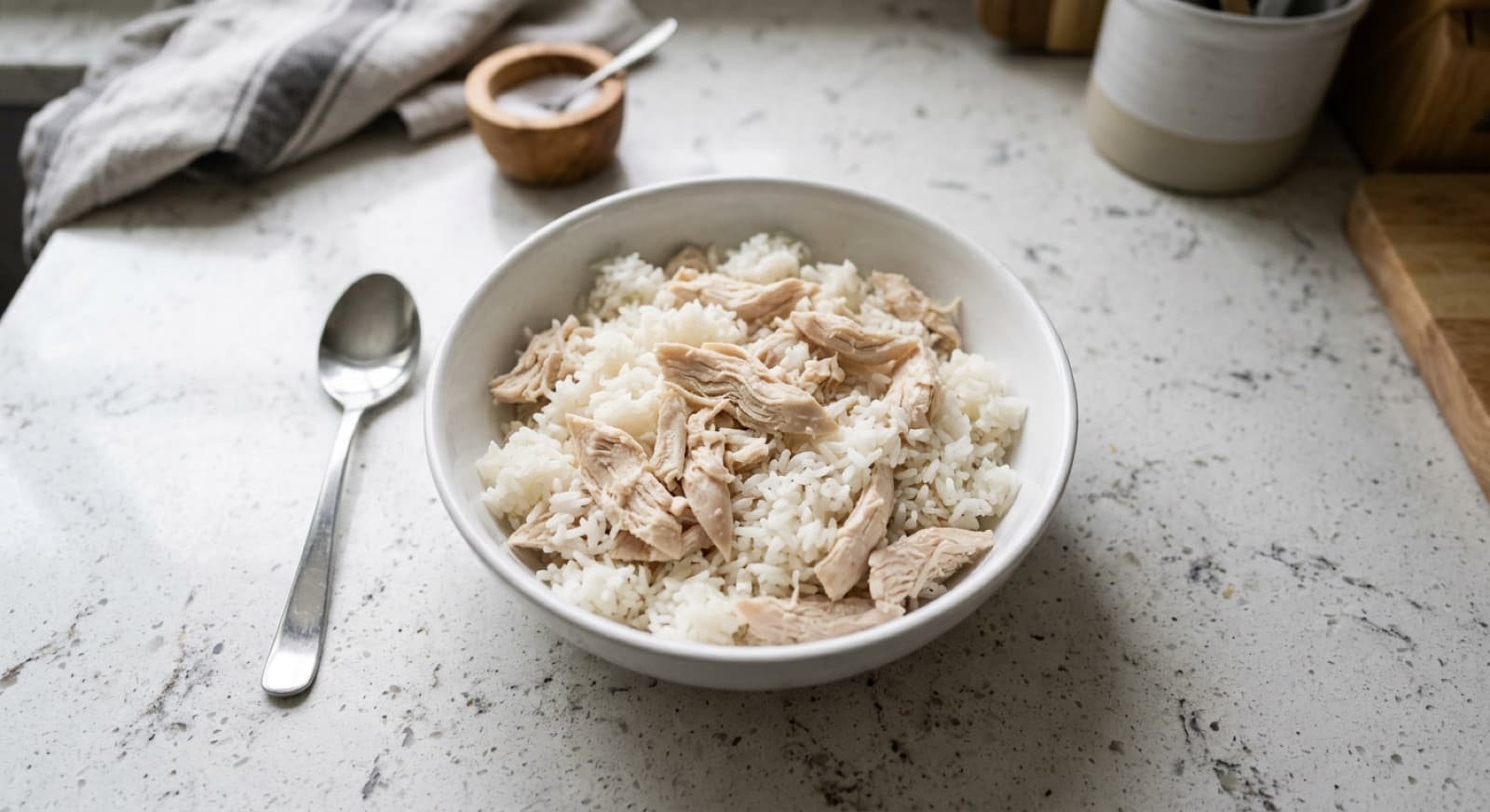
For a short bout of mild diarrhea in an otherwise bright, healthy adult dog, the classic home reset is a bland diet: boiled skinless chicken breast and plain white rice, roughly one part chicken to two parts rice, fed in small portions. A spoon of plain canned pumpkin (not pie filling) adds soluble fibre that helps firm things up. Per PetMD, you should see improvement within about a day, and you feed it for only three to five days before easing back to normal food.
Two honest limits. First, a bland diet is not nutritionally complete, so it is a short-term stopgap, never a long-term diet. Second, it is not a cure: if the diarrhea lasts beyond about 48 hours, has blood in it, or comes with vomiting or lethargy, stop and call your vet. Some vets now consider chicken and rice an outdated first move compared with a properly formulated veterinary GI diet, so treat it as first aid, not treatment.
The grain-free caution
It is tempting to read “sensitive stomach” and reach for grain-free, but slow down. Grain is rarely the allergen, and there is an open safety question. The US FDA investigated a possible link between grain-free diets high in peas, lentils, and potatoes and a serious heart condition, dilated cardiomyopathy. As the American Kennel Club's update explains, over 90 percent of reported cases involved grain-free diets and 93 percent contained peas or lentils, though causation has not been proven and the science is still unsettled.
The balanced takeaway: peas and potatoes are not poison, but grain-free is not automatically safer or better for a sensitive stomach, and it carries an unresolved question that a grain-inclusive food does not. Unless your vet has identified a specific reason, a quality food with grains, formulated to AAFCO standards, is the safer default.
Small fixes that punch above their weight
- Slow the gulping. A dog who inhales meals swallows air, which means gas and, in deep-chested breeds, a real bloat risk. A slow-feeder bowl is a cheap, genuinely effective fix.
- Smaller, more frequent meals. Splitting the daily food into two or three meals is gentler on a touchy stomach than one big bowl, and it helps with the empty-stomach morning bile too.
- A probiotic. Many vets use a canine probiotic like Purina FortiFlora to support stool quality. It is a helpful add-on, not a fix for an undiagnosed problem.
- Pumpkin. A spoon of plain canned pumpkin is a cheap soluble-fibre topper that can firm up loose stool.
And whatever you change, change it slowly. Transition new food over five to seven days, because a sudden switch is itself one of the most common causes of the upset stomach you are trying to fix. For a how-much-to-feed starting point, our dog feeding calculator gives a daily estimate by weight and age, and the breed-specific feeding guides in our library go deeper.
Frequently asked questions
What is the best dog food for a sensitive stomach?
There is no single best food, because it depends on what is upsetting your dog. For most dogs with mild, ongoing tummy trouble, a highly digestible over-the-counter formula like Purina Pro Plan Sensitive Skin & Stomach, Hill’s Science Diet Sensitive Stomach & Skin, or Royal Canin Digestive Care is the sensible first try. If you suspect a specific ingredient, a limited-ingredient diet with a single protein and single carb is the better starting point. The honest version is that the food is the easy half; the harder half is making sure the upset stomach is not a sign of something a vet needs to look at first.
When should I take my dog to the vet for vomiting or diarrhea?
Call your vet, often urgently, if you see blood in the vomit or stool, repeated vomiting, diarrhea that lasts more than about 48 hours, lethargy or weakness, a swollen or painful belly, refusal to eat, or signs of dehydration like tacky gums and sunken eyes. Puppies and senior dogs dehydrate quickly and have less reserve, so do not wait as long with them. A swollen, distended abdomen with retching can signal bloat, which is a life-threatening emergency. When two or more of these signs show up together, do not change the food and hope; get a professional eye on it.
What is the difference between a food allergy and a food sensitivity in dogs?
A food sensitivity or intolerance is a digestive issue with no immune system involved, usually mild gas, loose stool, or occasional vomiting. A true food allergy is an immune response, where the body reacts to a specific food and often shows up as itchy skin and ear infections as much as digestive upset. According to VCA Hospitals, the most common food allergens in dogs are proteins, especially dairy, beef, chicken, egg, soy, or wheat gluten. The practical difference is that a sensitivity can often be managed with a gentler diet, while a true allergy needs a vet-run elimination trial to pin down the trigger.
Is chicken bad for dogs with a sensitive stomach?
For most dogs, no. Chicken is a lean, digestible protein and a perfectly good base, which is why it shows up in bland diets and many sensitive-stomach foods. The nuance is that chicken is also one of the more common food allergens in dogs, so for a minority of dogs it really is the culprit. If your dog does poorly on chicken-based foods specifically, switching to a novel protein like fish, duck, or rabbit is a reasonable experiment. So the blanket claim that chicken is bad for sensitive stomachs is a myth for most dogs and true for a few.
Is grain-free dog food better for a sensitive stomach?
Not as a rule, and it is widely misunderstood. Grain is rarely the cause of a food allergy or sensitivity; allergies are usually to a protein. On top of that, the US FDA opened an investigation into a possible link between grain-free diets high in peas, lentils, and potatoes and a serious heart condition called dilated cardiomyopathy. Causation has not been proven and the science is unsettled, but it is enough reason not to choose grain-free by default. If your dog has no diagnosed grain issue, a quality food with grains is usually the safer starting point. Talk to your vet before going grain-free.
What can I feed my dog with diarrhea at home?
The classic short-term bland diet is boiled skinless chicken breast and plain white rice, roughly one part chicken to two parts rice, fed in small portions, sometimes with a spoon of plain canned pumpkin for fibre. You should see improvement within about a day, and you feed it for only three to five days before transitioning back to normal food. It is a stopgap, not a cure, and it is not nutritionally complete for the long term. Stop and call your vet if the diarrhea lasts beyond about 48 hours, contains blood, or comes with vomiting, lethargy, or a refusal to eat.
Why does my dog throw up yellow bile in the morning?
Yellow bile on an empty stomach, often first thing in the morning, is usually bile irritating an empty stomach, sometimes called bilious vomiting syndrome. A small low-fat snack before bed or splitting meals into smaller, more frequent feedings often helps, because it keeps the stomach from sitting empty for too long. That said, recurring vomiting is worth a vet visit to rule out other causes. An occasional one-off is rarely an emergency; a pattern is a reason to get it checked.
Do limited-ingredient diets actually help?
They can, for the right dog. A limited-ingredient diet uses a single animal protein and a single carbohydrate, which makes it easier to avoid an ingredient your dog reacts to and easier to troubleshoot. They are a good management tool for mild, suspected food sensitivity. One honest limit: over-the-counter limited-ingredient foods are not made under the strict cross-contamination controls of veterinary diets, so they are not reliable for diagnosing a true food allergy. For that, you need a vet-run elimination trial with a prescribed diet.
Do I need a prescription or hydrolyzed diet?
Sometimes. For a true, diagnosed food allergy, vets use hydrolyzed-protein prescription diets, where the protein is broken into pieces too small for the immune system to recognise. Brands like Hill’s z/d and Royal Canin Hypoallergenic are veterinary diets that require authorization, so they are not something you buy off the shelf or through an affiliate link. If an over-the-counter sensitive-stomach or limited-ingredient food has not solved a persistent problem, that is the point to talk to your vet about a proper elimination trial and a prescription diet rather than cycling through more retail foods.
Do probiotics like FortiFlora help a dog’s stomach?
They may support stool quality, and many vets use a canine probiotic such as Purina FortiFlora for the dietary management of diarrhea. Think of it as a helpful add-on rather than a fix for an undiagnosed problem. A spoon of plain pumpkin adds soluble fibre that can firm up loose stool too. Neither replaces figuring out why the stomach is upset, so if the trouble is ongoing, use these alongside a vet’s input, not instead of it.
How do I switch foods without upsetting my dog’s stomach?
Go slowly. Over about five to seven days, mix an increasing amount of the new food into the old, roughly a quarter new for a couple of days, then half, then three-quarters, then all the way. A sudden switch is one of the most common causes of diet-related diarrhea, so patience here prevents the exact problem you are trying to solve. If stools loosen at any step, hold at that ratio for a few extra days before increasing again.
Sources: VCA Hospitals: Food Allergies in Dogs; AKC: Dog Food Allergies; AKC: Diet and DCM Update; PetMD: Bland Diet for Dogs. This article is general information, not veterinary advice. A persistent or severe upset stomach needs a diagnosis from your veterinarian.
Related guides
Best Fresh Dog Food in Canada
Kabo, Open Farm, and the no-freezer options, honestly compared.
Dog Feeding Calculator
How much to feed your dog each day, by weight and age.
Dog Dental Care: What Works
Brushing, chews, and cleanings, sorted by the evidence.
Adoptable Dogs in Canada
Browse rescue dogs from shelters across the country.
Something else going on with your dog?
Pick what is on your mind and we will point you at the guide that answers it, and what to buy if anything.