The short answer
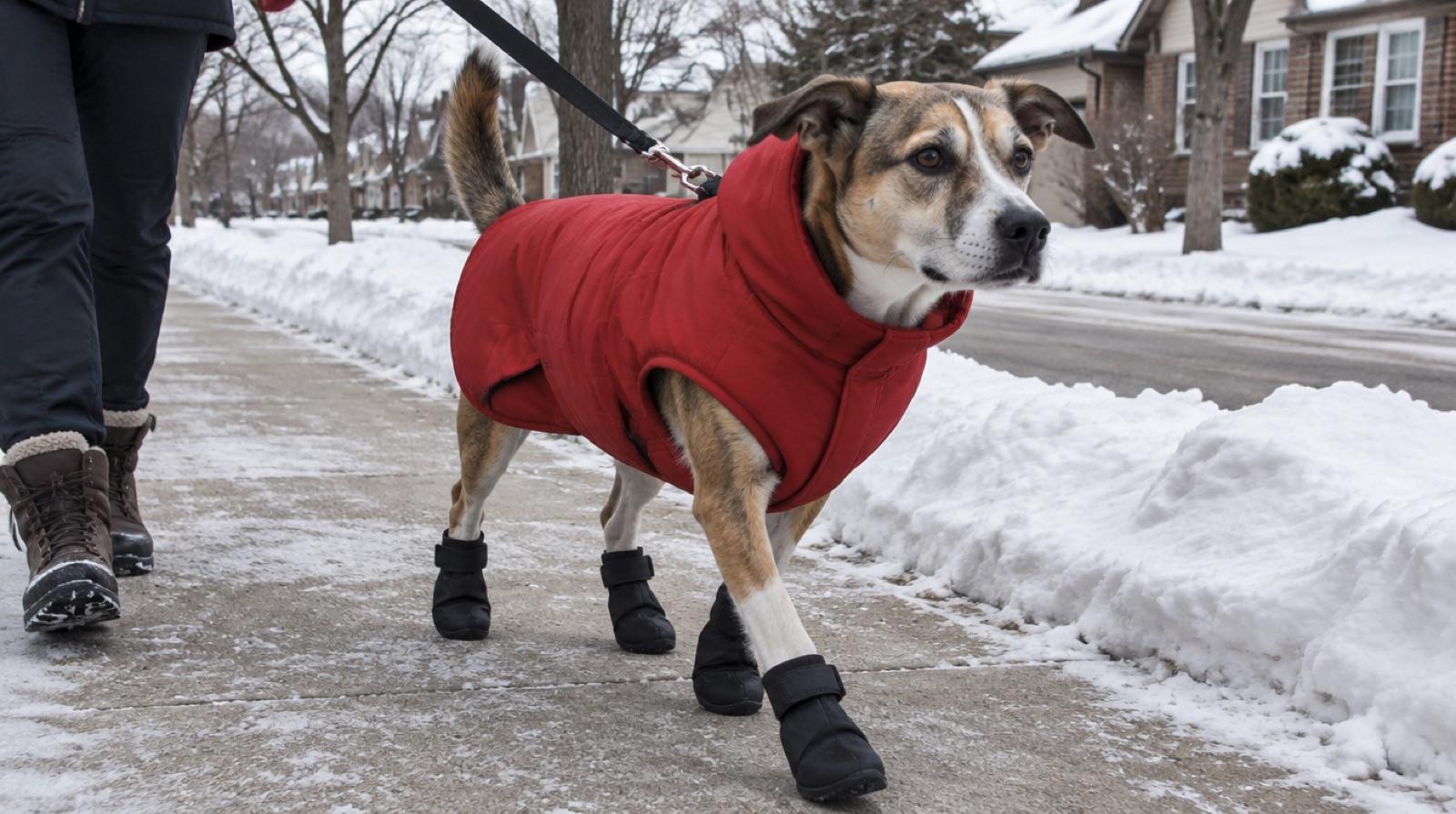
For boots, start with Canada Pooch Snow Boots (about $49 to $53) or the Original Fleece-Lined Muttluks (about $60 to $65). Both companies are based in Toronto. On a budget, Pawz waterproof boots are about $25. For a coat, the Kuoser waterproof reversible coat is about $30, and the Canada Pooch Everest Explorer is the premium pick at about $120. If boots will not stay on, use a paw balm and wipe the paws after every walk. Prices are from Amazon.ca on November 12, 2026.
The best dog boots you can buy in Canada
All of these were listed on Amazon.ca when we checked. Prices move with size, so the figure is what we saw for the sizes shown that day. The ratings are Amazon.ca customer ratings.
| Boots | What you get | Rating | Price |
|---|---|---|---|
| Canada Pooch Snow Boots | Winter boots from a Toronto company | 4.0 (602) | $49.49 to $53.24 |
| Original Fleece-Lined Muttluks | Set of four, fleece lined, treated leather soles | 4.0 (879) | $59.99 to $64.99 |
| Canada Pooch Suspender Boots | Boots held up by suspenders, for dogs that kick boots off | 4.6 (28) | $56.99 to $64.49 |
| Pawz Water-Proof Dog Boots | The budget option | 3.9 (23,207) | $24.99 |
| Ruffwear Polar Trex | Sold as a pack of two, so four paws need two packs | 4.2 (20) | $79.99 per pair |
Prices and ratings as listed on Amazon.ca on November 12, 2026, before tax. They change without notice and vary by size. Some links on this page are Amazon affiliate links, so we may earn a small commission at no extra cost to you. It never changes what we recommend.
Two of these brands are Canadian companies. Canada Pooch says its head office is in Toronto, where its products are designed. Muttluks describes itself as a Canadian company that began in 1994, with a production facility in Toronto. Ruffwear is American, based in Bend, Oregon.
Notice that most of these sit at about four stars. Fit varies from dog to dog, so buy from a listing you can return, and check the Ruffwear pack size before you compare its price with a set of four. The widely sold QUMY boots are another set of four with a 3.9 rating from more than 29,000 buyers.
Does a dog really need boots?
For a lot of Canadian dogs the answer is yes, and the reason is salt more than cold. The Canadian Veterinary Medical Association warns that the salt used on roads and sidewalks can become trapped between a dog's toes and cause paw irritation and inflammation. VCA Animal Hospitals adds that de-icers are very drying to paw pads and the skin between the toes, and can be toxic if licked off the paws once the dog is back inside.
On how serious licking is, the Pet Poison Helpline says a mild ingestion of salt-based ice melt leads only to stomach upset such as vomiting and diarrhea, that larger amounts can be far more serious, and that all types of ice melt have the potential to be hazardous. Boots keep the stuff off the paws in the first place, which is the point VCA makes in its guide to cold-weather paw protection.
Ice is the second reason. The American Kennel Club notes that hair on the feet of long-haired dogs can form ice balls between the pads and toes, and advises keeping that hair trimmed even with the surface of the foot. If ice balls do form, the CVMA says soaking the paws in warm water will dislodge and melt them.
How to get boots that fit, and stay on
Size from the maker's chart, not by guessing from breed. Then practise indoors before the first real walk.
VCA's advice on fit is short: use the manufacturer's sizing guidelines. Each brand in the table has its own chart on its listing, so check the chart for the brand you are buying.
Expect a learning period. The American Kennel Club says boots are often the most difficult item for dogs to get used to wearing, and advises taking your time. A few minutes at a time in the house, with treats, is the usual way in.
If boots keep coming off, you have two options. The Canada Pooch Suspender Boots are held up by suspenders. Or skip boots altogether, which is the next section.
If your dog will not wear boots
Use a barrier and a towel. VCA suggests a paw balm or wax for dogs that are hesitant to wear booties, and says the balm creates a barrier between the paws and salt or other de-icing agents. The Säker paw balm is listed on Amazon.ca as handmade in Canada and safe to lick, with a 4.4 rating from more than 3,000 buyers.
Then clean up after every walk. The ASPCA advises washing and drying your pet's feet and stomach after each walk to remove ice, salt and chemicals. The Ontario SPCA recommends a damp towel for the paws and underside. Keep one by the door from November to April.
Which dogs need a winter coat?
Small dogs, short-haired dogs, lean dogs, the very young, the old and the unwell. The American Kennel Club's guide to winter coats says small dogs cannot maintain their body heat in cold weather, that young puppies and senior dogs of all breeds and sizes are more susceptible to cold than healthy adults, and that the same can be true of dogs with chronic conditions like arthritis. The CVMA says coats help especially in shorter-haired breeds and those with little body fat.
Thick-coated dogs are a different case. The AKC says large breeds with thick coats will generally be protected from the cold, and the Ontario SPCA names Huskies, Samoyeds and Saint Bernards as breeds that may tolerate colder temperatures. The CVMA adds a caution worth keeping: even animals with heavy coats need protection and care in winter.
| Coat | What you get | Rating | Price |
|---|---|---|---|
| Kuoser Waterproof Dog Coat | Waterproof, reversible, with a leash hole | 4.3 (61,973) | $29.99 |
| Norbi Winter Coat for Small Dogs | Waterproof, with a built-in harness | 4.4 (6,989) | $30.49 |
| Canada Pooch Everest Explorer | Hooded winter coat from a Toronto company | 4.4 (176) | $119.86 |
Prices and ratings as listed on Amazon.ca on November 12, 2026, before tax. Stock on the Canada Pooch coat was low in some sizes that day.
If you walk your dog on a harness, check how the coat and harness work together before you buy. The Kuoser has a leash hole and the Norbi has a harness built in. Our guide to the best dog harness in Canada covers the harness side.
How cold is too cold for a walk?
There is no agreed Canadian number, and it is fair to say so. The CVMA gives no temperature threshold. VCA advises limiting walks to 5 to 10 minutes when it is below 20 degrees Fahrenheit, which is about minus 7 Celsius. The ASPCA's rule of thumb is that if it is too cold for you, it is probably too cold for your pet.
Watch the dog instead of the thermometer. The Ontario SPCA lists prolonged shivering, muscle stiffness and slow, shallow breathing as signs of hypothermia, and says to wrap the dog in a blanket or coat, get to warm shelter and seek immediate veterinary support.
Frostbite goes for the extremities. VCA's page on frostbite says the paws, ears and tail are the most commonly affected, and that affected skin often turns pale, grey or bluish. Move the dog somewhere warm and dry, do not rub or massage the area, do not use direct dry heat such as a heating pad or hair dryer, and call your vet.
Check the current price
Both are on Amazon.ca in Canadian dollars. Check the size chart on the listing before you order.
Frequently Asked Questions
What are the best dog boots for winter in Canada?
Canada Pooch Snow Boots and the Original Fleece-Lined Muttluks are the two to look at first, and both come from Toronto companies. On Amazon.ca on November 12, 2026, Canada Pooch boots were about $49 to $53 depending on size and Muttluks were about $60 to $65 for a set of four. Pawz waterproof boots, at about $25, are the budget option.
Do dogs really need boots in winter?
Many city dogs benefit from them, mainly because of road salt. The Canadian Veterinary Medical Association says salt used on roads and sidewalks can become trapped between a dog's toes and cause irritation and inflammation. VCA Animal Hospitals notes that booties protect a dog from chemical irritation on salt-treated sidewalks.
Which dogs need a winter coat?
Small dogs, short-haired dogs, lean dogs, puppies, seniors and dogs with chronic health conditions. The American Kennel Club says small dogs cannot maintain their body heat in cold weather, and that puppies and seniors are more susceptible to cold than healthy adults. Large breeds with thick coats are generally protected.
How cold is too cold to walk a dog?
There is no single Canadian number. The Canadian Veterinary Medical Association gives no temperature threshold. VCA Animal Hospitals advises limiting walks to 5 to 10 minutes when it is below 20 degrees Fahrenheit, which is about minus 7 Celsius. The ASPCA's rule is that if it is too cold for you, it is probably too cold for your pet.
What can I use if my dog will not wear boots?
Use a paw balm or wax before the walk, then wipe the paws afterwards. VCA Animal Hospitals suggests a paw balm or wax for dogs that are hesitant to wear booties, and says it creates a barrier between the paws and salt or other de-icing agents. The ASPCA advises washing and drying the feet and stomach after each walk.
How do I get my dog used to boots?
Slowly, indoors, with treats. The American Kennel Club says boots are often the hardest item for dogs to get used to wearing and advises taking your time. Start with a short session in the house and build up before you rely on them for a full walk.
This article is general information, not veterinary advice. Call your vet if you suspect frostbite or hypothermia, or if your dog has eaten ice melt.
Best Dog Harness in Canada
Which harness to buy for a dog that pulls or slips out.
Best GPS Dog Collar in Canada
Which trackers to buy in Canada for a dog that bolts.
Something else going on with your dog?
Pick what is on your mind and we will point you at the guide that answers it, and what to buy if anything.