The short answer
Bichon Frises are uncommon in Calgary rescue because the breed is small, valuable, and most surrenders move through breeder take-back contracts or private rehoming. Apply broadly to Calgary Humane Society, AARCS, BARCS, Pawsitive Match, ARF Alberta, Cochrane Humane Society, and Heaven Can Wait, and set up notifications. Adoption fees are typically $400 to $800 versus $1,500 to $3,500 for a registered breeder Bichon puppy. The breed traces to 14th-century French and Spanish nobility as a pure companion dog (never a working breed). Adults weigh 12 to 18 lbs, stand 9.5 to 11.5 inches at the shoulder, live 14 to 16 years, and carry a low-shed curly double coat that needs a full salon visit every four to six weeks.
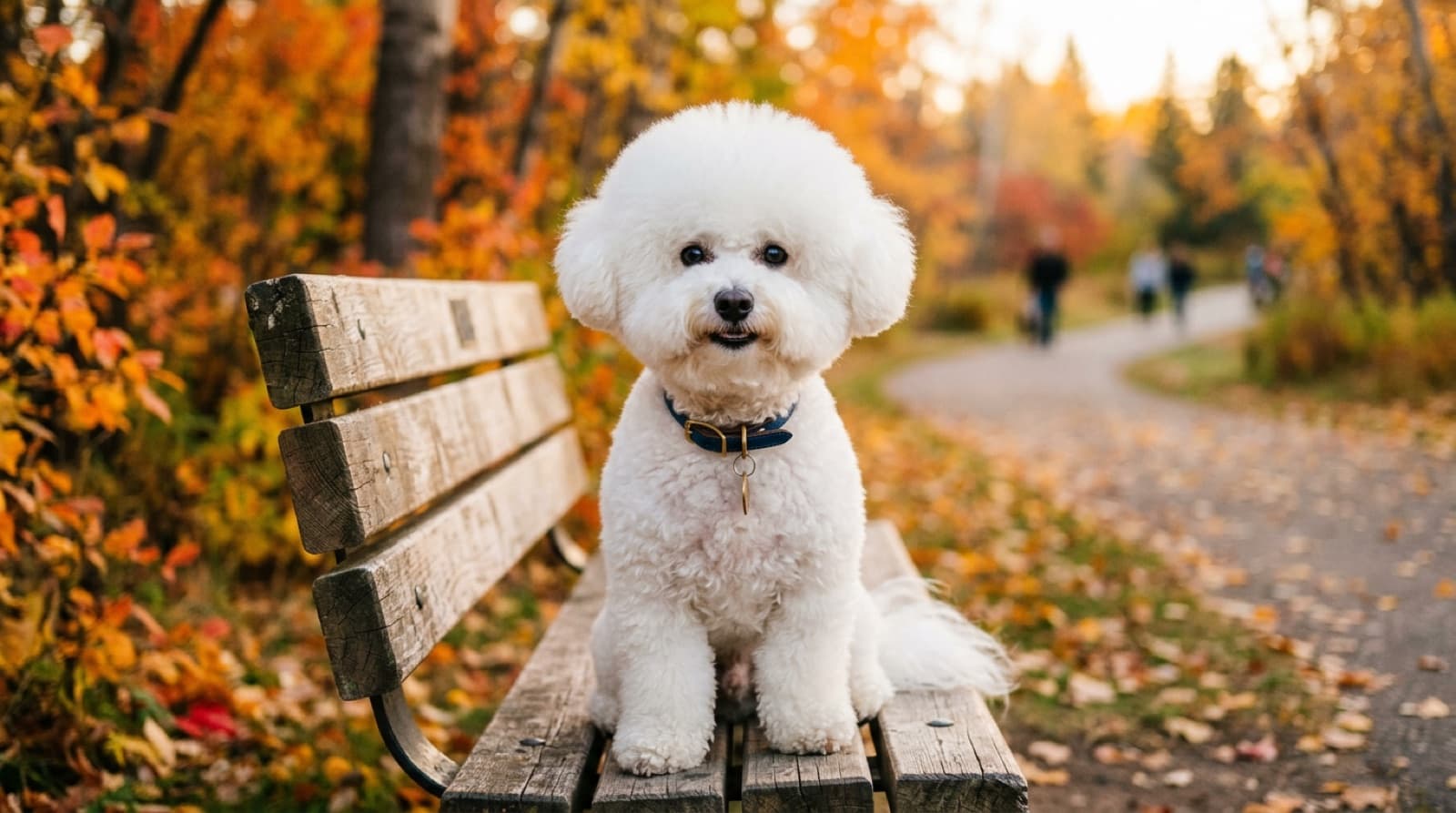
The Bichon Frise is a small companion breed with a documented lineage that traces back to 14th-century French and Spanish nobility. Unlike most small breeds in the Calgary rescue landscape, the Bichon was never bred for work. No vermin hunting like a Westie, no badger bolting like a Cairn, no truffle hunting like a Lagotto. The breed was selected across 700 years for one purpose: human company. That history matters because it shapes everything an adopter needs to know. The cheerful affectionate temperament, the sensitivity to harsh handling, the separation anxiety pattern, and the bond-with-people-over-everything orientation are all hardwired by centuries of breeding for the lap and the parlour. Today most Calgary adopters meet the breed through a friend's pet or through a Bichpoo cross at a local park. The breed is a genuinely good fit for the right Calgary household, but the every-four-to-six-week grooming workload, the time-alone tolerance, and the soft-temperament training reality catch many first-time owners off guard. This guide covers where Bichons actually appear in Calgary rescue, what they cost to live with, why the grooming cadence is non-negotiable, and how to think honestly about whether the breed fits your home.
The Bichon Frise at a glance
The Bichon Frise is a recognised purebred. The Canadian Kennel Club registers Bichons in the Non-Sporting Group, and the American Kennel Club does the same. The Bichon Frise Club of Canada is the national breed club and maintains the registered breeder directory. The breed standard is well established, which means coat type, adult size, and temperament are far more predictable than for any designer cross.
| Trait | Typical range |
|---|---|
| Adult weight | 12 to 18 lbs (males slightly larger than females) |
| Height at shoulder | 9.5 to 11.5 inches |
| Lifespan | 14 to 16 years |
| Coat | Low-shed curly double coat: soft cottony outer over a dense undercoat |
| Energy level | Moderate; bursts of playful zoomies |
| Exercise needs | 30 to 45 minutes daily plus play and short training sessions |
| Temperament | Cheerful, affectionate, sensitive, family-bonded, sociable, soft to training |
The dog you actually live with is much more predictable than a doodle because the standard is fixed. Variation comes mostly from individual temperament and from how the dog was raised: a well-socialised confident Bichon is the breed at its best; an under-socialised or poorly-bred Bichon can be timid and prone to fear barking. Most Calgary rescue Bichons fall in the friendly-to-mildly-anxious range. The breed inherits 700 years of companion breeding, which means it is genuinely happy to meet new people and dogs but does not handle long stretches of isolation.
Where to adopt a Bichon Frise in Calgary
Calgary Bichon rescue intake is uncommon for the same reason most popular small purebreds are scarce. The dogs are small, valuable, easy to rehome through breed-specific networks, and most registered breeders run take-back contracts that route surrenders back to the breeder rather than into a general shelter. The result is that a typical Calgary rescue sees one or two Bichons a year, not one or two a month. The strategy is the same as any low-volume purebred: apply broadly, set up alerts, and be ready to move quickly when a listing appears.
Calgary-area rescues to monitor:
- Calgary Humane Society: the largest local shelter; occasional Bichon and Bichon-mix intakes from owner surrenders.
- AARCS: foster-based; structured “good with” evaluations are useful for a soft-tempered companion dog.
- BARCS Rescue: Calgary foster network; small companion dogs appear regularly, with Bichon mixes from time to time.
- Pawsitive Match: Calgary foster-based; companion breeds appear regularly.
- ARF Alberta: Calgary foster network; broad small dog inventory with occasional curly-coated companions.
- Cochrane Humane Society: Cochrane-based, serves the Calgary region.
- Heaven Can Wait: High River-based, Calgary placement common.
- Calgary Animal Services: the municipal facility; rare surrendered Bichons when a family hits the grooming workload or a separation anxiety wall.
The single best move is to set up notifications on the LocalPetFinder Bichon Frise breed page. Current listings from all Calgary rescues land there as they appear, and you will see a new arrival before most adopters do.
Two breed-specific networks are worth knowing for flexible adopters. The Bichon Frise Club of Canada runs a national rescue referral network and occasionally places dogs from Ontario, Quebec, or British Columbia into Alberta when a regional foster home opens up. The Bichon Frise Rescue Brigade in the United States operates a similar surrender pipeline, though transport logistics into Canada are involved. Serious applicants who can demonstrate breed knowledge sometimes get matched through these channels months before a dog would otherwise appear in general rescue. When a registered Bichon breeder retires a brood female at age 4 or 5, the dog is sometimes placed through these networks at a fraction of puppy pricing.
What does a Bichon Frise cost in Calgary?
Calgary fees vary by rescue and what is included. The realistic ranges below are directional, not quotes:
| Source | Fee range | Typically includes |
|---|---|---|
| Calgary Humane Society | $400 to $650 | Spay or neuter, vaccinations, microchip, vet exam |
| AARCS | $500 to $800 | Spay or neuter, vaccinations, microchip, foster history |
| BARCS / Pawsitive Match / ARF Alberta | $400 to $750 | Spay or neuter, vaccinations, microchip, foster notes |
| Bichon Frise Club of Canada referral | $500 to $900 | Documented lineage, foster-based evaluation, breeder follow-up |
| Breeder puppy (CKC registered) | $1,500 to $3,500 | Parent health testing, written contract, 6 to 18 month waitlist |
The adoption fee is only the entry cost. Annual care for a Bichon in Calgary runs higher than most generic small breeds because of the every four to six week grooming requirement and the breed's tendency toward dental disease. Plan for:
- Professional grooming: $70 to $120 per session every 4 to 6 weeks at Calgary salons. That cadence is roughly twice as frequent as a Westie clip schedule and works out to $700 to $1,200 per year. The curly double coat does not shed out on its own; it keeps growing and mats fast against the skin without home brushing between visits. Skip a grooming and you usually pay for a full shave-down to start the coat over.
- Dental care: Bichons are prone to dental crowding because the breed has a small jaw and a full set of teeth. Annual dental cleanings under anaesthesia at a Calgary vet run $400 to $900, and many Bichons need one every one to two years from age 5 onward. Daily home brushing with a dog-safe toothpaste delays the need but does not eliminate it.
- Home grooming tools: a slicker brush, metal comb, detangling spray, eye-wipes, ear-cleaning solution, and small grooming scissors for between-salon touch-ups. Budget $80 to $150 once, then refill consumables every year or two.
- Small-dog gear: a well-fitted Y-front harness (collar-only walking can stress a Bichon's small trachea), a 6 foot leash, a long line for off-leash recall training, weatherproof boots and a coat for winter. Budget $150 to $300 in the first month.
- Food and treats: $40 to $70 per month depending on quality tier. Many Bichons do well on a moderate-protein small-breed diet; some need a hypoallergenic formula if skin or ear issues appear.
- Vet and preventive care: roughly $400 to $800 per year for routine wellness, vaccines, parasite prevention, and dental check-ups. The breed sometimes develops allergies, bladder stones, or patellar luxation; specialty care for these conditions is available through Western Veterinary Specialist Centre and VCA Canada West.
- Pet insurance: worth strong consideration given the breed's dental, skin, and patellar tendencies. Plan for $45 to $80 per month for a Bichon. Pre-existing conditions are excluded if not enrolled before symptoms appear, so enrol early in adulthood.
- Calgary dog licence: required for every dog three months and older under the Responsible Pet Ownership Bylaw 3M2006. A small annual fee that improves recovery odds if your dog ever goes missing.
First-year totals typically land between $2,500 and $4,500 once you add gear, training, grooming, and licence on top of the adoption fee. For a full breakdown of lifetime ownership cost in Calgary, see our Calgary adoption costs guide.
Why Bichons end up in Calgary rescue
Intake is uncommon. When surrenders do happen, the patterns are consistent year over year. Understanding them helps you build a household where it does not happen to your dog. The dominant surrender age is 2 to 7 years (young adults whose original families hit the workload wall after the honeymoon period).
- Grooming workload fatigue. The single most common surrender driver. The every four to six week salon visit at $70 to $120 catches families by surprise, particularly when matting between visits forces an expensive shave-down. Owners who expected a low-maintenance small dog and got a coat-care commitment sometimes surrender when the budget tightens or the routine becomes a chore.
- Separation anxiety. A very close second. Bichons were bred for human company across 700 years, and a household that switches to long workdays or removes a primary caregiver often triggers symptoms within months. Barking, destructive chewing, and house-soiling in an otherwise housetrained dog are the typical pattern. Many surrenders happen after a complaint from a Calgary condo neighbour about daytime barking.
- Sensitivity to harsh methods. First-time owners who try corrections or aversive training methods often see a Bichon shut down emotionally. The dog becomes withdrawn, fearful, or develops avoidance behaviours. Families who do not pivot to a force-free trainer sometimes surrender once the bond is damaged.
- Dental and skin vet bills. Calgary Bichons are prone to dental disease and sometimes skin sensitivities. A family that did not budget for $400 to $900 dental cleanings or recurring ear infections sometimes surrenders rather than commit to lifelong care.
- Lifestyle changes. Babies, moves to smaller condos, divorces, owner illness. Common across breeds but particularly hard on a Bichon whose grooming schedule and daily human-company expectation cannot easily transfer to a new home.
- Backyard-breeder cast-offs. A meaningful share of poorly bred Bichons end up surrendered when behavioural or health issues surface that the seller misrepresented. Untested parents producing severe allergies, patellar luxation, or fear-temperament puppies is a documented pattern in Canadian backyard-bred Bichons.
None of these are problems with the breed concept. They are problems with the match, the source, or the household honesty before adoption. Calgary rescues that run foster-based programs (AARCS, Pawsitive Match, ARF Alberta, BARCS) are the best resource for a Bichon whose adult temperament and grooming tolerance are already known, which avoids most of the patterns above. Read Is a Bichon Frise right for you? before applying.
The 14th-century origin: a French and Spanish nobility lap dog
The Bichon Frise traces back to 14th-century Mediterranean trade routes between the Canary Islands, Spain, and France. The breed descended from the Barbet (a French water dog) and an early Mediterranean small white companion type, and the four traditional Bichon varieties (Bichon Maltais, Bichon Bolognese, Bichon Havanais, Bichon Tenerife) all share that ancestry. The breed that became the modern Bichon Frise is the Bichon Tenerife strand, named for the Canary Island and brought back to mainland Europe by Spanish sailors who used the dogs as cheerful trade goods.
From the 14th through 16th centuries, the breed was a fixture of Spanish and Italian royal courts. By the 16th century, the dogs had crossed into French nobility through the court of Francis I, then reached peak popularity at the court of Henry III, who reportedly carried his Bichons everywhere in a basket suspended from his neck by ribbons. The breed's aristocratic life lasted through the 17th and 18th centuries, then declined sharply with the French Revolution. By the 19th century, the dogs had moved from royal laps to French street performers, who used the cheerful temperament and trainability in busking acts and circus performances.
The modern breed was formally named “Bichon à poil frisé” (Bichon of the curly coat) in 1933 by the Société Centrale Canine, France's national kennel club. The Federation Cynologique Internationale recognised the breed shortly after. Two world wars nearly extinguished the population; a small group of French and Belgian breeders preserved the lines through the 1940s and rebuilt the breed in the 1950s. The Bichon arrived in North America in 1956 and was recognised by the American Kennel Club in 1972 and the Canadian Kennel Club shortly after.
Two takeaways matter for Calgary adopters. First, the breed has a 700-year-plus documented pedigree as a pure companion (never a working dog), which means the genetic baseline assumes constant human company. Second, the cheerful eager-to-please temperament that made the Bichon famous in French courts is the same temperament you live with today. The breed is genuinely happy to meet new people and dogs, genuinely sensitive to harsh handling, and genuinely unhappy alone for long stretches. Buying a Bichon because the coat looks adorable and discovering the time-alone reality is the second most common Bichon surrender pattern in Calgary, behind grooming workload.
Bichon mixes common in Calgary rescue intake
Pure Bichons are uncommon in Calgary rescue, but Bichon-cross dogs show up more often because designer-cross breeders produced them in volume across the 2010s. The three crosses you are most likely to see in foster-based listings:
- Bichpoo (Bichon × Poodle). Also called Poochon or Bichon Poo. Typically 10 to 18 lbs, curly low-shed coat, lively cheerful temperament. The Poodle parent adds slightly more trainability and a wider colour range (cream, apricot, sometimes black points). Grooming demands match a pure Bichon: every 4 to 6 weeks at the salon. The mix is the most common Bichon cross in Calgary rescue.
- Cavachon (Cavalier King Charles × Bichon). Typically 12 to 20 lbs, wavy rather than tightly curly, softer temperament. The Cavalier parent adds calmness and a slightly more tolerant time-alone profile. Watch for the same heart conditions Cavaliers carry (mitral valve disease) and check what the breeder tested. Cavachons appear in Calgary rescue mainly from poorly bred backyard pairings rather than careful designer breeders.
- Teddy Bear (Bichon × Shih Tzu). Also called Shichon or Zuchon. Typically 9 to 16 lbs, fluffy plush coat, very family-bonded. The Shih Tzu parent adds a slightly sturdier build and a slightly mellower temperament. Grooming workload matches a Bichon. The brachycephalic (short-snout) tendency from the Shih Tzu side can show up to varying degrees.
Mixed-breed Bichons sometimes end up in general shelter intake rather than breed-specific rescue because their parentage is uncertain or the surrender paperwork does not name the breeds. This is good news for adopters with flexible breed preferences: a Bichpoo or Cavachon in a Calgary foster home is often a faster path than a pure Bichon. The temperament, the grooming demand, and the human-company need are all similar enough that the practical experience for an adopter is comparable.
Bichon Frise temperament: 700 years of companion breeding shows up daily
The Bichon Frise temperament is unusually consistent across the breed because the selection criteria have been narrow and continuous for centuries. The breed standard describes the Bichon as cheerful, gentle-mannered, sensitive, playful, and affectionate. What that looks like day to day in a Calgary home:
- Cheerful and sociable. Bichons are genuinely happy to meet new people and dogs. The breed does well at off-leash parks like Bowmont, Sandy Beach, and Tom Campbell's Hill, and most adult Bichons make friends quickly with other small and medium dogs. The cheerful disposition is genetic, not coached.
- Affectionate. Bichons bond strongly with their primary household and prefer to be in the same room. The breed is not as velcro as a Cavalier but bonds more tightly than a typical terrier. Lap time, couch time, and shared activity are the dog's preferred state.
- Sensitive. The breed reads human emotional cues finely and responds to tone before words. Raised voices, leash pops, and harsh corrections shut a Bichon down quickly. Force-free reward-based methods are the only sensible training path. The breed is intelligent but soft, which means it learns fast when motivated and disengages fast when pressured.
- Playful. Bichons retain a puppyish playfulness into adulthood. Zoomies on the living room rug, gentle wrestling with household dogs, and short bursts of toy play through the day are typical. The breed is not a high-energy athlete but it is not a still-life lap dog either.
- Bark-prone when anxious. The breed itself is not naturally vocal in the way a terrier is, but Bichons left alone too long or under-socialised can develop nuisance barking. The pattern usually traces back to anxiety rather than to a working-bred alert instinct. Address the anxiety and the barking usually settles.
Time-alone tolerance is the single most important match question. A Bichon raised from puppyhood with structured alone-time training (gradual absences, food puzzles, enrichment) can usually handle 4 to 6 hour absences by adulthood. A Bichon thrown into a long workday with no preparation typically develops separation anxiety within months. The breed is not a fit for households where the dog will routinely be alone 8 to 10 hours a day without a midday walker, daycare, or remote-work flexibility. Calgary force-free trainers like Raising Canine and Pup City Pup Academy run alone-time desensitisation programs that can rebuild tolerance over 8 to 16 weeks for adopters who realise the gap after bringing the dog home.
Calgary climate fit: a Mediterranean lap dog on the prairies
Bichons handle Calgary cold reasonably for a small Mediterranean-origin breed, but they are not as cold-hardy as a Westie or a Husky. The curly double coat does insulate, and a Bichon at full coat is comfortable walking down to about minus 10 degrees Celsius without a jacket. Below minus 10 a winter coat is sensible because the dog is small and the wind chill at Calgary's exposed off-leash parks pulls heat fast.
Practical Calgary winter routine:
- Walk without a coat to about minus 10; add a fitted jacket below that. Recently groomed Bichons (1-inch clip or shorter) need a jacket sooner than dogs at full coat.
- Booties help on packed snow and salted Beltline and Inglewood sidewalks. Salt and ice-melt residue irritates Bichon paws and gets trapped in the curly coat between the toes, which contributes to skin flare-ups. A quick paw rinse on return matters.
- Dry the dog thoroughly after every wet-snow walk. Moisture trapped in the curly double coat against the skin triggers skin issues and ear infections. Towel dry, then a low-heat blow-dry on the chest and belly.
- Watch for chinook coat changes. Calgary's warm winter chinooks can cause the undercoat to behave erratically because the dog's body partially resets the coat for warmer conditions. Brush more often in chinook weeks and watch for matting.
- Below minus 20 degrees, shorten walks and swap distance for indoor enrichment. A short trip to a Calgary daycare for social play, a structured training session, or a puzzle feeder carries the breed through cold snaps better than forcing long cold walks.
Summer is more straightforward but still demands attention:
- Most Bichons tolerate Calgary summer temperatures up to about 22 to 25 degrees Celsius without complaint. Above 25 degrees, walk before 8am or after 8pm. The white coat reflects some sun but the dense undercoat traps heat.
- Bichons sometimes enjoy water but the breed is not strongly water-driven. Test in a kiddie pool or a shallow Bow River spot before committing to swimming routines. After every swim, dry the ears and the undercoat thoroughly to prevent infections.
- Watch for grass-pollen and weed-pollen sensitivity. Calgary off-leash parks like Tom Campbell's Hill, Edworthy Park, and Bowmont Park all have stretches that can trigger seasonal skin reactions in sensitive Bichons. Some Calgary owners switch to morning walks on harder surfaces during peak pollen weeks.
- Provide constant water and shade. Small dogs heat up faster than large dogs, and the breed's cheerful disposition can mask early signs of overheating.
Breed mix verification: not every small white fluffy dog is a Bichon
Small white dogs with curly or fluffy coats are common in Calgary shelter intake, and not all of them are Bichons. Maltese mixes, small Poodle mixes, Coton de Tulear crosses, Bichon-Shih Tzu crosses (the Teddy Bear or Shichon), and Lhasa Apso mixes can all look superficially similar to a Bichon, particularly when the coat is unclipped and the breed history is unknown. Calgary foster-based rescues (AARCS, Pawsitive Match, BARCS, ARF Alberta) are usually upfront about this and label uncertain dogs as “Bichon mix” or “small white companion mix” rather than overclaiming. Apply the same skepticism to listings outside foster-based networks.
What an ethical rescue can and cannot tell you:
- Can tell you: the dog's settled adult coat condition, observed temperament in foster care, compatibility with kids, cats, or other dogs, ear health and any documented vet visits, and time-alone tolerance based on the foster home's observations.
- Cannot tell you with certainty: exact parentage (unless surrender paperwork includes the breeder), exact purebred status without registration documents, or which small companion breeds are in the mix beyond visual assessment. Listings that state these confidently without paperwork are usually guessing.
- DNA tests: Embark or Wisdom Panel DNA tests cost $130 to $200 and resolve parentage within 24 to 28 days. Most rescues do not pay for them; if the answer matters to you, factor a DNA test into your first-year budget.
The most reliable Bichon identifiers are the cottony curly double coat (not silky like a Maltese, not wiry like a Westie, not tightly poodle-curl like a Bichpoo), black point pigmentation on the nose, eye rims, and lips (a pink nose suggests Maltese or a poorly bred Bichon), the dark round eyes set well apart, the drop ears, and the plumed tail carried over the back. A Bichon should look square and balanced, not toy-fragile and not stocky. The black points against the white coat are the single most distinctive visual cue. If the dog you are looking at has weak pigmentation or a pink nose, it is more likely a Maltese mix.
The free-pet scam pattern is real for small valuable breeds in Calgary. The classic version: a Facebook or Kijiji listing offers a “free Bichon” with an emotional surrender story (military move, allergy in the family, breeder retirement). The applicant is asked to pay a shipping or holding fee of $200 to $500. The dog does not exist, or the dog that does exist turns out to be a Maltese or a small Poodle mix once delivered. The pattern targets the breed's relative scarcity and the urgency adopters feel when listings move quickly. Never pay a deposit to a private rehomer sight-unseen, and never meet at a transport pickup location without seeing the dog first in the surrender home. Legitimate Calgary rescues use foster homes, structured applications, and meet-and-greet visits; they do not ship dogs from out of province for an upfront fee.
Browse adoptable Bichon Frises in Calgary
See current Bichons and Bichon mixes across Calgary rescues in one place. Listings update regularly, and because the breed is small, cheerful, and bred for human company, dogs are often adopted within a week. A companion that thrives on family time and rewards a structured grooming routine with 14 to 16 years of cheerful presence. Set up notifications and apply quickly when a listing appears.
See Available Bichons →Frequently Asked Questions
Where can I adopt a Bichon Frise in Calgary?↓
How much does it cost to adopt a Bichon Frise in Calgary?↓
Are Bichon Frises hypoallergenic?↓
Are Bichon Frises good for first-time owners or apartments?↓
Do Bichon Frises have separation anxiety?↓
How much grooming does a Bichon Frise actually need?↓
Are Bichon Frises sensitive to harsh training methods?↓
Why are breeder waitlists so long for Bichons?↓
Are Bichon Frises good in Calgary winters?↓
Should I adopt a puppy or an adult Bichon?↓
How do I verify a Bichon is actually a Bichon and not a small white mix?↓
Rescue or breeder: which path is right for a Calgary family?↓
Continue reading
Adoptable Bichon Frises in Calgary
Current Bichon and Bichon-mix listings across Calgary rescues, refreshed regularly. Set up notifications for new arrivals.
Is a Bichon Frise right for you?
The household honesty test, the time-alone tolerance question, and the questions every Calgary adopter should answer before applying.
How to Groom a Bichon Frise
A Bichon Frise grooming guide: why the coat mats so fast, the pre-bath rule that prevents disasters, the powder-puff trim, tear stains, and the honest cost.
Bichon Frise Health Issues: Stones, Knees, Teeth
Bichon Frise health issues to plan for: bladder stones, slipping kneecaps, dental disease, itchy skin and allergies, and what to ask your vet after adoption.
New dog? Start with these care guides
Everything a new adopter needs to set up a safe, happy home.