The short answer
Brush a Bichon to the skin every day, and never bathe a tangled coat, because you cannot wash a knot out, you can only wash it tighter. The double coat sheds into itself and mats within days, so daily line brushing plus a metal-comb check is the routine, not a suggestion. The signature powder-puff look is hand-scissored and force-dried, which is why it costs more at the groomer. Watch the coat change around 8 months to a year, when matting spikes. And manage tear stains with gentle daily face cleaning, not by chasing the stain.
Why a Bichon mats faster than almost anything
The Bichon has a double coat: a soft, dense undercoat beneath a coarser, curly outer coat. Here is the mechanism that matters. When the undercoat sheds, the loose hair does not fall to the floor. It gets caught in the curl of the outer coat and stays there, and that trapped, shedding hair is precisely what tangles into mats.
This is the honest tension at the heart of the breed. The reason a Bichon is low-shedding and low-dander, the reason it is marketed to allergy sufferers, is the very same reason it mats so relentlessly. The coat holds onto everything. That trade is not a flaw to fix, it is the deal you make when you bring one home, and understanding it upfront is what separates owners who keep the coat from owners who end up at a shave-down. The outer guard coat fully comes in around a year of age, and the months leading up to that are peak matting season.
Brush to the skin, not the surface
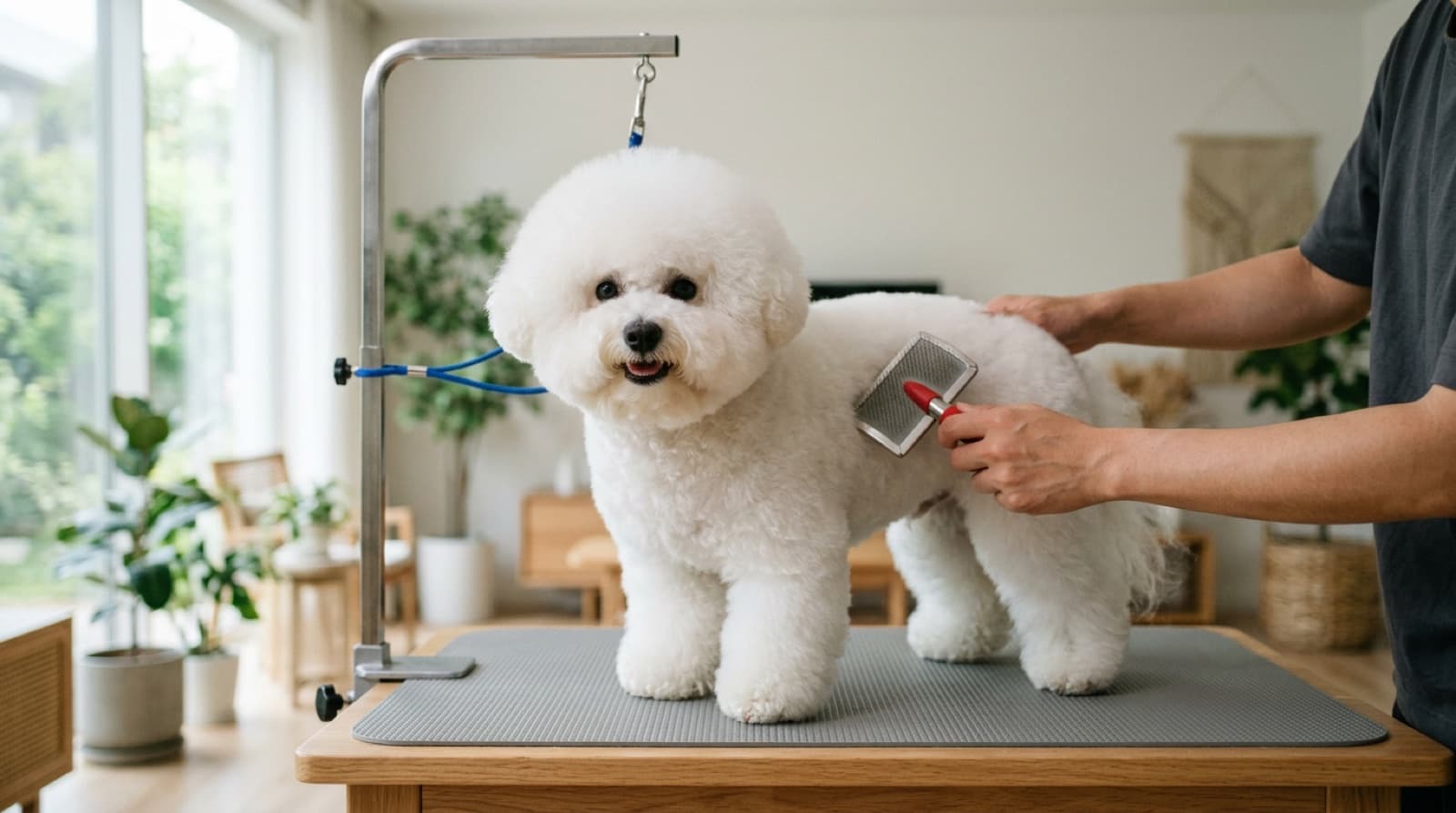
The number one mistake is surface brushing. You brush the top, the coat looks like a fluffy cloud, and a felt mat is quietly forming at the roots where the brush never reached. The skill that fixes it is line brushing: part the coat in a line, hold the hair above the part out of the way, and brush the exposed section from the skin outward with a slicker brush, then move down and repeat over the whole dog.
The check that keeps you honest is a steel comb. Pass it through each section down to the skin. If it glides, the section is done. If it snags, there is a mat, and no amount of surface fluffing has touched it. A light mist of detangling spray helps the comb move and reduces breakage on the tougher spots. For very young puppies, a softer pin brush is gentler while they learn to stand for grooming.
Some of the product links in this section are Amazon affiliate links — we may earn a small commission at no extra cost to you. It never changes which products we recommend.
The friction zones need a daily look even on days you cannot do a full brush: behind the ears, the armpits, where the legs meet the body, the back of the neck, and the collar line. These are where mats start, and 60 seconds a day on them prevents the large majority of grooming problems.
The coat change around a year old
Between roughly 8 months and a year, a Bichon's adult coat comes in and matting spikes hard, even for diligent owners. Brush more, not less, and consider a shorter clip to get through it.
Like other curly-coated breeds, the Bichon goes through a coat change as the adult guard hairs grow in, roughly between 8 months and a year. During this window the softer puppy coat and the incoming adult coat exist together and tangle around each other, and the matting gets noticeably worse no matter how good your routine is. Owners who thought they had grooming handled suddenly feel overwhelmed. It is normal and it passes.
The practical move is to increase brushing frequency through the change and, if it becomes a losing battle, put the dog in a shorter clip until the adult coat is fully in. A short-coated, comfortable Bichon is a far better outcome than a matted one, and it is not a failure of care. Once the adult coat settles, the routine gets more predictable.
Bathing and drying: brush first, always
This is the rule every Bichon groomer repeats: you cannot wash a knot out, you can only wash it tighter. Water shrinks and tightens any tangle that is already in the coat, turning a loose knot into felt. So the order is fixed. Brush the coat completely mat-free first, confirm with the comb, and only then bathe.
A gentle or brightening dog shampoo, well diluted and thoroughly rinsed, keeps the white coat clean without stripping it. Then dry to the skin. A high-velocity dryer is the tool that makes the powder-puff look possible: it blows the water out, lifts and straightens the curl away from the body, and blows out loose undercoat as you brush along with it. Letting a Bichon air-dry does the opposite, the damp curl tightens back down and re-mats. Half the reason a groomer's Bichon looks round and a home Bichon looks flat is the drying.
The powder-puff look, and the easier alternatives
The classic Bichon look is the powder puff: the coat scissored into an even, rounded outline that follows the body. It is not clipped flat. A groomer fluffs and force-dries the coat up and away from the skin, then hand-scissors the shape. That skilled scissor work is labour-intensive, which is why the full powder puff costs more than a plain trim and why most pet owners do not attempt the finish themselves.
If you want less maintenance, ask the groomer for a shorter puppy cut or teddy-bear trim, which keeps a soft rounded face but takes the body coat down to a length that mats less and is easier to brush. As with any curly coat, a shorter clip is the honest choice for an owner who knows they will not brush every single day. A comfortable short Bichon beats a matted show coat every time.
Tear stains and the white face
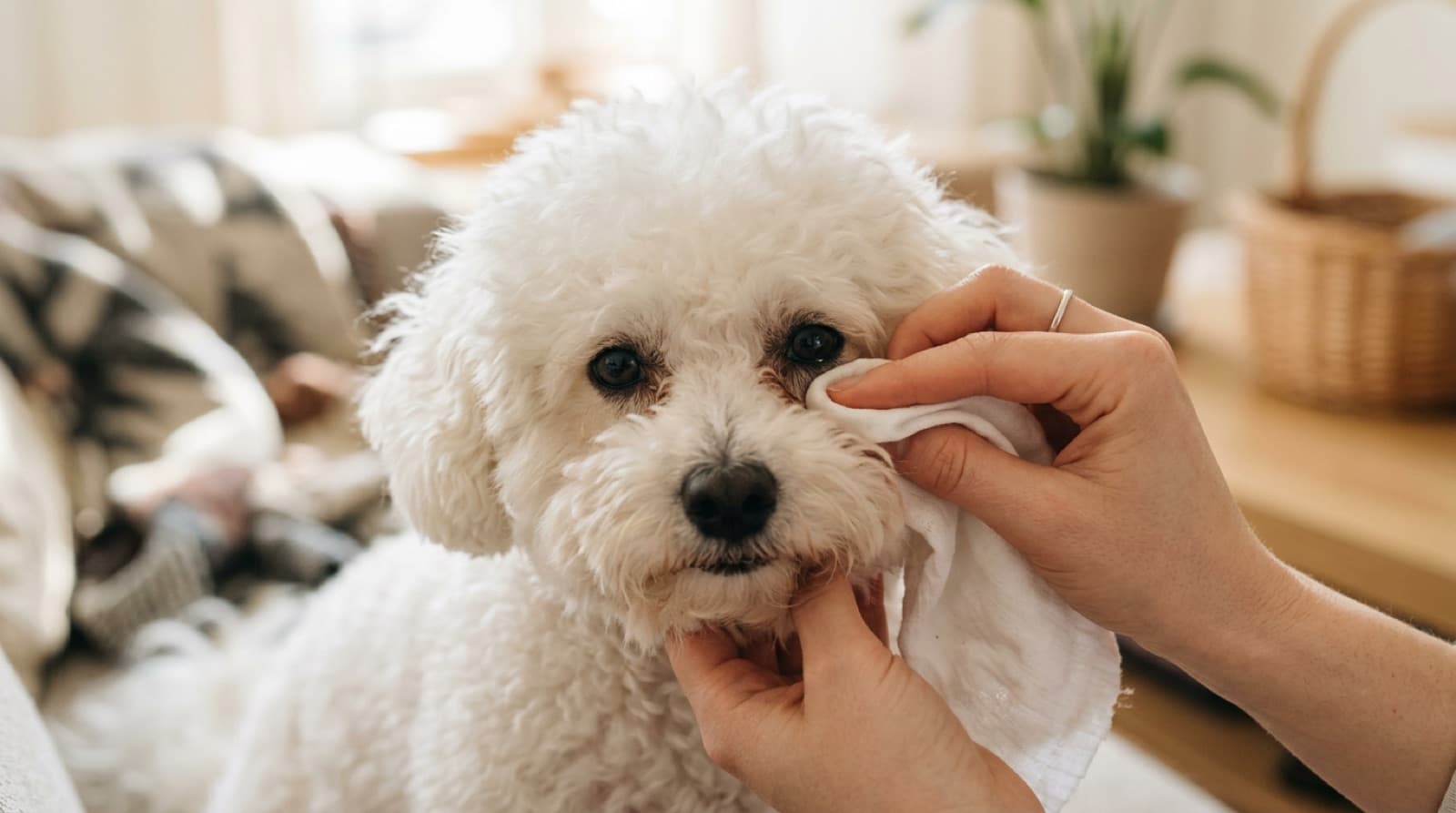
Tear staining is the defining cosmetic issue of the breed, because the reddish-brown marks under the eyes show up starkly on white hair. The colour is porphyrin, an iron-based pigment in tears and saliva. The important distinction the good guides make is between the stain and the cause. Whitening or wiping addresses the colour, but it does not fix why the dog is tearing.
Most tearing is anatomical, tears overflowing onto the face rather than draining, and is managed rather than cured. But new or worsening staining can point to an allergy, a blocked tear duct, or an eye or ear problem, so a sudden change deserves a vet check per resources like PetMD. Day to day, wipe the eye area gently with a clean damp cloth or a vet-approved eye wash, keep the hair around the eyes trimmed short so it does not wick tears across the face, and be wary of unregulated tear-stain supplements, some of which have contained antibiotics that should only be used under veterinary supervision. Clean face, trimmed hair, and a vet for anything sudden is the honest protocol.
The honest cost: groomer versus doing it yourself
A Bichon is a standing grooming commitment, and it is worth pricing in before you adopt. Professional grooms commonly run somewhere around $60 to $90 or more per visit in Canada, higher in cities like Toronto and Vancouver, and the Bichon Frise Club of America recommends professional grooming about every 4 weeks. At that cadence you are looking at roughly $600 to $900 or more a year, and a coat that arrives matted draws a de-matting surcharge or forces a shave-down. Canadian grooming cost surveys such as Dogster's give a useful sense of the ranges.
A Bichon costs more than a plain small dog for concrete reasons: the powder-puff finish is hand-scissored, the coat frequently arrives with mats that add de-matting time, and a full force-dry and brush-out is time-consuming. Grooming at home cuts the bill, but only if you commit to the daily brushing, since a home kit still means bathing a properly brushed coat and force-drying it. A serious home setup, a quality slicker, a steel comb, detangler, a whitening shampoo, and above all a high-velocity dryer, runs into the low-to-mid hundreds up front and pays back within a year, with the same honest caveat as every curly breed: the tools only help if you actually use them daily.
Thinking about adopting a Bichon Frise?
Go in ready for the daily brushing and you will love the breed. Browse Bichon Frises and Bichon mixes available now from the rescues we track across Canada.
See Available Bichon Frises →Frequently Asked Questions
How often should I brush a Bichon Frise?
Ideally daily, and weekly at the absolute minimum, because the curly double coat traps its own shed hair and mats within days if you skip it. The trap is that a Bichon can look like a fluffy cloud while a felt mat is forming at the skin underneath. So the brushing has to reach the skin, not just skim the surface, and a daily check of the friction zones behind the ears, in the armpits, and where the legs meet the body prevents most trouble.
Why does my Bichon mat so fast?
Because Bichons shed into the coat rather than out of it. The soft dense undercoat sheds loose hair that gets caught in the curly outer coat instead of falling to the floor, and that trapped hair is exactly what tangles into mats. It is the same trait that makes the breed low-shedding and low-dander, so the thing people love about the coat is the same thing that makes it high-maintenance. Mats form fastest behind the ears, in the armpits, and where the legs meet the body.
Can I get the powder-puff look at home?
You can maintain it, but the signature round outline is skilled scissor work most owners leave to a groomer. The powder-puff is not a clipped-flat cut. The coat is brushed and fluffed up and away from the body, force-dried straight to the skin, and then hand-scissored into an even rounded shape. That scissoring is what costs money and takes practice. A realistic split for most owners is daily brushing and bathing at home, with periodic professional grooms for the scissor finish.
How often does a Bichon need professional grooming?
Every 4 weeks is the Bichon Frise Club of America recommendation, and 4 to 6 weeks is common for owners doing solid brushing in between. Stretch it much further and the coat arrives pelted, at which point the humane option is a shave-down rather than hours of painful de-matting. The frequent professional cadence is a real part of the cost of the breed, which is why the at-home brushing habit matters so much.
What causes the reddish-brown tear stains under the eyes?
The colour comes from porphyrin, an iron-based pigment in tears, and it shows up dramatically against a white coat. The tearing itself is usually anatomical, tears spilling onto the face rather than draining normally, but new or sudden staining can signal an allergy, a blocked tear duct, or an eye or ear problem and is worth a vet check. Day to day, the management is gentle daily face cleaning and keeping the hair around the eyes trimmed, not bleaching the stain while ignoring why the dog is tearing.
Are tear-stain supplements safe?
Be cautious. Some tear-stain supplements have historically contained antibiotics such as tylosin, which is not an approved treatment for tear staining and should only ever be given under veterinary guidance. The safer routine for most dogs is daily wiping of the eye area with a clean damp cloth or a vet-approved eye wash, keeping the surrounding hair short, and asking your vet to rule out a medical cause if the staining is new. Do not reach for an unregulated supplement as a first step.
How do I keep my Bichon's coat white?
A mat-free coat is most of the battle, because dirt cannot build up in hair you are brushing out daily. Beyond that, a diluted whitening or brightening shampoo helps lift dullness, daily face cleaning limits tear and mouth staining, and rinsing thoroughly matters since shampoo residue can discolour. There is no product that keeps a neglected coat white; the whiteness follows the grooming routine, not the other way around.
Why is my Bichon more matted after a bath?
Because water tightens any tangle that was already there, and a coat that is not dried all the way to the skin re-curls damp and mats as it dries. This is the single most important rule for the breed: you cannot wash a knot out, you can only wash it tighter. Brush the coat completely mat-free first, then bathe, then force-dry straight while brushing. Bathing a tangled Bichon and letting it air-dry is how a manageable coat becomes a shave-down.
How to Groom a Poodle
The same curly-coat, continuous-growth grooming rules, on the other classic matting breed.
What to Feed a Bichon Frise
The other half of Bichon care: portions, the sensitive-tummy question, and treats.
Bichon Frise Health Issues
The breed's common health concerns, including the allergies behind tear staining.
Bichon Frises for Adoption
Live listings of Bichon Frises and Bichon mixes from the rescues we track.