The short answer
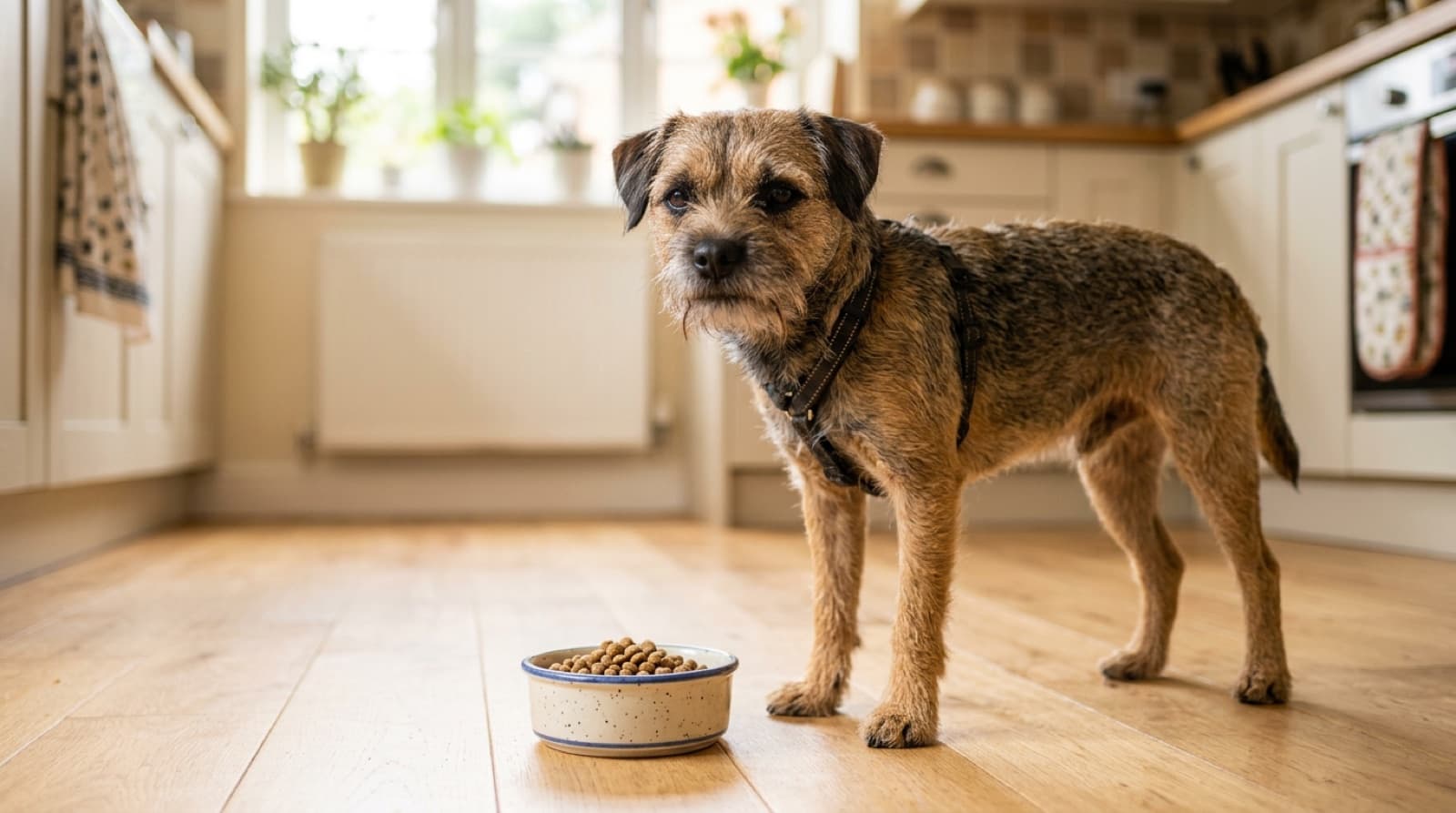
Feed a Border Terrier a complete small or medium-breed diet in a measured amount, and watch the waistline like a hawk. This is one of the most food-driven, obesity-prone breeds going, and the harsh wiry coat hides a thickening middle, so you have to feel the ribs, not look. Keep treats inside the daily calorie budget. Skip grain-free unless your vet advises it. The one genuinely breed-specific diet topic is CECS, a cramping condition linked to gluten, but that is a vet diagnosis, not a reason for a healthy dog to go gluten-free.
The number one issue: weight
Almost every other feeding question for this breed comes back to one thing. Border Terriers are intensely food-motivated, they essentially never refuse food, and they are among the breeds most predisposed to obesity in large veterinary studies from the Royal Veterinary College's VetCompass programme. That combination makes portion discipline the single most important thing you do.
Begging is not hunger. A Border Terrier will act starving an hour after a full meal. Feeding to the act, rather than to the dog's actual needs, is how a fit terrier quietly becomes an overweight one. Measure the meals, do not free-feed, and resist the eyes.
Treats are the hidden calories. Because the breed is so food-driven, treats dominate training and they add up fast. Keep treats to about ten percent of daily calories and subtract them from the meals. Better still, use part of the dog's measured kibble as training rewards so the rewards cost nothing extra.
You cannot eyeball a Border Terrier. Feel, do not look.
This is the practical trick that protects the breed. The harsh, wiry double coat hides a Border Terrier's outline, so a dog that looks lean can be carrying real weight underneath. You judge body condition by hand, not by eye.
Run your palms over the rib cage. You should feel the ribs easily under a thin layer of cover, roughly like feeling the bones on the back of your hand, and from above there should be a clear waist tucking in behind the ribs. If you have to press to find the ribs, the dog is overweight regardless of how it looks. Do this check every couple of weeks; on a coat that masks the change, your hands notice creeping weight long before your eyes do.
CECS and the gluten question
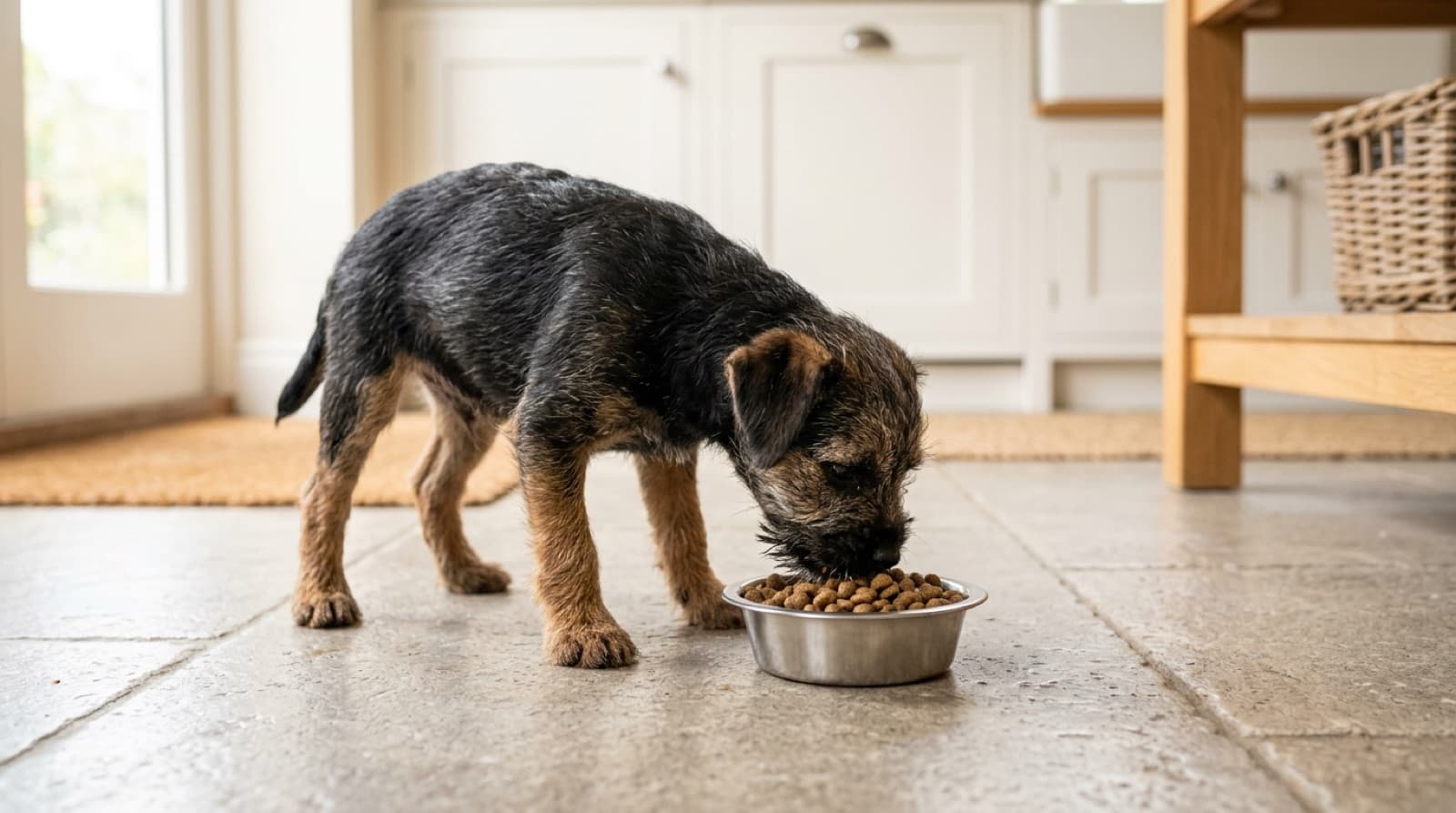
If your Border Terrier has episodes of cramping, trembling, or trouble moving while staying awake and aware, see your vet. That can be CECS, and it needs a proper diagnosis, not a self-prescribed diet.
This is the one diet topic that is genuinely specific to the breed. CECS, canine epileptoid cramping syndrome (owners often call it Spike's disease), causes episodes of muscle cramping and difficulty moving. A key feature is that the dog stays conscious and responsive through the episode, which helps distinguish it from a true seizure.
Here is the interesting part for a feeding article: peer-reviewed research by Lowrie and colleagues linked CECS to gluten sensitivity, and a strict gluten-free diet produced clear clinical and blood-test improvement in affected Border Terriers over roughly nine months. The breed's AKC profile notes the terrier's general hardiness, which makes this exception worth knowing.
Two cautions keep this accurate. First, this applies to a dog diagnosed by a vet, not to every Border Terrier; a healthy dog gains nothing from a gluten-free diet. Second, gluten-free is not the same as grain-free, and the two get confused constantly. If your dog has cramping episodes, the move is a vet visit, not a trip to the boutique food aisle.
Grain-free and foods to avoid
Skip grain-free unless your vet specifically advises it. Grain allergy is rare, and the FDA grain-free investigation is reason for caution. Do not confuse this with the gluten-free diet used for diagnosed CECS, which is a different, vet-directed thing.
Keep these away from a Border Terrier completely: chocolate, grapes and raisins, xylitol (in gum and some peanut butters), onions and garlic, macadamia nuts, alcohol, caffeine, and cooked bones. For a small, food-obsessed dog that will eat anything it finds, counter-surfing and stolen treats are a real risk, so keep human food well out of reach. If your dog eats something toxic, call your vet or a pet poison helpline right away.
Looking to adopt a Border Terrier?
Plan for a measuring cup and a treat budget before day one. Browse Border Terriers and terrier mixes available now from the rescues we track.
See Available Border Terriers →Where to buy Border Terrier food
Every brand worth feeding a Border Terrier is easy to find in store and online:
- Pet specialty chains (Pet Planet, Tail Blazers, Tisol, and similar). Carry Royal Canin, Pro Plan, and small-breed lines.
- Pet Valu and PetSmart. National chains that stock the major small and medium-breed formulas.
- Your vet clinic. The place for any therapeutic diet, including gluten-free options if your vet diagnoses CECS.
- Online. The same brands ship to your door, with low-calorie training treats easy to add.
For a food-driven dog, the treat aisle matters as much as the food aisle. Choose low-calorie training treats so the rewards do not blow the daily budget.
Frequently Asked Questions
What is the best food for a Border Terrier?
A complete small or medium-breed formula from a brand that employs a board-certified veterinary nutritionist and runs feeding trials, like Royal Canin, Hill’s Science Diet, or Purina Pro Plan. For a Border Terrier the bigger decision is not the brand, it is the portion: this is a famously food-obsessed breed that gains weight easily, so a quality complete food fed in a measured amount beats any premium bag fed by eye. Start with what the breeder or rescue used, transition over seven to ten days, and judge it by a lean body and firm stool.
How much should I feed a Border Terrier?
Most adult Border Terriers eat a fairly small amount, often somewhere around three quarters of a cup to one and a half cups of quality food a day split into two meals, but that scales with the dog’s size and activity, and the bag chart usually over-states. Feed to body condition, not a fixed number: you should be able to feel the ribs easily and see a waist. A common vet starting point is roughly two to three percent of ideal body weight a day, nearer two percent if the dog needs to slim down. Keep treats inside the daily total.
Why does my Border Terrier act starving all the time?
Because the breed is wired that way. Border Terriers are intensely food-motivated, which is wonderful for training and a real trap for the waistline, and they will act hungry no matter how much they have eaten. Begging is not evidence of hunger. The fix is not more food, it is structure: measure meals, keep treats to about ten percent of daily calories and subtract them from the meal, and use part of the dog’s kibble allowance as training rewards. The food drive is a feature you manage, not a need you feed.
My Border Terrier looks fine, but is the coat hiding weight?
Quite possibly. The harsh, wiry double coat genuinely hides a thickening waistline, so you cannot judge a Border Terrier’s weight by looking, you have to feel. Run your hands over the ribs: you should feel them easily with only a thin layer of cover, like the back of your hand, and there should be a visible waist behind the ribs from above. If you cannot feel the ribs, the dog is overweight even if it looks fine under the coat. Border Terriers are among the breeds most prone to obesity, so feel, do not look.
What is CECS, and does a gluten-free diet help?
CECS (canine epileptoid cramping syndrome, sometimes called Spike’s disease) is a breed-associated condition where a Border Terrier has episodes of cramping and difficulty moving while staying conscious and aware, which helps tell it apart from a true seizure. Peer-reviewed research has linked it to gluten sensitivity, and a strict gluten-free diet produced real improvement in affected dogs over several months. The catch is that this only applies to a dog actually diagnosed by a vet, gluten-free is not the same as grain-free, and a healthy Border Terrier does not need a gluten-free diet. If your dog has cramping episodes, see your vet rather than self-prescribing a diet.
Should I feed my Border Terrier grain-free?
Not unless your vet specifically advises it. Grain allergy is rare, and the FDA has been investigating a possible link between grain-free diets built on peas, lentils, and potatoes and a heart condition called dilated cardiomyopathy. Note the important distinction: the gluten-free diet used for diagnosed CECS is about gluten, not about going grain-free, and the two are easy to confuse. For a healthy Border Terrier, a complete diet from a feeding-trial brand is the safer default.
Border Terrier Health Issues
CECS, weight, and the health conditions to plan for in the breed.
What to Feed a Beagle
Another food-obsessed, weight-prone breed where portion discipline is everything.
Adopting a Border Terrier
Rescue sources, real costs, and what to expect from the breed in Calgary.
Border Terriers for Adoption
Live listings of Border Terriers and terrier mixes from the rescues we track.