The short answer
Border Terriers are uncommon but findable in Calgary rescue: roughly 1 to 3 dogs or close-mixes move through the combined rescue network in a typical year, with adoption fees at $400 to $700. Ethical breeder puppies run $1,800 to $3,500 on 6 to 18 month waitlists. The breed is an 18th-century working terrier from the Cheviot Hills along the Anglo-Scottish border: 11 to 15 lbs, 10 to 11 inches at the shoulder, 12 to 15 year lifespan, wiry weatherproof double coat. Gentler and more biddable than most terriers, strong apartment fit, real prey drive, and one of the best cold-climate small dogs for the Calgary winter.
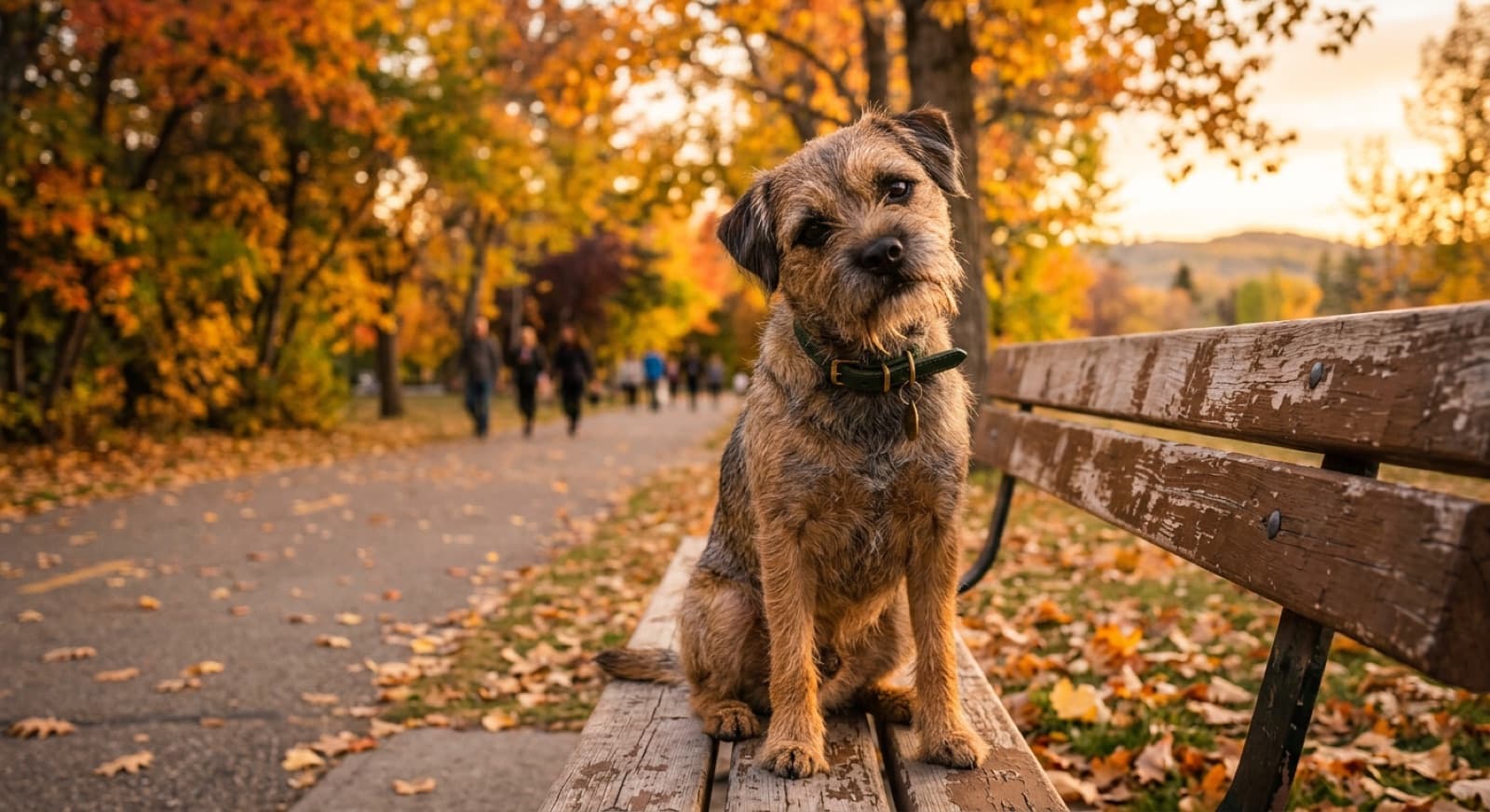
The Border Terrier is an 18th-century working terrier developed in the Cheviot Hills along the Anglo-Scottish border, where the breed was used to bolt foxes from rocky dens while keeping up with mounted foxhound packs across rough hill country. The Kennel Club recognised the breed in 1920, and the temperament has stayed remarkably consistent since. The result is a small terrier with the endurance of a working hound, the courage of a terrier, and a notably gentler family-bonded temperament than most of its cousins. For Calgary families wanting a small-terrier personality without Westie or Scottie independence, the Border Terrier is often the right answer. This guide walks through what acquisition actually looks like in 2026.
Calgary Border Terrier rescue landscape
Border Terrier intake in Calgary rescue is uncommon but not negligible. A typical year sees 1 to 3 Border Terriers or close-mixes move through the combined Calgary rescue network, usually as surrenders from owners who underestimated the prey drive, the grooming workload, or the exercise need. Foster-based rescues tend to identify the breed accurately; municipal-intake shelters more often list these dogs as “terrier mix” without naming the type.
The Calgary-area rescues worth monitoring:
- Calgary Humane Society: the largest local shelter; broad small-terrier intake.
- AARCS: foster-based; structured behaviour evaluations make breed identification reliable.
- BARCS Rescue: Calgary foster network with steady small-dog intake.
- Pawsitive Match: Calgary foster-based; family-oriented placements.
- ARF Alberta: broad small and medium dog inventory.
- Cochrane Humane Society: rural catchment around Calgary; working-terrier surrenders are more common given the surrounding hunting community.
- Heaven Can Wait: High River-based, Calgary placements common.
Breed-specific channels matter for the Border Terrier. The Border Terrier Club of America coordinates a North American breed-rescue referral list that occasionally moves dogs across the US-Canada border, and the Canadian Border Terrier Club handles in-Canada rehoming through member networks. Both are worth joining for the patient adopter.
The single best move is to set up notifications on the LocalPetFinder Border Terrier breed page. Any Border Terrier or close-mix listing across all Calgary rescues triggers an alert. The wait is typically 2 to 8 months from notification setup to a viable placement, with the catch that perfect matches require some flexibility on age, gender, and exact temperament profile.
The real cost of a Border Terrier in Calgary
Rescue and breeder pricing differ by roughly five times at acquisition. Ranges are 2026 Canadian dollars and directional, not quotes:
| Source | Price range | Notes |
|---|---|---|
| Calgary rescue placement | $400 to $700 | Includes spay/neuter, vaccinations, microchip, vet workup |
| Breed-club coordinated rehoming | $500 to $1,000 | Private placement through Canadian Border Terrier Club networks |
| Alberta or BC CKC breeder | $1,800 to $3,500 | 6 to 18 month waitlist; full parent health testing |
| US import breeder | $2,500 to $4,000 | AKC-registered; adds $400 to $800 in shipping and paperwork |
The breeder floor exists for a reason. Full parent health testing on a Border Terrier breeding pair (OFA hip and patella, CECS DNA panel, eye CERF, heart) runs $1,000 to $1,500. Stud fees on a proven sire are $800 to $1,500. Litters average four to six puppies. The math on a $1,200 puppy does not work for a breeder running ethical testing. Anything advertised under $1,500 is almost certainly a backyard operation skipping the panels.
Annual care for a Border Terrier in Calgary is at the lower end of small-breed ownership:
- Food and treats: $35 to $60 per month depending on quality tier. The small size keeps food costs low.
- Professional grooming: $50 to $120 every 8 to 12 weeks at Calgary salons for hand-stripping or clipping. Roughly $200 to $400 per year, which is lower than Westie or Mini Schnauzer wiry-coat costs.
- Home grooming tools: a slicker brush, stripping knife, nail clippers, ear-cleaning solution. Budget $60 to $100 once.
- Vet and preventive care: $400 to $700 per year for wellness, vaccines, parasite prevention, dental. Small terriers benefit from anaesthesia-supported dental cleanings every 1 to 2 years.
- Pet insurance: small-breed insurance runs $40 to $70 per month in Calgary. Worth considering for CECS or other breed-specific conditions that may need specialty care through Western Veterinary Specialist Centre.
- Training: a force-free puppy class series at $200 to $400. Border Terriers are sensitive; harsh methods damage the breed temperament fast. Raising Canine and Pup City Pup Academy are the Calgary trainers the rescue community recommends.
- Calgary dog licence: required for every dog three months and older under the Responsible Pet Ownership Bylaw 3M2006.
First-year totals typically land between $2,000 and $3,500 for a rescue Border Terrier once gear, training, and licence stack on top of the adoption fee. Breeder-puppy first-year costs run $3,500 to $5,500. For a full breakdown of lifetime ownership cost in Calgary, see our Calgary adoption costs guide.
Why Border Terriers get surrendered to Calgary rescues
The Border Terriers that move through Calgary rescue tend to share three surrender patterns. Understanding them helps you screen for the right match and set realistic expectations before adoption.
Prey-drive incidents. A Border Terrier kills a household cat, attacks a neighbour rabbit, or escapes a yard chasing squirrels. The owner is shaken, the household no longer trusts the dog, and the dog goes to rescue. This is the most common pattern and the most preventable: the prey drive is hardwired into the breed and was the whole point of the original working role.
Grooming workload underestimation. Owners who bought a Border Terrier expecting a low-maintenance terrier discover the hand-strip or clip schedule, the salon costs, and the between-appointment brushing. They surrender at the 6 to 18 month mark when the second or third grooming bill arrives.
Apartment-barking complaints. A smaller share of surrenders come from condo and apartment owners whose Border Terrier barks when bored. Calgary condo neighbours notice. These dogs are usually under-exercised; with proper exercise and mental work, the bark goes away.
The age profile of Calgary rescue Border Terriers is heavily weighted to 2 to 6 year young adults. Puppies are rare in rescue; seniors appear occasionally as owner-surrender end-of-life placements. The young-adult age range is actually a strong adoption profile: house-trained, past the destructive puppy stage, settled in temperament, and 8 to 12 years of life remaining.
Breed background: the working terrier of the Cheviot Hills
The Border Terrier developed in the 1700s in the Cheviot Hills along the Anglo-Scottish border, where the breed was used by farmers and hunters to bolt foxes from rocky dens. The unique combination of traits the breed needed for the work shaped everything about it: long enough legs to keep up with foxhounds on horseback, small enough body to follow a fox underground, the courage to face a cornered fox in a den, and the soundness to work multiple full hill days a week. The breed also needed to live calmly alongside the foxhound pack and the farm livestock between hunts.
That last requirement is what makes the Border Terrier different from most other small terriers. Where the Fox Terrier and the Jack Russell were bred as solo working dogs and kept their independent self-directed temperament, the Border Terrier was selected for pack compatibility and biddability alongside its working drives. The result is a terrier that bonds tightly to family, takes direction well, and is notably easier to live with than its cousins.
The Kennel Club (UK) recognised the Border Terrier in 1920. The Canadian Kennel Club and American Kennel Club both classify the breed in the Terrier Group. Modern Border Terriers remain remarkably close to the working type: a 1920 photograph next to a 2026 dog shows the same otter-shaped head, the same wiry double coat, and the same overall outline. Few breeds have stayed this consistent.
Border Terrier vs Westie vs Cairn vs Norwich/Norfolk Terrier
These four small terriers are often researched together by Calgary adopters who know they want a small terrier but have not yet picked the type. The practical differences:
| Trait | Border Terrier | West Highland White | Cairn Terrier | Norwich/Norfolk |
|---|---|---|---|---|
| Weight | 11 to 15 lbs | 15 to 22 lbs | 13 to 17 lbs | 10 to 12 lbs |
| Height | 10 to 11 inches | 10 to 11 inches | 9 to 10 inches | 9 to 10 inches |
| Head | Distinctive otter shape | Wide, rounded | Wedge-shaped, foxy | Foxy, small |
| Coat | Wiry tan, grizzle, red, blue/tan | Pure white wiry | Wiry brindle, red, grey | Wiry red, wheaten, black/tan |
| Ears | Drop, V-shaped | Prick | Prick | Norwich prick / Norfolk drop |
| Temperament | Gentle, biddable, family-bonded | Independent, vocal, confident | Independent, busy | Outgoing, social |
| Calgary rescue availability | 1 to 3 per year | 5 to 10 per year | 2 to 5 per year | <1 per year |
For a Calgary household specifically wanting the gentlest and most family-bonded of the small terriers, the Border Terrier is the clear pick. The trade-off is rescue availability: Westies appear more often in Calgary rescue. Households with flexibility on type but a strong preference for terrier personality should compare with the Westie and the Westie adoption guide.
Temperament: gentle for a terrier, biddable, family-bonded
Border Terriers are notably gentler than most terriers. The breed standard describes an active, plucky, affectionate dog with a strong working drive but a soft and biddable temperament toward family. Calgary owners report a dog that is engaged but not frantic indoors, attentive to the household routine, and gentle with children when raised alongside them. The breed is not a high-strung working terrier like a Jack Russell or a Fox Terrier; the energy is steadier and the temperament much softer.
The biddability is the trait that defines the breed for pet homes. Where most terriers were selected for independent decision-making (a Westie deciding whether to chase a rat is making that call solo), the Border Terrier was selected for pack compatibility and direction-taking from a handler. A Border Terrier will check in, will respond to recall protocols once trained, and will take training direction more readily than its cousins.
The sensitivity is the trait that defines training. Harsh corrections, prong collars, or shock-based methods damage the breed temperament fast. Force-free trainers like Raising Canine and Pup City Pup Academy are the right Calgary fit. A Border Terrier responds best to consistent positive-reinforcement work, gentle handling, and patient socialisation.
The working drives stay intact even in pet homes. Calgary households should expect:
- Strong prey drive. The breed will chase cats, rabbits, squirrels, and small dogs without training intervention. More on this below.
- Earthdog instinct. Border Terriers dig. A securely-fenced yard with a buried wire skirt at the fence base prevents escape; a soft garden bed will be excavated.
- Pack compatibility. The breed was selected to live with foxhounds and tolerates other dogs better than most terriers. Multi-dog households work well.
- Family bonding. Border Terriers attach tightly and prefer to be with their people. They do not do well as kennel-only or yard-only dogs.
Calgary climate fit: one of the best small breeds for the winter
The Border Terrier is one of the better small-breed climate matches for Calgary. The breed was developed in the cool wet hill country of the Anglo-Scottish border, where winter sits a few degrees above freezing for most of the season with regular rain and occasional snow. The wiry weatherproof double coat sheds water reasonably well, insulates effectively below freezing, and handles Calgary winters confidently for the breed size.
Practical Calgary climate notes:
- Winter coat usually optional above minus 15 degrees Celsius. Add one below minus 20 or for extended sessions given the small body size; the dog generates less heat than a medium breed.
- Booties are usually optional on packed snow but reduce salt irritation on Beltline and Inglewood sidewalks. A quick paw rinse on return works as an alternative.
- Watch for snow-ball formation in the leg furnishings and between the toes. Trim foot hair short during winter and check toes after every walk.
- Calgary chinooks can swing temperatures 30 degrees in hours. Keep weather-appropriate gear close at hand.
- Summer is comfortable but small dogs can overheat on hot pavement above 24 degrees Celsius. Walk early or late in July and August.
- The wiry coat dries quickly after rain or snow, which makes the breed lower-maintenance than many small dogs through wet spring weeks.
The breed cold tolerance maps closely onto the local climate. For Calgary owners who want a small dog that genuinely enjoys winter walks rather than tolerating them, the Border Terrier is one of the strongest picks.
Apartment compatibility: one of the better small-terrier options
Border Terriers are one of the better small-terrier picks for Calgary apartments and condos. The breed is quieter than most terriers when adequately exercised, bonds tightly to family, and adapts to small spaces without the constant vocal output that defines the Westie or Cairn. Calgary condo owners report Border Terriers settling into apartment life well, particularly in buildings that allow access to nearby off-leash spaces like Sandy Beach, Stanley Park, or the river pathways.
The threshold for apartment success is consistent exercise. An under-exercised Border Terrier barks, digs at the carpet, counter-surfs, and chews. The dog needs 45 to 60 minutes of physical exercise daily plus structured mental work (scent games, training sessions, food puzzles). Owners who provide a morning walk, an evening off-leash play session, and a few short training rounds across the day will find the breed apartment-compatible and quiet between sessions.
For condo buildings with breed restrictions, the Border Terrier weight (11 to 15 lbs) clears nearly all small-dog limits including the strictest 20-pound caps. The breed is recognised, registered, and unrestricted under all Calgary condo bylaws and insurance policies.
For more on apartment-friendly breeds and what makes them work in condos, see our Calgary apartment-friendly dogs guide.
The grooming decision: hand-strip or clip
The Border Terrier wiry double coat is maintained by one of two methods: hand-stripping (pulling out dead outer-coat hairs by hand or with a stripping knife) or clipping (cutting the coat with electric clippers). Both are valid; they produce different long-term results.
Hand-stripping preserves the wiry texture and the natural coat colour. The outer coat regrows in its original harsh form with the original pigment intensity. This is the breed standard approach and what most show-bred dogs receive. Hand-stripping takes 90 to 120 minutes at a Calgary salon, costs $80 to $120 per session, and is done every 8 to 12 weeks. A few Calgary groomers specialise in hand-stripping; most general salons do not, so calling ahead matters.
Clipping is faster, cheaper, and easier to find. Calgary salons that clip-only charge $50 to $80 per session. The trade-off is that the clipped outer coat regrows softer and lighter in colour over years. A clipped 6-year-old Border Terrier often looks visibly different from a hand-stripped one: lighter, fluffier, less defined in colour. For pet homes that prioritise convenience over coat texture, clipping is a reasonable choice.
Between professional sessions, weekly brushing with a slicker brush keeps the coat tidy and removes loose dead hair. The overall grooming workload is lower than the Westie, Cairn, or Mini Schnauzer, all of which have denser wiry coats that need more frequent maintenance. For owners who specifically chose the breed because grooming-light terriers are uncommon, the Border Terrier delivers.
Ear care matters separately. The drop ears trap moisture, and Border Terriers are prone to yeast and bacterial ear infections, particularly in humid Calgary summer weeks. Weekly ear inspection and a monthly clean with a vet-recommended solution prevents most issues.
Browse adoptable Border Terriers in Calgary
The LocalPetFinder Border Terrier breed page surfaces any rescue Border Terrier or close-mix the moment it appears across Calgary's combined rescue network. Set up notifications so the alert reaches you within hours. Foster temperament evaluation matters more than the breed label, and the right dog is often a near-mix rather than a strict purebred.
See Available Border Terriers →Common Border Terrier mixes in Calgary intake
Border Terrier mixes appear in Calgary rescue more often than purebreds. The three most common combinations and what to expect from each:
- Border Terrier x Cairn Terrier. Both small wiry-coated working terriers; the mix often produces a 12 to 18 lb dog with a wiry coat, drop or semi-prick ears, and a temperament that splits between the Border biddability and the Cairn independence. Recall training is harder than a purebred Border, easier than a purebred Cairn.
- Border Terrier x Poodle (Bordoodle). A small designer cross that produces 15 to 25 lb dogs with a softer wavy coat, lower shedding than the Border, and a temperament that varies widely depending on which parent dominates. Bordoodles need active socialisation as puppies; the cross can sharpen prey drive rather than dilute it.
- Border Terrier x Jack Russell. A high-energy cross with strong prey drive, often surrendered in Calgary by owners who expected a calmer dog. The mix typically lands 12 to 18 lbs with a smooth or broken coat. Needs the most exercise and the most structured training of the three.
For all three mixes, foster temperament evaluation matters more than the parentage label. A foster-housed Border Terrier mix that has lived alongside cats and other dogs for weeks carries far more reliable behavioural information than a kennel-housed purebred from a shelter that has not had time to evaluate the dog. When the LocalPetFinder breed page surfaces a Border Terrier mix listing, contact the foster directly and ask about cat compatibility, recall, prey drive incidents, and bond-formation timeline.
The prey-drive caveat: real, hardwired, manageable
The Border Terrier prey drive is not an optional trait you can train out. The breed was selected for 250 years to chase, corner, and dispatch small mammals underground, and the wiring runs deep. A Border Terrier off-leash in Nose Hill Park, Fish Creek Park, or Bowmont Park will spot a rabbit, fix on it, and chase. Without trained recall protocols, the dog will not come back until the chase ends.
What this means practically for Calgary owners:
- Cats. Border Terriers raised from puppyhood with household cats often coexist with those specific cats. They are generally not safe with cats they have not been raised with, and outdoor cats are at risk during walks. Foster-evaluated rescues come with cat-compatibility notes; ask the foster directly.
- Recall training matters. Long-line work at securely-fenced parks, consistent force-free recall protocols, and weeks to months of practice before off-leash freedom. Raising Canine and Pup City Pup Academy run the kind of structured recall classes Calgary Border Terrier owners need.
- Securely fenced yards. Border Terriers dig. A fence with a buried wire skirt at the base prevents the most common escape route. Six-foot fences are sufficient; the breed is not a jumper.
- Off-leash freedom comes later. Even well-trained Border Terriers should be assessed individually before full off-leash trust. Many owners maintain long-line freedom (15 to 30 ft) rather than fully off-leash for the dog life.
- Other small pets. Rabbits, hamsters, guinea pigs, and reptiles are not safe co-housed with Border Terriers. The drive is too strong and the small-pet body language too triggering.
None of this disqualifies the breed. It simply means the breed comes with one significant management requirement that owners must commit to before adoption. Calgary households with cats, small pets, or an expectation of immediate off-leash freedom should think hard about whether the Border Terrier is the right pick. Households without those constraints, willing to invest in recall training and a fenced yard, get a dog that handles the prey drive within a structured framework and lives happily within it.
Frequently Asked Questions
Where can I adopt a Border Terrier near me in Calgary?↓
Are there Border Terrier rescues near Calgary?↓
How much does a Border Terrier cost in Calgary?↓
Are Border Terriers hypoallergenic?↓
Are Border Terriers good for first-time owners?↓
Are Border Terriers good for apartments?↓
How much exercise does a Border Terrier need?↓
Border Terrier vs Westie vs Cairn vs Norwich Terrier: which is right for Calgary?↓
Do Border Terriers get along with cats?↓
How do Border Terriers handle Calgary winters?↓
How much grooming does a Border Terrier need?↓
How do I verify a Border Terrier breeder?↓
Why do Border Terriers get surrendered to Calgary rescues?↓
Continue reading
Adoptable Border Terriers in Calgary
Live Border Terrier and small-terrier mix listings across Calgary rescues, refreshed regularly. Set up notifications for the rare arrival.
Border Terrier health issues
CECS (Spike Disease), patella concerns, ear infections, and the breed-specific screening every Border Terrier adopter should know about before commitment.
West Highland White Terrier (Westie)
The most common small terrier in Calgary rescue. More independent and vocal than the Border, with pure-white coat and shorter legs. Available more often, louder in apartments.
Westie Adoption Calgary
The closely-related Westie adoption guide. Same Calgary rescues, similar size, different temperament. Worth reading alongside the Border Terrier guide before choosing.
New dog? Start with these care guides
Everything a new adopter needs to set up a safe, happy home.