The short answer
Before your cat comes home, sweep the space: remove every lily and toxic plant, hide and cover electrical cords, lock chemicals and medications behind cabinet locks, put all string and small objects away, secure every window with a sturdy screen, and fit a breakaway collar and ID tag plus a microchip. Lilies and swallowed string are the two true emergencies. Some links here are Amazon affiliate links; we may earn a small commission at no extra cost to you, and it never changes what we recommend.
If you suspect poisoning or a swallowed object, act now
Do not wait for symptoms. Call your vet, the nearest emergency vet, or a poison hotline immediately: ASPCA Animal Poison Control (888) 426-4435 or Pet Poison Helpline (855) 764-7661 (both 24/7; a consultation fee may apply). Two rules that save lives: lily exposure is time-critical, so call before symptoms appear, and never pull a string that is hanging from your cat's mouth or rear, because it may be anchored inside.
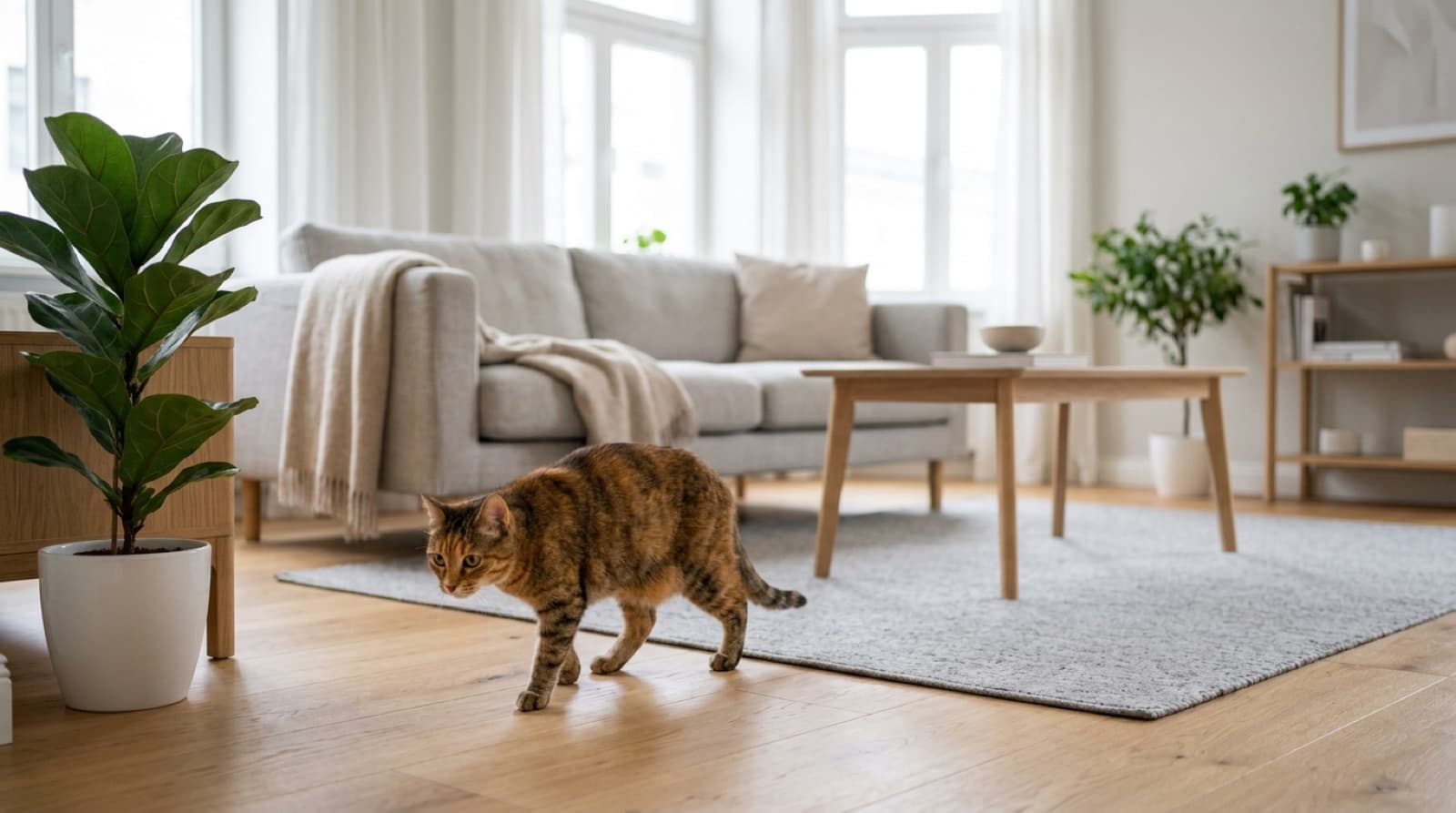
Bringing home a rescue cat is the good part. The hour before is the important one. A frightened new cat will bolt straight for the smallest, darkest hiding spot and then, once the house is quiet, work its way through every cord, gap, and windowsill in the place. Cat-proofing is simply doing that tour first, on your feet, and fixing what you find. It pairs with two other pieces of the same setup: the first week decompression timeline and an enriched environment. Safe, settled, and stimulated are the three halves, so to speak, of a good landing.
Toxic plants: lilies first, and it is not close
If you take one thing from this guide, take this: true lilies and daylilies can kill a cat, and there is no safe way to keep them in the house. Per the ASPCA, every part of a lily is toxic, including the pollen and even the water in the vase, and a tiny exposure, a couple of chewed leaves or pollen licked off the fur, can cause acute kidney failure. It is often fatal if treatment is delayed, so it is a call-immediately, do-not-wait situation. The only safe move is to keep lilies out entirely and to turn down lily bouquets rather than trying to place them “out of reach.”
Lilies are the worst, but plenty of common houseplants are also toxic, including sago palm, dieffenbachia, pothos, aloe, and philodendron, along with gifted or outdoor plants like azalea and oleander. Check anything green against the ASPCA toxic and non-toxic plant list before it comes home. Give your cat its own safe outlet to graze on with a pot of cat grass, which also steers it away from your other plants, and lean on genuinely cat-safe greenery like the spider plant or cast iron plant.
String and anything stringlike: the quiet killer
The rule that saves cats: if you see string, thread, or ribbon hanging from your cat's mouth or rear, do not pull it. Go straight to an emergency vet.
The cartoon image of a kitten with a ball of yarn is one of the most dangerous ideas in cat care. Yarn, thread, dental floss, ribbon, hair ties, rubber bands, and tinsel are what vets call linear foreign bodies. As VCA Animal Hospitals explains, if one end lodges in the gut, the intestine keeps trying to move the trailing end, cannot, and bunches up along it like an accordion while the string saws through the tissue. It is a surgical emergency and a higher-risk one than most swallowed objects. Store yarn, thread, floss, hair ties, and rubber bands in closed containers, skip tinsel entirely, and treat wand and string toys as supervised-only, putting them fully away in a lidded toy bin after every session. A wand toy is wonderful enrichment, but only in your hand, never left out.
Cords, outlets, and blind pulls
Kittens and curious cats chew electrical cords, which can cause mouth burns, fluid in the lungs, and electrocution (VCA), and the damage is not always obvious right away, so a chewed live wire is an emergency even if the cat seems fine. Route cords behind furniture, bundle and hide them with cord covers or a cable-management channel, and unplug loose cords when they are not in use. Do not overlook window-blind pull-cords, which are a separate strangulation hazard: tie them up out of reach or switch to cordless blinds.
Chemicals, medications, antifreeze, and essential oils
Human and pet medications, cleaning products, and rodenticides are common household poisons; store them all behind latched doors or up high and sealed. Magnetic or childproof cabinet locks on the under-sink cupboard handle most of this at once. Antifreeze deserves special mention: ethylene glycol is sweet-tasting and highly lethal, a very small amount can kill a cat, and the treatment window is only a few hours (VCA), so clean any spill immediately and store it sealed.
One that surprises people: essential oils and liquid potpourri are toxic to cats. Cats lack the liver enzymes to process many oils (Pet Poison Helpline), and an active oil diffuser is a specific risk because the microdroplets settle on the coat and are then absorbed through the skin or swallowed during grooming. Tea tree, citrus, pine, peppermint, cinnamon, and eucalyptus are among the worst. Keep concentrated oils inaccessible and do not run oil diffusers around cats. Note the important distinction from the calming diffuser below, which is a different, cat-safe product entirely.
Windows, balconies, and high-rise syndrome
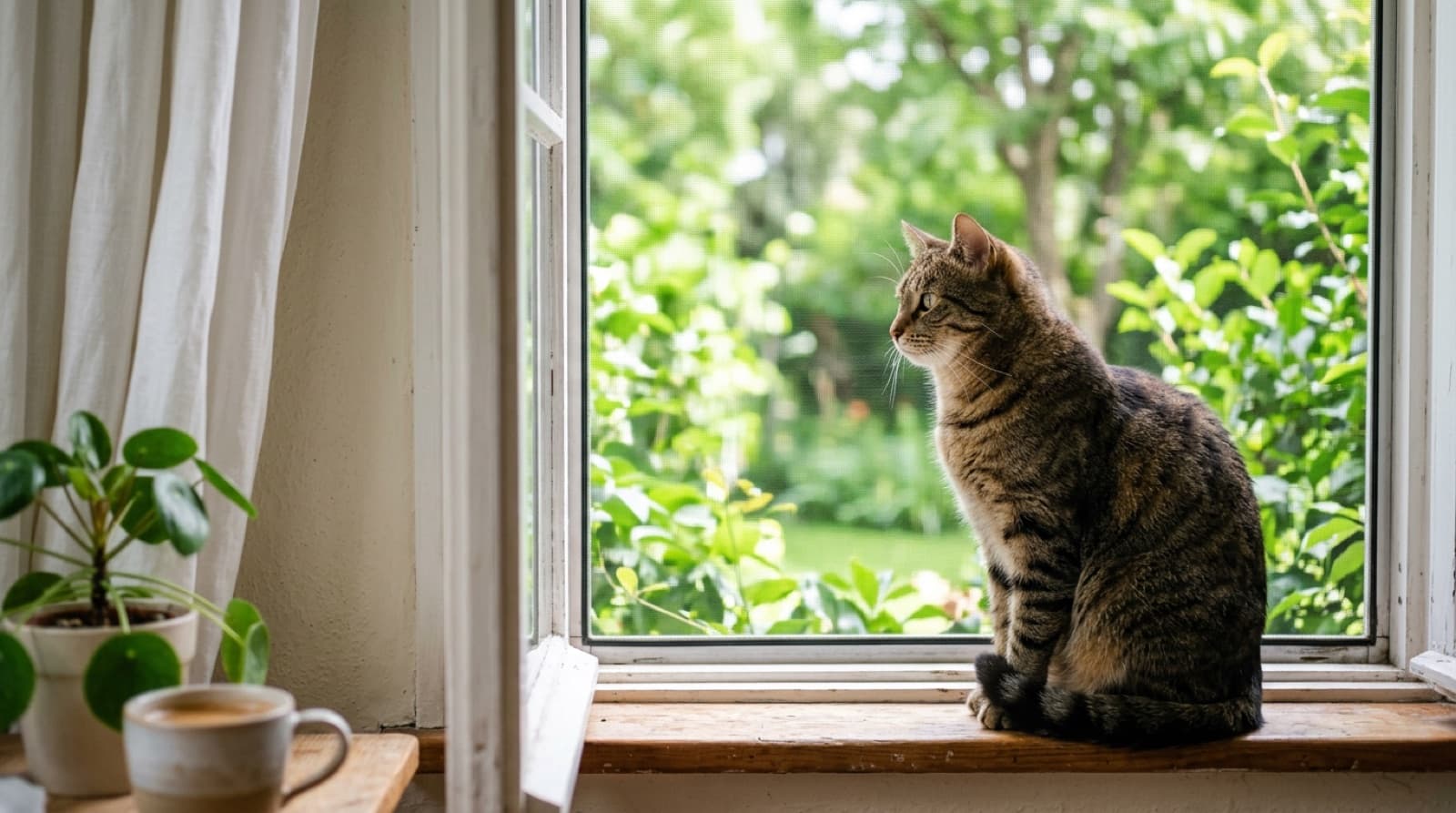
Cats fall from windows and balconies more often than people expect, an injury pattern the ASPCA calls high-rise syndrome. A cat fixated on a bird can lose its balance, and a smooth ledge gives nothing to grab, leading to shattered jaws, punctured lungs, and broken limbs. The ASPCA stresses two things: it is essentially 100 percent preventable, and ordinary childproof window guards are not enough, because a cat can slip through the gaps. Fit tight, sturdy screens on every reachable window, check that they cannot be pushed out, and never leave a cat on an unscreened balcony. If you have a balcony, enclose it or add balcony netting.
Trash, the kitchen, and appliances
Garbage is a buffet of hazards, cooked bones, spoiled or toxic food, and wrappers that cause choking or obstruction (VCA), so use a lidded or latching trash can or keep it behind a cupboard door. In the kitchen, stove-knob covers stop a curious paw turning on a burner. And build one habit that prevents a genuinely awful accident: cats climb into warm, enclosed spaces, so keep the washer and dryer doors closed and look inside before you start any appliance, extend the same glance to the dishwasher and fridge, and check the seat of a reclining chair before you lean back.
Escape prevention and ID
A newly adopted, frightened cat is a flight risk, and even a settled indoor cat can dart out an open door. The two-part safety net is identification and a barrier. Fit a breakaway collar with an ID tag, which releases if it snags so it cannot choke the cat, and get a registered microchip, which the VCA recommends for every cat including indoor-only ones, since a collar can come off but a chip is permanent. Add a screen or barrier at your main door and be extra alert to door-dashing in the first few weeks, which is when a new cat is most likely to try it.
One thing to add, not remove: a calming diffuser
Everything above is about taking hazards away. This is the one thing worth adding. A synthetic feline pheromone diffuser mimics the natural facial-marking scent cats use to signal that a place is safe, and plugging one in before your cat arrives can take the edge off those first anxious days. To be completely clear, this is a purpose-made, cat-safe product and is entirely different from the essential-oil diffusers warned about above, which are toxic. Think of it as the welcome mat once the room itself is safe.
Ready when the room is
Do the safety sweep first, then find your cat. Browse adoptable cats from rescues across Canada.
Browse Adoptable Cats →Frequently asked questions
How do I cat-proof my house?
Before your cat arrives, remove all lilies and other toxic plants, secure electrical and blind cords, lock away chemicals and medications, put string and small objects out of reach, and make sure every window has a snug, sturdy screen. Cat-proofing is easiest done room by room before the carrier ever opens, because a scared new cat will explore every corner at night when you are not watching.
Are lilies poisonous to cats?
Yes, and they are one of the most dangerous things you can have in a cat home. True lilies and daylilies are potentially fatal: per the ASPCA, all parts are toxic, including the pollen and even the water from a vase that held them, and a tiny exposure can cause acute kidney failure. They should never be in a cat's home at all, and if you suspect any exposure, call your vet or a poison hotline immediately, because treatment is most effective in the first few hours.
Why is string dangerous for cats?
Swallowed string, yarn, ribbon, thread or dental floss can become a linear foreign body that bunches and saws through the intestine, which is a surgical emergency (VCA). The critical rule: if you ever see string hanging from your cat's mouth or rear, do not pull it, because it may be anchored inside and pulling can cause fatal damage. Go straight to an emergency vet.
Are essential oils safe for cats?
No, many essential oils are directly toxic to cats, which lack the liver enzymes needed to process them (Pet Poison Helpline). Active diffusers are a specific risk, because the microdroplets settle on the cat's fur and are then absorbed through the skin or swallowed during grooming. Avoid running oil diffusers around cats, and keep concentrated oils and liquid potpourri completely out of reach.
How do I stop my cat chewing cords?
Route cords behind furniture, bundle and conceal them with cord covers, and unplug loose cords when they are not in use. Chewing an electrical cord can cause mouth burns and electrocution (VCA), so if your cat bites a live wire, seek emergency care right away, since the injuries are not always obvious at first. Blind pull-cords are a separate strangulation risk, so tie them up or switch to cordless blinds.
What plants are safe for cats?
Cat-safe options include the spider plant, cast iron plant and American rubber plant, and a pot of cat grass gives your cat its own safe outlet for grazing (ASPCA). Always check a plant against the ASPCA toxic and non-toxic plant list before bringing it home, and when in doubt, keep it out, because some of the most common houseplants and cut flowers are toxic.
How do I keep my cat from escaping?
Fit a breakaway (safety) collar with an ID tag and get a registered microchip, which the VCA recommends even for indoor-only cats, since scared new adopters bolt and any cat can slip out a door. Add a screen or barrier at your main doors and practise door-dashing awareness in the first few weeks, when a new cat is most likely to make a run for it.
Is my cat safe on the balcony?
Not without protection. The ASPCA warns of high-rise syndrome, the injuries cats suffer falling from windows and balconies when they lose their balance chasing a bird. Never leave a cat on an unscreened balcony, and use secured, sturdy screens or balcony netting. Note that childproof window guards are not enough on their own, because a cat can slip through the gaps.